
Best Cardio for Preserving Muscle Mass: 5 Workouts
You’ve worked hard for every pound of muscle you’ve built. So the moment someone suggests adding cardio, that familiar knot forms in your stomach — what if this undoes everything? That fear is legitimate, but here’s the reframe fitness science has been moving toward for years: cardio doesn’t kill your gains. How you do cardio does.
Most gym-goers land in one of two losing strategies. They either skip cardio entirely, leaving cardiovascular health and fat loss on the table, or they hop on the treadmill and run hard for 45 minutes — triggering the exact muscle-breakdown process they were trying to avoid. Both extremes cost results. The solution isn’t vague (“just do some light cardio”), it’s specific.
In this guide, you’ll discover exactly which cardio exercises protect muscle, the precise heart-rate zones to train in, and a step-by-step weekly schedule — including answers to emerging questions like what to do if you’re using a GLP-1 medication like Zepbound. Before you dive in: this guide assumes you’re already doing consistent resistance training 2–4 times per week and eating roughly 0.7–1.0g of protein per pound of bodyweight. If those two boxes are checked, you’re ready to add the best cardio for preserving muscle mass without sacrificing a single rep’s worth of progress.
The best cardio for preserving muscle mass is low-impact, moderate-intensity exercise — incline walking, stationary cycling, and the elliptical top the list, kept in Zone 2 heart rate (roughly 60–70% of your max).
- Choose low-impact LISS cardio (Zone 2, 20–40 min) to burn fat without triggering muscle breakdown
- Timing matters: Do cardio after lifting or on separate days — never before heavy sets
- The 3-3-3 Rule gives you a proven weekly framework: 3 lifting days + 3 low-intensity cardio days + 1 active recovery day
- The Muscle Insurance Protocol: Combining the right modality + right intensity + right timing is the system that protects your gains — not just picking one
- GLP-1 users: Resistance training is non-negotiable if you’re on Zepbound to prevent muscle loss alongside fat loss
Why Cardio Kills Gains & How to Fix It
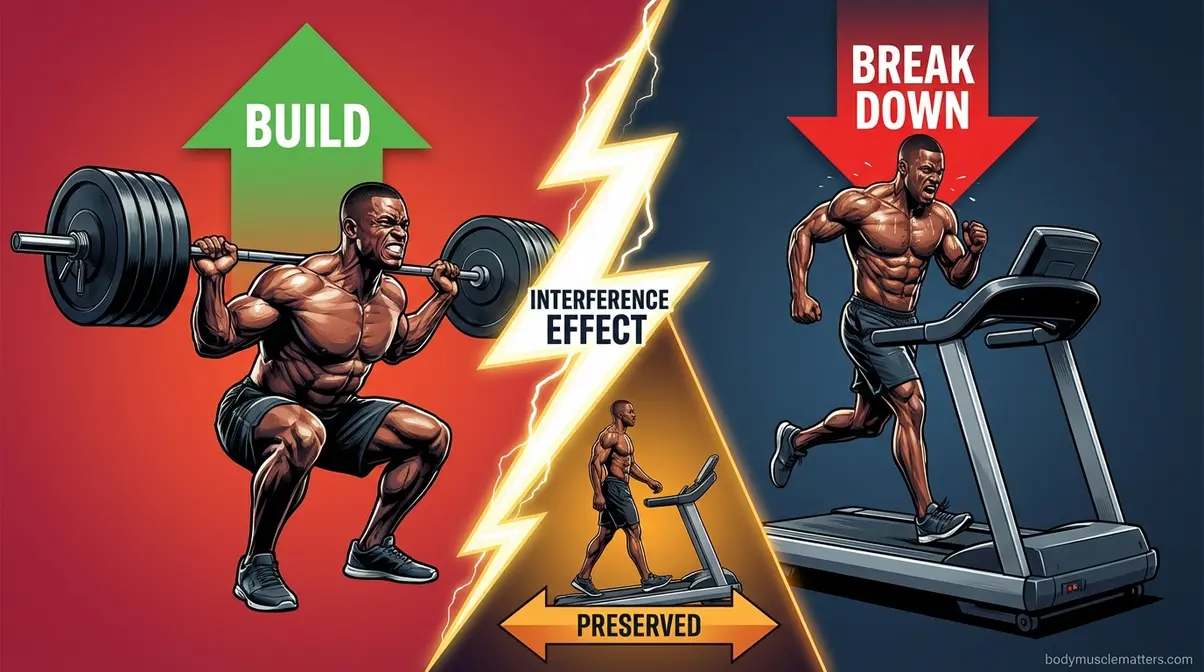
The interference effect is the documented phenomenon where aerobic training suppresses the molecular signals your body uses to build muscle. It occurs when cardio and weightlifting compete for the same cellular resources. Understanding it is the first step in the Muscle Insurance Protocol — and the key to doing cardio without sacrificing a single pound of muscle.
Picture this: you crush leg day on Monday. Your quads, hamstrings, and glutes are primed for growth. Then, feeling motivated, you jump on the treadmill and run at high intensity for 45 minutes. By Thursday your legs feel flat, your squats feel weaker, and you’re convinced cardio ruined your progress. You’re not wrong — but the problem wasn’t the cardio itself. It was the dose, the intensity, and the timing.
What Is the Interference Effect?
The real reason cardio might be killing your gains is called the interference effect — the documented phenomenon where endurance training activates cellular pathways that compete with, and can partially suppress, the molecular signals responsible for muscle hypertrophy (hypertrophy = muscle growth). Think of it like a computer running too many programs simultaneously: your machine slows down but doesn’t crash. Your muscles can still grow during concurrent training, but at a reduced rate when cardio is poorly managed.
The critical insight — and the one that changes everything — is that the interference effect is NOT automatic or inevitable. It is dose- and intensity-dependent. A 20-minute Zone 2 incline walk produces far less interference than 60 minutes of high-intensity running on the same day as your heavy lift. A 2022 meta-analysis of concurrent aerobic and strength training programs found that combining both training types produces a small but measurable negative effect on muscle fiber hypertrophy compared to strength training alone, specifically noting this attenuation most prominently with running-based aerobic exercise (PubMed Central, 2022). Research on concurrent training interference confirms that the modality, frequency, and duration of your cardio are the controlling variables — not the cardio itself.
The Muscle Insurance Protocol is built exactly on this insight: by selecting the right low-impact modality, training in Zone 2, and scheduling with the 3-3-3 Rule, you minimize interference to near-zero. The full framework comes together in Step 3 — for now, know that the solution is specific and entirely learnable.
Understanding the science behind the interference effect gives you the foundation everything else builds on. Now that you know WHY the conflict happens, let’s look at what it actually does inside your muscles — and why the difference between “catabolic” and “anabolic” isn’t just jargon. It’s the difference between growing and shrinking.
Catabolic vs. Anabolic States
When you train, your body operates in one of two primary states. The anabolic state — the state where your body is building and repairing tissue, driven by hormones like testosterone and IGF-1 — is what every gym session is designed to create. This is the environment resistance training builds. On the other side sits the catabolic state — the state where your body breaks down molecules, including muscle protein, to fuel activity. Excessive cardio can nudge you into that second state, and that’s the origin of the “cardio kills gains” fear.
Specific triggers push the body catabolic: cardio sessions that push past 45–60 minutes of high intensity, doing cardio in a caloric deficit without sufficient protein intake, and performing hard cardio immediately before lifting can all accelerate muscle protein breakdown. Properly structuring workout programs by managing the intensity and timing of endurance sessions can minimize the interference effect on muscle hypertrophy (PubMed Central, 2024). Strategies to minimize the interference effect center on keeping cardio moderate in duration and intensity.
Here’s the critical reassurance: low-intensity, moderate-duration cardio (Zone 2, 20–40 minutes) does NOT typically push a well-fed, well-rested athlete into a catabolic state. This is the article’s core reframe. Beyond state management, there’s a fiber-type dimension worth knowing. High-intensity cardio like sprinting places enormous demand on your fast-twitch muscle fibers — the same fibers that power your heavy squats and deadlifts — while Zone 2 cardio primarily engages slow-twitch fibers. Keeping your cardio in Zone 2 literally protects your fast-twitch capacity for the barbell.
Understanding the catabolic trigger is useful — but what’s happening at the molecular level is even more revealing. Two competing signals are battling inside your cells every time you exercise. Here’s who wins, and how to make sure it’s always the muscle-building signal.
The mTOR vs. AMPK Conflict
Inside every muscle cell, two molecular signals compete for control after exercise. mTOR — mechanistic Target of Rapamycin — your body’s primary “build muscle” signal, activated by resistance training and protein intake — is what triggers muscle protein synthesis and drives hypertrophy. When mTOR is active, your body assembles new muscle protein. On the opposing side: AMPK — AMP-activated protein kinase — an enzyme activated by energy depletion during prolonged cardio that signals your body to conserve fuel by slowing protein synthesis. When AMPK is elevated, it suppresses mTOR activity.
The conflict in plain English: heavy, prolonged cardio raises AMPK. Elevated AMPK reduces mTOR activity. Reduced mTOR = slowed muscle building. This molecular interaction is the root cause of the interference effect — and it’s the reason why “any cardio” isn’t the same as “muscle-destroying cardio.” Zone 2 cardio raises AMPK only mildly and for a shorter duration. The NIH source paper (PMC4523889) documents the relationship between aerobic exercise and skeletal muscle protein metabolism — importantly, AMPK doesn’t “destroy” mTOR; it modulates it, meaning the suppression is partial and temporary when cardio is appropriately dosed (PubMed Central, 2022).
Strategic timing allows mTOR to peak from your lifting session before any AMPK-driven suppression can occur. This is the molecular case for doing cardio after lifting — or better yet, on entirely separate days.
The diagram below maps this signaling conflict visually — use it as a reference for understanding why timing is the most critical variable in your cardio programming.
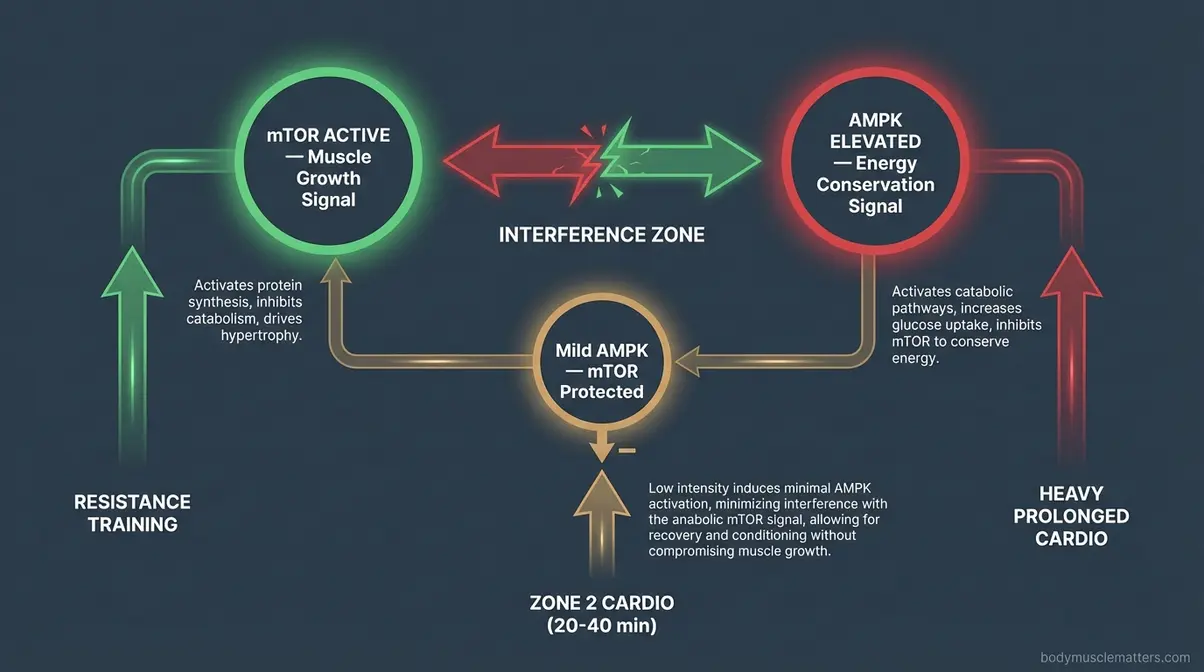
Caption: How mTOR and AMPK compete after exercise — and why Zone 2 timing tips the balance toward muscle growth.
Now you understand the signaling conflict. But one question creates a lot of anxiety for gym-goers who take a break: what happens when you stop training entirely for a week or two?
Does 2 Weeks Off Ruin Gains?
Short answer: no — but it’s also not nothing. Measurable muscle atrophy can begin after approximately 2 weeks of total training cessation, and research confirms this is real. A 2024 study found that after six weeks of resistance training-induced hypertrophy, participants who stopped training entirely showed a measurable decrease in muscle thickness at the 2-week mark — roughly 2.6% at the trained site (PubMed Central, 2024). The fear of muscle atrophy after two weeks of detraining is based in real physiology, but the magnitude is manageable.
Here’s the critical reassurance: muscle memory is genuine. Previously trained individuals regain lost muscle significantly faster than it was originally built. A 2-week break because of illness, travel, or planned rest is not a 2-month setback — it’s an interruption in a longer arc. Return consistently after the break, keep protein intake up during the off period, and you’ll recover the lost ground faster than you’d expect. This fear is real and deserves respect. The evidence, however, counsels calm.
Now that you understand the “why” behind the interference effect, it’s time to answer the question that brought most people to this article: which cardio exercises actually protect your muscle while burning fat?
5 Best Muscle-Sparing Cardio Workouts

The best cardio for preserving muscle mass is low-impact, moderate-intensity exercise that burns fat without triggering the interference effect. Incline walking, stationary cycling, and the elliptical lead the list because they elevate your heart rate into Zone 2 without heavy mechanical stress on the muscles you’ve built in the weight room.
Across Reddit’s r/leangains and professional fitness communities, the agreement is consistent: low-impact, steady-state cardio in Zone 2 is the safest approach. Before breaking down each modality, here’s how this list was built.
How We Selected These 5 Exercises: These five cardio modalities were selected based on three criteria drawn from post-2023 concurrent training research: (1) metabolic impact — how much fat they burn relative to their systemic fatigue load; (2) interference risk — how significantly they activate AMPK and suppress mTOR; and (3) joint impact — whether the movement pattern creates muscle-damaging eccentric forces that compete with weightlifting recovery. All five exercises score high on metabolic impact and low on interference risk.
One note that applies to every option below: regardless of which modality you choose, the heart-rate zone you train in determines whether this cardio protects or costs you muscle. More on that in the scheduling section — but keep it in the back of your mind as you read.
1. Incline Walking: Gold Standard
Incline Walking — a treadmill-based LISS exercise (LISS — Low-Intensity Steady-State cardio — exercise performed at a steady, moderate pace for 20–40 minutes) performed at a 10–15% grade — is the top pick for muscle-sparing cardio for nearly every gym-goer. It sits naturally in Zone 2 for most people, burns a meaningful number of calories, and places almost no eccentric stress on the muscles you need to recover for lifting.
- Parameters:
- Grade: 10–15% incline
- Pace: 3.0–3.5 mph
- Duration: 20–40 minutes
Why does this protect muscle? Incline walking primarily recruits slow-twitch muscle fibers, leaving your fast-twitch fibers completely untouched. It also promotes lipolysis (lipolysis — the breakdown of stored fat into fatty acids for fuel) because the intensity is low enough that fat, not glycogen, becomes the primary fuel source. You’re burning stored fat directly — not competing with your lifting energy reserves. The calorie burn per session is solid, and the fatigue cost is minimal. Effective LISS cardio options like incline walking have been recognized in fitness communities as the single most beginner-accessible muscle-preserving cardio tool.
One important caution: avoid using the treadmill handrails. Holding the rails reduces caloric expenditure by up to 25% and alters the muscular demand of the exercise — defeating much of the benefit.
“A bike is best, but incline treadmill walking is also a good alternative. Only increase aerobic training load when you need to.”
If incline walking is the gold standard, stationary cycling is a close second — and for anyone with knee sensitivity or a preference for seated cardio, it may actually be the better choice.
2. Stationary Cycling
Stationary Cycling — one of the most effective low-impact cardio modalities for protecting lower body muscle — earns its place for a reason rooted in biomechanics, not just preference. Unlike running, which creates significant eccentric loading during the downward phase of each stride (that’s the muscle-lengthening, damage-creating force), cycling is primarily a concentric movement. You push the pedal down; there’s no equivalent “landing” stress. That difference in muscle damage is precisely why this option ranks so highly for lifters.
- Parameters:
- Resistance: Set to keep heart rate at 60–70% of max (Zone 2)
- RPM: 80–100 for steady-state work
- Duration: 20–40 minutes
Cycling is especially valuable for lower body lifters — the movement recruits quads and hamstrings in a non-damaging way, which actually facilitates blood flow and active recovery to those muscle groups without creating new damage. Research comparing training styles found that moderate-intensity HIIT versus steady-state cardio for muscle performance showed that steady-state cardio kept below 40 minutes preserved muscular performance effectively compared to high-volume steady-state sessions (PubMed Central, 2016). Cycling at Zone 2 falls squarely in that protective range.
Versus incline walking, cycling may produce slightly fewer calories per minute for some individuals — but it can be maintained longer with less fatigue, making it ideal post-leg day or for anyone with hip or ankle limitations.
For gym-goers dealing with joint issues — particularly knee, hip, or lower back problems — the elliptical offers a third option that distributes the workload across your entire body.
3. The Elliptical
The elliptical is the most joint-protective machine on this list. The oval motion path completely eliminates the heel-strike impact of running, and because your foot never leaves the pedal, there’s zero ground-reaction force transferred through the knee and hip joints. No impact means no eccentric muscle-damage force — which makes it particularly protective for quad, hamstring, and calf integrity during high-volume lifting phases.
- Parameters:
- Resistance: Low-to-medium (enough to stay at 50–65% of max heart rate)
- Duration: 20–35 minutes
- Technique: Use the handles to recruit upper body — lats, biceps, and chest get light activation this way
That upper-body engagement is unique among these five modalities. The elliptical is the only machine here that also lightly challenges your pulling muscles during cardio. It’s not a replacement for rows and pull-ups, but it’s an added benefit. The best use case: anyone recovering from a lower body injury, anyone with knee or hip joint sensitivity, and anyone who wants the absolute lowest-impact full-body cardio option available. One limitation worth noting: the elliptical tends to produce fewer calories per minute than incline walking or cycling at the same perceived effort for most people.
If you prefer outdoor training — or want a cardio option that also builds functional strength — rucking offers a compelling alternative to machines.
4. Rucking
Rucking — the practice of walking with a weighted backpack or rucksack, typically 10–40 lbs, to increase metabolic demand without elevating impact — is the one modality on this list that doesn’t just preserve muscle. It actively builds it. Originally a military fitness staple, rucking has grown steadily within the fitness community as a way to add a strength stimulus to cardio without any of the interference-effect risk of high-intensity training.
- Parameters:
- Load: 10–15 lbs for beginners; work up to 20–30 lbs over time
- Pace: 3.0–4.0 mph on flat terrain
- Duration: 20–45 minutes
The weighted pack recruits isometric and postural muscles — trapezius, erector spinae, and core — that aren’t typically challenged by any other cardio modality. You’re getting cardiovascular benefit AND a meaningful strength stimulus to your posterior chain simultaneously. That’s a unique value proposition in this list. Best for: outdoor exercisers, those who find gym cardio machines repetitive, and anyone whose schedule benefits from cardio that doubles as functional strength work.
One important caution for beginners: hilly terrain significantly increases intensity and can push you out of Zone 2. Start on flat ground, establish your pace and heart rate baseline, then introduce elevation gradually over several weeks.
For gym-goers with significant joint conditions or those in active recovery weeks, swimming and rowing offer the most muscle-protective cardio options in existence.
5. Swimming & Rowing
Swimming is the ultimate joint-zero cardio option. Water buoyancy removes gravitational load from every joint simultaneously — knees, hips, lumbar spine — while the full-body engagement of freestyle or breaststroke keeps heart rate elevated in Zone 2 for most recreational swimmers. For anyone managing significant joint conditions, chronic injury, or a heavy lifting phase where all available recovery capacity needs protecting, swimming belongs at the top of the shortlist.
Parameters for swimming: 20–30 minutes at recreational pace, with brief rest between harder efforts.
Rowing at moderate resistance and controlled tempo provides cardiovascular benefit without leg-dominant eccentric loading — making it an excellent deload-week option. Keep intensity deliberately controlled. High-intensity rowing (think Erg sprints) produces significant metabolic fatigue and can generate its own interference if overdone. Light-to-moderate rowing, however, fits cleanly within the Zone 2 window. Practical reality: most gym-goers don’t have pool access. If you do, swimming is the single most joint-friendly cardio option available. If not, incline walking and cycling are the practical equivalents for the vast majority of lifters.
Cardio Modality Comparison
| Exercise | Impact Level | Zone 2 Compatible | Best For | Recommended Frequency |
|---|---|---|---|---|
| Incline Walking | Very Low | ✅ Yes (naturally) | General fat loss; beginners | 3–5x/week, 20–40 min |
| Stationary Cycling | Very Low | ✅ Yes | Lower body lifters; joint sensitivity | 3–4x/week, 20–40 min |
| Elliptical | None | ✅ Yes | Joint conditions; full-body option | 3–4x/week, 20–35 min |
| Rucking | Low | ✅ Yes (flat terrain) | Outdoor training; functional strength | 2–3x/week, 20–45 min |
| Swimming/Rowing | None | ✅ Yes (moderate pace) | Significant joint conditions; deload weeks | 2–3x/week, 20–30 min |
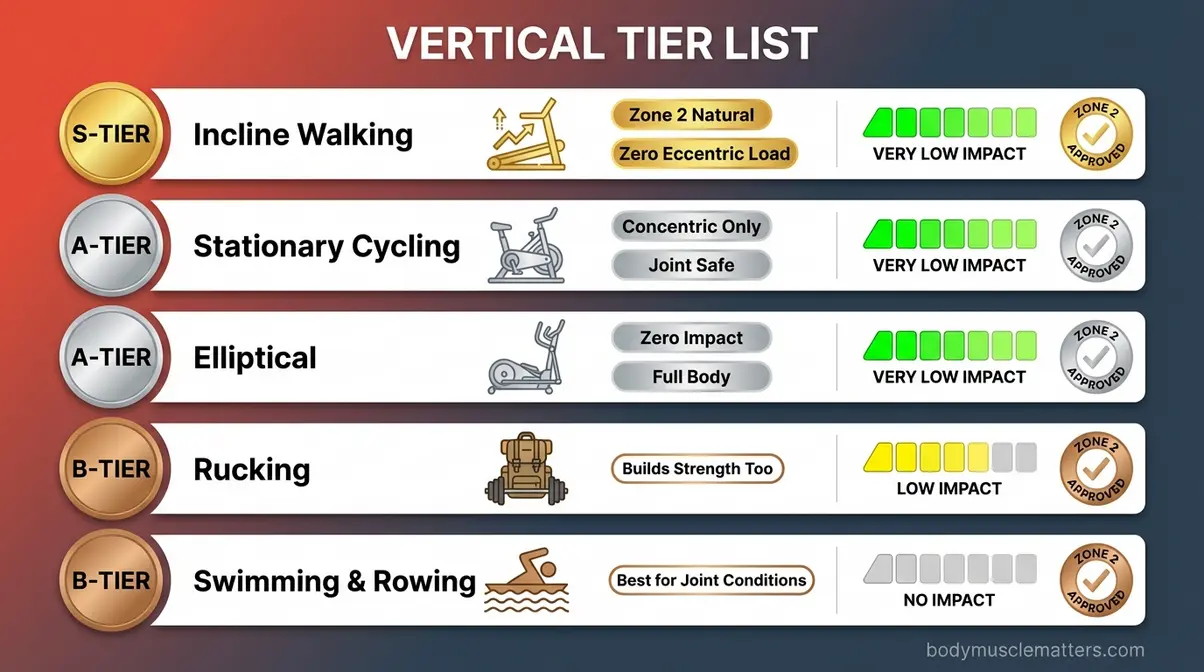
Caption: All five modalities ranked by impact level and Zone 2 compatibility — use this tier list to match your equipment access to your recovery needs.
The right cardio machine is step one. Step two — and the variable that makes or breaks your muscle preservation — is the schedule. Knowing what to do means little without knowing when to do it, how long to go, and how hard to push. That’s exactly what the Muscle Insurance Protocol covers next.
Cardio Scheduling: The 3-3-3 Rule
Estimated Time: 20-40 minutes per session
Tools/Materials Needed: Heart rate monitor, gym access or basic cardio equipment
Scheduling cardio correctly is the difference between protecting your muscle and losing it, regardless of which exercise you choose. The Muscle Insurance Protocol’s scheduling layer combines three rules: cardio timing relative to lifting, Zone 2 intensity management, and the 3-3-3 weekly split. Together, they minimize AMPK-driven interference while maximizing fat loss.
The most critical mistake gym-goers make is choosing the right exercise but programming it at the wrong time. Cardio at the wrong moment in your week is like building a wall then jackhammering it the same afternoon. This section is the operational core of the Muscle Insurance Protocol. The modalities from the previous section mean nothing without the timing, intensity, and structure covered here.
Step 1: Choose Cardio Timing
The before-vs.-after debate has a clear answer — with a better option that most articles miss entirely. Here’s the ranking, from best to avoid:
- Best option: Separate days entirely. Lifting on Monday means cardio on Tuesday. This approach allows full mTOR activation from your lifting session to occur before AMPK is elevated by cardio. Properly structuring workout programs by separating cardio and strength sessions — ideally to different days — has been shown to minimize the interference effect on muscle hypertrophy (PubMed Central, 2024). For beginners training 3 days per week, doing cardio on rest days is the simplest and safest approach available.
- Second best: Cardio after lifting on the same day. If your schedule demands both in one session, lift first — always. After a strength session, mTOR is already activated from the resistance stimulus. Adding 20–30 minutes of Zone 2 cardio post-lift creates far less molecular interference than the reverse order. Your muscle-building signal fires first; the cardio signal comes second.
- Avoid: Cardio before lifting. Pre-lifting cardio depletes glycogen (the primary fuel for your compound lifts), elevates AMPK before your mTOR window opens, and introduces neuromuscular fatigue that reduces lifting performance — compounding the interference effect rather than controlling it.
One important clarification: a low-intensity warm-up (5–10 minutes at 2.5 mph on the treadmill) before lifting is NOT cardio in this context. That’s warm-up. It doesn’t raise AMPK meaningfully and is perfectly appropriate before any lifting session.
Now you know when to schedule your cardio. Next — and this is the piece that most gym-goers skip entirely — is the heart rate zone you train in. Get this wrong and even perfectly timed cardio can still undermine your gains.
Step 2: Find Zone 2 Heart Rate
Zone 2 cardio — exercise performed at 60–70% of your maximum heart rate — is the intensity level where fat becomes your primary fuel source and interference with muscle building is minimized. At this zone, your body primarily runs on lipolysis (fat breakdown) rather than glycogen, AMPK activation is moderate and short-lived, and your recovery cost is low enough that your muscles can still adapt to the lifting stimulus you gave them.
Why Zone 2 specifically, and not Zone 3 or 4? Above Zone 2 (more than 70% of max heart rate), your body increasingly shifts from fat to glycogen as its primary fuel. That depletes the same energy reserves you need for lifting AND produces greater AMPK activation, compounding the interference effect. Below Zone 2 (less than 60% of max), you’re burning calories but not generating meaningful cardiovascular adaptation. Zone 2 is the precise sweet spot. Zone 2 cardio keeps heart rate at a low, steady intensity that maximizes fat burning and endurance without creating excessive fatigue that could hinder heavy lifting performance (Cleveland Clinic, 2024). The benefits of Zone 2 cardio for concurrent training are well-supported across exercise science literature.
How to calculate your personal Zone 2:
- Estimate your max heart rate: Subtract your age from 220 (the Karvonen approximation)
- Calculate your lower Zone 2 bound: Multiply your max heart rate by 0.60
- Calculate your upper Zone 2 bound: Multiply your max heart rate by 0.70
Worked example (for a 28-year-old): 220 − 28 = 192 bpm max heart rate. Zone 2 = 60–70% of 192 = 115–134 bpm.
Most LISS cardio, when performed correctly, lands naturally in Zone 2. If you don’t have a heart rate monitor, use the talk test: at Zone 2 intensity, you should be able to hold a full sentence of conversation, but you couldn’t comfortably sing. If you’re gasping between words, you’ve gone above Zone 2. If you could belt out a chorus without effort, push the intensity slightly.
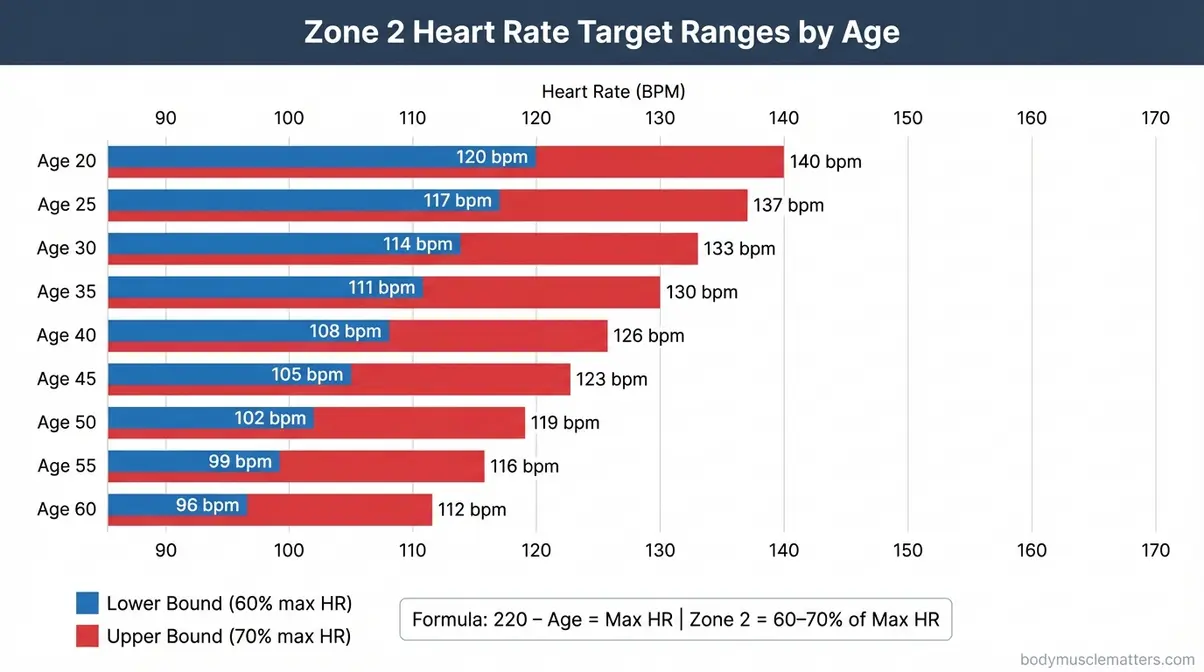
Caption: Find your personal Zone 2 range by age — the target window where fat oxidation is maximized and muscle interference is minimized.
Now you know the intensity target. The final piece of the programming puzzle is how to structure your full week — and the 3-3-3 Rule gives you the clearest possible framework for doing exactly that.
Step 3: Apply the 3-3-3 Rule
The 3-3-3 Rule — a weekly workout split designed to balance strength training, cardio, and recovery across a standard week — is the scheduling framework that makes the Muscle Insurance Protocol executable for real people with real schedules. It answers the question: “I know what to do and how hard to work — but how do I lay out my whole week?”
If you want to understand how to properly apply the 3-3-3 rule to your routine, the structure is straightforward:
- 3 days of resistance/strength training (your primary hypertrophy stimulus)
- 3 days of low-intensity Zone 2 cardio (your fat-burning, cardiovascular-health layer)
- 1 day of active recovery (light movement, mobility, or full rest)
The beauty of this framework is that it naturally creates separation between lifting and cardio sessions — building the “separate days” benefit discussed above directly into the structure. On lifting days, you lift. On cardio days, you do Zone 2 cardio. The two modalities rarely compete in the same session, which is precisely the point.
This framework also prevents the two most common scheduling errors: doing too much cardio (which inflates AMPK exposure) and doing cardio on every rest day without any recovery buffer. One true rest or active recovery day protects your connective tissue, your nervous system, and your motivation across the training week.
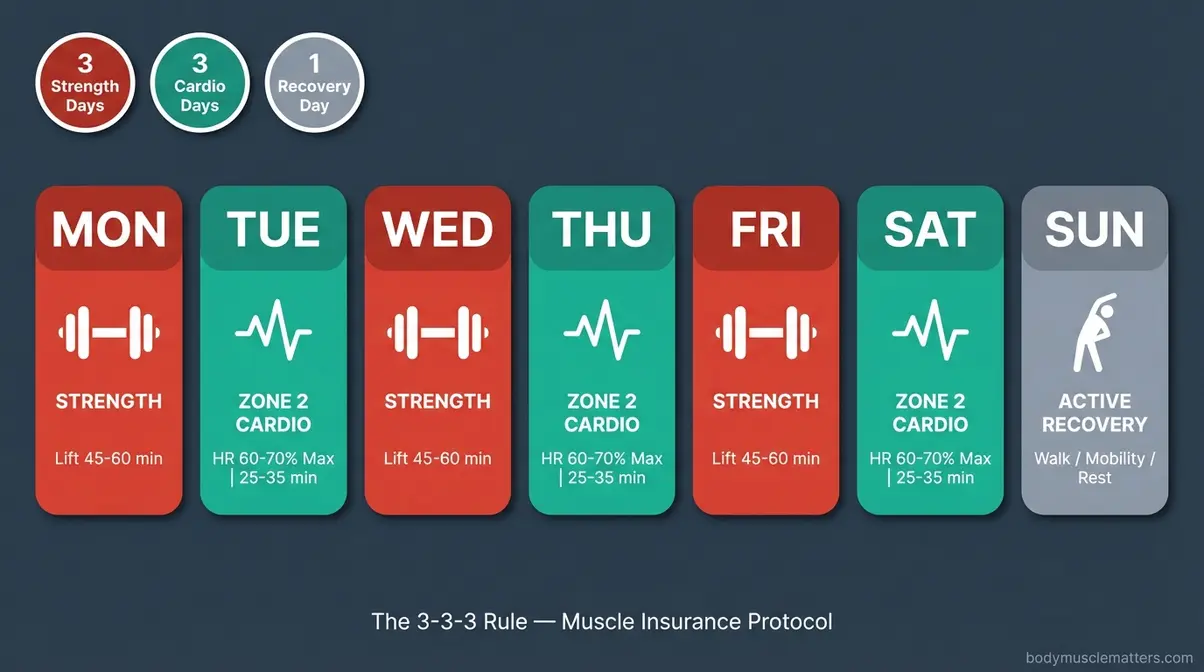
Caption: The 3-3-3 Rule weekly layout — use this checklist to plan your week before touching a machine.
Step 4: Execute Weekly Split
Here is a concrete, executable week built on the 3-3-3 Rule. This is not a template to modify — it’s a starting point to run for 4–6 weeks and assess. Adjust from here based on recovery.
Sample 7-Day Split:
| Day | Session Type | Exercise | Duration / Notes |
|---|---|---|---|
| Monday | Strength | Lower Body Lifting | 45–60 min — squats, deadlifts, leg press |
| Tuesday | Zone 2 Cardio | Incline Walking or Cycling | 25–35 min — HR at 60–70% max |
| Wednesday | Strength | Upper Body Lifting | 45–60 min — press, rows, pull-ups |
| Thursday | Zone 2 Cardio | Elliptical or Rucking (flat) | 25–35 min — HR at 60–70% max |
| Friday | Strength | Full Body or Weak Point Day | 45–60 min — compound + accessory |
| Saturday | Zone 2 Cardio | Your preferred modality | 30–40 min — conversational pace |
| Sunday | Active Recovery | Light walk, mobility, stretching | 20–30 min — no structured intensity |
Programming Notes: Getting Started
- Start conservative. In week 1, cap cardio at 20–25 minutes. Add 5 minutes every 1–2 weeks until you hit your target duration.
- Never go above Zone 2 on cardio days. If your heart rate climbs above 70% of max, slow down or reduce the incline — protect the protocol.
Programming Notes: Recovery & Progression
- Eat enough protein on cardio days. Cardio days in a deficit are the highest-risk window for catabolism. Target 0.7–1.0g of protein per pound of bodyweight every day, including rest and cardio days.
- Monitor recovery. If lower body lifting performance drops over 2–3 weeks, reduce cardio frequency from 3 to 2 days and reassess.
- Advance only when ready. Increase aerobic training load only when your current load feels genuinely manageable — not when you think you should be doing more.
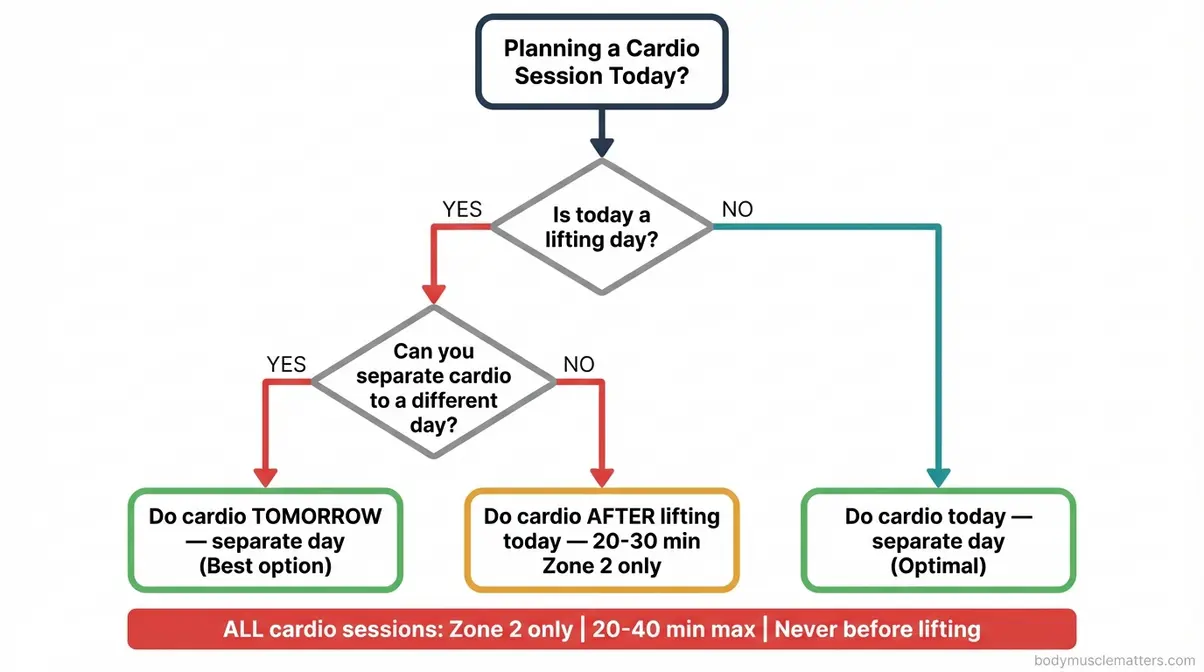
Caption: Use this flowchart to map any weekly schedule variation back to the Muscle Insurance Protocol’s core timing rules.
Properly understanding the science behind cardio programming provides additional context for this split design.
Managing Cortisol & GLP-1 Medications
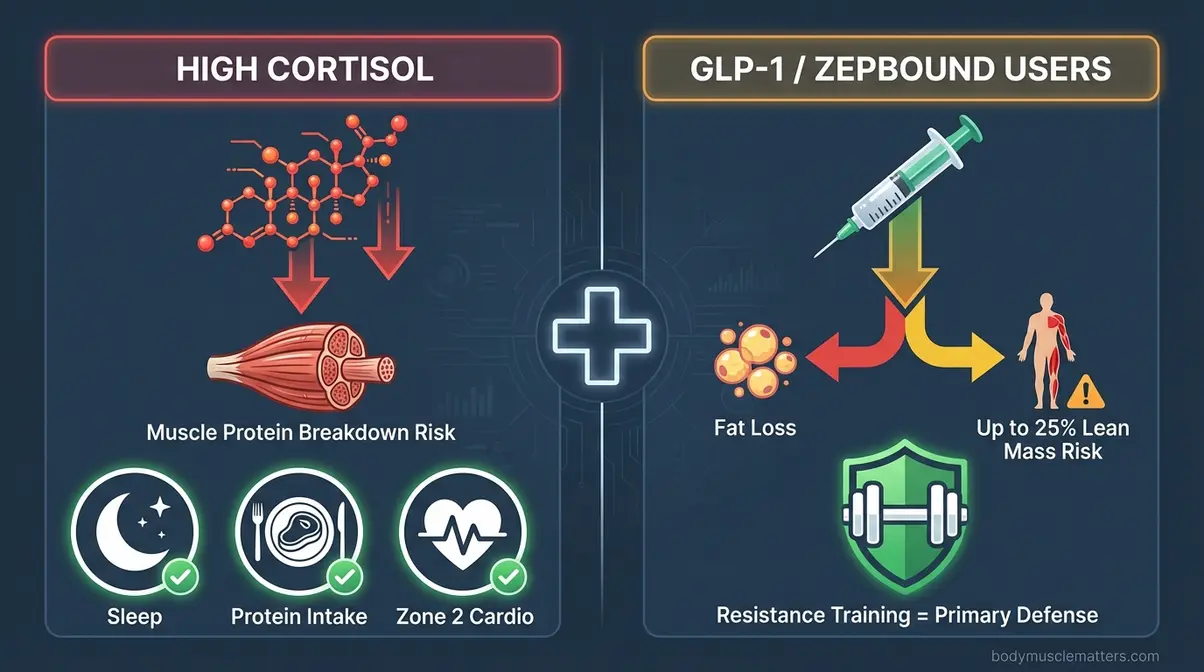
This section covers two emerging topics that no competitor article has addressed together: the role of chronic cortisol elevation in muscle loss, and what gym-goers on GLP-1 medications like Zepbound should specifically be doing. Both are clinical health topics — the guidance below is educational, not prescriptive.
⚠️ Medical Disclaimer: The information in this section is for educational purposes only and does not constitute medical advice. The discussion of cortisol physiology and GLP-1 medications (including Zepbound/tirzepatide) involves clinical health topics. Consult your physician or a qualified healthcare provider before making any changes to your training or medication routine based on this content. Individual results vary. If you are currently prescribed a GLP-1 medication, notify your doctor before significantly adjusting your exercise intensity or volume.
Can You Build Muscle With High Cortisol?
Chronically elevated cortisol directly reduces your capacity to build and maintain muscle — but the relationship is more nuanced than “cortisol bad, avoid exercise.” Cortisol is a catabolic hormone: when levels remain elevated over days or weeks, it redirects amino acids away from muscle repair and toward energy production. Research provides evidence for the association of cortisol with reduced grip strength, whole-body lean mass, and appendicular lean mass — noting that each standard deviation increase in chronically elevated cortisol correlated with measurable losses in muscle mass and strength (PubMed, 2022).
Here’s the important nuance: exercise-induced cortisol spikes are normal and necessary. Your cortisol rises during a workout, peaks 0–20 minutes post-session, and returns to baseline within 41–60 minutes for most people in a healthy hormonal state (PMC, 2022). That acute spike is part of the adaptation process. The problem is chronic elevation from lifestyle stress, inadequate sleep, extreme caloric restriction, or excessive training volume — that sustained cortisol environment is what suppresses protein synthesis and accelerates muscle breakdown.
For gym-goers managing high cortisol: Zone 2 cardio is actually part of the solution, not the problem. Regular moderate exercise over time lowers baseline cortisol levels (Stanford Lifestyle Medicine, 2025). The cardio mistake that amplifies cortisol — running at high intensity for 60+ minutes, especially in a caloric deficit — is precisely the pattern the Muscle Insurance Protocol is designed to avoid. Keeping sessions in Zone 2, limiting duration to 20–40 minutes, and prioritizing sleep and protein intake are the evidence-based tools for learning how to build muscle and manage high cortisol.
Muscle Building on GLP-1 & Zepbound
GLP-1 medications like Zepbound (tirzepatide) are highly effective for fat loss — but they do not differentiate between fat and lean muscle mass during weight reduction. Research indicates that up to 25% of weight lost during GLP-1 treatment may come from lean body mass, including muscle tissue (Prevention Clinics, 2025). For anyone currently on Zepbound or a similar medication, this statistic is the single most important reason resistance training is non-negotiable, not optional.
The emerging research on this topic is clear and recent. A 2025 analysis of GLP-1 agonists found that while these medications cause lean mass loss as part of overall weight reduction, they appear to preserve skeletal muscle quality — reducing fatty infiltration and enhancing fiber characteristics — when combined with appropriate resistance training (PubMed Central, 2025). Patients who engage in regular exercise at initiation and throughout GLP-1 treatment have the best outcomes for preserving lean body mass (Massachusetts General Hospital, 2025).
- For Zepbound users specifically:
- Resistance training 3–4 times per week is the primary protective intervention — not cardio
- Cardio on GLP-1 medications should remain in Zone 2 and at moderate duration (20–30 min) — high-intensity cardio in an already-significant caloric deficit increases catabolism risk
- Protein intake should be prioritized aggressively: 0.8–1.2g per pound of lean body mass daily
- Notify your physician before significantly adjusting training intensity or volume while on the medication
“GLP-1 medications have transformed the treatment of obesity, but they can also increase the risk of muscle loss” — a finding that makes concurrent resistance training and strategic cardio programming more important, not less, for anyone on these medications (Powers Health, 2025). This is an area where the Muscle Insurance Protocol has direct clinical relevance.
Cardio Mistakes That Stall Gains
5 Biggest Cardio Mistakes
Choosing the right cardio modality is step one. Avoiding these five execution errors is what separates gym-goers who preserve muscle from those who wonder where their gains went.
Mistake 1: Doing too much, too soon. Adding 5 hours of cardio per week when you were doing zero is a systemic shock. Your AMPK exposure spikes, cortisol climbs, and recovery capacity gets overwhelmed before your training base can absorb the new stimulus. Start with 2 days, 20 minutes each. Add volume only after 2–3 weeks of consistent adaptation.
Mistake 2: Choosing running as the default cardio. Running creates significant eccentric loading — especially downhill or at pace — on the quads, hamstrings, and calves. That damage competes directly with the recovery demands of your lifting. For muscle preservation, running is the highest-interference modality on this list. The five exercises in this guide exist specifically because they don’t create that problem.
Mistake 3: Training above Zone 2. This is the most common error our fitness team sees referenced across concurrent training research. Once your heart rate climbs past 70% of max, you shift toward glycogen dependence, AMPK activation increases sharply, and the fat-burning, muscle-sparing benefits of Zone 2 disappear. Invest in a basic heart rate monitor — even a budget wristband — and use it for every cardio session.
Mistake 4: Skipping protein on cardio days. Cardio in a caloric deficit without adequate protein is the fastest way to accelerate muscle catabolism. Cardio days are not low-protein days. If anything, hitting your protein target matters more on days when you’re in a larger caloric deficit from the added energy expenditure.
Mistake 5: Never progressing (or progressing too fast). The 3-3-3 Rule is a starting framework, not a permanent ceiling. Once your body adapts to three Zone 2 sessions per week, you can begin extending session duration — but only when your current load feels genuinely manageable. Stalling at the same stimulus indefinitely means plateauing results; jumping to higher intensity because you’re impatient means triggering the interference effect. Increase aerobic training load only when you need to.
When to Rethink Your Current Approach
The Muscle Insurance Protocol works for the vast majority of gym-goers — but there are specific scenarios where the standard framework needs adjustment or a different strategy altogether.
Consider adjusting if: Your lifting performance (top sets, working weights) has declined for 2+ consecutive weeks after adding cardio. This is a direct signal of insufficient recovery. Reduce cardio frequency by one session per week before adding anything else.
Consider a different approach if: You are training for a specific endurance event (half-marathon, cycling race). At that training volume, concurrent training interference becomes significant and the Muscle Insurance Protocol’s Zone 2 parameters won’t provide sufficient aerobic development. Consult a coach who specializes in hybrid training.
Seek qualified guidance if: You are managing a chronic condition (metabolic syndrome, cardiovascular disease, or hormonal disorder), are post-surgical, or are on multiple prescription medications that affect heart rate response. The heart rate formulas and intensity guidelines in this guide are designed for healthy adults and require individualization in clinical contexts.
Frequently Asked Questions
Best Muscle-Sparing Cardio?
Incline treadmill walking is the single best cardio exercise for muscle preservation for most gym-goers. It naturally keeps heart rate in Zone 2 (60–70% of max), primarily engages slow-twitch muscle fibers while leaving fast-twitch fibers untouched, and promotes lipolysis — fat oxidation — rather than glycogen depletion. Stationary cycling is an equally effective alternative, particularly for lifters with knee or hip sensitivity. Both modalities produce negligible interference with muscle protein synthesis when kept to 20–40 minutes at appropriate intensity (PubMed Central, 2022).
What is the 3-3-3 rule at the gym?
The 3-3-3 Rule is a weekly workout framework: 3 days of resistance training, 3 days of low-intensity Zone 2 cardio, and 1 day of active recovery. It’s designed to balance hypertrophy stimulus, fat burning, and nervous system recovery across a 7-day cycle. The structure creates natural separation between lifting and cardio sessions, minimizing the AMPK-driven interference that competes with mTOR-driven muscle building. For most beginners-to-intermediates, this split offers the clearest path to concurrent fat loss and muscle preservation without overcomplication.
Can I build muscle while on Zepbound?
Yes — but resistance training must be a non-negotiable part of your routine while on Zepbound. Research indicates that up to 25% of weight lost during GLP-1 treatment may come from lean body mass, including muscle tissue. Patients who engage in regular resistance training 3–4 times per week at treatment initiation and throughout preserve significantly more lean mass than those who rely on medication alone (Massachusetts General Hospital, 2025). Keep cardio in Zone 2, prioritize protein at 0.8–1.2g per pound of lean body mass daily, and consult your physician about adjusting training intensity as your medication dose changes.
Can you build muscle with high cortisol?
Muscle growth is significantly impaired by chronically elevated cortisol, but acute exercise-induced cortisol spikes are normal and necessary. The distinction matters: cortisol peaks 0–20 minutes post-workout and returns to baseline within an hour for healthy individuals — that’s adaptive. Chronic elevation from sleep deprivation, extreme caloric restriction, or overtraining is the real threat. Evidence associates chronic cortisol elevation with reduced lean mass and grip strength (PubMed, 2022). Zone 2 cardio, adequate sleep, and sufficient protein intake are the three most evidence-supported levers for managing cortisol in a training context.
Stop Cardio From Killing Gains?
The answer is the Muscle Insurance Protocol: choose a low-impact modality (incline walking, cycling, or elliptical), train in Zone 2 (60–70% max heart rate), and schedule cardio on separate days from lifting or after your lifting session. Avoid high-intensity running, keep sessions to 20–40 minutes, and never skip protein on cardio days. A 2022 meta-analysis confirms that the interference effect is dose- and intensity-dependent — not inevitable (PubMed Central, 2022). Poorly dosed cardio costs muscle; strategically dosed cardio preserves it while accelerating fat loss.
Will 2 weeks off ruin my gains?
Two weeks away from training will produce some measurable muscle atrophy — roughly 2–3% at the trained site — but it is not catastrophic and is largely reversible. Research on detraining confirms that muscle protein synthesis drops in the first 1–2 weeks of cessation, with measurable but modest reductions in muscle thickness (PubMed Central, 2024). The critical counterpoint: muscle memory allows previously trained individuals to regain lost muscle significantly faster than it was originally built. A 2-week break from illness, travel, or planned rest is an interruption in a longer arc — not a reset to zero. Return consistently, keep protein intake up during the off-period, and recovery will be faster than you expect.
Conclusion
For gym-goers committed to preserving muscle mass while burning fat, the evidence is clear: low-impact Zone 2 cardio — incline walking, stationary cycling, and the elliptical — produces meaningful fat loss with negligible interference to muscle protein synthesis when kept to 20–40 minutes. A 2022 concurrent training meta-analysis confirms that the interference effect is dose- and intensity-dependent, not an inevitable consequence of cardio itself (PubMed Central, 2022). The best cardio for preserving muscle mass is strategic, not sacrificial.
The Muscle Insurance Protocol — systematic combination of low-impact cardio selection, Zone 2 heart-rate management, and the 3-3-3 scheduling rule — is the reframe that transforms cardio from a threat into a tool. Every anxious gym-goer who has avoided cardio out of fear of losing their gains has been missing this: muscle preservation isn’t a passive hope. It’s an active, learnable system with specific parameters for modality, intensity, and timing. When all three pillars work together, your body burns fat and protects muscle simultaneously.
Your next step is concrete: this week, replace one rest day with a 25-minute Zone 2 incline walk at 12% grade, 3.2 mph. Monitor your heart rate. Track your lifting performance over the following two weeks. If your strength holds — and it will — you’ve just proved to yourself that cardio and gains are not enemies. Add a second session in week three. Build the full 3-3-3 structure by week six. The protocol is waiting — your gains are insured.
Frequently Asked Questions (Additional Context)
See full FAQ section above for all six PAA-optimized answers.
Related posts:
StrongLifts 5x5 for Beginners: Complete Guide 2026
How to Get a Bigger Bum Without Exercise: 3-Tier Guide
What Muscles Does the StairMaster Work? 6 Groups
Olympic Weightlifting vs Powerlifting: 2026 Guide
What Kills Muscle Gains? 7 Proven Saboteurs to Fix Now
Best Strength Training Apps for Women: Top 7 Picks

Callum
Hi, I'm Callum, the founder of Body Muscle Matters. I'm not a certified trainer, I'm a self taught lifter who started this site to share what I've learned from my own training and a lot of trial and error. Everything here comes from real experience and honest research, written the way I'd explain it to a friend who is just getting started. My goal is simple: practical, no hype fitness advice you can actually use.