⚠️ Medical Disclaimer: This article is for informational purposes only and does not constitute medical advice. Muscle scraping involves applying targeted pressure to soft tissue and carries real risks if performed incorrectly or on contraindicated conditions. Always consult a licensed physical therapist, chiropractor, or physician before starting any new therapy — especially if you have underlying health conditions.
” badge near the H1 before publication.]
If you’ve ever watched a physical therapist drag a stainless-steel tool across someone’s skin and winced in sympathy — you’re not alone. That treatment is called muscle scraping, and despite looking uncomfortable, it’s one of the most researched soft-tissue therapies in modern sports medicine.
The problem is that most articles about what is muscle scraping either bury you in academic jargon or skip the safety details entirely. Without the right information, you risk choosing a therapy that isn’t right for your condition — or missing a contraindication that could make things worse.
This guide covers everything: what muscle scraping is, how it actually works, how it compares to massage and cupping, and how to determine whether it’s safe for you.
📋 New to muscle therapy? This guide assumes zero prior knowledge — every technical term is explained in plain language the first time it appears. No experience required.
If you are wondering exactly what is muscle scraping, clinically called Instrument-Assisted Soft Tissue Mobilization (IASTM), it is a therapy that uses beveled tools to stimulate healing in soft tissue. Research suggests it reduces pain through neurological and circulatory mechanisms, not by physically breaking tissue.
- It has a clinical name: IASTM evolved from ancient Gua Sha and includes standardized protocols like the Graston Technique®
- “The Mechanical Myth” is wrong: Scraping doesn’t chisel away scar tissue — it triggers neurological pain-gating and cellular repair pathways
- It is legitimate but not for everyone: Studies show moderate certainty for pain reduction; strict contraindications apply (DVT, open wounds, clotting disorders)
- A typical session lasts 15–20 minutes per treated area under a licensed practitioner
What Is Muscle Scraping? The Clear Answer
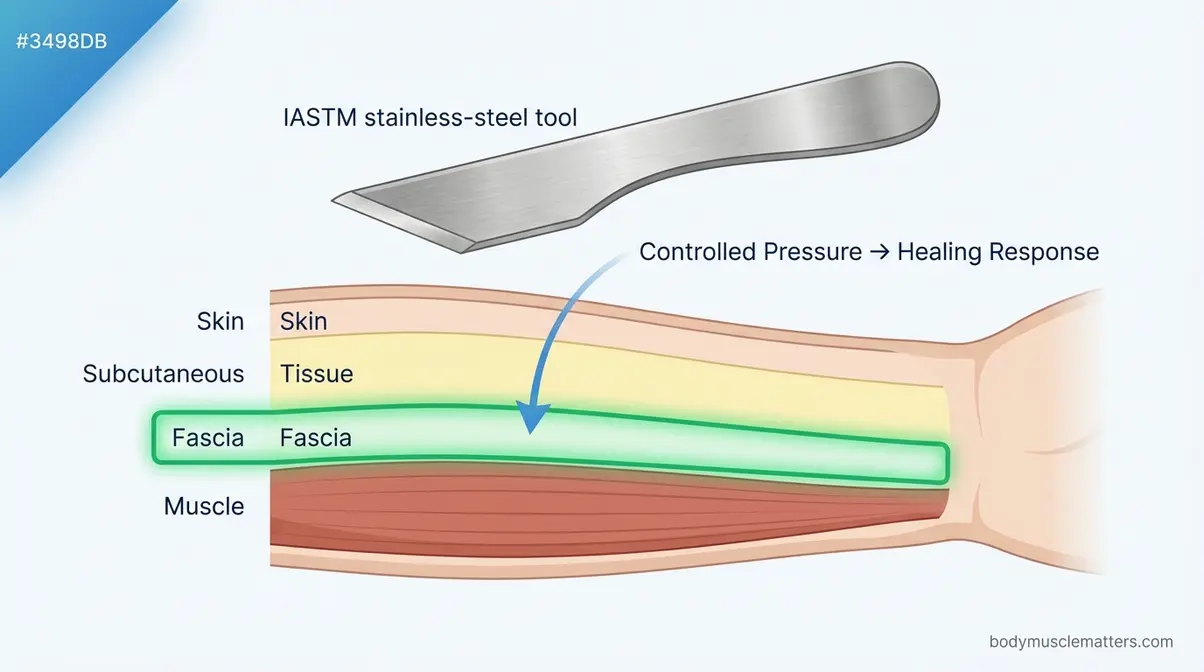
Muscle scraping — clinically known as Instrument-Assisted Soft Tissue Mobilization (IASTM) — uses rigid, beveled tools to detect and address restrictions in the body’s fascial network. The fascia (pronounced “FASH-ee-uh”) is your body’s connective tissue network, which wraps around every muscle like a sheet of cellophane. When a practitioner glides a smooth-edged tool along your skin with controlled pressure, they’re communicating directly with that underlying tissue — stimulating the body’s own healing response. This is what makes muscle scraping therapy distinct from ordinary rubbing or kneading.
You may have heard that scraping physically “breaks up” scar tissue — in the next section, we’ll show why that popular explanation isn’t quite right.
The Clinical Name: What IASTM Means
Muscle scraping is most commonly called IASTM in a clinical setting. The acronym stands for Instrument-Assisted Soft Tissue Mobilization — and each word is meaningful. Instrument means a physical tool is used rather than bare hands. Assisted means the tool guides and amplifies the pressure the practitioner applies. Soft tissue refers to your muscles, tendons, and fascia — not bone. Mobilization means the goal is to restore movement and stimulate the body’s healing processes.
The tools themselves come in a variety of shapes. Most are made from stainless steel, though some use plastic or jade. Each tool has curved, beveled edges — a concave (inward-curving) edge for rounded areas like calves, a straight edge for flatter areas like forearms. Practitioners select the tool shape based on the body part being treated. There is no single “muscle scraping tool.” As traditional Gua Sha — the historical ancestor of modern IASTM — is utilized by healthcare practitioners to relieve pain, promote lymphatic drainage, and enhance localized blood flow (Cleveland Clinic).
If you hear your physical therapist say they’re going to do IASTM on your IT band, this is exactly what they mean.
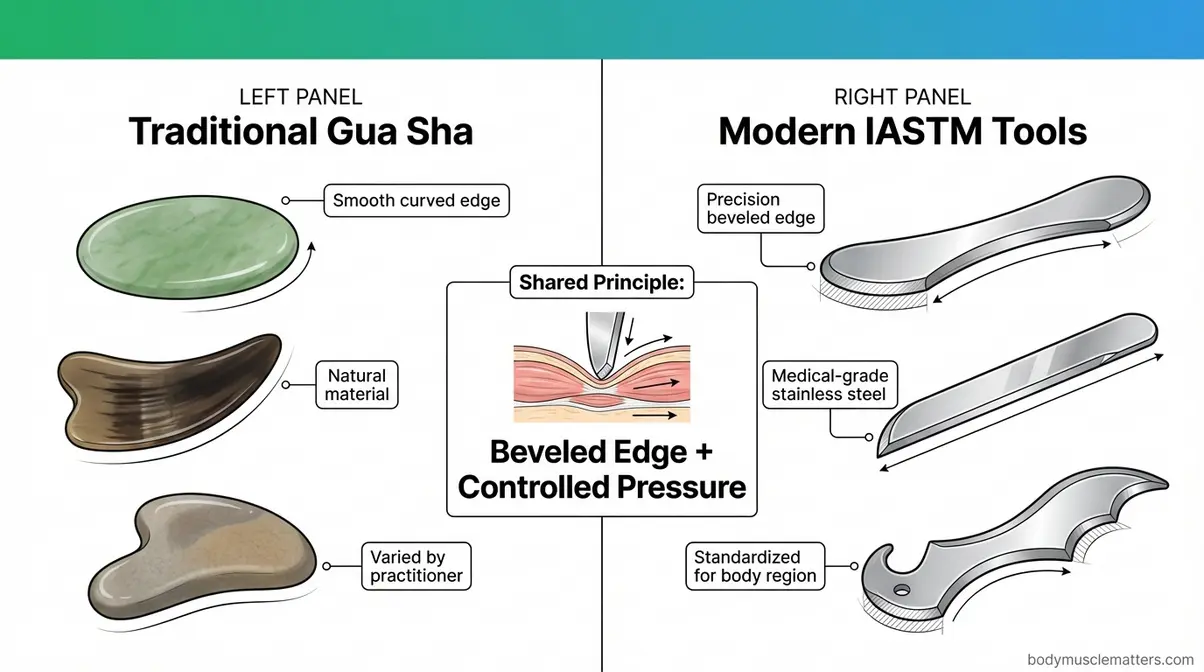
Caption: Modern IASTM stainless-steel tools (left) share the beveled-edge principle with traditional Gua Sha implements (right), though clinical tools are precision-engineered for specific body regions.
IASTM didn’t emerge from a lab — it evolved from a centuries-old practice with roots in traditional Chinese medicine.
From Gua Sha to the Graston Technique
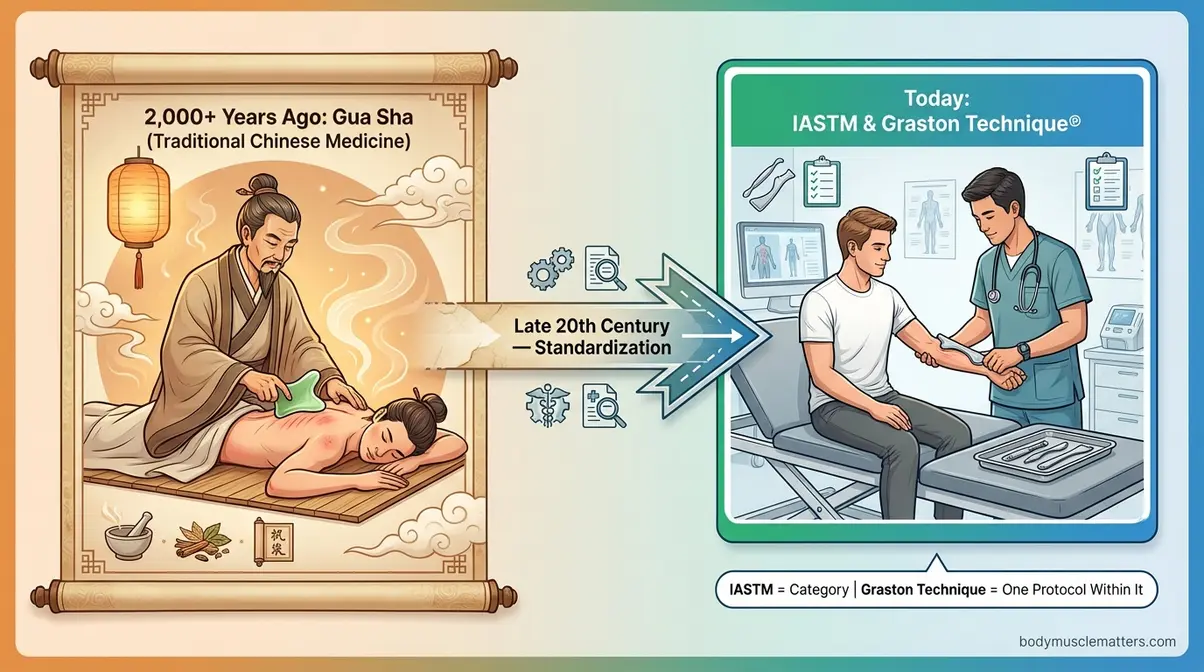
Gua Sha (pronounced “gwah-shah”) is an ancient Chinese healing practice involving scraping the skin with a smooth-edged tool to improve circulation and relieve pain. It has been practiced for over 2,000 years across East Asia, predating modern anatomy by centuries.
In the late 20th century, Western physical therapists adapted this principle. They combined the Gua Sha scraping motion with medical-grade steel tools and documented clinical protocols — and IASTM was born. The key difference is standardization: where traditional Gua Sha varied widely between practitioners, modern IASTM follows consistent force guidelines, angles, and session durations.
The Graston Technique® is one of the most widely recognized and patented forms of IASTM, developed in the 1990s and now used in thousands of clinics worldwide. It is important to be clear about the hierarchy: IASTM is the category; the Graston Technique is one specific protocol within it. Think of IASTM as the category (like “smartphone”), and the Graston Technique as one specific brand within it (like “iPhone”). No competitor article makes this distinction cleanly — most treat Graston and IASTM as synonyms, which they are not.
Today, muscle scraping is practiced by a range of licensed healthcare professionals — but not every practitioner is equally qualified.
Who Performs Muscle Scraping?
Muscle scraping therapy is performed by licensed physical therapists (PTs), chiropractors, certified athletic trainers (ATCs), and massage therapists who have completed specific IASTM training. Many of these practitioners hold additional credentials — for instance, Graston Technique certification requires coursework and supervised clinical practice beyond a standard PT license.
- Qualified practitioners typically include:
- Licensed Physical Therapists (PTs) — the most common setting for IASTM
- Chiropractors — often integrate IASTM with spinal and joint care
- Certified Athletic Trainers (ATCs) — common in sports performance environments
- Trained Massage Therapists — with specific IASTM or Graston certification
A traditional MD or family doctor does not typically perform IASTM directly — but may refer you to a qualified PT or chiropractor. If you’re new to scraping, ask your primary care doctor for a referral to a licensed physical therapist trained in IASTM techniques. At-home scraping tools are widely sold online, but unsupervised use carries meaningfully higher risk — especially if you have any underlying health conditions.
For a deeper look at the origins of instrument-assisted soft tissue mobilization, explore the foundational mechanics of muscle scraping.
Now that you know what muscle scraping is and who performs it, let’s look at the question that trips everyone up: does it actually work, and if so, how?
How Muscle Scraping Works: The Science Explained
A 2007 pilot study published on PubMed found that Gua Sha-style scraping causes a fourfold increase in microcirculation at the treated area, with significant elevation lasting over 25 minutes — and that circulatory surge is closely linked to reductions in muscle pain (Nielsen et al., 2007). That single finding upends the way most people picture muscle scraping. It isn’t a mechanical tool grinding away hardened tissue. Something more interesting — and more biological — is happening.
How the Tool Interacts with Your Fascia
When a beveled tool glides across your skin, it exerts pressure through several layers: skin, subcutaneous fat, and then the fascia — that cellophane-like connective tissue network introduced earlier. In healthy tissue, fascia slides freely between muscle layers. But after injury, overuse, or prolonged inactivity, the fascia layers can develop adhesions — areas where fascia layers have stuck together, restricting movement, like pages in a book glued shut. These adhesions are frequently the culprits behind muscle knots that crunch when massaged.
The tool’s controlled pressure stimulates mechanoreceptors (pressure-sensitive nerve endings) in the fascia and muscle. This sends a cascade of signals through your nervous system and into your cells. The controlled microtrauma from the tool also triggers a local healing response: increased blood flow, fibroblast activity (the cells that repair connective tissue), and the release of anti-inflammatory compounds. Research confirms that IASTM enhances local microcirculation, increasing blood perfusion and nutrient delivery to the treated tissue (PMC, 2026).
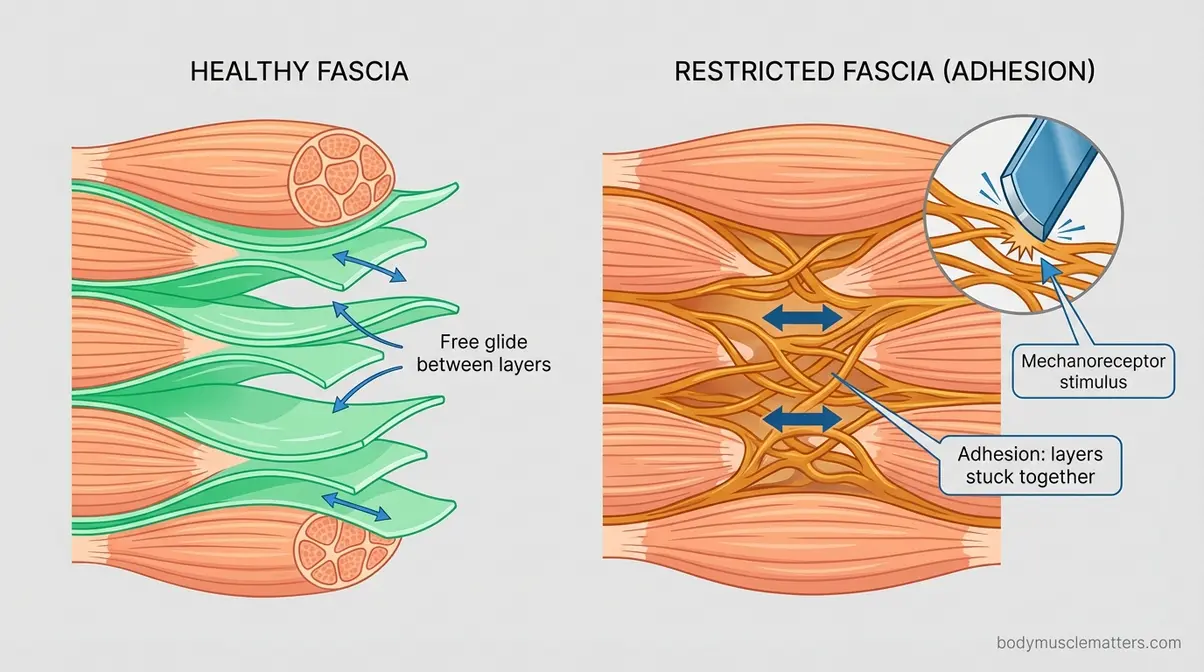
Caption: Fascial adhesions (right panel) restrict muscle glide and are a primary target of IASTM — the tool’s pressure stimulates mechanoreceptors that initiate the healing cascade.
Debunking “The Mechanical Myth”
Here is the most important correction in this entire guide: scraping does not physically chisel scar tissue off your muscles. This is “The Mechanical Myth” — the popular but scientifically inaccurate belief that the metal tool acts like a tiny chisel, physically breaking apart hardened deposits.
The tissue-level forces involved in IASTM (typically 7–8 Newtons of applied force) are nowhere near the mechanical threshold required to physically fracture fibrous scar tissue. What the tool actually does is deliver a controlled mechanical stimulus that triggers two distinct biological responses.
First, neurological pain-gating: the strong mechanical pressure signal from the tool essentially “crowds out” pain signals in your nervous system. Think of it like a traffic jam — when the tool’s signal floods the pain pathway, your brain receives less pain information from that area. This is why scraping can feel surprisingly relieving even during the session.
Second, cellular repair signaling: the mechanical stimulus activates molecular repair pathways inside your cells. AMPK and mTOR — two molecular switches inside your cells that control repair and regeneration — are activated by mechanical pressure. Think of AMPK as the alarm that tells your body “there’s repair work to do here,” and mTOR as the foreman that dispatches the repair crew (muscle satellite cells, which rebuild tissue). The result is a controlled, targeted healing response rather than passive physical manipulation.
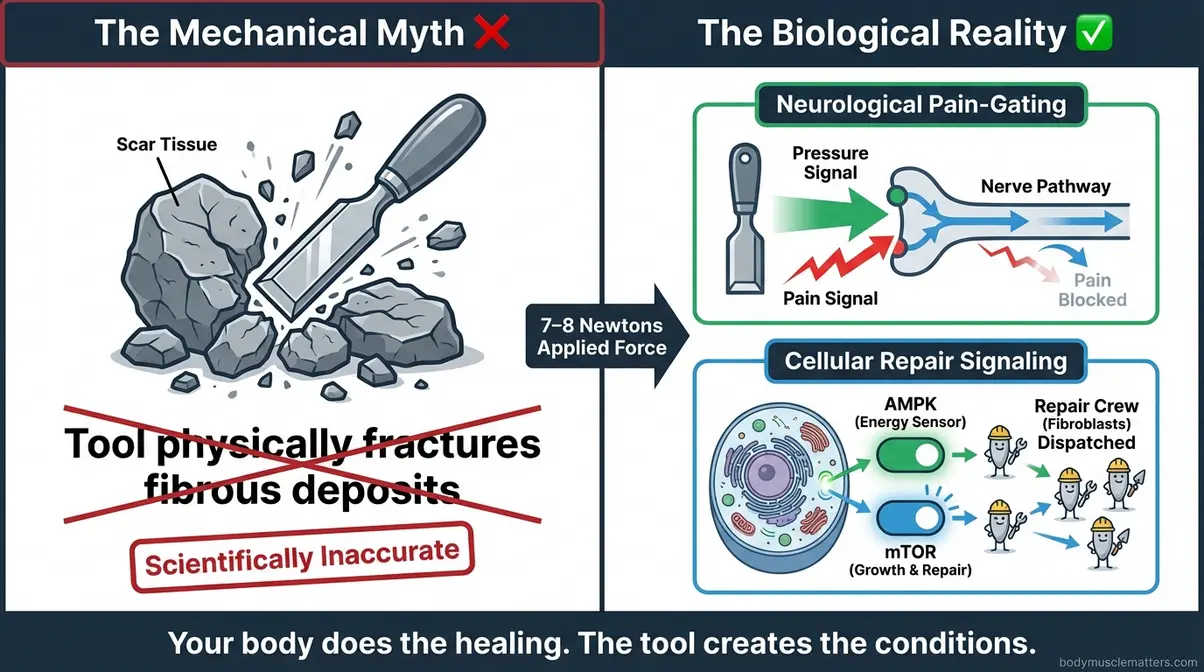
Caption: “The Mechanical Myth” versus the actual science — muscle scraping works through neurological and cellular signaling, not physical tissue chiseling.
What the Research Actually Shows
“Muscle scraping works to address tension, tight spots, and knots in the soft tissues — like muscles, fascia, and tendons — through targeted pressure.”
That description mirrors what peer-reviewed research confirms. A 2026 systematic review published in PMC evaluated IASTM’s effectiveness on pain and physical function across multiple patient populations. The review found that IASTM significantly reduced patient-reported pain (standardized mean difference of –0.71 overall, with the strongest gains in neuropathic pain subgroups, SMD = 1.13) — meaning real, measurable pain reduction, not just placebo effect (PMC, 2026). According to Touro University research, specialized methods like the Graston Technique can safely reduce pain and increase flexibility when appropriately practiced. Combining IASTM with exercise therapy for chronic neck pain patients not only significantly reduced pain but also improved muscle endurance (PMC, 2026).
So why does muscle scraping feel good? The neurological answer is more satisfying than the mechanical one. The pressure signal temporarily gates — or blocks — pain transmission along the same nerve pathways carrying your discomfort. This creates near-immediate relief that isn’t your tissue being rearranged; it’s your nervous system being recalibrated.
For athletic recovery specifically, the microcirculation increase means more oxygen and nutrients reach fatigued muscle fibers faster. Research suggests this may accelerate the clearance of metabolic waste products (like lactic acid) that accumulate after intense exercise (PMC, 2026) — which is why the technique has become common in sports medicine and professional athletic training rooms.
Muscle Scraping vs. Massage vs. Cupping
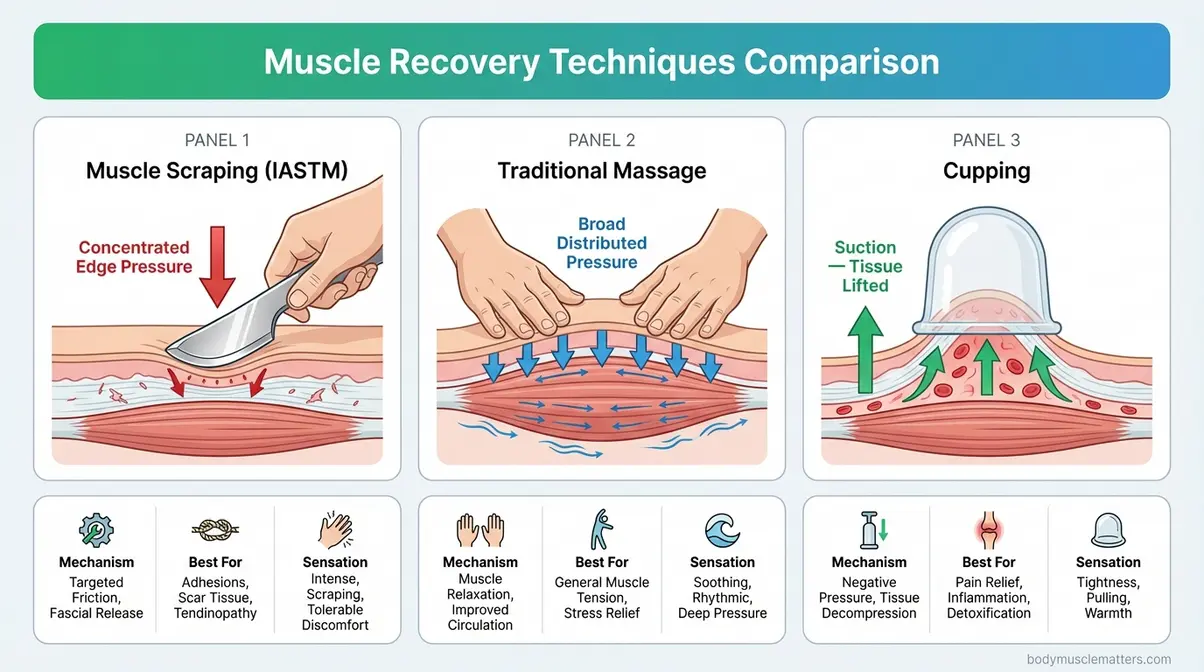
All three therapies target soft tissue pain and tightness — but they use different mechanisms, suit different conditions, and produce different sensations. Understanding the distinctions helps you and your provider choose the right tool for your specific situation.
Muscle Scraping vs. Traditional Massage
When asking what is muscle scraping compared to other therapies, it’s helpful to understand the tool differences. Both scraping and massage manipulate soft tissue. The key difference is the tool and the depth of stimulus. Traditional massage uses hands, fingers, and forearms — applying broad, distributed pressure that promotes relaxation, improves circulation, and reduces surface-level tension. It’s excellent for general soreness, stress, and lymphatic movement.
Muscle scraping uses a rigid tool that concentrates pressure into a precise edge. This targeted contact allows the practitioner to detect textural changes in fascia (the “grittiness” they sometimes describe feeling through the tool) and apply stimulus to a very specific area. For localized adhesions, chronic tendinopathy (tendon overuse injury), or post-surgical scar tissue, research indicates IASTM may produce more targeted effects than broad-hand massage alone (PMC, 2026).
Neither therapy is universally superior. For general relaxation, wide-area muscle soreness, or learning how to massage calf muscles after exercise, manual massage is often the more comfortable and accessible choice. For a stubborn plantar fasciitis nodule or a specific IT band restriction, IASTM’s precision becomes an advantage. Many practitioners use both within a single treatment session.
| Feature | Muscle Scraping (IASTM) | Traditional Massage |
|---|---|---|
| Tool | Rigid beveled instrument | Hands, fingers, forearms |
| Pressure type | Concentrated, edge-focused | Broad, distributed |
| Primary target | Fascial adhesions, tendinopathy | General tension, circulation |
| Sensation | Firm pressure, mild discomfort | Varied — relaxing to deep |
| Typical provider | PT, chiropractor, ATC | Massage therapist, PT |
| Best for | Localized restrictions, sports injuries | General soreness, relaxation |
Scraping vs. Cupping: What Research Says
Cupping therapy uses suction — typically silicone or glass cups — to pull tissue upward rather than compress it downward. Where scraping pushes into tissue, cupping lifts tissue away from the underlying structures. Both increase local blood flow; they simply do so through opposite mechanical directions.
A 2026 PMC review of cupping therapy found that cupping alone or combined with other therapies produced moderate pain-relieving benefits across multiple musculoskeletal conditions (PMC, 2026). However, direct head-to-head trials comparing IASTM and cupping specifically are limited. Current evidence suggests cupping may work faster for broad, deep muscle knots in large muscle groups (like the upper back or hamstrings), while IASTM appears better suited for precise, localized targets like tendon insertions or scar tissue at a surgical site.
For most beginners, the practical question is access and comfort. Cupping leaves circular bruise-like marks; IASTM can produce redness and petechiae (explained in the next section). Neither is universally better — both are tools in a competent practitioner’s kit, and many therapists use them together strategically.
Is Muscle Scraping Safe? What Sessions Are Like
IASTM has a strong safety profile when performed by a trained practitioner on appropriate candidates. A 2026 international expert consensus published in PMC established clear precautions and contraindications for IASTM — the first formal expert consensus of its kind — confirming that screening patients beforehand is foundational to safe treatment (PMC, 2026).
Does It Hurt? Pain and Petechiae
Muscle scraping is not painless. Most patients describe a firm pressure sensation — somewhere between a deep tissue massage and a mild burning feeling on the skin. Discomfort is generally proportional to the degree of fascial restriction in the treated area; tighter or more adhered tissue tends to feel more intense.
You should expect some redness and potentially petechiae (pronounced puh-TEE-kee-ay) — small reddish marks on the skin that look like light bruising. Petechiae occur because the tool’s pressure causes minor capillary bleeding just under the skin surface. They are a normal response and typically fade within a few days. They are not a sign of injury, and they do not require treatment.
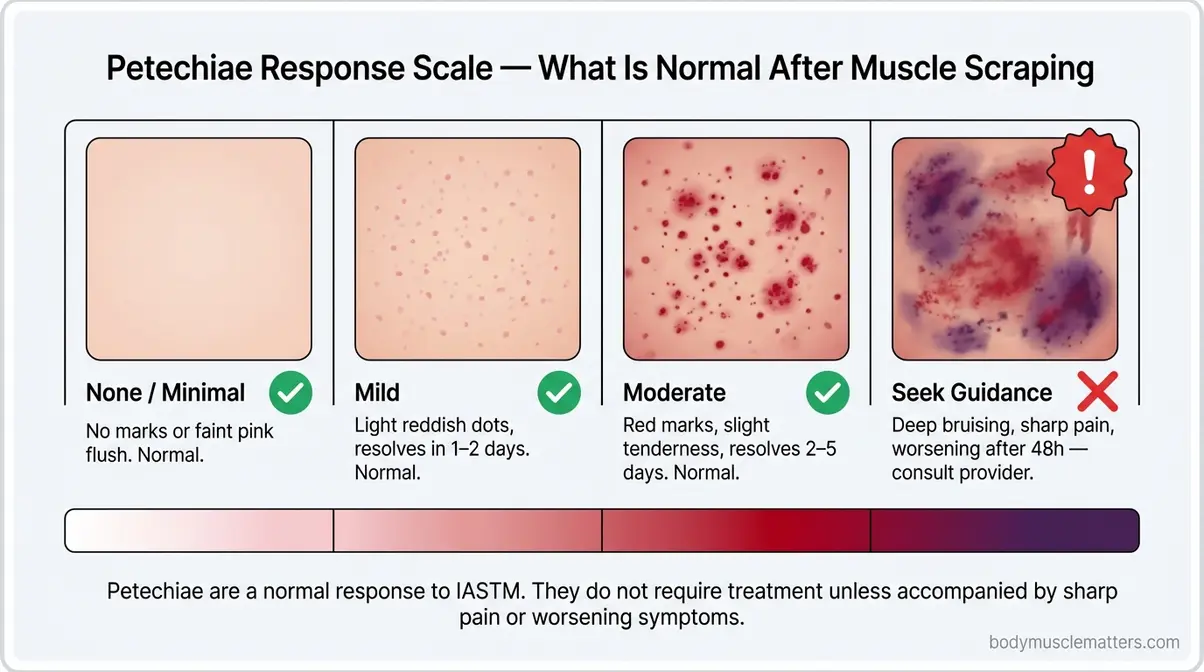
Caption: Mild-to-moderate petechiae (reddish skin marks) are a normal response to IASTM treatment and typically resolve within 2–5 days.
Pain that persists beyond 48 hours, sharp stabbing sensations during treatment, or bruising that worsens rather than fades — those are signals to stop and consult your provider. A skilled practitioner will always monitor your skin response and adjust force accordingly.
How Long Is a Muscle Scraping Session?
Clinical application of IASTM typically involves 3 to 5 minutes of active scraping per treated area, within a full session of 15 to 20 minutes that includes preparation, positioning, and aftercare (PMC, 2017). Your practitioner may treat one area or several in a single appointment, depending on your condition and tolerance.
Force parameters matter too. Research on IASTM technique protocols suggests an applied force of approximately 7 to 8 Newtons (roughly the pressure of a firm handshake) as a working range for most soft tissue applications — enough to stimulate mechanoreceptors without causing unnecessary trauma (PMC, 2019). Practitioners trained in Graston Technique certification courses learn these parameters explicitly.
Most patients receive IASTM as part of a broader treatment plan — combined with stretching, strengthening exercises, or other sore muscles recovery tips. A full course of treatment may range from 4 to 8 sessions, though this varies widely by condition.
Is Muscle Scraping Legit? The Evidence
Yes — with important qualifications. IASTM is not fringe pseudoscience. It is practiced in thousands of licensed clinical settings, taught in accredited PT and chiropractic programs, and supported by a growing body of peer-reviewed research. A 2026 systematic review found IASTM significantly reduced musculoskeletal pain across multiple patient populations with measurable effect sizes (PMC, 2026). A 2026 meta-analysis further confirmed that IASTM combined with exercise produces meaningful improvements in both pain and functional outcomes for chronic conditions including neck pain and tendinopathy (PMC, 2026).
That said, the research has limitations. Many studies have small sample sizes. Few trials use rigorous blinding. Effect sizes vary by condition and population. “Research suggests” is the accurate framing — not “proven cure.” The therapy works well for many people with specific musculoskeletal conditions; it is not a universal solution for all pain.
When to Avoid Muscle Scraping: Contraindications
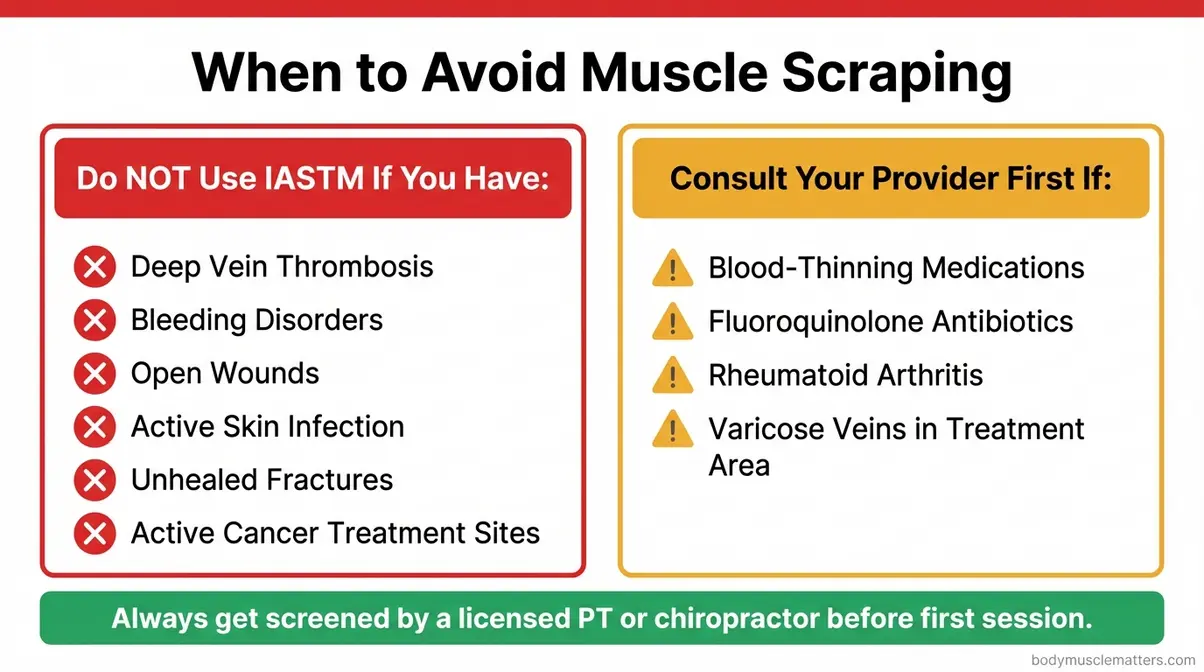
A 2026 international expert consensus (the first of its kind for IASTM) confirmed that screening for contraindications before treatment is not optional — it is foundational to patient safety. Clinical standards for IASTM emphasize careful screening for these risks (PMC, 2019). This section exists because no other beginner guide provides this information clearly.
Who Should Never Try Muscle Scraping
The following conditions are considered strong contraindications — meaning muscle scraping should not be performed at all:
- Deep vein thrombosis (DVT) — a blood clot in a deep vein; pressure could dislodge the clot
- Bleeding or clotting disorders (e.g., hemophilia) — increased bruising risk and uncontrolled microtrauma
- Open wounds, skin scrapes, or blisters — direct application over broken skin risks infection
- Active skin infections or acute inflammatory skin conditions — applying pressure worsens inflammation
- Unhealed bone fractures — risk of displacement or pain amplification
- Active cancer treatment sites — direct pressure over radiation therapy areas or active tumor sites is contraindicated
- Metal allergy — relevant if stainless steel tools are used without a protective layer
- Thrombophlebitis (inflammation of a vein with clot) or osteomyelitis (bone infection)
Use caution — and always consult your provider — if you are taking blood-thinning medications, fluoroquinolone antibiotics, or hormone replacement therapy, as these can affect tissue fragility and healing response. Rheumatoid arthritis and psoriatic arthritis also require specific precautions (PMC, 2026). Furthermore, a PubMed meta-analysis notes that while IASTM reduces pain, it does not reliably lead to clinically meaningful improvements in physical function on its own without comprehensive rehabilitation.
When You Need a Professional Instead
At-home muscle scraping kits are inexpensive and heavily marketed. For many people with no contraindications and minor post-workout soreness, gentle self-application may be appropriate after professional guidance. However, several situations require a licensed practitioner — not a YouTube tutorial:
- Chronic or undiagnosed pain — A professional can determine whether IASTM is even the right therapy for your specific condition.
- Post-surgical recovery — Scar tissue management after surgery requires precise technique and timing. Incorrect application can disrupt healing.
- Neurological symptoms — If you experience numbness, tingling, or radiating pain (signs of nerve involvement), scraping the area without proper diagnosis risks worsening the underlying cause.
- Conditions near varicose veins — Direct pressure over varicose veins is contraindicated.
The honest assessment: IASTM is a legitimate, evidence-backed therapy — and it is also a technique that requires clinical judgment to apply safely. For your first experience, start with a licensed physical therapist who can screen you properly, demonstrate correct technique, and teach you what a normal response looks and feels like. That foundation protects you when you decide whether to continue professionally or explore supervised self-care.
Frequently Asked Questions
Is muscle scraping painful?
Muscle scraping typically causes a firm pressure sensation — not sharp pain. Most patients describe it as similar to deep tissue massage: uncomfortable in the moment, but manageable. Intensity varies by area; tighter or more restricted tissue tends to feel more intense. Redness and petechiae (small reddish skin marks) are normal and fade within a few days. If you experience sharp, stabbing pain during a session, tell your practitioner immediately — that’s a signal to stop or adjust technique.
Is muscle scraping legit?
Yes — muscle scraping (IASTM) is a legitimate, evidence-backed therapy used in licensed clinical settings worldwide. A 2026 PMC systematic review found IASTM significantly reduces musculoskeletal pain with measurable effect sizes across multiple conditions (PMC, 2026). It is taught in accredited physical therapy programs and used by licensed PTs, chiropractors, and athletic trainers. It is not a cure-all, and research quality varies — but calling it pseudoscience is inaccurate. “Research suggests meaningful benefit” is the honest, precise framing.
How Long Is a Muscle Scraping Session?
A typical IASTM session involves 3 to 5 minutes of active scraping per treated area, within an overall appointment of 15 to 20 minutes (PMC, 2017). Your practitioner may treat one region or several within that window. Sessions that exceed 5 minutes per area without clinical justification risk over-treating the tissue. At-home sessions should follow the same conservative limits. Most treatment plans span 4 to 8 sessions total, depending on your condition, though your provider will tailor this to your response.
Does muscle scraping get rid of knots?
Muscle scraping can help reduce muscle knots — but not by physically breaking them apart. The tool stimulates mechanoreceptors in the fascia, triggering neurological pain-gating (temporarily reducing pain signal transmission) and increasing local microcirculation by up to fourfold, which promotes tissue healing (Nielsen et al., 2007). This means the knot’s perceived tightness may decrease as the nervous system calms and blood flow improves. For persistent or deep knots, IASTM combined with targeted stretching and strengthening exercises produces the best results.
What doctor does muscle scraping?
Traditional MDs and family doctors do not typically perform muscle scraping themselves. IASTM is most commonly performed by licensed physical therapists (PTs), chiropractors, and certified athletic trainers (ATCs) who have completed specific IASTM or Graston Technique training. A primary care physician or orthopedic surgeon may refer you to a PT or chiropractor for IASTM as part of a rehabilitation plan. If you’re unsure where to start, ask your doctor for a referral to a licensed physical therapist with IASTM certification.
Putting It Together: What You Now Know
For anyone dealing with chronic pain, stubborn muscle knots, or post-workout tightness, understanding what is muscle scraping represents a crucial first step toward recovery. It is a well-researched, clinically accessible option — when pursued with the right information. A 2026 PMC systematic review confirmed that IASTM significantly reduces pain across musculoskeletal conditions, with the strongest gains in patients with neuropathic and chronic pain presentations. The best outcomes combine scraping with targeted exercise and professional oversight.
“The Mechanical Myth” — the idea that a metal tool chisels apart scar tissue — is the single most important misconception to leave behind. What actually happens is neurological and cellular: pain signals are gated, microcirculation surges, and cellular repair pathways switch on. Your body does the healing. The tool creates the conditions for that to happen.
Your clearest next step is a consultation with a licensed physical therapist trained in IASTM — not an online tool purchase. Bring this guide. Ask your PT to screen you for contraindications, explain what your first session will feel like, and outline a realistic treatment plan. A 30-minute evaluation is all it takes to know whether muscle scraping is right for your specific situation. Consult a licensed healthcare professional before beginning any new soft tissue therapy.