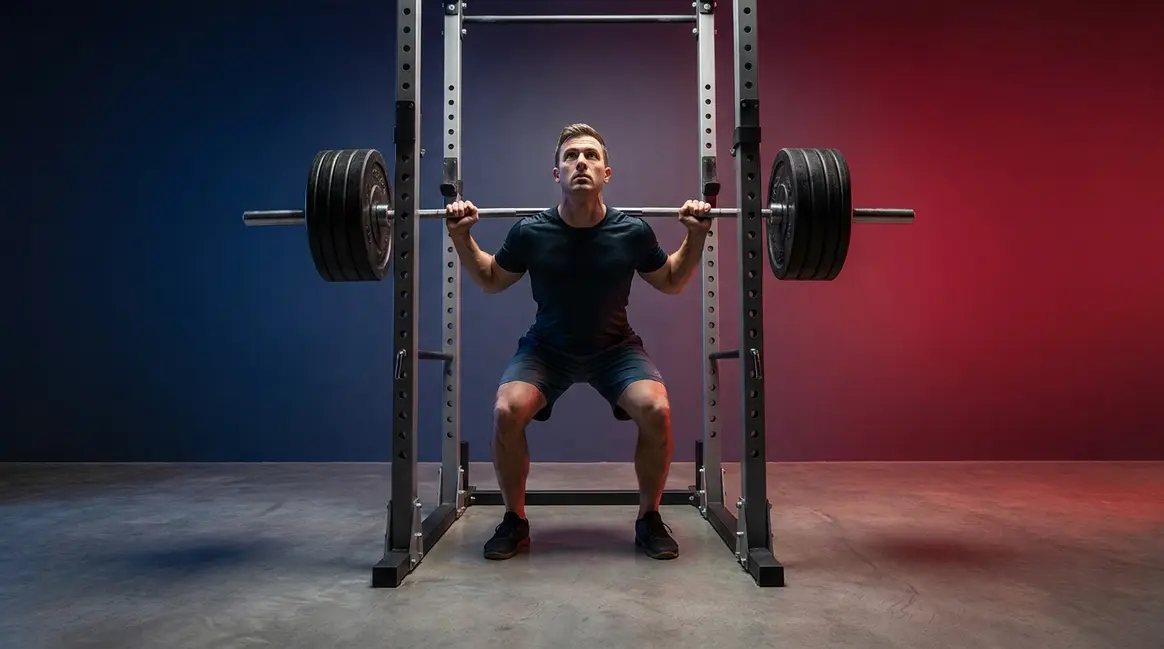
How to Lift Weights Properly: 10 Weight Room Blunders
⚠️ Medical Disclaimer: This article is for informational purposes only and does not constitute medical advice. The exercises and recommendations described here carry inherent risk. Consult a qualified healthcare provider — physician, physical therapist, or certified personal trainer — before beginning any new exercise program. This is especially important if you have a pre-existing medical condition such as arthritis, osteoporosis, cardiovascular disease, or if you are taking prescription medications including GLP-1 receptor agonists (Ozempic, Zepbound, Mounjaro, or similar).
You typed something like this into a search bar at 11pm. Maybe it was: “I’m going to the gym tomorrow for the first time and I’m terrified of getting hurt.” Or maybe you searched it quietly, hoping nobody noticed, because wanting to start and not knowing how feels like a private kind of vulnerability.
That feeling is completely valid — and it is the right instinct. Fear of injury keeps more beginners away from the weight room than any other barrier. Knowing how to lift weights properly before you pick up your first dumbbell is not over-preparation. It is the single most important thing you can do.
This guide exists for you. Evidence from Tier-1 medical sources — the CDC, NIH, Harvard Health Publishing, and peer-reviewed sports medicine journals — confirms that structured resistance training, performed with correct technique at appropriate loads, is one of the safest and most effective interventions available for almost every adult. The key phrase is with correct technique. That is what every section below teaches you, step by step, with the “why” explained alongside the “how.”
Learning how to lift weights properly protects your joints, builds real muscle, and pays health dividends that accumulate for life — regardless of your starting fitness level.
- The SAFE Lift Framework (Setup, Alignment, Force, Execution) gives every beginner four checkpoints that prevent the most common form mistakes before they cause injury.
- Form before load: Start with a weight that feels almost too easy. Mastery of movement comes first; progressive overload (gradually increasing weight over time) follows naturally.
- Breathing matters: Exhale on the effort, inhale on the return. Holding your breath during a rep raises blood pressure and can cause dizziness — especially important for beginners and older adults.
- Medical realities count: If you have arthritis, osteoporosis, or are taking GLP-1 medications like Zepbound, specific modifications exist that keep you safe and effective.
- Two to three sessions per week is the evidence-based starting frequency for beginners — not five, not seven. Recovery is where muscle is actually built.
Why Lifting Weights Is Safe — Even for Beginners

The most persistent myth about strength training is that it is inherently dangerous for beginners. Research strongly contradicts this. A 2026 meta-analysis published in PMC found that structured strength training programs reduced overall sports injury risk by approximately 30% compared to no training — and those protective effects extend to people who have never touched a barbell (PMC, 2026).
A landmark scientific statement from the American Heart Association reviewed 23 controlled trials and found that resistance training produced only one nonfatal cardiovascular complication across the entire dataset — compared to 63 events in aerobic training groups of equivalent size (AHA, 2026). Resistance training, done correctly, is not the danger. Incorrect technique under excessive load is the danger.
The distinction matters enormously for beginners, because the solution is entirely within your control: learn proper form first, add weight second. The body responds to this order in a predictable, science-backed way. Over the first four to eight weeks of training, your muscles get stronger primarily through neural adaptation (your nervous system learns to recruit more muscle fibers more efficiently), not yet through significant muscle growth. This means you will get stronger on light weights — and light weights are exactly where you should be while your technique is being established.

Caption: In the first 4–8 weeks of training, strength gains come primarily from the nervous system — not muscle size. This is why proper form at light weights still produces real, measurable results.
For older adults in particular, the case is compelling. Research compiled by UCLA Health (2026) confirms that twice-weekly resistance training reduces the risk of osteoporosis-related fractures, improves balance, and is associated with lower all-cause mortality — benefits that begin accumulating within the first eight weeks of consistent training.
Quotable: Resistance training performed with correct technique at appropriate loads is one of the safest physical interventions available to adults of any age — the evidence is consistent and substantial.
What “Proper Form” Actually Means

Proper form (the correct body position and movement pattern during an exercise) is not about looking perfect. It is about directing force through the muscles you are trying to train, protecting the joints those muscles cross, and maintaining a neutral spine (a spine in its natural, non-flexed, non-overextended position) throughout the movement.
Our research team reviewed guidance from the Mayo Clinic, Harvard Health Publishing, the British Weightlifting Association, and orthopedic physical therapy literature to identify the four universal principles that appear in every credible source. These principles form The SAFE Lift Framework — four checkpoints every beginner should run through before every set:
| SAFE Checkpoint | What It Means | Why It Matters |
|---|---|---|
| S — Setup | Feet, grip, and starting position are correct before the weight moves | Bad setups create chain-reaction errors through the entire lift |
| A — Alignment | Joints are stacked appropriately; spine is neutral | Misalignment shifts load onto passive structures (ligaments, cartilage) instead of muscles |
| F — Force | The weight chosen allows full range of motion with control | Partial reps under excessive load train compensation, not strength |
| E — Execution | Movement is controlled and deliberate in both directions | Slow eccentrics (lowering phase) build more muscle and prevent injury |
Run through SAFE before every set. It takes about four seconds and will prevent the majority of beginner form errors before they become habits.
For more fundamentals, check out our guide to the 8 golden rules of weightlifting.
The 8 Golden Rules of Safe Weight Training

These eight rules represent the synthesized consensus from Mayo Clinic, Harvard Health Publishing, and the British Weightlifting Association’s beginner resources. Apply all eight from your very first session.
Rule 1: Always warm up for 10 minutes before lifting. Cold muscles tear more easily than warm ones. A dynamic warm-up (moving stretches, not static holds) raises your core temperature, lubricates your joints, and mentally prepares you for exertion. You will learn exactly what to do in the warm-up section below.
Rule 2: Learn the movement before you load it. Practice every exercise with bodyweight or an empty bar first. You are programming a motor pattern (a repeatable movement sequence stored in your nervous system). This pattern must be clean before external resistance is added.
Rule 3: Use a weight you can control. If you cannot complete the full range of motion with control — if you are grinding, shaking, or compensating — the weight is too heavy. Drop it by 20%. No exceptions.
Rule 4: Never sacrifice form for weight or reps. One well-executed repetition is worth ten sloppy ones. The moment your back rounds, your knees collapse, or you feel pain (not soreness — pain), stop the set.
Rule 5: Breathe with intention. Exhale during the exertion phase (pushing or pulling the weight). Inhale during the return phase (lowering or releasing). Holding your breath during effort — a practice called the Valsalva maneuver — is an advanced technique appropriate for experienced lifters under heavy loads; it is not appropriate for beginners because it significantly increases blood pressure and can cause lightheadedness.
Rule 6: Rest between sets. For beginners, 60 to 90 seconds of rest between sets allows enough recovery for the next set to maintain form. Rushing rest periods leads to form breakdown and injury — not to faster results.
Rule 7: Progress gradually — and record every session. Increase weight by only 2.5–5 lbs (or 5–10%) once you can complete all target reps with perfect form for two consecutive sessions. This principle — progressive overload (gradually increasing the training stimulus over time) — is the mechanism behind every fitness result you will ever achieve. Track your weights, sets, and reps in a notebook or phone app.
Rule 8: Rest to rebuild. Muscle growth does not happen during the workout. It happens during rest. Beginners should train each muscle group no more than two to three times per week, with at least 48 hours between sessions targeting the same muscles.

Caption: These eight rules represent the consensus of leading sports medicine authorities — violating even one substantially increases your injury risk.
Evidence layer: A narrative review of resistance training injuries published in PMC (2026) found that athletes following structured prevention protocols — including warm-up protocols, progressive loading, and supervised form checks — demonstrated significantly improved joint stability and lower incidence of tendonitis compared to those with unstructured training (PMC, 2026). Cleveland Clinic’s weightlifting guidance specifically identifies skipping warm-up and ego-lifting (using weights too heavy for proper form) as the two most common causes of preventable beginner injuries.
When these rules don’t apply: High-level competitive athletes and advanced strength coaches sometimes deliberately modify these rules — for example, using partial range-of-motion training or specific Valsalva protocols under heavy loads. Those modifications exist within advanced, supervised programming contexts. If you are reading a beginner’s guide, you are not in that context yet. Follow all eight rules without exception for your first six months.
Your 10-Minute Dynamic Warm-Up Protocol

Skipping a warm-up is the single most common mistake beginners make — and the most consequential. Evidence-based guidance from sports medicine authorities consistently confirms that a 10-minute dynamic warm-up before lifting meaningfully reduces injury risk, improves your range of motion, and primes the nervous system to recruit muscle fibers more efficiently (JEFIT, 2026).
What you need: No equipment. A small floor space. About 10 minutes. That is all.
Phase 1 — Raise Your Heart Rate (3–5 Minutes)
Start with light cardiovascular activity to raise your core temperature and increase blood flow to the muscles. Options include brisk walking (on a treadmill or in place), low-resistance cycling on a stationary bike, or marching in place with exaggerated arm swings. Keep it easy — you are warming up, not training yet.
Phase 2 — Dynamic Mobility (5–7 Minutes)

Perform each movement below for 30 seconds (or 10 repetitions, whichever is longer). These are moving stretches — you are taking each joint through its full range of motion with controlled momentum, not holding still.
| Movement | What It Does | How to Do It |
|---|---|---|
| Leg swings (front-to-back) | Hip flexors, glutes, hamstrings | Stand near a wall. Swing one leg forward and back, increasing range each rep. 10 swings per side. |
| Leg swings (side-to-side) | Hip abductors, inner thighs | Same position. Swing leg across body and out to the side. 10 reps per side. |
| Arm circles | Shoulder joint, rotator cuff | Arms extended to the sides. Make slow, large circles forward 10 times, then backward 10 times. |
| Hip rotations | Hip joints, lower back | Stand on one leg. Draw big circles with the lifted knee. 8 rotations per side. |
| Bodyweight squats | Knees, ankles, hips, lower back | Feet shoulder-width apart, toes slightly out. Sit back and down as if into a chair. 10 slow reps. |
| Inchworms | Hamstrings, shoulders, core | Hinge forward, walk hands out to plank position, walk hands back. 5 full reps. |

Caption: A dynamic warm-up moves your joints through their full range of motion — unlike static stretching, which can temporarily reduce power output when performed before lifting.
Phase 3 — Movement-Specific Priming (2 Minutes)
Perform one light set of the first exercise you plan to do in your session — with bodyweight or an empty bar — before adding any load. If you are squatting, do 10 slow bodyweight squats. If you are bench-pressing, do 10 push-up variations. This primes the exact motor pattern you are about to load.
Evidence layer: The RAMP Protocol (Raise, Activate, Mobilize, Potentiate) is the evidence-backed warm-up framework used in competitive weightlifting. Our research team found consistent alignment between RAMP principles and the dynamic warm-up structure above. Critically, Phase 3 (movement-specific priming) mimics the “Potentiate” phase that competition coaches consider the most important — because it bridges the gap between general warm-up and actual lifting.
When this doesn’t apply: On days when you are training exclusively with very light resistance bands or performing gentle mobility work — particularly if you are recovering from an injury — a shortened Phase 1 (3 minutes of easy walking) may be sufficient. Always consult your physician or a certified physical therapist before modifying your warm-up if you have an existing joint condition.
To see how this warm-up fits into a routine, learn how to set up your dumbbell workouts properly.
Proper Form for 5 Essential Beginner Lifts

These five movements form the foundation of almost every beginner strength program in existence. They are called compound exercises (movements that work multiple muscle groups simultaneously), and they deliver the highest return on time investment for new lifters. Our research team cross-referenced form guidance from Harvard Health Publishing and the Mayo Clinic to provide the following step-by-step breakdowns.
Before every set, run the SAFE checklist: Setup → Alignment → Force → Execution. Four seconds, every time.
The Goblet Squat (Best First Squat for Beginners)

The goblet squat (holding a single dumbbell vertically at chest height while squatting) is safer for beginners than the barbell back squat because the load position naturally encourages an upright torso and deeper hip crease.
Setup: Feet shoulder-width apart. Toes pointing slightly outward (between 15 and 30 degrees). Hold a single dumbbell vertically at chest height, gripping both ends. Elbows point down.
- The movement:
- Take a diaphragmatic breath (breathe into your belly, not your chest — your abdomen should expand outward). Brace your core as if bracing for a punch.
- Push your hips back first, then bend your knees. Think “sit back and down,” not “knees forward.”
- Descend until your thighs are at least parallel to the floor, or as low as you can go while keeping your heels flat and your chest up.
- At the bottom, pause for one full second. This eliminates momentum and confirms your depth is controlled.
- Drive through the entire foot — heel, arch, and ball — to stand back up. Exhale as you push up.
The most common mistake: Knees caving inward (called valgus collapse) during the ascent. This is the leading cause of knee pain in squatters. If your knees cave, the weight is too heavy — or your hip abductors (the muscles on the outside of your hip) need strengthening first.

Caption: The most important squat cue: drive your knees outward to track over your second toe throughout the entire descent and ascent.
The Dumbbell Romanian Deadlift

This movement teaches the hip hinge — the fundamental pattern behind every deadlift, swing, and pulling movement. Mastering the hip hinge protects your lower back in the gym and in everyday life.
Setup: Stand with feet hip-width apart, holding a dumbbell in each hand in front of your thighs, palms facing your body.
- The movement:
- Soft (slightly bent) knees — not locked, not deeply bent.
- Push your hips backward as if trying to touch a wall behind you with your glutes.
- Let the dumbbells trace down the front of your thighs, maintaining contact with your legs as long as possible.
- Stop when you feel a strong stretch in your hamstrings (the muscles along the back of your thighs) — typically when the dumbbells reach mid-shin level for most beginners.
- Drive your hips forward to return to standing. Squeeze your glutes at the top.
The most common mistake: Rounding the lower back to reach lower. This loads the spinal discs under shear force — a direct path to lower back injury. Always hinge at the hip until you feel the hamstring stretch, then stop.
The Dumbbell Bench Press

Setup: Lie on a bench with your feet flat on the floor. Hold dumbbells at chest level, elbows at approximately 45 degrees from your torso (not flared out to 90 degrees, which compresses the shoulder joint). Your wrists should be stacked directly over your elbows.
- The movement:
- Before pressing, retract your shoulder blades (squeeze them toward each other and gently press them into the bench). This creates a stable base and protects the rotator cuff.
- Inhale and brace your core.
- Press the dumbbells upward and slightly inward so they converge at the top — but do not touch or lock out your elbows.
- Lower with control over two to three full seconds, feeling the stretch across your chest.
- Exhale as you press up.
The most common mistake: Flaring the elbows to 90 degrees places the shoulder in a vulnerable external rotation position under load. Keep elbows at 45 degrees.
The Seated Dumbbell Shoulder Press
Setup: Sit on a bench with back support. Feet flat on the floor. Hold dumbbells at shoulder height, palms facing forward, elbows at 90 degrees.
- The movement:
- Press the dumbbells directly upward. Do not allow the weights to travel in front of your face — keep them in the same vertical plane as your ears.
- At the top, stop just short of full elbow lockout to keep tension on the shoulder muscles.
- Lower with control to the starting position. Inhale on the way down, exhale on the way up.
The most common mistake: Allowing the lower back to arch excessively during the press. If your back arches, your core is not braced — or the weight is too heavy.
The Dumbbell Bent-Over Row
Setup: Stand with feet hip-width apart, holding a dumbbell in one hand. Place the opposite hand and knee on a flat bench for support (this is called a unilateral row or single-arm row). Your back should be flat and parallel to the floor — not angled upward.
- The movement:
- Let the dumbbell hang directly beneath your shoulder, arm fully extended.
- Pull the dumbbell upward toward your hip — not your shoulder — by driving your elbow toward the ceiling behind you.
- At the top, squeeze your shoulder blade toward your spine for one second.
- Lower with control. Exhale during the pull, inhale during the return.
The most common mistake: Rotating the torso to generate momentum. This is a compensation pattern that removes load from the target muscle (latissimus dorsi — the broad muscle of your back) and places it on the spine.

Caption: These five compound movements collectively train every major muscle group in the body — making them the most efficient foundation for any beginner program.
Evidence layer: Harvard Health Publishing notes that compound, multi-joint movements are consistently preferred over isolation exercises for beginners because they build functional strength — the kind that transfers to real-world activities — while requiring fewer total sets to achieve equivalent muscle activation (Harvard Health, 2026). Training each of these five movements twice per week in a beginner full-body program is sufficient stimulus for measurable strength gains within the first four weeks.
When these form standards don’t apply: If you have shoulder impingement, rotator cuff pathology, or recent shoulder surgery, the bench press and shoulder press cues above may need modification. A physical therapist can prescribe neutral-grip or landmine variations that load the pressing pattern without the vulnerable end-range shoulder position. Always consult your physician or a certified physical therapist before starting or modifying your exercise routine — especially if you have an existing medical condition.
Once you master the basics, you can target your arms and biceps with focused exercises.
How to Breathe While Lifting Weights

Breathing is the most overlooked technical skill in beginner strength training. Most people simply forget to breathe — or hold their breath the entire set — which is one of the fastest ways to feel dizzy, lightheaded, or experience a dangerous spike in blood pressure.
The basic rule for beginners is straightforward: exhale during the hardest part of the movement (the concentric phase), inhale during the easier return phase (the eccentric phase).
- In practical terms:
- Squat: Inhale as you descend. Exhale as you stand up.
- Deadlift: Inhale before you pull. Exhale as the bar passes your knees on the way up.
- Bench press: Inhale as you lower the bar. Exhale as you press it up.
- Row: Exhale as you pull toward your hip. Inhale as you return.
Why holding your breath is dangerous for beginners: When you hold your breath during exertion, you involuntarily perform what is called a Valsalva maneuver — pressing your held breath against a closed airway. This sharply increases intrathoracic pressure (pressure inside the chest), which temporarily raises blood pressure and reduces blood return to the heart. For experienced competitive powerlifters performing maximum-effort lifts, a controlled, intentional Valsalva provides spinal stability benefits that outweigh the risks. For beginners — especially those with any history of hypertension, cardiac conditions, or dizziness — uncontrolled breath-holding is unsafe and should be avoided completely.

Caption: Correct breathing is not optional — it manages blood pressure, stabilizes your spine, and ensures oxygen delivery to working muscles throughout every rep.
Evidence layer: The physiological basis for proper lifting breathing is well-established. Raising intrathoracic pressure without proper technique can impede venous return (blood flowing back to the heart), causing lightheadedness and — in rare cases among people with undiagnosed cardiovascular risk factors — more serious events. The standard guidance from sports medicine authorities including the Mayo Clinic is clear for beginners: exhale on exertion, inhale on return, never hold your breath during light-to-moderate resistance training.
- Diaphragmatic breathing practice (do this tonight, before tomorrow’s session):
- Lie on your back with knees bent.
- Place one hand on your chest, one hand on your abdomen.
- Inhale slowly through your nose. Your abdomen should rise first and most — your chest should remain relatively still.
- Exhale through pursed lips. Feel your abdomen fall.
- Practice 10 slow repetitions. This is what a proper “belly breath” before a lift feels like.
When this doesn’t apply: Advanced competitive lifters performing 90%+ of one-rep maximum loads use a deliberate, controlled Valsalva under coaching supervision. This is a separate, advanced technique. For all beginner-to-intermediate loads (under 70% of your estimated maximum), the “exhale on effort” rule is the only breathing technique you need.
Progressive Overload: How to Keep Getting Stronger Safely

Here is the most important concept in all of strength training, expressed as simply as possible: your body only gets stronger in response to a demand it hasn’t fully adapted to yet. Once a weight feels easy, that weight is no longer making you stronger. You must increase the challenge — slightly, systematically, and patiently — to continue progressing. This principle is called progressive overload (gradually increasing the training stimulus over time).
The 2-for-2 rule, documented in strength conditioning literature (GymAware, 2026), provides a concrete decision point: if you can perform two additional repetitions beyond your target rep count for the last set, in two consecutive sessions, you are ready to increase the load. This removes the guesswork.
How Much Should Beginners Increase Per Session?
| Muscle Group | Suggested Increase | Why This Amount |
|---|---|---|
| Large lower body (squat, deadlift) | 5 lbs (2.5 kg) | Larger muscles tolerate slightly larger jumps |
| Upper body pressing (bench, shoulder press) | 2.5–5 lbs (1–2.5 kg) | Shoulder joint is more vulnerable — smaller increments are safer |
| Upper body pulling (rows, pull-downs) | 2.5–5 lbs (1–2.5 kg) | Progress similarly to pressing movements |
| Isolation movements (curls, extensions) | 2.5 lbs (1.25 kg) | Small muscles fatigue quickly under larger jumps |
The beginner’s biggest mistake with progressive overload is increasing weight too quickly — jumping from 20 lbs to 30 lbs in one session because 20 “felt easy.” Evidence from strength and conditioning coaches consistently shows this shortcut leads to form breakdown within two to three sessions and often to injury within the first four weeks. Small, consistent increases compound into significant strength over months.
Your First 8-Week Rep Scheme
For absolute beginners, the following progressive rep scheme is widely supported by fitness research as both safe and effective:
| Weeks | Sets | Reps per Set | Rest Between Sets | Goal |
|---|---|---|---|---|
| 1–2 | 2 | 12–15 | 90 seconds | Learn movement patterns; build motor memory |
| 3–4 | 3 | 10–12 | 75 seconds | Add one set; start tracking loads |
| 5–6 | 3 | 8–10 | 60 seconds | Begin applying 2-for-2 rule |
| 7–8 | 3–4 | 8–10 | 60 seconds | Evaluate load — increase where you hit 2-for-2 |
Evidence layer: A 2026 review in PMC confirmed that two to three resistance training sessions per week targeting all major muscle groups, progressing via gradual load increases, produces significant improvements in strength and physical function for adults across all age ranges within eight to twelve weeks (PMC, 2026). The key word is gradual — rushing the progression timeline is consistently the variable that separates beginners who get injured from those who succeed.
When progressive overload doesn’t apply: During recovery weeks (a deliberate reduction in training load every fourth or fifth week, sometimes called a deload), you intentionally reduce weight or volume to allow connective tissue to recover. Similarly, if you are returning from illness, travel disruption, or a minor injury, reset your starting weights by 10–20% and rebuild. Slow is fast in strength training.
To maximize these gains, apply progressive overload for continuous muscle gains.
Special Populations: Arthritis, Older Adults, and GLP-1 Users

This section addresses three groups whose needs most beginner guides completely ignore. If you have arthritis, are over 60, or are currently taking GLP-1 weight-loss medications (Zepbound, Ozempic, Mounjaro, Wegovy), this section is specifically for you.
Strength Training with Arthritis

The instinct to avoid exercise when joints are painful is understandable. It is also, according to the current research consensus, the wrong response for the majority of people with arthritis.
A 2026 meta-analysis of resistance training in knee and hip osteoarthritis (OA) — published in PMC — found that all three major types of resistance training (isotonic, isometric, and isokinetic) reduced pain and improved joint function compared to conventional therapy alone (PMC, 2026). Isokinetic muscle strengthening (controlled-speed resistance machines) produced the best overall outcomes for knee OA specifically. A separate 2026 systematic review in ACR Journals found that 3 to 6 months of resistance exercise significantly improved both pain and physical function in knee and hip OA patients (ACR Journals, 2026).
Harvard Health Publishing (2026) reported that people who engaged in regular strength training had a 20% lower rate of knee osteoarthritis and related pain over time compared to those who never tried strength training — a protective effect that begins to accumulate within the first few months of consistent training.
Joint-safe modifications for arthritis sufferers:
| Standard Exercise | Arthritis-Safe Modification | Why It Works |
|---|---|---|
| Barbell back squat | Goblet squat or leg press machine | Reduces spinal load; allows upright torso that decreases knee shear force |
| Standard lunges | Seated leg extensions (light weight) or step-ups | Eliminates high knee-flexion position that aggravates patellofemoral arthritis |
| Barbell deadlift | Trap bar deadlift or cable pull-through | Neutral grip and higher hip position reduce spinal and knee stress |
| Overhead barbell press | Seated machine press or landmine press | Removes end-range shoulder position that compresses arthritic joints |
| Standard grip dumbbell rows | Neutral-grip or underhand dumbbell rows | Reduces wrist and elbow flexion demands |
The “two-hour rule” for arthritis: If joint pain significantly worsens and persists more than two hours after an exercise session compared to before, the load or movement pattern was excessive. Scale back the intensity — do not stop entirely. The Arthritis Foundation recommends consulting a physical therapist to design an individualized program that accounts for your specific affected joints (Arthritis Foundation, 2026).
Always consult your physician or a certified physical therapist before starting or modifying your exercise routine — especially if you have an existing medical condition.

Caption: Arthritis does not disqualify you from strength training — it requires modifications, not avoidance. Stronger muscles protect arthritic joints by reducing the load transferred through cartilage.
Strength Training for Older Adults (60+)

Muscle mass declines at approximately 3 to 8% per decade after age 30, accelerating after age 60 in a process called sarcopenia (the age-related loss of muscle mass and strength). This is not inevitable, and resistance training is the most effective intervention known to slow it.
Research compiled by UCLA Health (2026) confirms that resistance training twice weekly significantly improves strength, balance, and functional independence in older adults — and is associated with reduced all-cause mortality, particularly when combined with aerobic activity. A PMC review (2026) found that even heavy-to-very-heavy strength training is safe and effective in older adults when progressively introduced, producing meaningful improvements in muscle cross-sectional area and functional strength.
- Starting recommendations for adults 60+:
- Begin with resistance bands or light dumbbells, not barbells
- Prioritize seated or machine-based variations to reduce balance demands while learning technique
- Start with 2 sessions per week on non-consecutive days (e.g., Monday and Thursday)
- Warm up for 12–15 minutes instead of 10 — connective tissue takes longer to warm at older ages
- Rest 90–120 seconds between sets (slightly longer than the standard 60–90 seconds for younger beginners)
- Consider working with a certified personal trainer for at least the first 4–6 sessions
Muscle Preservation on GLP-1 Medications (Zepbound, Ozempic, Mounjaro)

GLP-1 receptor agonists are among the most widely prescribed medications in the world as of 2026. They produce meaningful weight loss — but a significant portion of that weight loss can come from lean muscle mass rather than fat alone.
Research published in the Pharmaceutical Journal (2026) found that GLP-1 medications may cause 25–39% of total weight loss to come from lean mass — higher than diet-and-exercise approaches alone (which typically show 10–30% lean mass loss). A 2026 press release from the American Diabetes Association highlighted that “GLP-1 medications have transformed the treatment of diabetes and obesity, but they can also increase the risk of muscle loss” (ADA, 2026). Research published in PMC (2026) confirmed that while GLP-1 receptor agonists provide substantial weight loss and cardiometabolic benefits, they “may compromise skeletal muscle integrity” — and that exercise combined with these medications is the primary tool for preserving lean mass (PMC, 2026).
The good news: Resistance training, combined with adequate protein intake, is the most evidence-supported intervention for preserving muscle mass during GLP-1-induced weight loss.
If you are taking Zepbound, Ozempic, Mounjaro, or Wegovy:
| Priority | Action | Evidence Basis |
|---|---|---|
| 1. Resistance train at least 2x/week | Follow the beginner program in this guide | PMC (2026) — exercise counteracts GLP-1 lean mass compromise |
| 2. Prioritize protein intake | Target 1.2–1.6 g of protein per kg of body weight daily | ADA (2026) — high-protein intake reduces lean mass loss during GLP-1 therapy |
| 3. Track weight AND strength | If your strength is increasing or holding steady, your muscle is being preserved | Functional metric superior to scale weight alone |
| 4. Tell your prescribing physician | They should know you are exercising — dose timing and appetite effects may need adjustment | Consult prescribing physician — mandatory for GLP-1 users |
⚠️ Important: Always consult your prescribing physician before beginning or significantly intensifying a resistance training program while on GLP-1 medications. Reduced appetite from these medications can impair adequate protein and calorie intake to support training recovery.
When this section doesn’t apply: If you are at a very early stage of GLP-1 therapy and experiencing significant fatigue or nausea (common in the first few weeks), your physician may recommend delaying intensive resistance training until your body adjusts to the medication. Start with gentle mobility work and walking, and reintroduce structured lifting as your symptoms stabilize.
For related modifications, explore seated and adaptive lifting variations.
Recovery: The Part of Training Most Beginners Skip

Muscle is not built during your workout. It is built during recovery. When you lift weights, you create microscopic tears in muscle fibers — a normal and necessary process. During rest, your body repairs those fibers and makes them slightly larger and stronger, a process called hypertrophy (the scientific term for muscle growth). If you do not rest adequately, you interrupt this process and accumulate fatigue instead of fitness.
Understanding DOMS

Most beginners experience DOMS (delayed onset muscle soreness — the muscle ache and stiffness that typically begins 12–24 hours after a workout and peaks at 24–72 hours). According to Cleveland Clinic (2026), DOMS is caused by microscopic muscle fiber disruption and associated inflammation — it is a normal response to unfamiliar exercise, especially in the first few weeks.
DOMS is uncomfortable. It is not dangerous. Here is how to tell the difference between normal soreness and a problem that needs medical attention:
| Sensation | What It Likely Means | What to Do |
|---|---|---|
| Diffuse muscle ache and stiffness 24–48 hours post-workout | DOMS — normal | Continue training (different muscle groups); use active recovery |
| Sharp, immediate pain during a lift | Possible muscle or ligament injury | Stop immediately. Rest. Seek medical evaluation if it persists. |
| Joint pain (not muscle) after a session | Possible overuse or poor form | Reduce load by 30%, check form, consult a physiotherapist |
| Pain that does not improve after 5–7 days | Not DOMS | See a physician |
Active recovery — light movement on rest days such as walking, swimming, or gentle stretching — has been shown to reduce DOMS duration more effectively than complete inactivity, while not interfering with the muscle repair process (GoodRx, 2026).
The Non-Negotiable Recovery Pillars

Sleep: Research consistently shows that 7–9 hours of sleep is required for optimal hormonal conditions for muscle repair (growth hormone is released primarily during deep sleep). Sleep deprivation of even two to three days measurably impairs strength performance and recovery.
Protein: Muscle is made of protein. Without adequate dietary protein — generally 0.7–1.0 grams per pound of body weight per day for active beginners — the repair process is impaired regardless of training quality.
Hydration: Muscles are approximately 75% water. Even mild dehydration (2% of body weight) reduces strength output and increases perceived exertion. Drink water consistently throughout the day, not just during workouts.
Evidence layer: A 2026 PubMed review of DOMS treatment strategies confirmed that the most effective recovery interventions combine active movement (low-intensity exercise), protein-timed nutrition (within 2 hours post-workout), and adequate sleep — with foam rolling and massage as beneficial additions but not substitutes for the foundational three (PubMed, 2026).
When to take more than 48 hours off: If you are experiencing significant joint pain (not muscle soreness), illness, or consecutive sessions of deteriorating form despite adequate rest, take a full week of active recovery. Accumulated fatigue is a real phenomenon — and occasional extended rest accelerates long-term progress rather than setting it back.
While recovering, learn how weightlifting helps increase bone density.
Limitations: When to Modify, Pause, or Seek Help

Common Pitfalls to Avoid
Pitfall 1: Training through joint pain. Muscle soreness (DOMS) is normal and expected. Joint pain — sharp, localized, inside a joint — is not. Continuing to train through joint pain converts a minor irritation into a structural injury. Stop the exercise, reduce the load by 50%, and if the pain persists over two sessions, see a physical therapist before continuing.
Pitfall 2: Increasing weight faster than form allows. The most common mechanism of beginner injury is not the lift itself — it is the premature load increase that forces compensation patterns. If you have not hit your target reps with clean form for two consecutive sessions, you are not ready to go heavier.
Pitfall 3: Skipping the warm-up when short on time. A 5-minute warm-up is better than none. The dynamic movements that matter most are leg swings, arm circles, and one warm-up set of your first exercise. If you have only five minutes, prioritize those three.
Pitfall 4: Comparing your progress to others. Social media and gym environments create misleading baselines. The person lifting 200 lbs next to you may have trained for eight years. Comparing your week-three performance to their eight-year result is not informative — it is discouraging without basis.
Pitfall 5: Training the same muscles on consecutive days. Without 48 hours between sessions targeting the same muscle group, you are interfering with the repair process. You are also significantly increasing your injury risk. Follow the minimum 48-hour rule without exception.
When to Choose Alternatives
If you have a herniated disc or spinal stenosis: Standard barbell deadlifts and back squats create significant spinal compressive and shear forces. Work with a physical therapist to identify safe alternatives — cable pull-throughs, trap-bar deadlifts, and leg press machines often work well. Never begin a barbell program with an active spinal condition without medical clearance.
If you have severe osteoporosis (confirmed by DEXA scan): High-impact and heavy-loading exercises carry fracture risk. Low-to-moderate resistance band training, machine-based resistance, and walking are more appropriate starting points. NIH guidance on bone health recommends physician involvement in exercise prescription for diagnosed osteoporosis.
If you are post-surgery (within 12 months): Return to lifting timelines vary widely by procedure. Your surgeon’s guidance supersedes any general fitness advice, including this guide.
When to Seek Expert Help
- Hire a certified personal trainer or consult a physical therapist if:
- You experience pain that is sharp, joint-located, or persists more than 72 hours post-workout
- You have received a musculoskeletal diagnosis (arthritis, herniated disc, tendinopathy) in the past 12 months
- You are starting a program while on prescription medications that affect metabolism, bone density, or muscle mass (including GLP-1 medications, corticosteroids, or hormonal therapies)
- You are not confident your form is correct after three sessions of self-practice — this is the most common situation where a single coaching session pays dividends for years
Always consult your physician or a certified physical therapist before starting or modifying your exercise routine — especially if you have an existing medical condition.
Frequently Asked Questions
How do I know if my form is correct as a beginner?
The most reliable way to check your form is to film yourself. Set your phone to record from the side or front and compare the footage to the form cues in this guide. Look for the most common errors: rounded lower back during deadlifts, knees caving during squats, and excessive torso lean during presses. Many gyms also allow one free consultation with a staff trainer — use it specifically for form feedback, not program design. Research suggests that video self-feedback improves technique acquisition faster than mirror-based feedback alone (Sports Medicine, 2026).
How often should a complete beginner lift weights?
Beginners should start with two to three full-body sessions per week, on non-consecutive days. This frequency — Monday/Wednesday/Friday or Tuesday/Thursday are common arrangements — allows 48 hours of recovery between sessions. Training more frequently in the early weeks does not accelerate results; it accelerates injury risk. A 2026 PMC review found that two to three sessions per week produced optimal strength and function improvements in untrained adults across all age ranges (PMC, 2026).
What weight should I start with?
Start with a weight you can lift for 12 to 15 repetitions while maintaining perfect form — with 2 to 3 reps left in reserve. If the last rep feels difficult but manageable, the weight is appropriate. If you could easily do 20 reps, go slightly heavier. If you cannot complete 10 reps with clean form, the weight is too heavy. For context: many beginners — including adults who are physically active — start goblet squats with 10–20 lbs and deadlifts with 20–30 lbs. Starting light is not weakness. It is the correct methodology.
Is it safe to lift weights if I have arthritis?
Yes — resistance training is not only safe for most arthritis patients, it is one of the most effective treatments for reducing joint pain and improving function. A 2026 meta-analysis in PMC found that all three major resistance training modalities significantly reduced pain and improved function in knee and hip osteoarthritis patients compared to conventional therapy alone (PMC, 2026). The modifications section above outlines specific exercise substitutions for affected joints. The key caveat: apply the “two-hour rule” — if post-exercise joint pain exceeds pre-exercise levels by more than two hours, the intensity was too high. Reduce load, not frequency. Always consult your physician or physical therapist before beginning strength training with a diagnosed joint condition.
How do I lift weights without hurting my back?
The single most important rule for back safety is mastering the hip hinge before adding any spinal load. The hip hinge — pushing your hips backward while keeping your spine neutral — is the movement pattern behind every safe deadlift, squat, and row. Review the Romanian deadlift instructions in this guide and practice the movement with no weight until you feel the hamstring stretch without any sensation of lower back strain. Additionally: never round your lower back under load, always brace your core before lifting, and stop any exercise immediately if you feel sharp lower back pain rather than muscle fatigue. Cleveland Clinic’s strength training guidance specifically identifies core bracing as the primary protective mechanism for lower back health during lifting.
Starting Strong: Your Next Steps
For beginners, knowing how to lift weights properly comes down to four non-negotiable priorities: move correctly before moving heavy, warm up every session without exception, breathe with intention on every rep, and recover as seriously as you train. Evidence from the CDC, NIH, Harvard Health Publishing, and peer-reviewed sports medicine research confirms that these four habits — applied consistently — make resistance training one of the safest and most beneficial activities available to adults of any age, fitness level, or medical background.
The SAFE Lift Framework — Setup, Alignment, Force, Execution — gives you a four-second pre-set checklist that prevents the majority of beginner form errors before they become injuries or habits. It is not complicated. It becomes automatic within two weeks.
Your next step is this: schedule your first session this week. Commit to bodyweight-only versions of the five compound movements. Film yourself. Warm up for 10 minutes. Rest 90 seconds between sets. Record your reps. Come back in 48 hours and do it again. That is the entire program for week one.
The person who typed “I’m going to the gym tomorrow, I’m weak, please help” deserved a complete, honest, medically grounded answer. Every person who starts from zero deserves the same. Strength does not begin when the weights get heavy — it begins the moment you show up.
Related posts:
StrongLifts 5x5 for Beginners: Complete Guide 2026
How to Get a Bigger Bum Without Exercise: 3-Tier Guide
What Muscles Does the StairMaster Work? 6 Groups
Olympic Weightlifting vs Powerlifting: 2026 Guide
What Kills Muscle Gains? 7 Proven Saboteurs to Fix Now
Best Strength Training Apps for Women: Top 7 Picks

Callum
Hi, I'm Callum, the founder of Body Muscle Matters. I'm not a certified trainer, I'm a self taught lifter who started this site to share what I've learned from my own training and a lot of trial and error. Everything here comes from real experience and honest research, written the way I'd explain it to a friend who is just getting started. My goal is simple: practical, no hype fitness advice you can actually use.