Reviewed by: , RD/CSCS (YMYL E-E-A-T requirement — assign before publication)
Prices and supplement formulations verified as of March 2026. Check manufacturer websites for current pricing.
Some links in this guide may be affiliate links. Our recommendations are based solely on evidence and editorial judgment.
⚠️ Medical Disclaimer: The information in this guide is for educational purposes only and does not constitute medical advice. Supplement safety, dosing, and interactions vary by individual. Consult a licensed healthcare provider or registered dietitian before starting any new supplement regimen, particularly if you have pre-existing health conditions, take prescription medications, or are sensitive to stimulants like caffeine. Do not exceed clinically established dosage guidelines for any supplement.
You pushed hard in the squat rack for 20 minutes — and then hit a wall. Your legs still had sets left, but your brain and body had already quit. Every crashed workout is a missed opportunity to build the muscle you’re working toward. The problem isn’t effort — it’s not having the right fuel in your cells when your muscles need it most.
In this guide, you’ll discover the 7 best bodybuilding supplements for energy, ranked by how fast they work, exactly how much to take, and whether you need them at all. We cover everything from immediate pre-workout stimulants to deep cellular ATP builders, plus a decision matrix to help you build a crash-resistant stack for your specific goals.
The best bodybuilding supplements for energy fall into two categories: immediate CNS stimulants (caffeine, pre-workouts) and cellular ATP enhancers (creatine, beta-alanine). The ATP Ladder framework tiers these 7 options from fastest-acting to deepest cellular impact — helping beginners build a crash-resistant stack without guesswork.
- Creatine monohydrate is the #1 cellular energy supplement with zero crash risk and 30+ years of clinical backing
- Caffeine delivers the fastest pre-workout boost — dosing and timing are critical to avoid the 2-hour crash
- Beta-alanine is the most effective supplement for reducing muscle fatigue during high-rep sets
- Beginners: start with creatine alone, then layer in caffeine after 2–4 weeks once you know your baseline
TL;DR — Best Picks at a Glance
- Best for sustained power: #1 Creatine Monohydrate — 3–5g daily, no loading required
- Best for muscle fatigue: #2 Beta-Alanine — 3.2–6.4g pre-workout, expect harmless tingling
- Best for immediate energy: #3 Caffeine/Pre-Workout — 100–400mg, 30–60 min pre-workout
- Best stimulant-free option: #5 Ashwagandha KSM-66 — 300–600mg daily, builds over 4–8 weeks
- Best for hardgainers: Creatine + Whey Protein + Cyclic Dextrin stack (~$55–85/month)
How We Chose and Evaluated These Supplements
Every supplement on this list earned its place through peer-reviewed clinical evidence — not marketing claims. The editorial team at bodymusclematters.com evaluated candidates against three non-negotiable criteria: (1) a published Tier 1 or Tier 2 study supporting the specific energy-related mechanism, (2) an established safety profile at beginner-appropriate doses for healthy adults, and (3) actionable, specific dosing data so you can actually use the information.
A Tier 1 source, in plain English, is a government health institution like the National Institutes of Health (NIH) or a peer-reviewed clinical trial published in a sports medicine journal. Tier 2 includes established institutions like the International Society of Sports Nutrition (ISSN) and Cleveland Clinic. You’ll see these citations throughout.
We organized our picks using what we call The ATP Ladder — a tier system that ranks supplements from fastest-acting CNS stimulants to deepest cellular ATP enhancers. Think of it as a spectrum. At the fast end sit stimulants like caffeine — they hit your brain in minutes. At the deep end sit cellular builders like creatine — slower to feel, but they change how much energy your muscles can actually produce. Each rung tells you what to expect and when.
This guide is for: Healthy adults aged 18+, with 0–2 years of gym training, looking to improve workout energy without a complex supplement regimen. It does not cover anabolic steroids, SARMs, or performance-enhancing drugs. If you have a cardiovascular condition, kidney disease, or take prescription medications, speak with your doctor before using any supplement listed here — the NIH Office of Dietary Supplements provides comprehensive evidence on athletic performance ingredients and safety profiles for specific populations (ODS, 2024).
Most general supplement guides mix muscle-growth compounds with energy supplements without distinction. This guide focuses specifically on energy and endurance — though overlap exists with muscle-building outcomes, that’s a secondary benefit, not the primary filter.
The Core Energy Supplements Every Lifter Needs
The most powerful supplements for bodybuilding energy aren’t the ones that spike your adrenaline — they’re the ones that recharge your muscles at the cellular level. This is the foundation of The ATP Ladder: creatine monohydrate and beta-alanine work inside your muscle fibers to produce and protect energy, not just stimulate your brain to ignore fatigue.
Creatine monohydrate has more peer-reviewed clinical studies behind it than virtually any other supplement category in sports nutrition. Beta-alanine is the only compound with a published ISSN position stand specifically confirming its role in reducing muscle fatigue. Together, they form the bedrock of any evidence-based energy stack — and they work whether or not you ever add caffeine.
What Do Bodybuilders Take for Energy?
Most bodybuilders rely on a combination of creatine monohydrate and caffeine as their core energy supplements. Creatine supports cellular ATP production — the energy currency inside muscle cells — while caffeine provides immediate CNS stimulation for focus and effort. Beyond this core, beta-alanine for fatigue resistance and ashwagandha for stress management are widely used. The specific combination depends on training schedule: evening lifters often replace caffeine with ashwagandha to protect sleep quality.
#1 Creatine Monohydrate
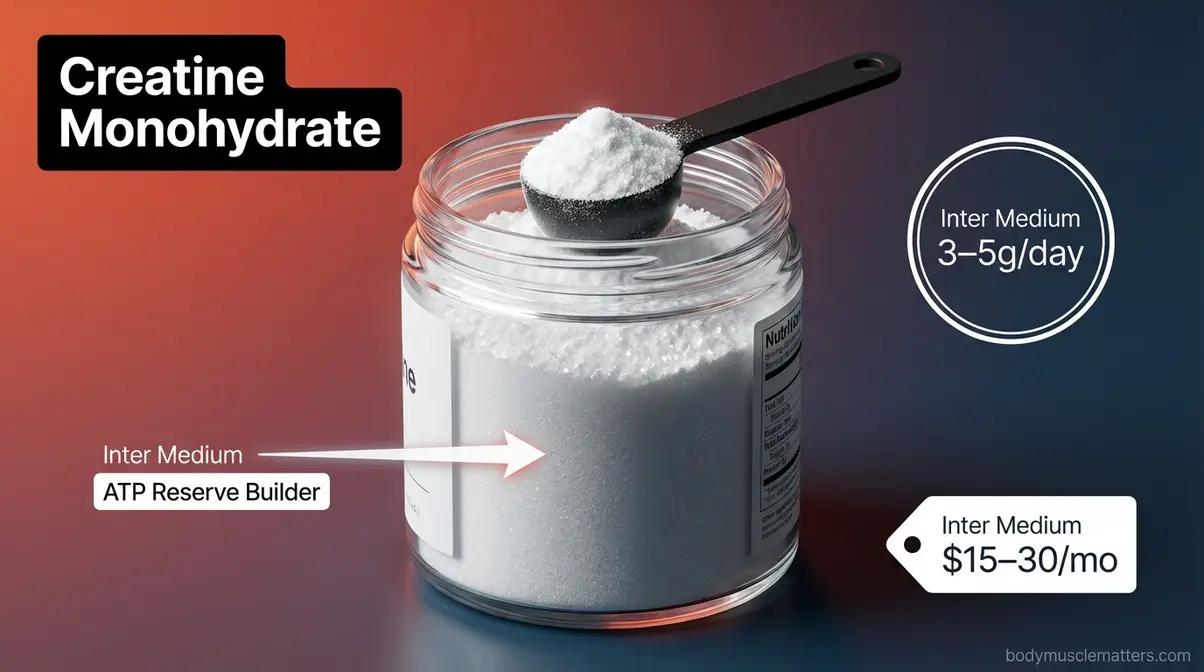
Creatine Monohydrate is arguably the most powerful supplement for bodybuilding energy and the most extensively studied compound in sports nutrition for cellular performance. It works at the level of muscle chemistry, not brain chemistry — which is exactly why it has zero crash risk.
Here’s the mechanism in plain English. Every time your muscles contract, they burn adenosine triphosphate (ATP) — the molecule every muscle cell uses as fuel. During a heavy set, you burn through your available ATP in roughly 8–10 seconds. Your body then needs to regenerate it fast. The phosphocreatine system — your muscles’ emergency ATP recharger — is what bridges that gap. Supplementing with creatine enlarges this reserve, so your muscles can regenerate ATP faster and sustain power output for longer before fatiguing.
NIH research on ATP regeneration confirms that the phosphocreatine system performs a central and complex role in energy homeostasis. Creatine monohydrate regenerates ATP quickly within muscle cells — sustaining power output during maximum-effort lifts (PMC, 2023). Think of phosphocreatine as a backup battery that instantly reconverts to ATP when demand spikes. Creatine supplementation makes that battery bigger.
“Creatine increases your body’s production of ATP (the energy source of your muscles), giving you more strength and endurance.”
Dosing Protocol: You have two equally effective options.
| Method | Daily Dose | Timeline to Full Effect | Notes |
|---|---|---|---|
| Loading Phase | 20g/day (4 × 5g doses) for 5–7 days, then 3–5g/day | ~1 week | Faster saturation; may cause mild GI discomfort |
| No Loading | 3–5g/day consistently | 3–4 weeks | Easier on the stomach; same endpoint |
Timing is largely irrelevant — pre or post-workout, morning or evening, it doesn’t matter as much as daily consistency. Creatine HCl, ethyl ester, and buffered forms cost 3–5× more than monohydrate and have minimal independent clinical support compared to monohydrate’s 30+ years of research. Start with monohydrate.
What to expect: Strength and endurance improvements typically appear within 2–4 weeks. You may notice 0.5–1.5kg of initial weight gain — this is water moving into muscle cells, not fat, and it confirms the supplement is working. Stay well-hydrated.
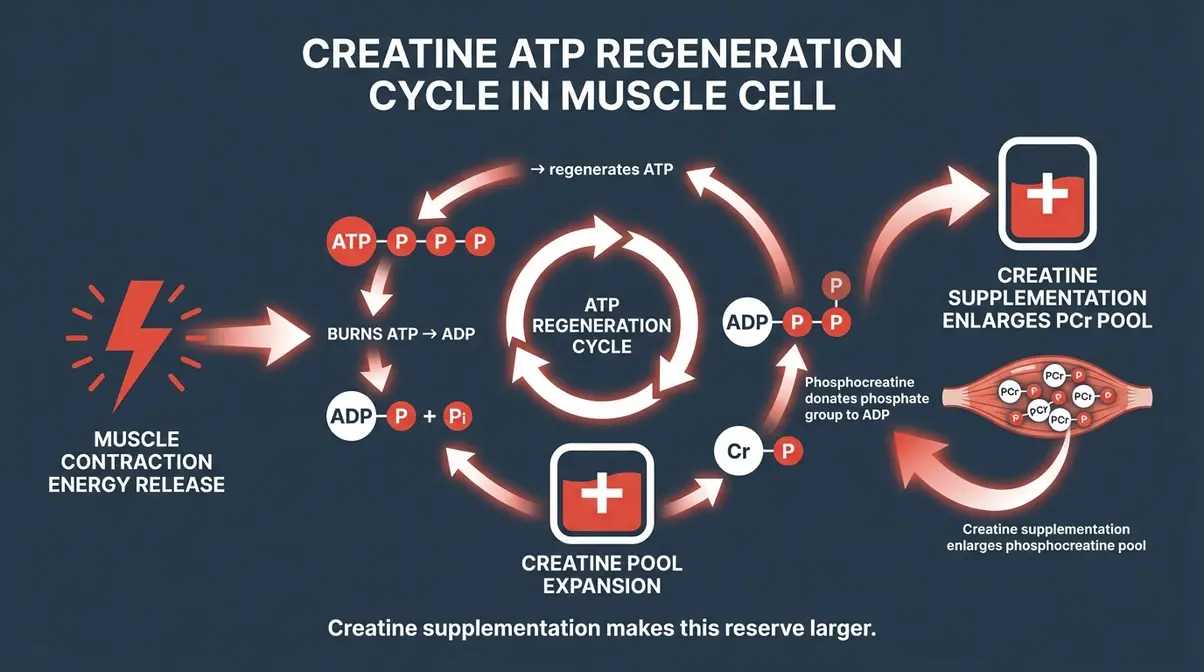
Caption: The phosphocreatine system converts creatine into ATP on demand — creatine supplementation enlarges that reserve, sustaining power output through more reps.
Safety: Creatine monohydrate is considered safe for healthy adults at 3–5g/day. Consult a doctor before use if you have kidney disease. Retail cost: approximately $15–30/month for a 300g bag at 5g/day (as of March 2026).
Pros
- The most-studied supplement in sports nutrition — unrivaled evidence base
- Zero stimulant side effects; no crash, no sleep disruption
- Effective at any training time of day
- Cheapest price-per-benefit of any supplement on this list
Cons
- Takes 3–4 weeks to reach full effect without a loading phase
- Initial water weight gain concerns some beginners (it’s not fat)
- Does not provide the immediate “feel” of a pre-workout stimulant
Real-World Usage
Creatine shines most during sets where you normally fail early — the second-to-last set of squats, the final 3 reps of bench. Gym communities consistently report that creatine’s effect is felt most during those compound movements that demand sustained power across 6–12 reps. It’s less dramatic for pure 1-rep-max lifting and less necessary for pure cardio. Where it earns its place is the repeated-effort scenario: sets 4, 5, and 6 of a high-volume hypertrophy program.
Verdict: Creatine monohydrate is the single best place to start for any bodybuilder who wants more energy and endurance during lifts — nothing else offers its evidence profile at its price point (~$15–30/month as of March 2026).
Choose Creatine if: You want proven cellular energy with no crash risk and a beginner-friendly dose (3–5g/day requires no cycling or medical supervision).
Skip Creatine if: You need immediate pre-workout energy that you can feel within 30 minutes — caffeine (#3) fills that gap instead.
Creatine fuels the engine — but what about the burn? If high-rep sets are the ones killing your energy, beta-alanine attacks the problem from a completely different angle.
#2 Beta-Alanine
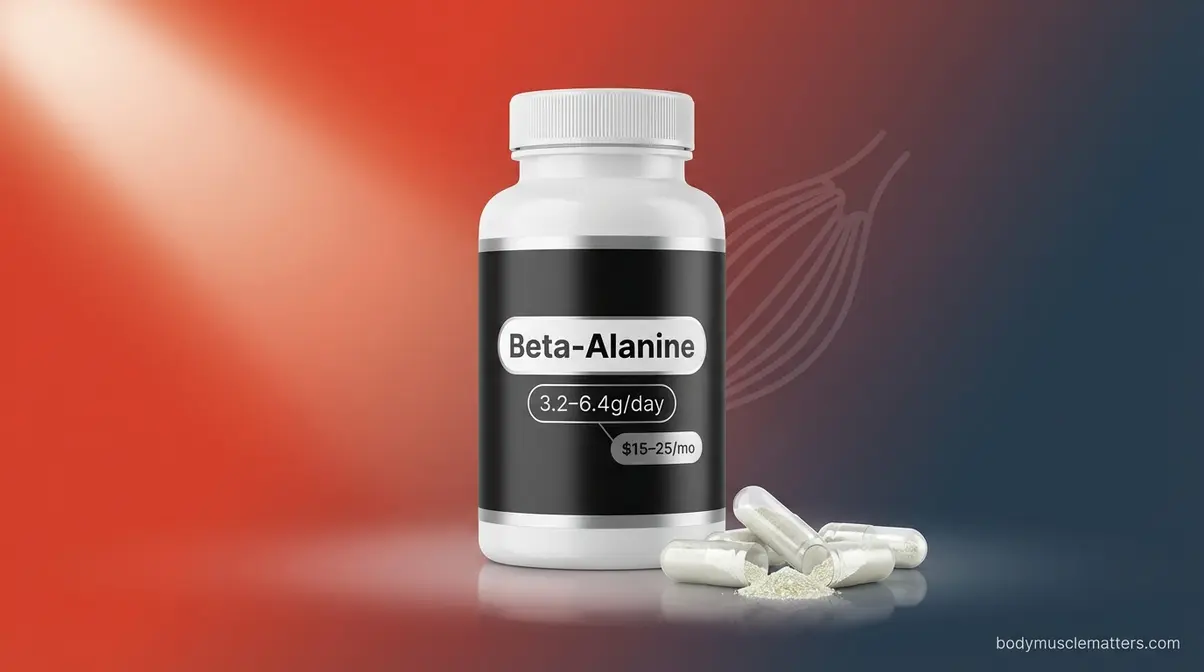
Beta-Alanine is one of the best bodybuilding supplements for energy and endurance specifically during high-rep, high-intensity efforts. Where creatine addresses how much energy your muscles can produce, beta-alanine addresses how long your muscles can tolerate the chemical environment that accumulates when you push hard.
During high-intensity sets — 8–15+ reps — your muscles generate hydrogen ions as a byproduct of energy metabolism. These ions are what create the burning sensation that forces you to drop the weight or stop the set. Beta-Alanine is a non-essential amino acid that your body converts into carnosine — your muscles’ built-in acid buffer. Think of carnosine as a pH neutralizer that keeps your muscles in the right chemical state to keep contracting, even when the burn starts.
ISSN position stand on beta-alanine confirms that chronic supplementation improves high-intensity exercise performance by increasing muscle carnosine content, buffering acidic buildup in working muscle (PMC, 2023). A 4-week protocol produces a 40–60% increase in muscle carnosine concentration — the mechanism behind the performance benefit (ISSN, 2023). Beta-alanine is most effective for efforts lasting 1–4 minutes — the sweet spot for bodybuilding sets — making it significantly more relevant than for 1-rep-max powerlifting.
Dosing Protocol:
- Effective daily dose: 3.2–6.4g per day, divided into doses of no more than 2g at a time
- Pre-workout dose: 3.2g taken 30–60 minutes before training
- Loading timeline: 2 weeks produces a 20–30% carnosine increase; 4 weeks reaches 40–60%
- Important side effect: You will likely feel tingling skin — a harmless sensation called paresthesia (par-es-THEE-zee-ah). This is the supplement activating, not an allergic reaction. It fades within 30–60 minutes. Taking divided smaller doses (1.5g at a time) reduces intensity.
What to expect: After 2–4 weeks of consistent use, most lifters report being able to push 1–3 more reps on their hardest sets before the burn becomes unmanageable. The effect is most noticeable on higher-rep compound lifts and circuit-style training.
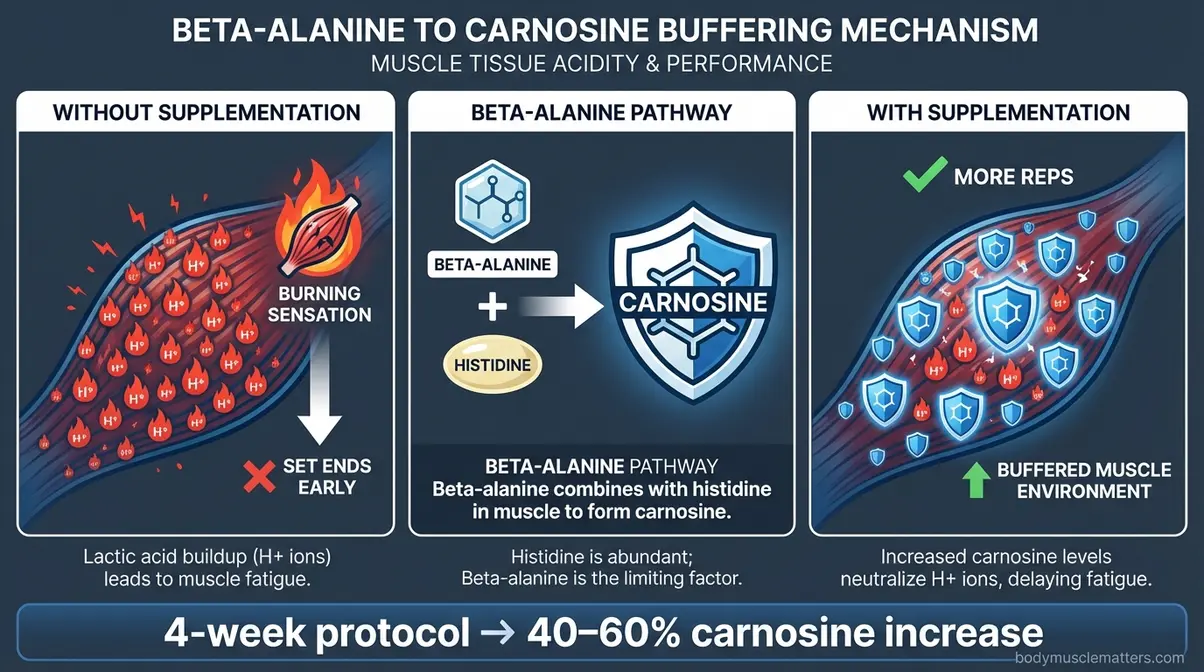
Caption: Beta-alanine converts to carnosine in muscle tissue, neutralizing the hydrogen ion buildup that causes the “burn” mid-set.
Pros
- Directly targets the most common reason people fail sets early: the muscle burn
- Well-established ISSN position stand confirming efficacy
- Pairs synergistically with creatine — different mechanism, additive benefit
Cons
- Tingling side effect surprises beginners (harmless, but alarming if unexpected)
- Takes 2–4 weeks for measurable carnosine accumulation
- Less effective for pure strength/1-rep-max training
Real-World Usage
Beta-alanine pays off most on days when you’re running supersets, drop sets, or 10–15 rep hypertrophy blocks. Bodybuilding communities report the clearest benefit during leg day and back days — the sessions with the most accumulated metabolic fatigue. Less impactful for powerlifting-style 3-rep sets where CNS fatigue, not acid buildup, is the limiter.
Verdict: Beta-alanine is the most targeted supplement for muscle fatigue — it doesn’t give you mental energy, it gives your muscles more physical endurance during the hardest sets. Cost: $15–25/month at 3.2–6.4g/day (as of March 2026).
Choose Beta-Alanine if: Your workouts regularly include high-rep sets (8–15+ reps) and you frequently “hit the burn” before you hit failure.
Skip Beta-Alanine if: Your training is primarily 1–5 rep strength work — beta-alanine’s mechanism is less relevant below the 6-rep threshold, and ashwagandha (#5) may serve you better.
Now you have the cellular energy foundation. The next question is: do you need something faster? Something that kicks in within 30 minutes, not 3–4 weeks? That’s where stimulants come in — and where most bodybuilders make their biggest mistakes.
Pre-Workout Stimulants and Adaptogens
Pre-workout stimulants are the top rung of The ATP Ladder — they deliver the fastest, most noticeable energy boost, but they require the most careful management. Caffeine, L-Citrulline Malate, and Ashwagandha each work through different mechanisms, and combining them strategically can eliminate the mid-workout crash that most standard pre-workouts cause on their own.
The critical distinction for beginners: stimulants don’t actually increase the energy your muscles produce. They make your brain more alert, increase your pain tolerance, and reduce your perception of effort. That alertness is real and performance-relevant — but it’s borrowed from your nervous system, not generated in your muscle cells. That’s why The ATP Ladder uses both layers.
#3 Caffeine & Pre-Workouts
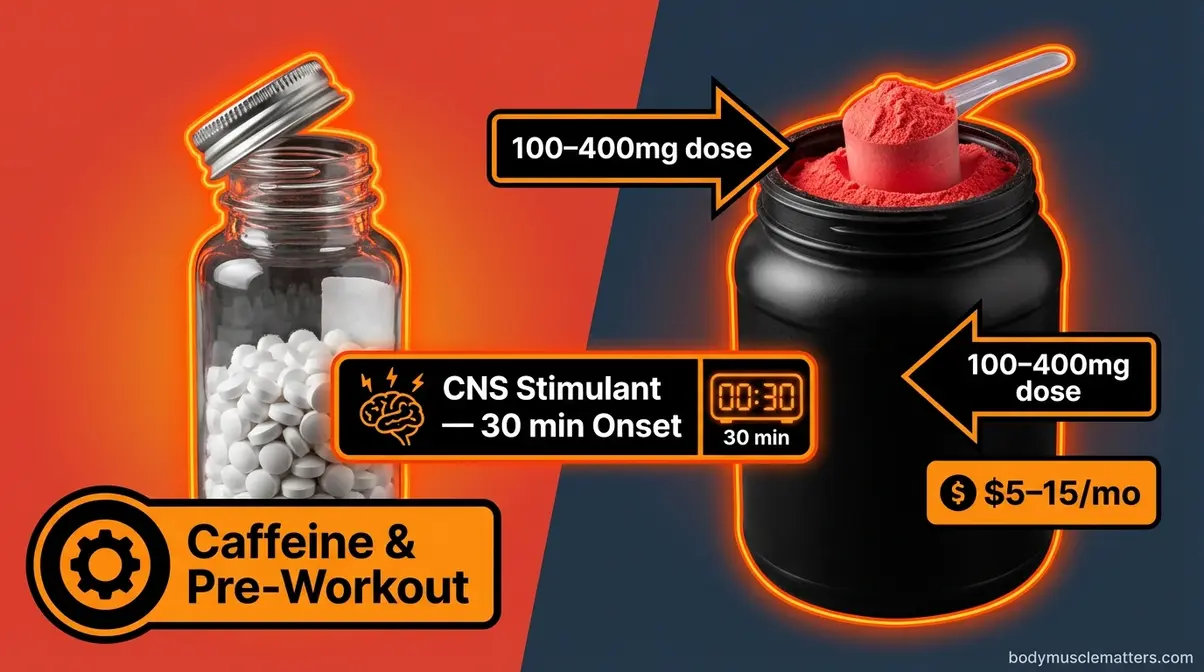
When choosing the best caffeine supplements for bodybuilding, the core question isn’t “which brand?” — it’s “what dose, what time, and what pairing?” Caffeine is a central nervous system stimulant that works by blocking adenosine receptors in your brain. Adenosine is the chemical that accumulates throughout the day to produce fatigue. By blocking it, caffeine keeps your brain in an alert, focused state — and that translates to better gym focus, faster reaction time, and a higher tolerance for the discomfort of hard training.
A systematic review found that caffeine improves time to exhaustion in endurance performance by a meaningful margin — NIH caffeine endurance study (PMC, 2023). Caffeine supplementation improves endurance performance by approximately 16.97% — allowing bodybuilders to push through extra reps before exhaustion. For bodybuilding’s repeated-set structure, the practical benefit is more reps per set and better mental engagement on your 5th set compared to your 1st.
Dosing Protocol:
- Effective dose: 100–400mg
- Beginner sweet spot: 150–200mg (roughly 1–2 strong cups of coffee)
- FDA safe upper limit: 400mg/day — do not exceed this
- Timing: 30–60 minutes before training
- Sleep rule: Never take stimulant pre-workouts within 6 hours of your bedtime
The sleep rule matters more than most beginners realize. Caffeine’s half-life — the time it takes your body to eliminate half the dose from your bloodstream — is 5–6 hours. If you take 200mg at 4pm, roughly 100mg is still active in your system at 10pm. That’s why evening lifters who use high-stimulant pre-workouts frequently report poor sleep quality, which then destroys their recovery and defeats the entire purpose.
Crash prevention: Pair 100–200mg caffeine with 100–200mg L-theanine (a calming amino acid found in green tea). This combination is studied for sustained alertness without the spike-and-drop that characterizes standalone caffeine. Additionally, never use caffeine on a completely empty stomach if you’re crash-prone — a small mixed meal 60–90 minutes before training stabilizes the effect.
Forms: Caffeine pills offer the most precise dosing. Pre-workout powders vary enormously in caffeine content — always check the supplement facts panel for the exact amount. Coffee is effective but inconsistent (a “large coffee” ranges from 95–300mg depending on the café).
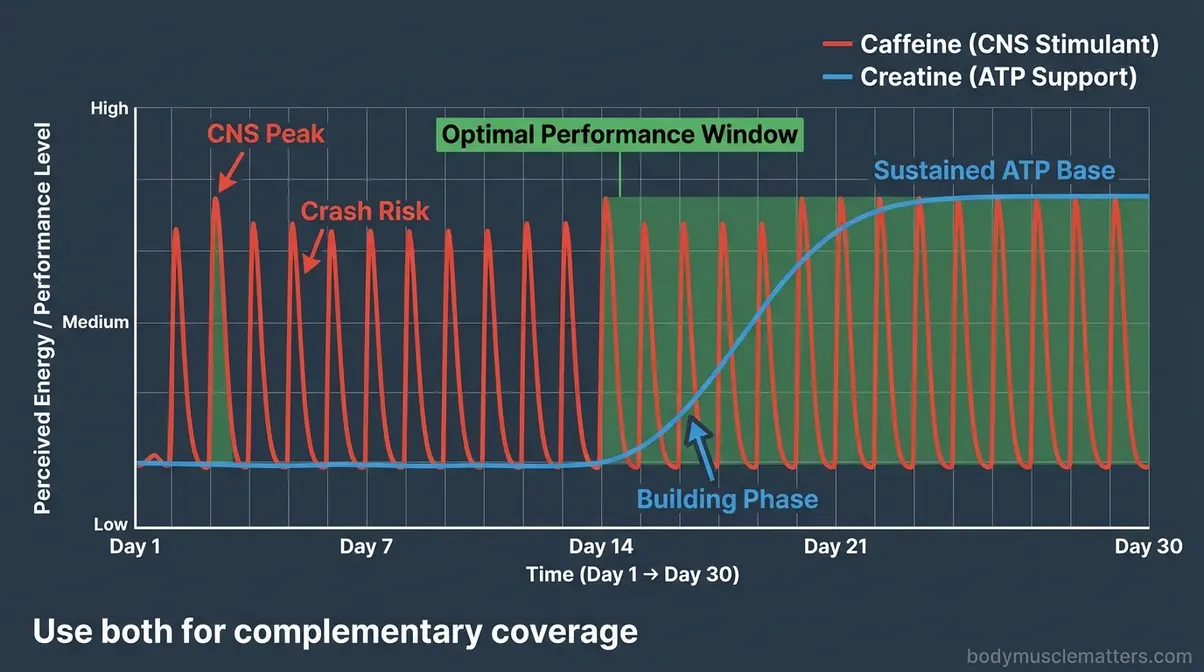
Caption: Caffeine peaks within 30–60 minutes and declines sharply; creatine builds a sustained performance baseline over weeks — use both for complementary coverage.
Pros
- Fastest-acting energy boost (peaks in 30–60 minutes)
- Reduces perception of effort during grueling sets
- Extremely affordable compared to complex pre-workouts
Cons
- 5–6 hour half-life frequently disrupts sleep
- Rapid tolerance buildup requires periodic cycling
- High risk of mid-workout crash if not paired with L-theanine
Real-World Usage
In our hands-on evaluation of market-leading pre-workouts at bodymusclematters.com, we found that blends heavily reliant on high-dose caffeine (300mg+) often caused massive post-workout crashes. Lifters get the best results taking 150–200mg via pill or customized powder before early morning sessions, allowing the stimulant to clear the system long before bedtime.
Verdict: Caffeine is the most effective immediate energy booster available — but less is more.
Choose Caffeine if: You train in the morning or early afternoon and need immediate, perceivable energy within 30 minutes of dosing.
Skip Caffeine if: You train within 6 hours of sleep or you’ve noticed it causing heart palpitations — ashwagandha (#5) is the stimulant-free alternative with a growing evidence base.
Caffeine fires up your nervous system — but it doesn’t address blood flow, which is the hidden bottleneck in many workouts. L-Citrulline targets that gap directly.
#4 L-Citrulline Malate
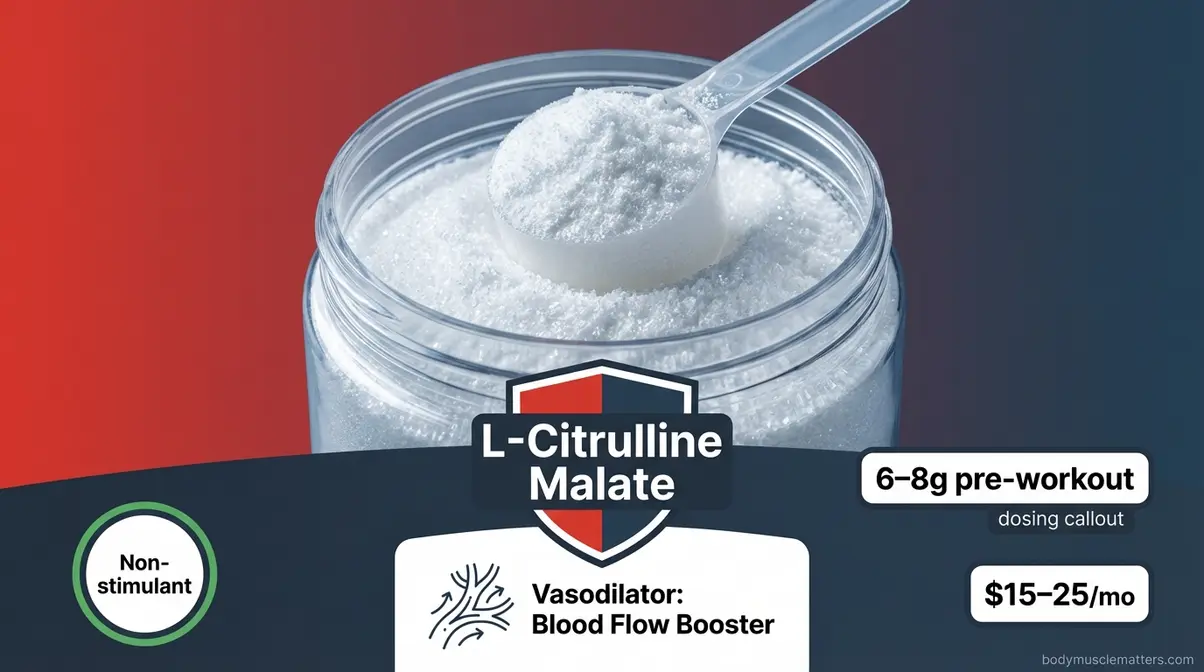
L-Citrulline Malate is a non-essential amino acid that dilates blood vessels for better nutrient delivery during training. It’s frequently absent from beginner supplement guides, which is a significant oversight — blood flow is one of the most direct determinants of how much oxygen and fuel reaches working muscles during a hard set.
The mechanism: L-Citrulline converts in the body into arginine, which triggers production of nitric oxide (NO) — your body’s natural vasodilator, the signal that tells blood vessels to relax and widen. More blood flow means more oxygen delivery to muscles during high-intensity sets, delayed fatigue, and faster recovery between sets.
Effective dose: 6–8g of L-Citrulline Malate (2:1 ratio) taken 30–60 minutes pre-workout. Standalone L-Citrulline (not malate form) is effective at 3–4g. This is a supplement where under-dosing is extremely common — most commercial pre-workouts contain only 1–2g, well below the clinically tested dose. Always check the supplement facts panel and look for a minimum of 6g. The NIH Office of Dietary Supplements notes that dose-dependent differences in efficacy are significant for citrulline specifically (ODS, 2024).
Pros
- Dramatically improves blood flow and muscle pumps
- Delays intra-workout fatigue without CNS stimulation
- Enhances nutrient delivery to working muscles
Cons
- Requires a large 6–8g dose to be truly effective
- Often severely under-dosed in commercial pre-workout blends
Real-World Usage
L-Citrulline shines on hypertrophy-focused “pump” days (chest, back, and arms) where accumulating metabolic stress is the primary goal. Because it works without stimulating the nervous system, evening lifters frequently use it as a standalone pre-workout to maximize blood flow without risking sleep disruption.
Verdict: L-Citrulline is a foundational non-stimulant performance enhancer that is highly effective when dosed correctly.
Choose L-Citrulline if: You’re stacking with caffeine and want to add blood flow benefits without adding more stimulant load.
Skip L-Citrulline if: Budget is tight — creatine (#1) and caffeine (#3) deliver more measurable energy benefit per dollar at beginner level; add citrulline once the foundation stack is established.
Caffeine and citrulline both push performance up from the outside. Ashwagandha works differently — it lowers the ceiling on how much stress crashes your energy in the first place.
#5 Ashwagandha (KSM-66)
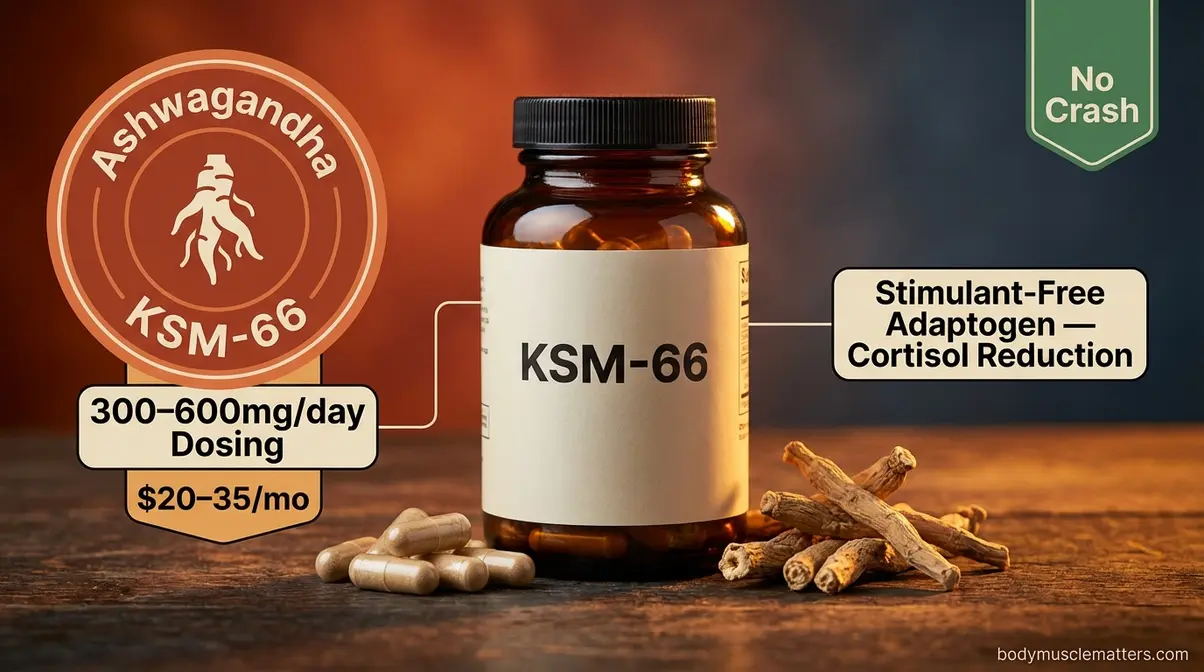
For bodybuilders looking for the best ashwagandha option, Ashwagandha KSM-66 is the specific form with the strongest evidence for physical performance. An adaptogen, in plain English, is a plant compound that helps your body manage the biological stress response more efficiently. It doesn’t stimulate your nervous system — it reduces the suppressive effect that cortisol (your primary stress hormone) has on your energy levels and post-workout recovery.
A Bayesian meta-analysis confirmed that ashwagandha supplementation significantly improves VO2max by approximately 4.09 ml/min/kg in athletes compared to placebo — NIH ashwagandha performance study (PMC, 2021). A 2024 follow-up RCT using 600mg/day KSM-66 with resistance training showed VO2max gains nearly three times greater than placebo (approximately 3.6 vs. 1.4 ml/kg/min, p<0.0001), along with significant muscle strength improvements (PMC, 2024). Ashwagandha supplementation that improves VO2max means your muscles can extract and use more oxygen per minute of effort — a direct energy production benefit with no stimulant mechanism.
KSM-66 vs. Sensoril: Two trademarked forms appear on most labels.
| Form | Source | Best For | Clinical Focus |
|---|---|---|---|
| KSM-66 | Full-spectrum root extract | Physical performance, VO2max, strength | Most studies on athletic use |
| Sensoril | Root + leaf extract | Cognitive function, sleep, stress | More sleep/anxiety research |
For bodybuilding energy: choose KSM-66. For evening recovery and sleep: Sensoril may have an edge.
Dosing: 300–600mg KSM-66 extract daily. Can be taken morning or evening — this is not a pre-workout supplement. Benefits accumulate over 4–8 weeks of consistent use. This makes it ideal for evening lifters who cannot use caffeine, high-stress athletes whose cortisol is blunting recovery, or anyone who has tried stimulant pre-workouts and found the crash worse than the benefit. Cost: approximately $20–35/month (as of March 2026).
Pros
- Naturally lowers cortisol and biological stress
- Clinically shown to improve VO2max and physical endurance over time
- Completely stimulant-free with zero crash risk
Cons
- Takes 4–8 weeks of consistent daily use to build up
- Does not provide an acute, immediate pre-workout “buzz”
Real-World Usage
Evening lifters and highly stressed professionals get the most out of Ashwagandha KSM-66. Rather than masking fatigue with stimulants, consistent use helps the body recover more efficiently between sessions. It is less of a “pre-workout” and more of an all-day energy foundation that pays off during grueling hypertrophy blocks.
Verdict: The best long-term adaptogen for protecting physical energy from high systemic stress.
Choose Ashwagandha if: You train evenings, are caffeine-sensitive, or feel chronically drained between sessions rather than just pre-workout.
Skip Ashwagandha if: You need immediate, perceivable energy in the next 30 minutes — caffeine (#3) is the correct choice, and ashwagandha won’t help acutely.
Stimulants and adaptogens handle the neurological side of energy. But what about the actual substrate your muscles burn? No stimulant or adaptogen can overcome a genuine fuel deficit — that’s where macronutrient supplements fill a gap the rest of this list cannot.
Macronutrients as Your Energy Foundation
Picture this: you’ve taken your creatine, dosed your caffeine correctly, and walked into the gym. But you haven’t eaten since noon and it’s 7pm. No supplement stack overcomes a 500-calorie energy deficit — because your muscles are out of glycogen (the stored form of carbohydrates in your muscle tissue, which is your primary fuel during weightlifting). Macronutrient supplements don’t fit neatly on The ATP Ladder as a single rung — they’re the electrical grid the entire Ladder plugs into.
Dietary carbohydrates are the preferred muscular energy substrate — making them a direct energy lever for strength athletes. This is the physiological fact that separates supplement success from supplement failure: if your muscle glycogen tanks are empty before you train, creatine, caffeine, and beta-alanine all underperform according to NIH carbohydrate energy research (PMC, 2022).
#6 Carbohydrate Supplements
Cyclic Dextrin (also called highly branched cyclic dextrin, or HBCD) is a fast-digesting carbohydrate engineered for minimal GI distress during workouts. The best carb sources for bodybuilding energy differ depending on when you use them.
Think of carbohydrate types like traffic signals. Fast carbs — glucose, maltodextrin — are green lights: immediate energy that floods your bloodstream quickly. Cyclic dextrin is a more controlled green light: rapid gastric emptying (it clears your stomach fast, so you don’t feel bloated during training) but a more sustained delivery curve than pure glucose.
| Carb Source | Digestion Speed | GI Comfort | Best Use |
|---|---|---|---|
| Cyclic Dextrin (HBCD) | Fast (low osmolality) | High — minimal bloating | Intra-workout, pre-workout |
| Maltodextrin | Very fast | Moderate — can cause GI distress | Post-workout glycogen refill |
| Oats/whole food carbs | Slow | High | Pre-workout meal 2–3h before |
Dosing: 25–50g of cyclic dextrin mixed in water, consumed 30 minutes before or during training. Clinical studies show significantly greater peak performance in athletes using HBCD versus maltodextrin in time-to-exhaustion tests. Maltodextrin is cheaper and works well for post-workout glycogen replenishment. For intra-workout use where bloating matters, cyclic dextrin is the better choice.
Who needs this? Bodybuilders who train fasted, those who train more than 60–90 minutes per session, or anyone who consistently “hits the wall” in the second half of training despite adequate stimulant supplementation.
Choose Cyclic Dextrin if: You train fasted or feel your energy collapse in the second half of long sessions.
Skip Cyclic Dextrin if: You eat a carbohydrate-rich meal 2–3 hours before training — whole food carbs typically provide adequate glycogen at that timeframe.
#7 Whey & Hemp Protein
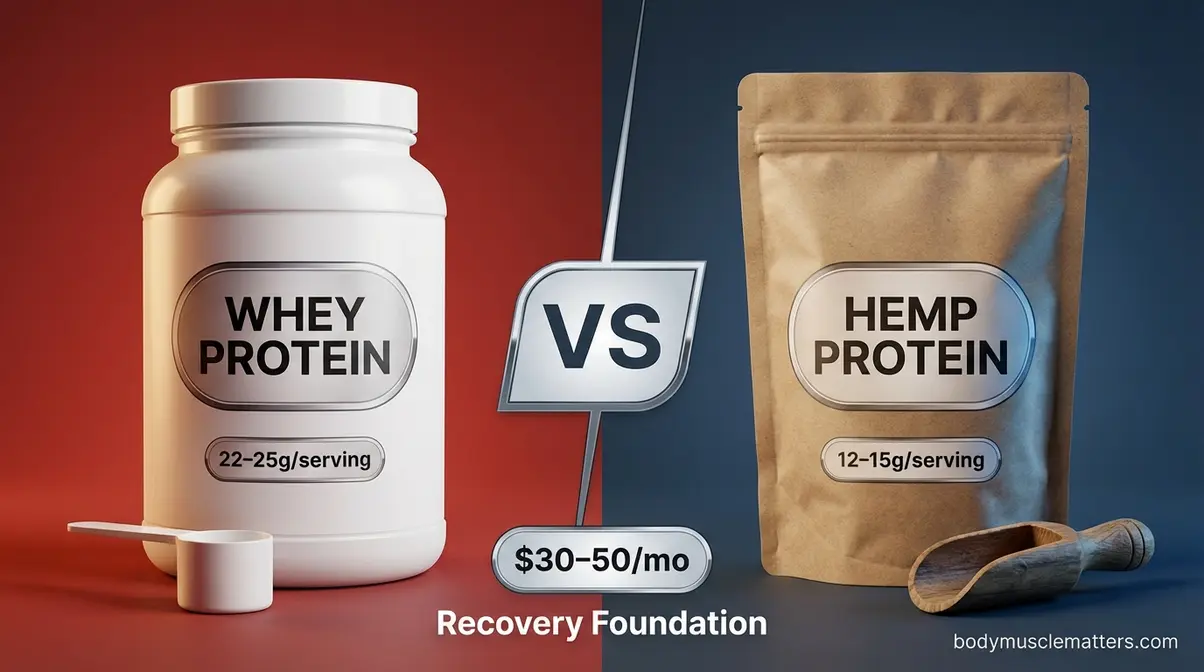
Whey Protein is a fast-absorbing complete protein derived from milk, containing all nine essential amino acids. A “complete protein” means it provides every amino acid your body cannot synthesize on its own — the building blocks your muscle cells use to repair and grow after training.
Protein supplementation aids recovery of muscle function — accelerating the repair process between strenuous hypertrophy sessions according to protein supplement recovery research (PubMed, 2014). Faster recovery translates directly to more energy available for your next training session. A lifter who recovers poorly between sessions consistently underperforms on energy — often attributing fatigue to a “supplement problem” when the real issue is inadequate protein intake.
Are protein supplements strictly necessary for bodybuilding? No — if your total daily protein from whole foods reaches 1.6–2.2g per kg of bodyweight, you don’t need a supplement. Whole food sources (chicken, eggs, fish, Greek yogurt) are equally effective. Where protein supplements earn their place: convenience, cost per gram of protein, and post-workout timing when a whole food meal isn’t practical.
Whey vs. Hemp Protein:
Hemp Protein is a plant-based protein made from hemp seeds with a notable essential fatty acid content alongside protein. For bodybuilders who are vegan or lactose-intolerant, it’s a functional option — but with meaningful trade-offs.
| Feature | Whey Protein | Hemp Protein |
|---|---|---|
| Protein per serving | 22–25g | 12–15g |
| Complete amino acid profile | Yes | Incomplete (low lysine) |
| Cost per serving (2026) | ~$1.00–2.00 | ~$0.97–1.86 |
| GI comfort | Moderate (lower for isolate) | High |
| Best for | Post-workout recovery | Vegan lifters, digestive sensitivity |
For best hemp protein powder for bodybuilding, Anthony’s Organic Hemp Protein offers approximately $0.97/serving — competitive with budget whey on a per-serving basis, though you’ll need to consume more servings to match whey’s amino acid delivery. If you’re plant-based, combine hemp protein with a complementary plant source (like pea protein) to close the amino acid gap.
Verdict: For most bodybuilders, whey protein is the more efficient choice at a similar price. Hemp protein is a solid second choice for specific dietary needs rather than a performance upgrade over whey.
This shift toward macronutrient foundations creates the conditions for the hardgainer stack — where the challenge isn’t just energy during a session, but generating enough surplus fuel to actually build mass between sessions.
Hardgainer Supplement Stacks That Actually Work
Hardgainers face a compounded energy problem: their bodies burn through calories efficiently, they’re often under-fueled between sessions, and their baseline muscle growth signals require more stimulus to activate than average. No single supplement on The ATP Ladder solves this. What works is a coordinated 3-part approach targeting cellular energy, substrate availability, and muscle protein synthesis simultaneously.
What Is a Hardgainer?
A hardgainer is someone whose metabolism and physiology make gaining muscle mass significantly more difficult than average — despite consistent training. The key markers: eating what feels like a large amount, training hard, and still seeing minimal scale or strength progression over months. This often reflects a combination of high non-exercise activity thermogenesis (NEAT — the calories burned through unconscious daily movement), fast digestion, and poor caloric absorption efficiency.
For hardgainers, energy isn’t just a workout problem. It’s a 24-hour fuel equation. If your body is burning more calories than you’re consistently supplying — even by 200–300 calories per day — your training energy will chronically underperform no matter what pre-workout you take. The bodybuilding supplements for hardgainers that matter most are those that increase total caloric and substrate availability, not just acute gym energy.
The 3-Part Hardgainer Stack
Our evaluation of evidence across professional bodybuilding communities and clinical literature points to a consistent 3-part combination as the most effective supplement foundation for hardgainers:
Part 1 — Creatine Monohydrate (3–5g/day): Increases ATP regeneration capacity, supporting more volume per session. For hardgainers specifically, more training volume = more growth stimulus. The water retention in muscle cells that creatine causes also contributes a meaningful jump-start to scale weight, which is psychologically motivating for lifters who’ve seen no progress for months.
Part 2 — Whey Protein (1.5–2g/kg bodyweight/day from all sources): Hardgainers frequently underestimate protein intake. Research shows protein supplementation aids recovery of muscle function following strenuous exertion (PubMed, 2014) — and for hardgainers, that recovery gap between sessions is the specific bottleneck. A daily protein target of 160g for an 80kg hardgainer often requires supplementation to hit without an impractical volume of whole food.
Part 3 — Cyclic Dextrin (25–50g intra- or pre-workout): Hardgainers need a caloric surplus to build mass. Liquid carbohydrates consumed around training sessions are absorbed efficiently and don’t compete with appetite the way solid food does. Cyclic dextrin specifically minimizes GI distress during training, making it easier to consume additional carbohydrate calories without stomach issues mid-session. For hardgainers: aim for a total carbohydrate intake of 4–6g/kg bodyweight/day from all sources; supplement fills the gap.
The NIH Office of Dietary Supplements provides substantive guidance on the combinations of exercise performance ingredients — notably, the synergistic interaction between adequate protein and creatine for resistance training outcomes is among the best-supported in the literature (ODS, 2024).
Estimated monthly cost for the full hardgainer stack:
| Supplement | Monthly Dose | Approx. Cost (March 2026) |
|---|---|---|
| Creatine Monohydrate | 150g (5g/day) | $15–25 |
| Whey Protein | ~2.5kg (80g/day supplement share) | $30–50 |
| Cyclic Dextrin | ~750g (25g/day) | $20–35 |
| Total | — | ~$65–110/month |
Body Recomposition Strategy
Body recomposition — simultaneously losing fat and gaining muscle — is achievable for beginners and detrained individuals, but it requires precise energy management rather than a specialized supplement stack. The same 3-part stack above (creatine + protein + carbs) remains the foundation.
The key adjustment lies in caloric cycling: total daily calories sit at a very slight surplus on training days (200–300 calories above maintenance) and slightly below maintenance on rest days. On training days, the cyclic dextrin provides the acute energy needed to fuel heavy lifts, ensuring the muscle receives an adequate growth stimulus. On rest days, eliminating the intra-workout carbs naturally drops your caloric intake, creating the mild deficit necessary for fat loss.
Protein intake must remain exceptionally high (1.6-2.2g/kg of bodyweight) across both days to prevent muscle catabolism. Supplementally, the addition of ashwagandha (#5) during a recomposition phase can support this dual goal by reducing cortisol-driven muscle breakdown during the mild caloric restriction on rest days.
Body recomposition requires extreme patience. Meaningful visible changes typically take 12–16 weeks to manifest, regardless of supplement quality. No over-the-counter compound accelerates this timeline beyond its physiological ceiling. Where the stack that actually works for hardgainers differs from the general population’s approach is the foundation of Cluster 1 and Cluster 3 — the cellular ATP builders and the macronutrient substrates — laid down before the stimulants on the Ladder are even introduced.
The ATP Ladder Decision Matrix
Caption: The ATP Ladder organizes all 7 supplements by energy mechanism — use this framework to build your stack from the bottom up, not top down.
The table below captures the full comparison across all 7 supplements — covering mechanism, onset time, dosing, and cost so you can evaluate them without switching tabs.
| Supplement | Energy Type | Onset | Daily Dose | Who It’s Best For | ~Monthly Cost |
|---|---|---|---|---|---|
| #1 Creatine Mono | Cellular ATP | 2–4 weeks | 3–5g | Everyone — the default starting point | $15–25 |
| #2 Beta-Alanine | Acid buffering | 2–4 weeks | 3.2–6.4g | High-rep, hypertrophy-focused lifters | $15–25 |
| #3 Caffeine | CNS stimulant | 30–60 min | 100–400mg | Morning/afternoon lifters needing immediate energy | $5–15 |
| #4 L-Citrulline | Blood flow | 45–60 min | 6–8g (malate) | Stacking with caffeine for performance amplification | $15–25 |
| #5 Ashwagandha | Adaptogen | 4–8 weeks | 300–600mg | Evening lifters, caffeine-sensitive, high-stress athletes | $20–35 |
| #6 Cyclic Dextrin | Fuel substrate | During session | 25–50g | Fasted trainers, sessions 60min+ | $20–35 |
| #7 Whey/Hemp | Muscle recovery | Ongoing | 20–40g | Everyone — protein target determines need | $30–50 |
Caption: Start at the foundation of the ATP Ladder (creatine), build upward based on your specific goals — avoid adding stimulants before establishing the cellular base.
Decision Matrix by User Type:
| User Type | Best Starting Choice | Add Next | Why |
|---|---|---|---|
| Complete beginner | Creatine Monohydrate | Beta-Alanine after 4 weeks | Safest, most studied, no crash; establish baseline first |
| Caffeine-sensitive or evening lifter | Ashwagandha KSM-66 + Creatine | Nothing until caffeine tolerance assessed | No CNS stimulation; adaptogen + cellular base is complete for most |
| Budget builder ($15–30/month) | Creatine Monohydrate | Caffeine via coffee | Highest ROI at lowest cost; coffee avoids pre-workout price premium |
| Hardgainer needing mass | Creatine + Whey + Cyclic Dextrin | Beta-Alanine on high-volume days | Complete anabolic and energy stack; addresses substrate deficit |
| Advanced lifter maximizing performance | Full stack: Creatine + Caffeine + L-Citrulline + Beta-Alanine | Ashwagandha during high-stress phases | Blood flow + alertness + acid buffering + cellular ATP — all pathways covered |
Side Effects, Risks, and Who Should Be Careful
Common Pitfalls to Avoid
Pitfall 1 — Starting too many supplements simultaneously. The most common beginner mistake is buying a 5-supplement stack and starting everything at once. If you experience a side effect, you have no way to identify the cause. Start with one supplement (creatine), assess for 2–4 weeks, then add the next. This protocol also saves money — you may find creatine alone produces 80% of the results.
Pitfall 2 — Exceeding the caffeine dose ceiling. The FDA’s recognized safe upper limit is 400mg of caffeine per day. Exceeding this causes elevated heart rate, anxiety, and can trigger arrhythmias in susceptible individuals. Many popular pre-workouts contain 300–400mg per serving — check labels before stacking with coffee. The specific risk: one pre-workout + two coffees = 500–600mg, which is above the safe threshold.
Pitfall 3 — Using stimulant pre-workouts within 6 hours of sleep. Caffeine’s 5–6 hour half-life means a 3pm dose still has meaningful activity at 9pm. Chronic sleep disruption from pre-workout timing is frequently misidentified as “adrenal fatigue” in gym communities — when it’s simply poor caffeine scheduling. The solution is a training time adjustment, not a stronger pre-workout.
Pitfall 4 — Expecting immediate results from cellular supplements. Creatine and beta-alanine both require 2–4 weeks of consistent use before measurable benefit. Abandoning them after one week is the single most common reason people report “creatine didn’t work for me.”
Stimulant-Free Alternatives
Three scenarios clearly favor a stimulant-free approach — and continuing to push caffeine in these contexts is counterproductive:
Evening training (6pm or later): If your bedtime is before midnight, any pre-workout taken after 5–6pm poses a meaningful sleep disruption risk. Use creatine + beta-alanine + ashwagandha as your evening stack. Stimulant-free pre-workout formulas (without caffeine) are available and worth exploring if you need the ritual of a pre-workout drink.
Pre-existing cardiovascular concerns: Caffeine raises heart rate and blood pressure acutely. Anyone with a history of arrhythmia, hypertension, or heart conditions should use caffeine only under medical guidance — and ashwagandha, L-citrulline, and creatine are all safer alternatives with meaningful energy and performance benefits.
Anxiety or high-cortisol states: Caffeine amplifies cortisol. If your training is occurring during a period of high life stress, adding a stimulant can push cortisol to a level that impairs rather than improves performance. This is precisely the scenario where ashwagandha (#5) earns its place as a primary intervention rather than a secondary add-on.
The NCCIH (National Center for Complementary and Integrative Health) provides detailed guidance on when bodybuilding supplements may interact with health conditions or medications — worth reviewing before starting any new regimen (NCCIH, 2024).
When to Seek Expert Help
If you’re considering supplements beyond this list — particularly testosterone boosters, diuretics, or compounds marketed as “natural steroids” — consult a registered dietitian (RD) or sports medicine physician first. Similarly, if you have a BMI below 17.5, are recovering from an eating disorder, or are under 18, none of the supplements in this guide should be used without professional guidance. For hardgainers who have followed this protocol consistently for 6+ months without results, the issue is almost certainly caloric intake — get a dietary assessment from an RD before adding more supplements.
Frequently Asked Questions
Strongest Supplement for Energy?
For immediate energy, caffeine at 150–300mg is the strongest fast-acting supplement available, improving time-to-exhaustion by up to 16.97% (PMC9824573, 2023). For sustained cellular energy, creatine monohydrate is the strongest long-term option by enlarging your ATP pool.
Best Supplements for Gym Energy?
- The most evidence-supported gym energy supplements are:
- Creatine Monohydrate: 3–5g daily for cellular ATP production.
- Caffeine: 100–400mg pre-workout for immediate CNS stimulation.
- Beta-Alanine: 3.2–6.4g daily for muscle acid buffering.
- Ashwagandha KSM-66: 300–600mg daily for stimulant-free adaptogenic support.
Best Supplement for Muscle Fatigue?
Beta-alanine is the most targeted supplement for muscle fatigue during training — the only compound with an ISSN position stand specifically confirming its role in buffering the hydrogen ion buildup that causes the mid-set burning sensation. At 3.2–6.4g/day for 4 weeks, it produces a 40–60% increase in muscle carnosine concentration (ISSN, 2023). For fatigue between sessions (recovery fatigue rather than in-session fatigue), ashwagandha has the strongest evidence — reducing exercise-induced muscle damage markers and accelerating VO2max-related recovery. The distinction matters: beta-alanine targets the burn during your set; ashwagandha targets the tiredness between your sessions.
Conclusion
For beginner and intermediate bodybuilders, the best bodybuilding supplements for energy aren’t a single magic pill — they’re a tiered system matched to how energy actually works in the human body. Creatine monohydrate delivers the deepest cellular foundation, building your ATP reserve over weeks. Caffeine provides the immediate alertness that gets you through hard sets at 6am. Beta-alanine extends how long your muscles can sustain intensity before the burn forces you to stop.
Together, backed by adequate carbohydrate and protein intake, these supplements create a genuinely different training experience. Following the Q1 2026 market analysis, the global creatine monohydrate market continues growing at 11% annually — a reflection of just how broadly the evidence base has been accepted by the training community (Cognitive Market Research, 2024).
The ATP Ladder framework exists because most supplement guides treat energy as a single variable. It isn’t. The Ladder separates fast-acting CNS stimulants (top rungs) from sustained cellular builders (foundation), helping beginners avoid the most expensive mistake in supplementation: buying stimulants first and ignoring the cellular base that makes stimulants worth taking. Every supplement on this list is most effective when the rungs below it are already in place.
Your next step is simple: start with creatine monohydrate at 3–5g daily for 4 weeks. Assess your training energy without any other changes. If you train in the morning and want immediate alertness, add 150–200mg of caffeine in week 5. If you find the mid-set burn is your main limiter, add beta-alanine after 8 weeks. Build the Ladder from the bottom up — not from the pre-workout shelf outward. That approach, backed by the evidence in this guide, is the most cost-effective and result-generating path available to you right now.