Important Health Notice: This article is for informational and educational purposes only. It does not constitute medical or nutritional advice. Always consult a registered dietitian or licensed healthcare provider before making significant changes to your diet, especially if you have an existing health condition.
What if everything you’ve been told about needing to exercise more to lose weight is only 30% of the story? Spending hours on the treadmill while still struggling with the scale isn’t a motivation problem — it’s a priorities problem. If you’ve heard the phrase “you can’t out-train a bad diet,” you’ve already encountered the core principle behind the 70/30 framework.
In this guide, you’ll learn exactly what is the 70/30 diet, how its three distinct interpretations work, and whether it’s the right sustainable eating framework for your lifestyle. This guide draws on published guidelines from the National Institutes of Health (NIH), the National Heart, Lung, and Blood Institute (NHLBI), and systematic reviews from PubMed to ensure every claim is backed by Tier 1 clinical evidence.
The 70/30 diet is a flexible eating framework where 70% of your food choices are whole, nutrient-dense foods and 30% is reserved for real-life flexibility — making consistency, not perfection, the foundation of lasting weight loss.
- The most common interpretation: 70% of weight loss results come from diet; 30% from exercise
- The clean eating version: 70% whole foods (vegetables, lean proteins, whole grains); 30% treats and real-life flex meals
- The macro version: Used in keto/carnivore diets — 70% of calories from fat, 30% from protein
- The Consistency Threshold: Eating well 70%+ of the time builds sustainable metabolic habits more reliably than any “perfect” diet plan
- AI search growing fast: Interest in this topic on AI platforms is growing rapidly — more people are turning to AI to understand lifestyle eating frameworks
What Is the 70/30 Diet?
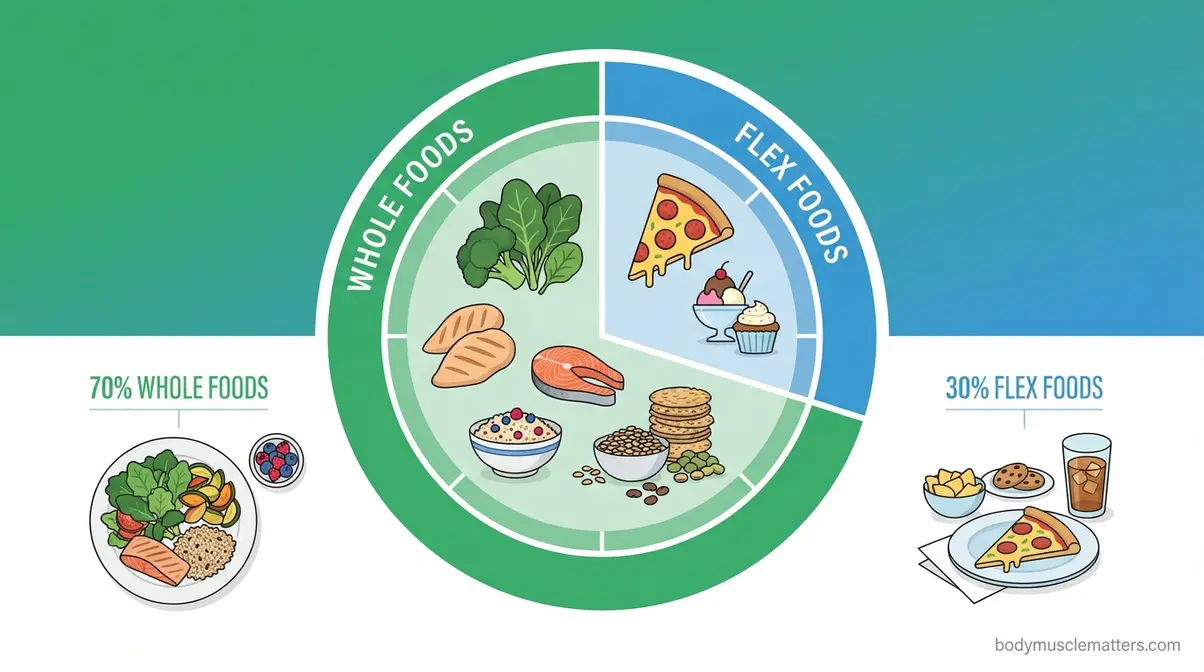
The 70/30 diet is a flexible eating framework built on the principle that what you eat drives approximately 70% of your weight management results, while exercise and lifestyle habits account for the remaining 30%. Here at bodymusclematters.com, we emphasize that it’s not a single formalized clinical protocol with a rigid meal plan — it’s a practical heuristic that helps people prioritize food quality over gym heroics. A systematic review on combining diet and exercise confirmed that the most efficient approach to managing weight in adults combines portion-controlled eating with structured activity — neither element works optimally alone (NIH, 2023).
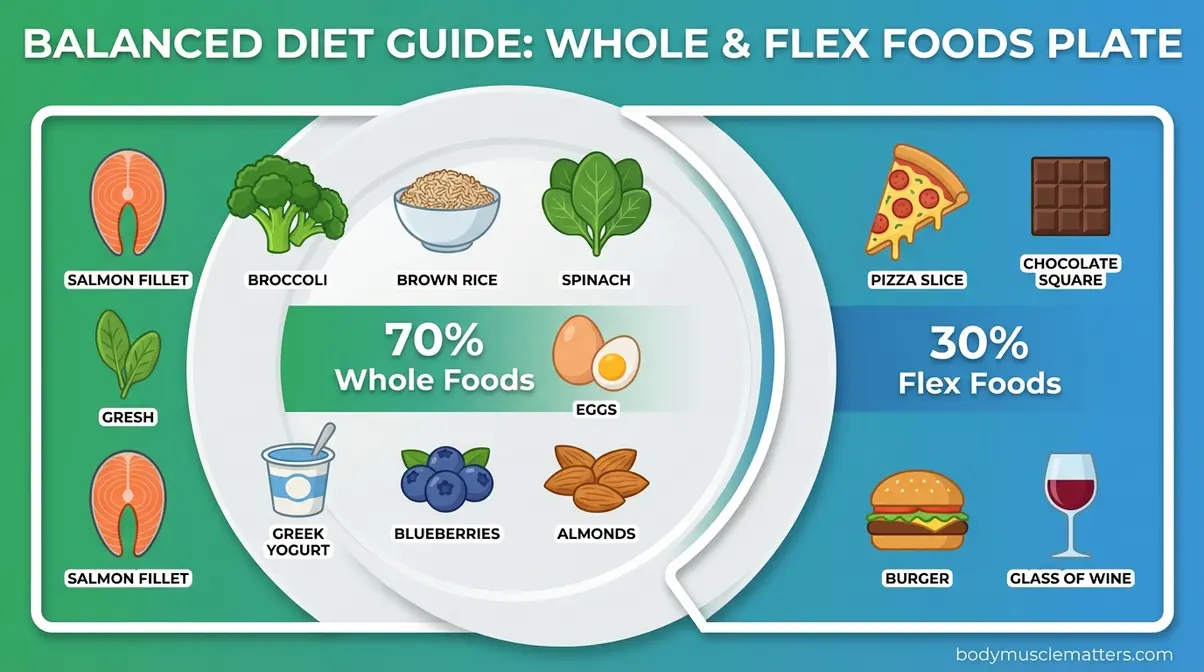
Caption: A visual breakdown of the 70/30 diet plate — 70% whole, nutrient-dense foods and 30% flexible choices for sustainable, real-life eating.
What makes the 70/30 rule particularly confusing for beginners is that the same name covers three different interpretations. Understanding which version someone is referring to — and which one applies to you — is the first step to making it work.
The 70% Diet, 30% Exercise Rule
This is the version you’ve most likely heard from a personal trainer or fitness influencer. It holds that 70% of your weight management results come from your food choices, and just 30% from exercise. In plain language: you cannot out-train a bad diet.
It’s worth being transparent here. The exact 70/30 split is a widely repeated fitness community heuristic — it originated in gym culture and isn’t traced to a single peer-reviewed formula. However, the underlying principle is well-supported by clinical science. A systematic review on combining diet and exercise confirmed that combining dietary portion control with structured exercise produced the most effective weight management outcomes in adults (NIH, 2023). The ratio captures a real truth, even if the precise numbers are a useful approximation rather than a laboratory result.
Consider this mental model: a 30-minute run burns roughly 300 calories. A large fast-food combo meal can pack 1,200 calories or more. The math alone shows why kitchen choices carry more weight than cardio choices. That’s why understanding the food side first — before overhauling your exercise routine — is where most people get the best early results.
Where the diet/exercise ratio focuses on effort allocation, the second interpretation is about food quality — and it’s the version that most everyday eaters actually find livable.
The 70% Clean, 30% Flex Approach
This is the lifestyle version of the 70/30 rule, and it’s the one that resonates most with people who’ve burned out on strict diets. Here, 70% of your meals and snacks are built from “clean” foods — and 30% is reserved for real-life flexibility.
“Clean eating” means choosing minimally processed whole foods: think vegetables, lean proteins (lower-fat sources like chicken breast, fish, eggs, and legumes), whole grains, and healthy fats. The 30% flex portion isn’t a cheat day or a free-for-all — it’s proportional. In a week of 21 meals, roughly 14 to 15 are whole-food-focused and 6 to 7 allow for more relaxed choices. No food is permanently off-limits.
This is where The Consistency Threshold becomes the real “secret sauce” of the framework. Research on habit formation suggests that sustainable behavior change — not perfection — is what produces long-term metabolic results. The 70/30 clean eating approach works not because 70% is a magic number, but because it’s achievable for real people with real lives. It shifts your relationship with food from “all or nothing” to “mostly good, sometimes fun” — and that shift is what separates a sustainable lifestyle from yet another crash diet.
There’s one more version of the 70/30 rule — a more technical one used in specific low-carb dietary protocols.
The 70% Fat, 30% Protein Macro Split
Macronutrients — or “macros” — are the three main categories of nutrients your body uses for energy: protein, fat, and carbohydrates. In ketogenic or carnivore eating plans, a 70/30 macro split means approximately 70% of your daily calories come from fat and 30% from protein, with carbohydrates reduced to near zero.
This is a completely distinct interpretation from the lifestyle 70/30 rule above — beginners frequently confuse the two. One is a general food quality ratio; the other is a specific macronutrient prescription used in therapeutic or performance contexts.
For context: the acceptable macronutrient distribution ranges established for general adults set fat at 20–35% of daily calories — far below keto’s 70% fat target (NCBI, 2023). If you’re working with a healthcare provider on a medical nutrition plan, this distinction matters significantly. Related ratio diets — like the 40/30/30 plan (40% carbohydrates, 30% protein, 30% fat, also called the Zone Diet) and the 80/20 rule — share the same percentage-based naming logic. These are compared in a later section.
How the 70/30 Diet Aids Weight Loss
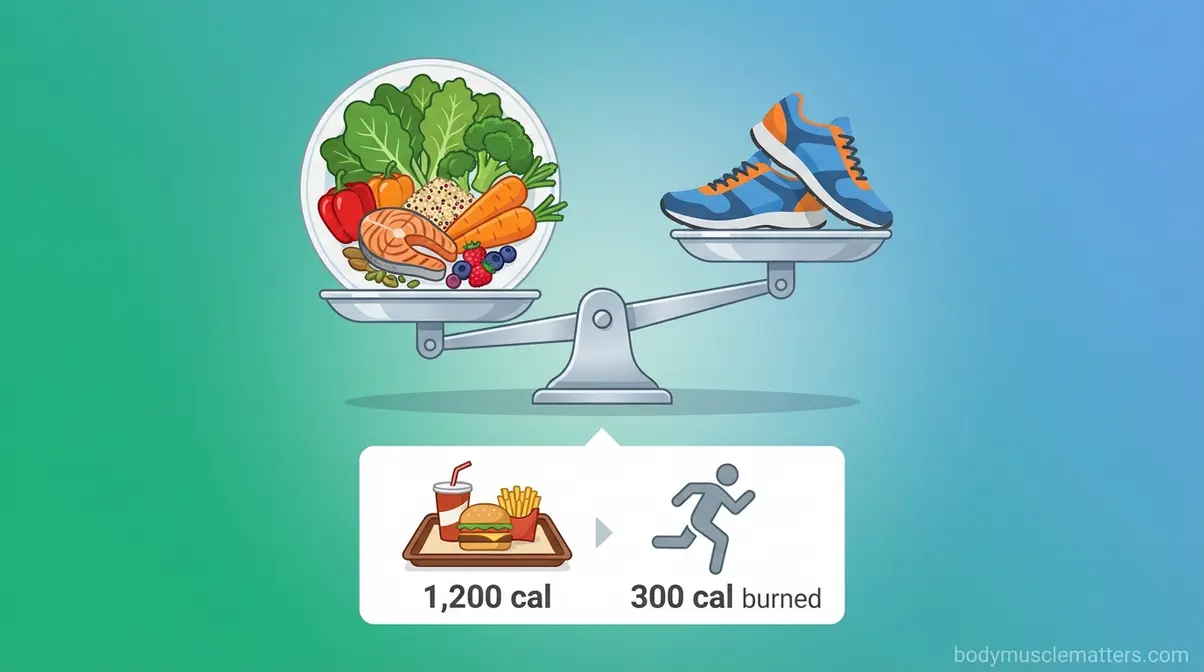
The 70/30 diet works for weight loss because it treats diet as the primary lever — not a supporting player. Understanding why food choices dominate the equation helps anyone who’s been gym-focused without results finally redirect their energy where it counts most.
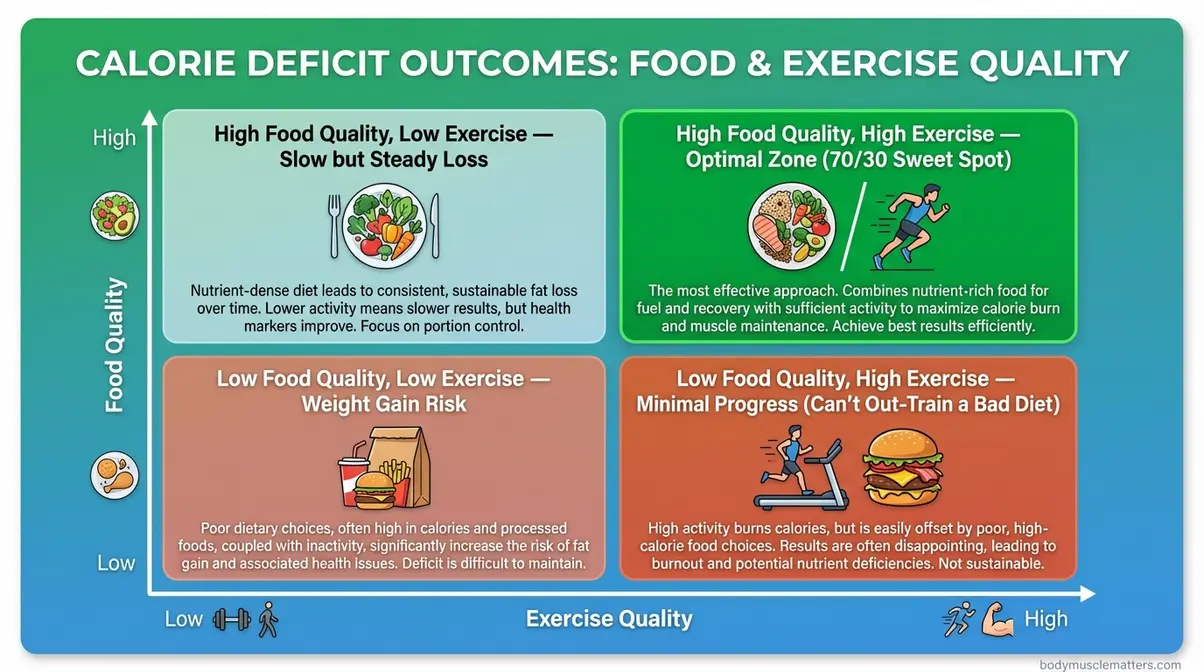
Caption: The 70/30 calorie deficit matrix — why food quality decisions account for the majority of weight management outcomes compared to exercise alone.
Why Food Matters More Than Exercise
Weight loss requires a calorie deficit — eating fewer calories than your body burns in a day. Exercise contributes to that deficit, but food choices determine the majority of the calorie equation. A single high-calorie meal can easily reverse an hour of cardio.
For anyone wondering what is the best diet to lose belly fat, research consistently points to dietary quality and portion control as the primary drivers, not isolated abdominal exercises or extra gym sessions. Clinical research on physical activity for weight maintenance from the University of Colorado Anschutz Medical Campus found that successful long-term weight-loss maintainers averaged 12,000 steps daily — relying on consistent activity rather than chronic food restriction to prevent regain (CU Anschutz, 2023). This is a crucial distinction: the most effective long-term maintainers move consistently, not obsessively, while keeping their food quality high.
The takeaway for an overwhelmed beginner isn’t “stop exercising” — it’s “understand where to focus first.” Getting your food quality right 70% of the time before obsessing over your workout schedule is a more effective sequence than most gym plans suggest.
Building a Sustainable Calorie Deficit
A calorie deficit means consistently eating fewer calories than your body uses each day. Over time, your body taps stored fat for energy — leading to gradual, sustainable weight loss. The challenge most people face is that creating a deficit through willpower alone is exhausting and rarely lasts.
The 70% whole foods portion of this approach creates a natural deficit without strict calorie counting. Whole foods are generally lower in calorie density (fewer calories per bite) and higher in fiber (which keeps you fuller longer). Vegetables, legumes, and lean proteins do more to satisfy hunger per calorie than ultra-processed snack foods — so eating more of them naturally reduces total intake.
Unlike a low-fat diet, which restricts a specific macronutrient, the 70/30 approach focuses on food quality ratios rather than macro elimination. That flexibility is a key reason it tends to feel more manageable for beginners navigating conflicting diet information.
Does Fasting From 7pm to 7am Work?
A 12-hour eating window (finishing by 7pm, resuming after 7am) is a gentle form of time-restricted eating that may support weight management when combined with good food quality. A systematic review of intermittent fasting outcomes — analyzing 27 clinical trials — found that time-restricted eating produced weight loss of 0.8% to 13.0% of baseline body weight, comparable to traditional calorie restriction (PubMed Central, NIH, 2020). While longer fasting windows (16:8) show stronger results in some studies, a 12-hour window is one of the most sustainable options for beginners — especially seniors. It works best as a complement to the 70/30 approach, not as a standalone strategy.
What to Eat on the 70/30 Diet
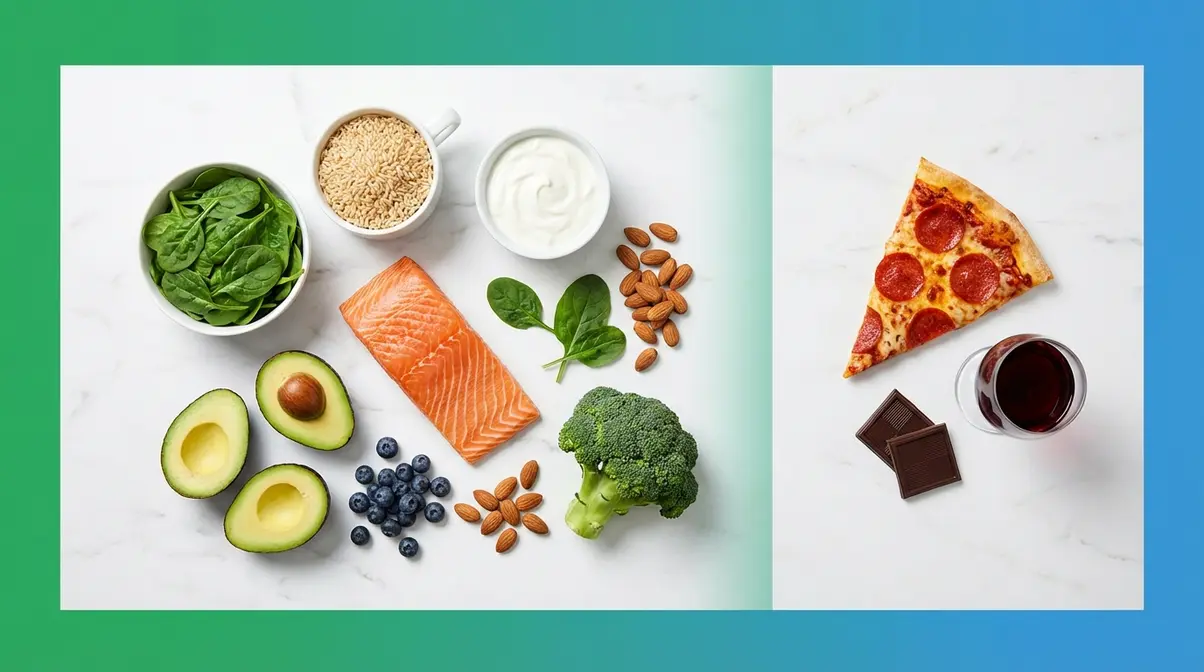
On the 70/30 diet, a balanced plate includes lean proteins, vegetables, whole grains, and healthy fats as the majority, with 30% reserved for real-life flexibility — no food is permanently off-limits. This section gives you a concrete starting point: specific foods, not vague categories.
The 70%: Clean Foods That Count
“Clean foods” on the 70/30 diet are whole, minimally processed foods that deliver maximum nutrition relative to their calorie content. These are the foods that build your foundation — and fill roughly 70% of your plate, your grocery cart, and your week.
Your 70% food list:
- Vegetables: Leafy greens (spinach, kale, arugula), broccoli, cauliflower, bell peppers, zucchini, sweet potatoes
- Lean proteins: Chicken breast, turkey, salmon, tuna, eggs, Greek yogurt, lentils, black beans, tofu
- Whole grains: Brown rice, oats, quinoa, whole wheat bread, barley
- Healthy fats: Avocado, olive oil, almonds, walnuts, chia seeds
- Fruit: Blueberries, apples, bananas, oranges, berries of all kinds
- Legumes: Chickpeas, kidney beans, edamame
Prioritizing protein at breakfast — eggs, Greek yogurt, or a protein-rich smoothie — is one of the most effective ways to reduce hunger throughout the day, reducing the temptation to dip into your 30% before you intend to.
The 30%: What Flex Foods Are Allowed
The 30% flex portion is where the 70/30 diet earns its reputation as a sustainable “old school weight loss plan.” This isn’t a cheat window — it’s a planned, proportional allowance for real life.
Your 30% flex list includes:
- Pizza, burgers, or takeout (in reasonable portions)
- Desserts and sweet treats
- Alcohol (in moderation)
- Processed snacks like chips or crackers
- Restaurant meals where you can’t fully control the ingredients
- Social eating occasions — birthday cake, holiday meals, dinner parties
The key distinction: the 30% is spread across the week, not saved up for a single binge. Think of it as roughly 6–7 meals or snack occasions per week where your choices are more relaxed. Each time you fill 70% of your plate with whole foods, you’re reinforcing The Consistency Threshold — building the automatic habit that makes this framework actually work over time, not just for 30 days.
7-Day Meal Plan Snapshot
Here’s a 3-day preview of what the 70/30 clean eating approach looks like in practice. The full 7-Day Meal Plan PDF (with grocery lists and macro breakdowns) provides the complete week.
| Day | Breakfast | Lunch | Dinner | Flex |
|---|---|---|---|---|
| Monday | Oats with blueberries + 2 eggs | Grilled chicken salad, olive oil dressing | Baked salmon, brown rice, broccoli | — |
| Tuesday | Greek yogurt, banana, almonds | Lentil soup + whole grain bread | Turkey stir-fry with quinoa and peppers | Small chocolate square |
| Wednesday | Scrambled eggs + avocado toast | Tuna salad wrap on whole wheat | Chicken thighs, sweet potato, green beans | Pizza slice (1–2) |
Download the full 7-Day 70/30 Diet Meal Plan PDF (includes grocery lists and macro breakdowns) for the complete week with portion guidance.
70/30 vs. Similar Ratio Diets
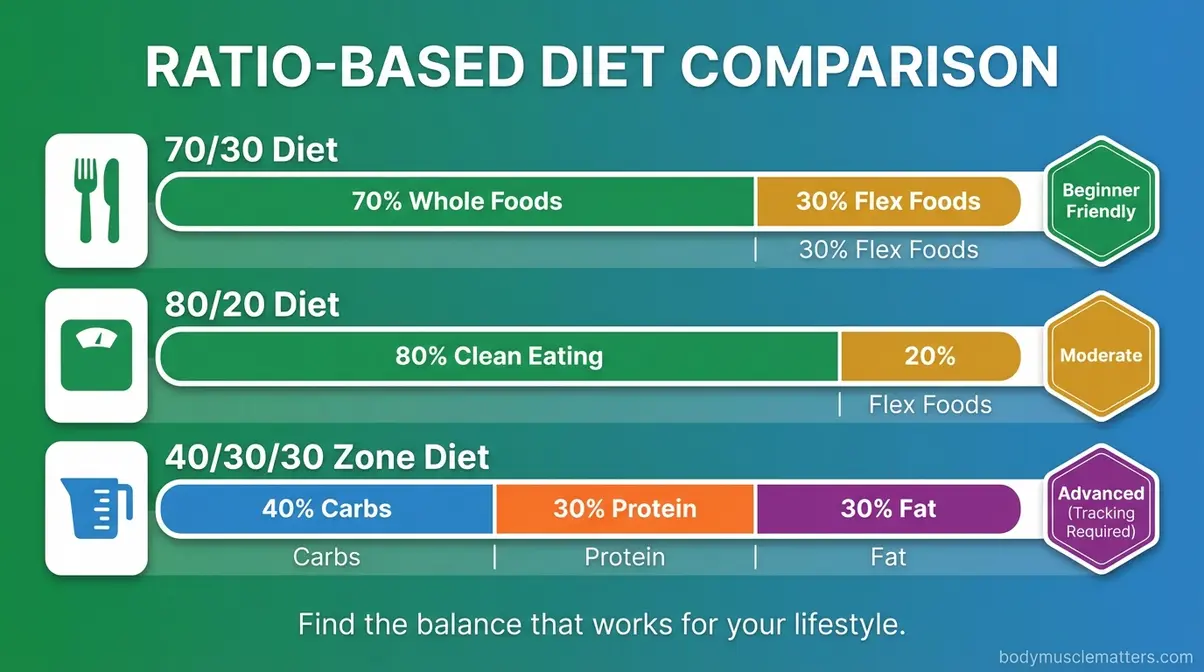
Caption: How the 70/30 diet compares to similar ratio-based approaches — from the more lenient 80/20 rule to the macro-precise 40/30/30 Zone diet plan.
The 70/30 diet doesn’t exist in isolation. It shares shelf space with several popular ratio-based approaches, and the differences between them matter more than most beginners realize.
70/30 vs. the 80/20 Rule
The 80/20 diet follows the same structural logic as the 70/30 clean eating approach — eat nutritiously 80% of the time, allow flexibility for the remaining 20%. In a week of 21 meals, the 80/20 rule permits roughly 4 flex meals compared to the 70/30 rule’s 6–7.
The practical difference: The 80/20 rule is slightly more lenient but leaves less margin for error on weeks when life gets messy. The 70/30 rule builds in more real-life flexibility, which some people find more realistic long-term. Neither has a proven superiority over the other in clinical trials — the best ratio is whichever one you’ll actually maintain. Both outperform rigid elimination diets in adherence research, because they remove the psychological pressure of perfection.
70/30 vs. the 40/30/30 Macro Plan
The 40/30/30 plan — often called the Zone Diet — operates on an entirely different level. Instead of splitting clean meals from flex meals, it prescribes precise daily macronutrient percentages: 40% of calories from carbohydrates, 30% from protein, and 30% from fat. Every meal and snack is calibrated to maintain this ratio.
This distinction is important: the 70/30 diet is a lifestyle ratio (what proportion of your choices are healthy vs. flexible), while the 40/30/30 plan is a macronutrient ratio (what proportion of your calories come from each macronutrient). Confusing the two is one of the most common beginner mistakes. The 40/30/30 approach requires tracking and food weighing — making it more structured but significantly less beginner-friendly than the 70/30 framework.
Is the 70/30 Rule a Fad Diet?
The short answer: no — but the longer answer is worth understanding.
A fad diet typically promises rapid results through drastic, unsustainable restriction. The 70/30 framework does the opposite. Its core mechanism — building consistent habits rather than demanding perfection — aligns directly with what clinical dietary research recommends for long-term weight management. The DASH diet and the Harvard Alternative Healthy Eating Index (AHEI), both Tier 1 clinical frameworks, share the 70/30 rule’s fundamental principle: prioritize whole, nutrient-dense foods as the majority of intake while allowing natural flexibility.
“Therefore, it’s not scientifically possible to eat everything you want and lose weight — even with a ‘magic pill’ in place.”
This is the honest truth that separates the 70/30 rule from fad thinking. The framework works precisely because it doesn’t promise effortless dieting. The 30% flex portion isn’t permission to ignore calories — it’s a structured release valve that prevents the deprivation-binge cycle that kills most strict diets. The evidence indicates this approach to consistency is what separates those who maintain weight loss from those who regain it.
The 70/30 Diet and Heart-Healthy Eating
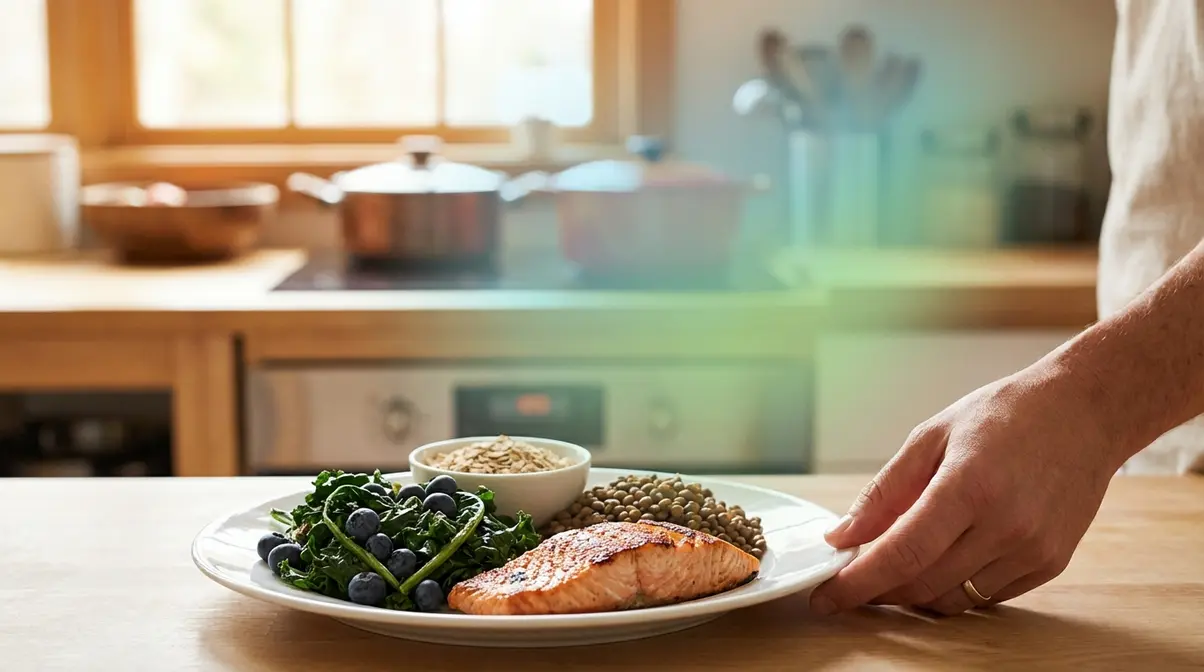
The 70/30 diet’s emphasis on whole, plant-forward foods puts it in direct alignment with the most clinically validated heart-healthy eating patterns available. This isn’t a coincidence — it reflects a convergence of what dietary science keeps confirming.
DASH and Mediterranean Diets
The DASH diet (Dietary Approaches to Stop Hypertension) — developed by the NHLBI to lower blood pressure — prioritizes vegetables, fruits, whole grains, lean proteins, and low-fat dairy while limiting sodium, added sugars, and saturated fats. The Mediterranean diet emphasizes similar whole-food categories with additional focus on olive oil, fish, and legumes. Both have been ranked among the top heart-healthy diets by nutrition experts in 2026, according to Medical News Today’s annual review of leading dietary frameworks.
Research from the European Heart Journal (2026) found that both DASH and Mediterranean approaches reduced the prevalence of metabolic syndrome in adults, with the Mediterranean diet showing superior blood pressure reduction when combined with sodium restriction. The 70/30 clean eating approach is not identical to either — but it maps closely to their shared foundation: whole foods as the majority, real-life flexibility built in.
For anyone whose primary motivation is cardiovascular health alongside weight management, the 70/30 framework provides a practical entry point into evidence-backed dietary habits without requiring the detailed tracking or food weighing that clinical DASH protocols sometimes involve.
The 70/30 Diet for Seniors
Older adults — generally defined as those 65 and above — have distinct nutritional needs that most generic diet guides ignore completely. Muscle mass naturally declines with age (a process called sarcopenia), calorie needs decrease, yet micronutrient needs often increase. The 70/30 clean eating framework adapts well to this profile.
According to the National Institute on Aging’s healthy meal planning guidance, older adults benefit most from nutrient-dense foods: a variety of vegetables, fruits, whole grains, seafood, poultry, and low-fat dairy — closely mirroring the 70/30 clean eating list. A practical, low-effort addition many seniors find helpful is a simple 12-hour eating window — finishing dinner by 7pm and starting breakfast after 7am. This gentle time restriction requires no calorie counting and aligns naturally with the 70/30 framework’s emphasis on habit over intensity.
What Are 5 Foods That Seniors Should Eat Every Day?
Seniors benefit most from fatty fish, dark leafy greens, berries, beans or lentils, and whole grains eaten regularly. Fatty fish like salmon deliver omega-3s that protect both heart and brain health. Dark leafy greens provide vitamins K and C for bone integrity. Berries offer antioxidants associated with cognitive support. Beans and lentils supply plant protein and blood sugar-stabilizing fiber. Whole grains like oats provide sustained energy and digestive health. The National Council on Aging identifies these food groups as among the most beneficial for healthy aging (NCOA, 2026).
What Three Foods Should Seniors Avoid Eating?
Seniors are best served by limiting high-sodium processed foods, foods with heavy added sugars, and excess saturated fats. High-sodium foods — including processed meats, canned soups, and salty snacks — raise blood pressure, which carries greater cardiovascular risk as we age. Added sugars contribute to blood sugar instability and systemic inflammation. Excess saturated fat, found in fatty red meats and full-fat processed products, is linked to cardiovascular disease risk. The American Heart Association (2026) recommends seniors focus every calorie on nutrient density, given that total calorie needs decrease with age while micronutrient needs remain high or increase.
When the 70/30 Diet Needs Adjustment
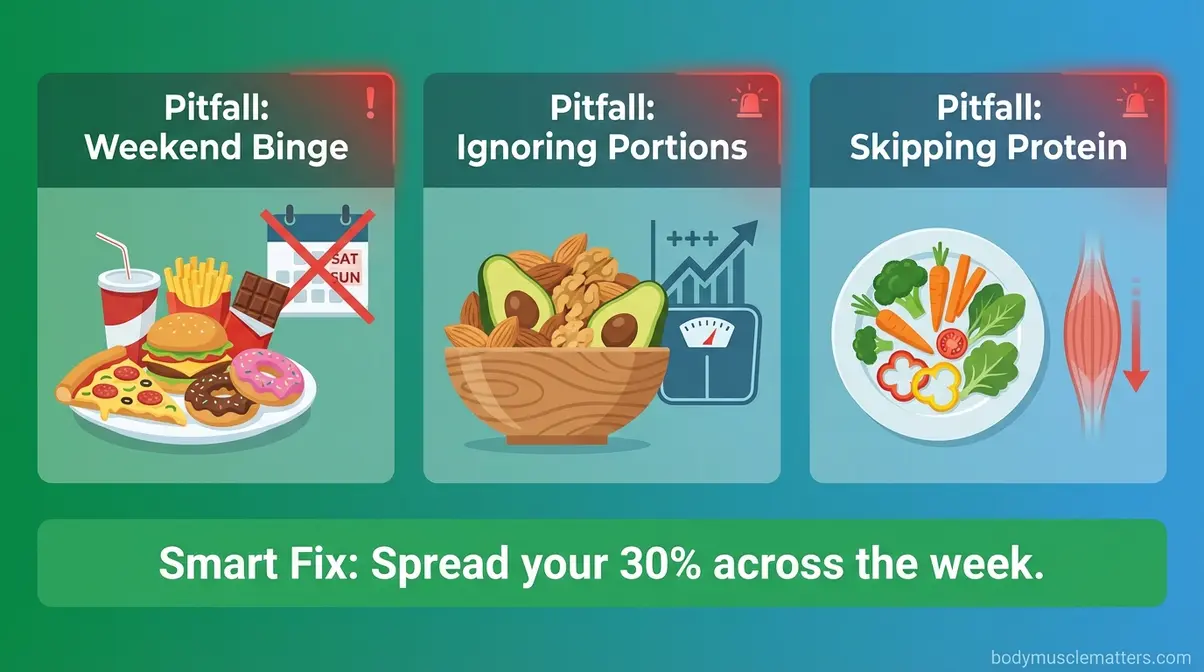
The 70/30 framework is genuinely flexible — but “flexible” doesn’t mean “works for everyone without modification.” Knowing where beginners go wrong, and when a different approach is warranted, is part of using this framework responsibly.
Common Pitfalls Beginners Make
Pitfall 1: Treating the 30% as a weekly binge window. The flex portion is meant to be spread throughout the week — 6 to 7 moderate flex choices, not saved up for a Friday free-for-all that undoes five days of clean eating. Concentrated indulgence defeats the metabolic consistency the framework is designed to build.
Pitfall 2: Underestimating portion sizes in the 70%. Whole foods are healthier, but they still carry calories. Almonds, avocado, brown rice, and olive oil are all 70% foods — and all calorie-dense. Eating unlimited quantities of “clean” foods while ignoring portions is a common reason the scale stops moving.
Pitfall 3: Skipping protein. Many beginners fill their 70% with vegetables and grains but undereat protein. Lean proteins (chicken, fish, eggs, legumes) are critical for preserving muscle during weight loss and keeping hunger manageable throughout the day.
Who Should Modify the 70/30 Plan
The 70/30 framework is a general wellness heuristic — not a therapeutic protocol. Certain individuals should modify it significantly or work with a professional before applying it:
- People managing diabetes or blood sugar conditions: The 30% flex portion may need tighter carbohydrate awareness. Consult a registered dietitian for a ratio that accounts for glycemic response.
- Those with kidney disease: High-protein foods in the 70% category (legumes, fish, lean meats) may require adjustment based on individual kidney function and phosphorus/potassium tolerance.
- Athletes and highly active individuals: A standard 70/30 calorie distribution may not provide sufficient energy for high-volume training. Macronutrient calibration with a sports dietitian may be more appropriate.
- Individuals with a history of disordered eating: Ratio-based frameworks can occasionally reinforce rigid thinking. A non-diet approach supervised by a registered dietitian may be a better starting point.
When to Talk to Your Doctor
Before making significant dietary changes, consult a registered dietitian or your doctor — particularly if you:
- Take medication that interacts with specific foods (e.g., blood thinners and leafy greens, statins and grapefruit)
- Have an existing condition like cardiovascular disease, type 2 diabetes, or kidney disease
- Are pregnant or breastfeeding
- Have experienced unexplained weight gain or loss without dietary changes
- Feel persistent fatigue, dizziness, or digestive distress after changing your eating pattern
No lifestyle eating framework — including the 70/30 diet — replaces individualized clinical guidance. A qualified professional can help you adapt the ratio to your specific health profile and make it genuinely safe and effective for the long term.
Frequently Asked Questions
What is the 70/30 rule for weight loss?
The 70/30 rule for weight loss states that approximately 70% of your results come from dietary choices and 30% from physical activity. This doesn’t mean exercise is unimportant — it means that food quality and portion control are the dominant variables in the weight loss equation. A systematic review published by the NIH confirmed that combining portion-controlled eating with structured exercise produced the best outcomes in adult weight management (NIH, 2023). For most people, fixing their diet first delivers faster early results than doubling their gym time.
How did Kelly Clarkson really lose weight?
Kelly Clarkson lost approximately 60 pounds through a combination of dietary changes, increased daily movement, and medical support for a prediabetes diagnosis. Her approach emphasized protein-focused eating, whole unprocessed foods, and walking — not extreme restriction or surgical intervention. She has publicly discussed using a prescription medication to help her body process sugar more effectively, alongside lifestyle changes including infrared sauna use. Her journey reflects the 70/30 principle in practice: food quality and consistent daily movement over heroic gym sessions (Healthline, 2026; Women’s Health, 2026).
Is the 70/30 diet the same as the 80/20 diet?
No — the 70/30 and 80/20 diets share the same structure but differ in their flexibility ratio. The 80/20 rule permits roughly 4 flex meals per week (in a 21-meal week), while the 70/30 approach allows 6 to 7. The 80/20 rule is slightly stricter on the indulgence side. Both outperform rigid elimination diets in long-term adherence because they avoid the deprivation-binge cycle. The right choice depends entirely on which ratio you’ll realistically maintain — not which one sounds more disciplined.
Do I need to count calories on the 70/30 diet?
Calorie counting is not required on the 70/30 diet, but portion awareness matters. The 70% whole foods portion naturally creates a lower-calorie-density eating pattern — whole foods are generally higher in fiber and protein, which promote fullness with fewer calories. However, even healthy foods carry calorie counts. If the scale isn’t moving after 4–6 weeks, a brief period of rough calorie tracking can help identify whether portion sizes are the hidden variable. Consult a registered dietitian before making significant dietary changes.
Can the 70/30 diet work for vegetarians or vegans?
Yes — the 70/30 diet adapts well to plant-based eating. The 70% clean food list is naturally plant-forward: vegetables, legumes, whole grains, fruits, nuts, and seeds form the core of both vegetarian and 70/30 clean eating. Vegans simply build protein from lentils, tofu, tempeh, edamame, and chickpeas rather than animal sources. The key adjustment is ensuring adequate protein and vitamin B12 intake — areas where a registered dietitian can provide specific guidance for plant-based practitioners.
What is the 40/30/30 diet?
The 40/30/30 diet — also called the Zone Diet — divides daily calories into 40% carbohydrates, 30% protein, and 30% fat across every meal. Unlike the lifestyle-ratio 70/30 approach, the 40/30/30 plan is a macronutrient framework requiring precise portion measurement and food tracking. It’s designed to stabilize blood sugar and reduce hunger through hormonal balance. Research suggests it can support weight loss in the short term, but the tracking requirements make it significantly more demanding than the 70/30 clean eating approach for most beginners.
The Bottom Line on the 70/30 Diet
The 70/30 diet is one of the most beginner-accessible weight management frameworks because it works with real human behavior rather than against it. For anyone overwhelmed by conflicting diet advice, the core message is straightforward: prioritize whole, nutrient-dense foods 70% of the time, allow genuine flexibility for the remaining 30%, and let consistency — not perfection — do the heavy lifting. A systematic review on combining diet and exercise confirms that this combined approach to diet quality and structured activity is the most effective long-term strategy for adults managing their weight (NIH, 2023).
The Consistency Threshold is what makes this framework clinically meaningful rather than just a catchy ratio. Eating well 70% of the time isn’t a compromise — it’s the metabolic sweet spot where sustainable habits form, where food stops feeling like an enemy, and where real-life social eating is a feature, not a failure. That shift in mindset is what separates people who maintain their results from those who cycle through diets endlessly.
Your next step is simple: start with your 70% food list. Stock your kitchen with three lean proteins, three vegetables, and one whole grain this week. Aim for 14 of your next 21 meals to come from that list — and let the other 7 be exactly what real life requires. Consult a registered dietitian or your doctor before making significant dietary changes, particularly if you have an existing health condition. The 70/30 approach gives you the structure to start — and the flexibility to actually keep going. Ready to get started? Download the full 7-Day 70/30 Diet Meal Plan PDF today.