How Much Protein Per Day for Men: Your Exact Number
Home ›Supplements and Nutrition
Most men need between 56 and 200 grams of protein per day — and that enormous range is exactly why this question matters. The number that’s right for you depends on three things: your body weight, your goal, and your health profile.
Following the standard 0.8 grams per kilogram advice works if you’re sedentary and simply want to avoid deficiency. But active men, men over 60, and men on GLP-1 medications like Mounjaro all need something different — and applying the wrong number is actively counterproductive.
In this guide, you’ll get a step-by-step formula to calculate how much protein per day for men makes sense for your specific situation, a reference chart by body weight, and evidence-based answers for the circumstances most guides ignore — including kidney disease, GLP-1 medications, and age-related muscle loss.
Most men need 56–200g of protein per day — the right amount depends on body weight, activity level, and health goals.
- Sedentary men: 0.8 g/kg body weight is the evidence-based minimum (National Academy of Medicine, via NCBI)
- Active men building muscle: 1.4–2.0 g/kg is the research-supported range (ISSN, 2017)
- Men over 60: Need 1.0–1.3 g/kg to combat age-related muscle loss — sarcopenia (PMC, 2015)
- The Protein Pyramid Framework: Start with your baseline, adjust for your goal, then fine-tune for your health profile
⚠️ Medical Disclaimer
This article is for informational purposes only and does not constitute medical advice. Consult a physician or registered dietitian before making significant changes to your diet, especially if you have a pre-existing health condition such as kidney disease or if you are on prescription medications.
The Baseline: What the RDA Actually Means for Men
How we derived these recommendations: The figures in this article are drawn from National Academy of Medicine Dietary Reference Intakes, the USDA Dietary Guidelines for Americans 2020–2025, the International Society of Sports Nutrition position stands, and peer-reviewed clinical studies published in PubMed and PubMed Central. All recommendations reflect consensus from Tier 1–2 academic and government sources.
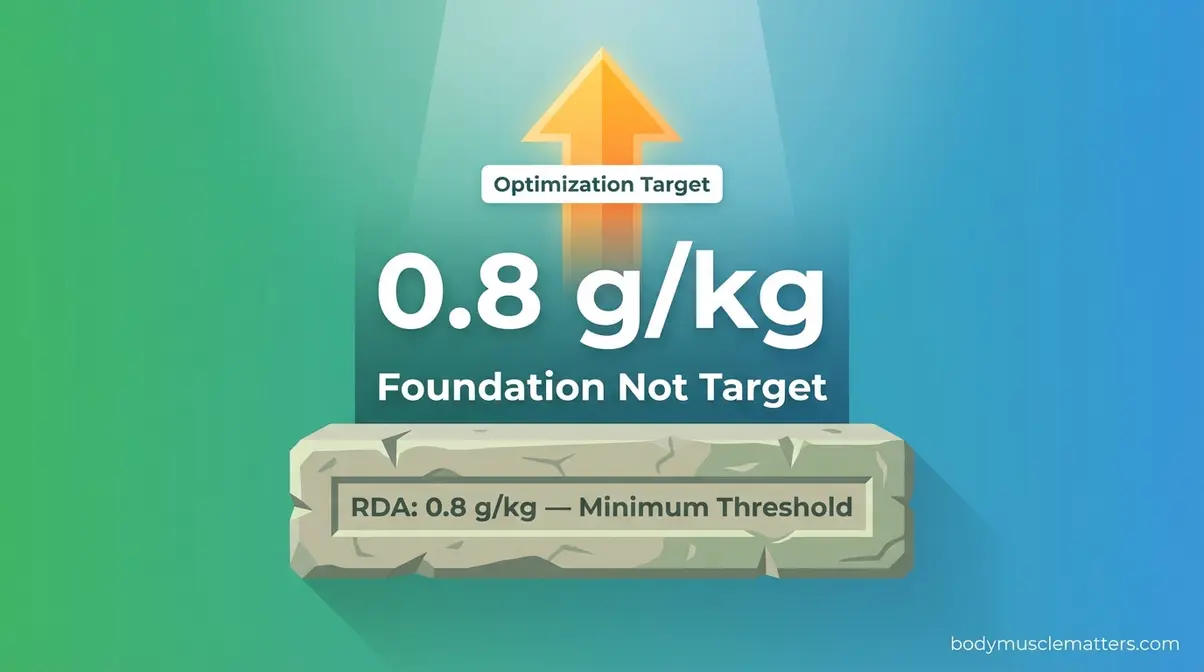
For most adult men, the minimum recommended protein intake is 0.8 grams per kilogram of body weight per day — the Recommended Dietary Allowance for protein set by the National Academy of Medicine, the scientific body that sets U.S. dietary reference intakes. For a 180-pound (82 kg) man, that equals approximately 66 grams of protein daily (NCBI, 2024). But this number is a deficiency threshold, not a health target — and for active men, it’s meaningfully too low.
“It’s recommended to eat 1.2 to 1.7 grams of protein per kilogram of body weight per day per the Food and Nutrition Board of the Institute of Medicine.”
That guidance above reflects what most nutritional authorities actually recommend for health-conscious adults — well above the survival-level RDA. The disconnect between the RDA and real-world protein needs is where most men get confused, and it’s where the evidence matters most.



The Dietary Guidelines for Americans position protein as 10–35% of total daily calorie intake (USDA, 2020–2025). At 2,500 calories per day, that’s a range of 63g to 219g — which confirms that “more than the RDA” is well within safe and recommended territory.
Think of your protein needs as a pyramid: the RDA is your foundation — the non-negotiable floor. But where you land above that floor is determined by your goals and your health. The Protein Pyramid Framework — a three-tier decision system with a Foundation Layer (RDA baseline), a Goal Layer (activity and goal modifier), and an Optimization Layer (health and age fine-tuning) — gives every man a structured path to a defensible daily target. The next two sections build upward from that foundation.
Why the 0.8 g/kg Rule Is Just a Start
The Recommended Dietary Allowance for protein was established to prevent nitrogen deficiency in sedentary adults — a minimum for physiological survival, not a target for health optimization (NCBI, 2024). This distinction matters more than most men realize.
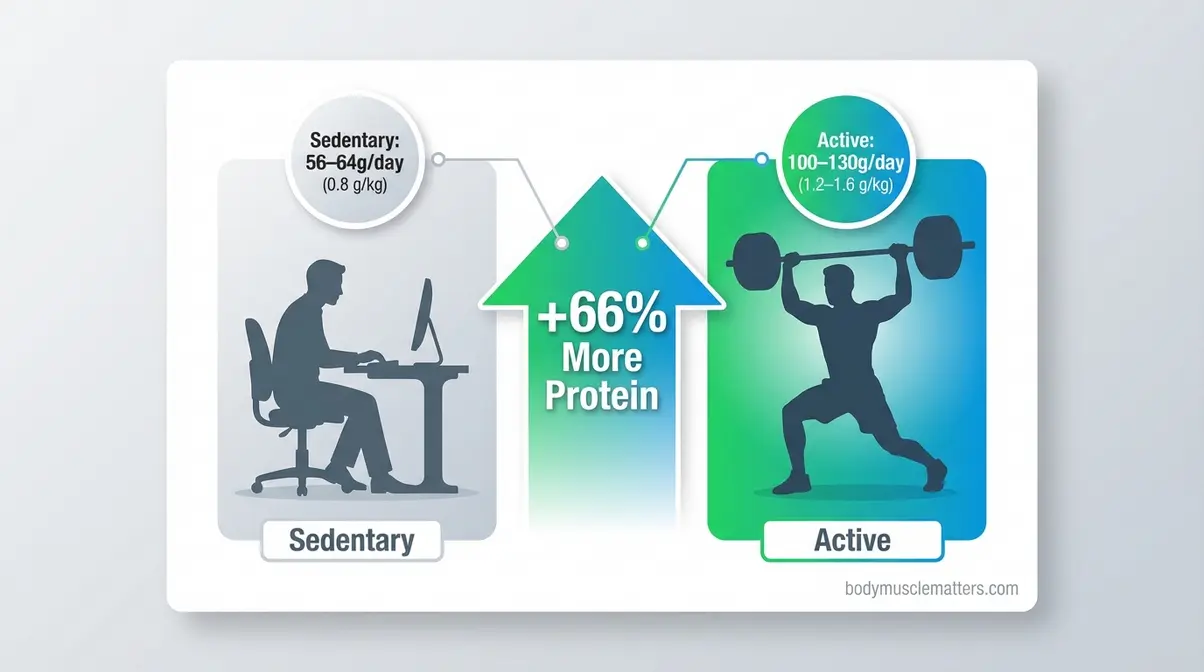
To understand the fundamental role of protein, consider the math first. For a 70 kg (154 lb) man, 0.8 g/kg = 56g of protein per day. For an 80 kg (176 lb) man, it’s 64g per day. These are the numbers often cited as “how much protein men need” — yet they were calculated to prevent nitrogen deficiency in a sedentary population studied decades ago, not to support an active man’s performance or health.
The USDA confirms that adults can safely consume 10–35% of total daily calories from protein — a range that allows for significantly higher intake than the RDA minimum (USDA Dietary Guidelines, 2020–2025). For a 175 lb sedentary office worker, the minimum sits at about 64g daily — roughly what you’d find in three large chicken breasts. But if he starts lifting weights three times a week, his optimal intake jumps to 100–130g. That’s not a marginal difference; it’s a complete recalibration.
Protein’s Role Beyond Building Muscle
Protein’s role extends well beyond muscle tissue. It serves as the raw material for enzymes that drive digestion and metabolism, hormones like insulin and growth hormone precursors, antibodies that power immune response, and the connective tissue that holds skin, tendons, and organs together.
Every system that relies on protein competes for the amino acids you consume. An active man synthesizing new muscle tissue must cover all of these demands on top of his training load. Think of protein as a budget: the RDA covers rent — basic survival. But you need substantially more to invest in growth, recovery, and long-term health optimization.
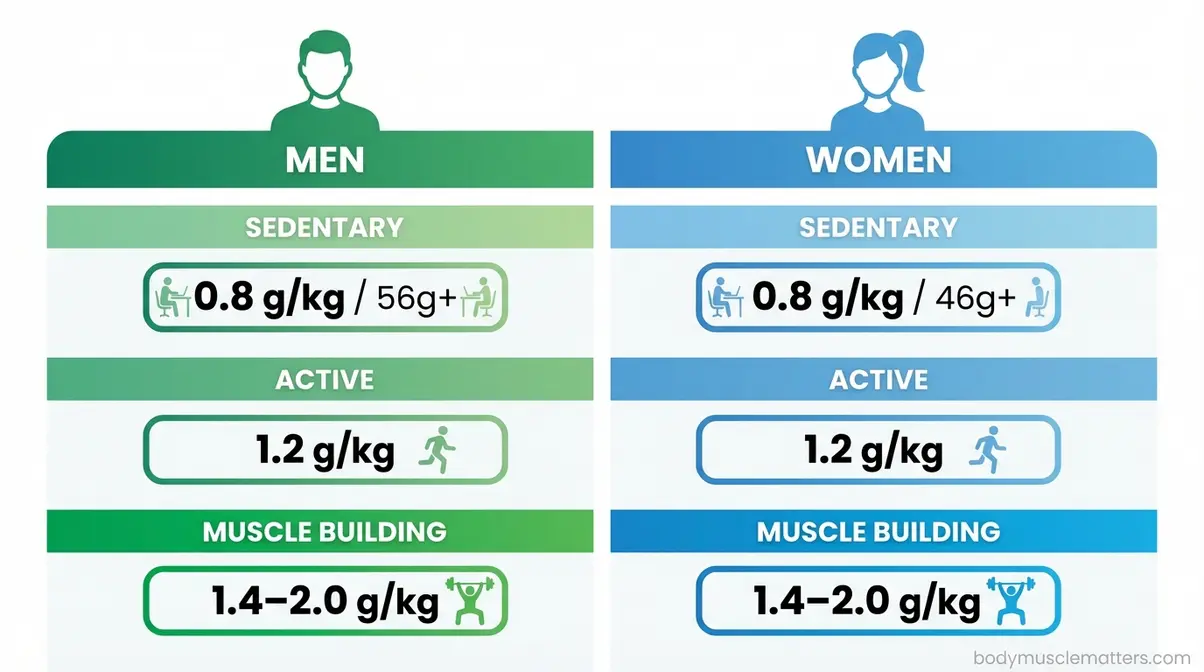
Now that you understand why the RDA is a floor and not a target, let’s use your actual body weight to calculate exactly how many grams of protein you need each day.
How to Calculate Your Exact Daily Protein Needs
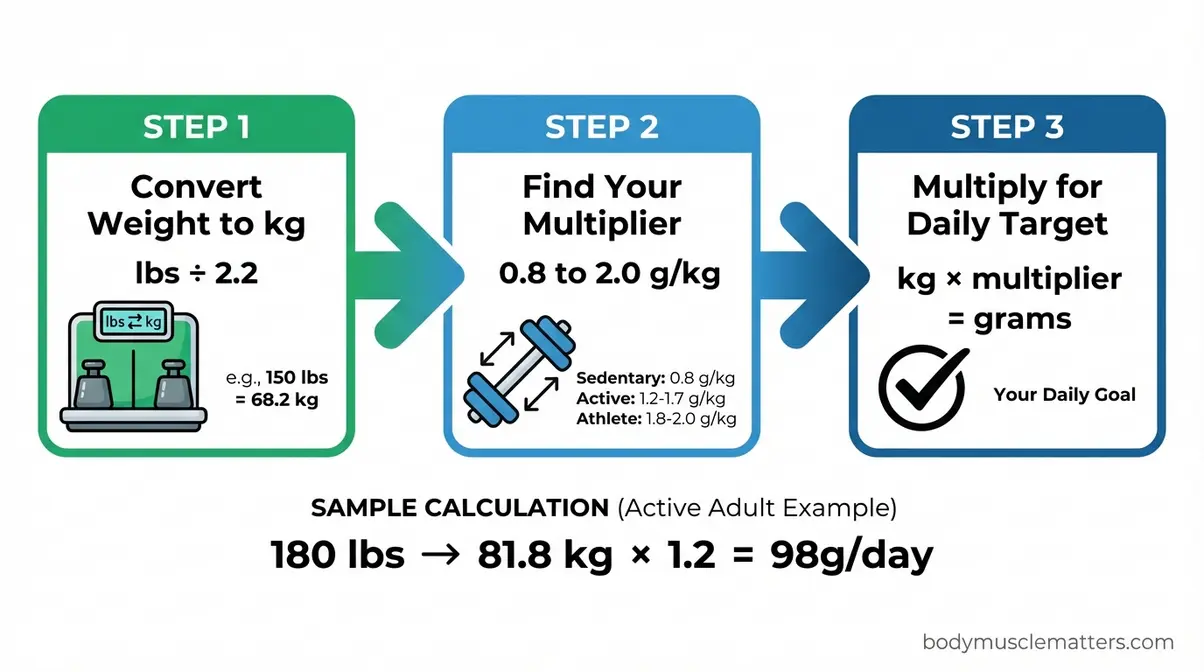
A 180-pound man needs approximately 65–82 grams of protein daily for general health — and up to 147 grams if he’s actively training for muscle growth. The difference comes down to one formula and a multiplier for your goal. The calculation below gets you to the Foundation Layer of the Protein Pyramid; in the next section, you’ll apply the Goal Layer multiplier for muscle building or fat loss.
“A 200-pound man needs between 73 and 91 grams of protein per day for general health, rising to 127–182 grams if actively building muscle” (based on USDA Dietary Reference Intakes and ISSN guidelines).
The Three-Step Protein Formula
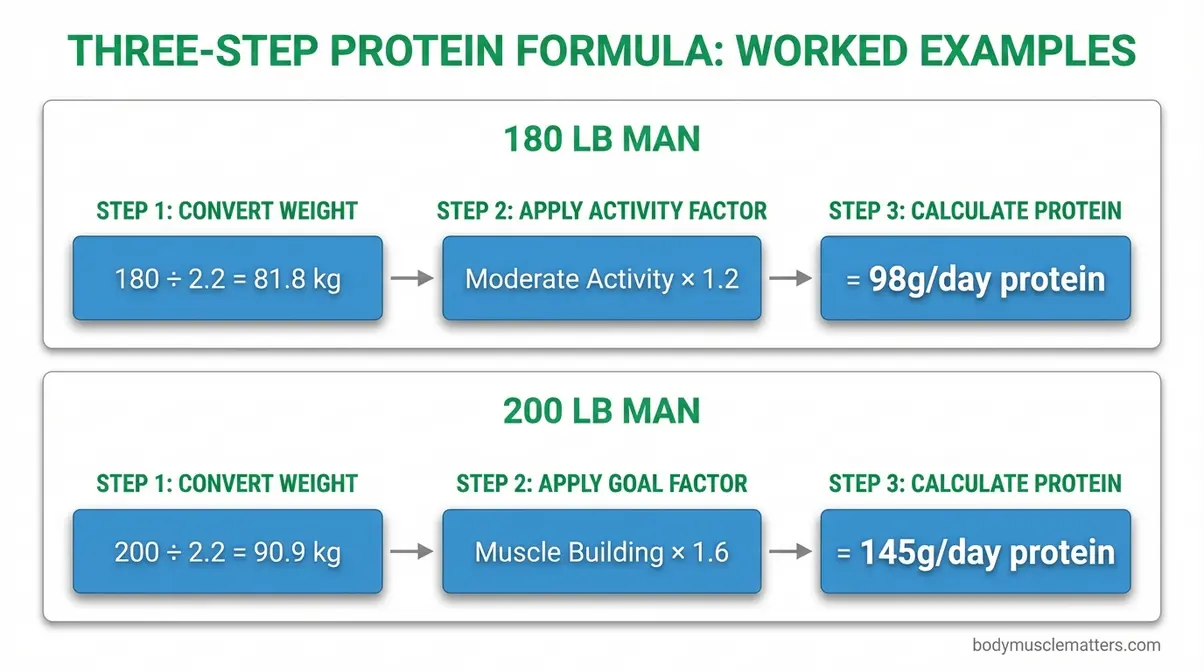
Translating a g/kg ratio into a personal daily target takes three steps. No calculator required.
Step 1: Convert your body weight to kilograms
Body weight in lbs ÷ 2.2 = weight in kg
- Step 2: Identify your activity multiplier
- Sedentary (desk job, minimal exercise): 0.8 g/kg
- Moderately active (exercise 2–4x/week): 1.0–1.2 g/kg
- Actively training (5+ sessions/week, building muscle): 1.4–2.0 g/kg
Step 3: Multiply to get your daily target
Weight (kg) × multiplier = daily protein target in grams
Worked example — 180 lb man: 180 ÷ 2.2 = 81.8 kg. For moderate activity at 1.2 g/kg: 81.8 × 1.2 = 98g of protein per day.
Worked example — 200 lb man: 200 ÷ 2.2 = 90.9 kg. For muscle building at 1.6 g/kg: 90.9 × 1.6 = 145g per day.
Worked example — 60 kg man: At sedentary: 60 × 0.8 = 48g. At moderate activity: 60 × 1.1 = 66g. This addresses the common query about how much protein is needed per day for a 60 kg man directly.
For a personalized calculation based on your exact age, sex, and activity level, the official USDA DRI calculator provides official Dietary Reference Intake figures (USDA, 2024).
Use those three steps for any body weight. But if you want the numbers at a glance, the chart below covers the most common weight ranges and activity levels.
Protein Targets by Body Weight Chart
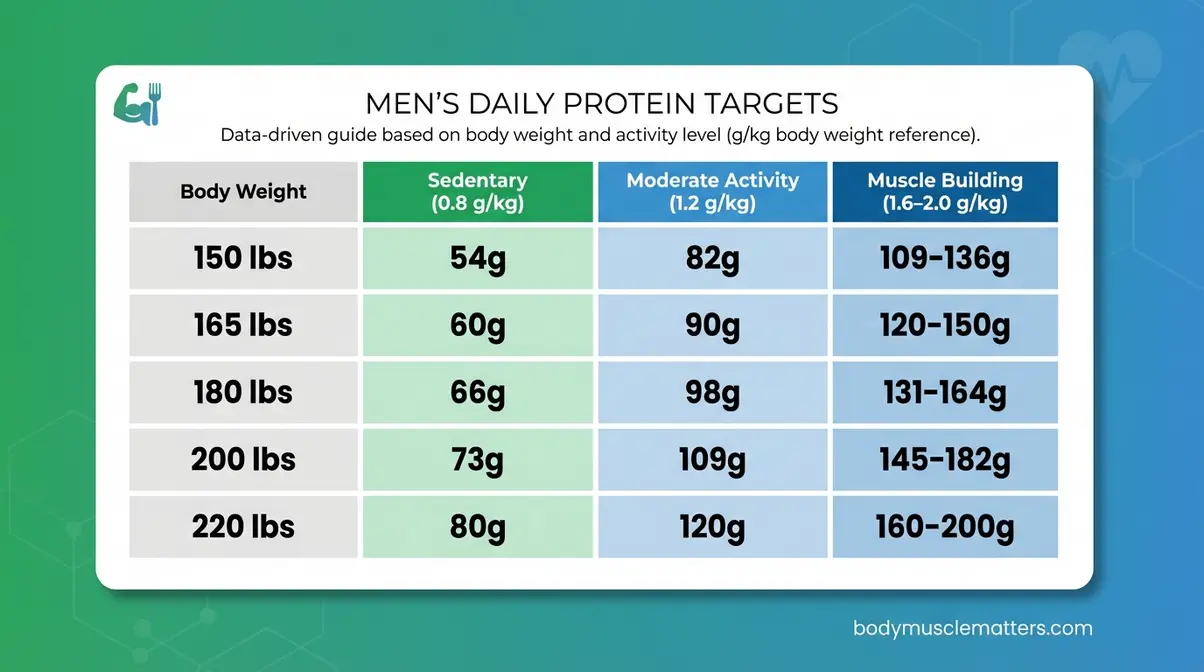
The table below calculates daily protein targets for men at five common body weights, across three activity levels. Find your row, select your goal.
| Body Weight | Sedentary (0.8 g/kg) | Moderate Activity (1.2 g/kg) | Muscle Building (1.6–2.0 g/kg) |
|---|---|---|---|
| 150 lbs (68 kg) | 54g | 82g | 109–136g |
| 165 lbs (75 kg) | 60g | 90g | 120–150g |
| 180 lbs (82 kg) | 66g | 98g | 131–164g |
| 200 lbs (91 kg) | 73g | 109g | 145–182g |
| 220 lbs (100 kg) | 80g | 120g | 160–200g |
The 200-pound man row is worth calling out directly: a 200 lb man needs a minimum of 73g and should target 145–182g for active muscle building. If you’re on a weight-loss diet, use the 1.2–1.6 g/kg range to preserve muscle. For men over 60, aim for 1.0–1.3 g/kg regardless of activity level — covered in detail below.
To use our protein calculator for personalized results that factor in your specific goals and age, visit our free interactive tool for a target in under 60 seconds.
Now you know your total daily target. The next section answers the most common follow-up: how much do you need specifically to build muscle, and does eating more protein always mean more muscle?
Protein for Muscle Building: A Complete Guide
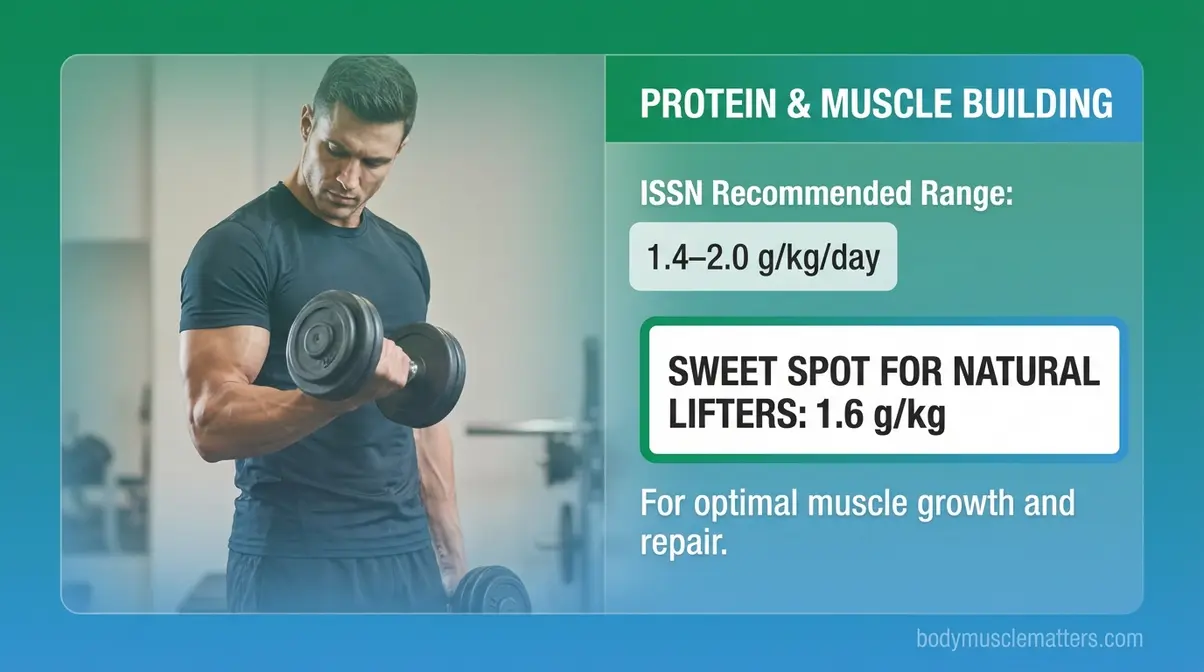
You’ve started lifting three times a week. Your friend at the gym says 200 grams of protein — your trainer says just hit your body weight in grams. Both can be right depending on one number: your body weight in kilograms. The Goal Layer of the Protein Pyramid shifts your baseline upward — for muscle building, that adjustment is the largest of the three layers.
“Research from the International Society of Sports Nutrition shows that 1.4–2.0 grams of protein per kilogram of body weight per day maximizes muscle protein synthesis in training men” (International Society of Sports Nutrition position stand, ISSN via PubMed, 2017).
Men protein intake for physically active individuals — according to Michigan State University Extension, a peer-reviewed educational resource for athletic nutrition — should target 1.2–2.0 g/kg of body weight (Michigan State University Extension, 2023).
Pros
- 28g protein per serving — one of the highest ratios available
- Third-party tested with no artificial ingredients
- Convenient way to hit daily targets when whole food isn’t practical
Cons
- A supplement, not a replacement for whole-food protein
- Premium price versus basic whey blends
The Best Range for Muscle Growth
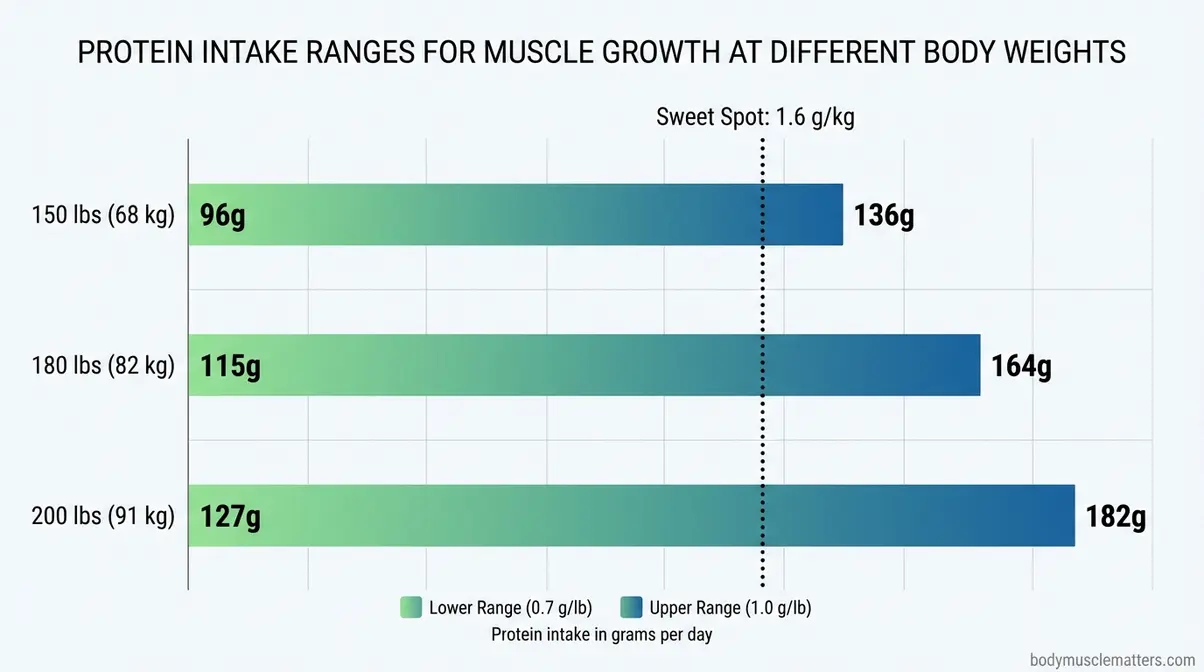
The research-supported range for muscle growth is 1.4–2.0 g/kg per day, with 1.6 g/kg frequently cited as the sweet spot in meta-analyses for natural lifters. The International Society of Sports Nutrition position stand confirms this range as optimal for maximizing muscle protein synthesis in resistance-trained men (ISSN via PubMed, 2017).
Here’s how the three common daily protein targets break down by body weight:
- 150g target: Appropriate for a man weighing approximately 85–107 kg (187–235 lbs) training at moderate intensity (1.4 g/kg)
- 180g target: Fits a 90–115 kg (198–253 lbs) man training hard at 1.6–2.0 g/kg
- 200g target: Fits a 100–125 kg man (220–275 lbs) at the high end of training intensity
Above 2.0–2.2 g/kg, the evidence for additional muscle synthesis benefit weakens substantially. Going higher wastes supplement budget and increases total caloric load without proportional muscle return — a ceiling most natural lifters never need to approach.
A common question: “Can you build muscle with 100g of protein if you’re 200 lbs?” At 90.9 kg, 100g equals only 1.1 g/kg — below the 1.4 g/kg evidence-based floor for muscle growth. Results will be slower and less efficient compared to targeting 130–145g. Progress isn’t impossible, but it’s meaningfully suboptimal.
For a detailed guide on protein for building muscle with full meal planning and supplement breakdowns, see our dedicated resource.
Does Protein Timing Actually Matter?
The per-meal recommendation from the ISSN is 20–40g of protein per dose to maximize muscle protein synthesis — especially post-exercise (ISSN via PubMed, 2017). This is the synthesis efficiency sweet spot, not a hard absorption ceiling.
The “anabolic window” concept — the idea that you must consume protein within 30 minutes of training — is largely overstated for non-elite athletes. Consuming protein within two hours of training is sufficient for most men. Hitting your daily total matters far more than precise timing.
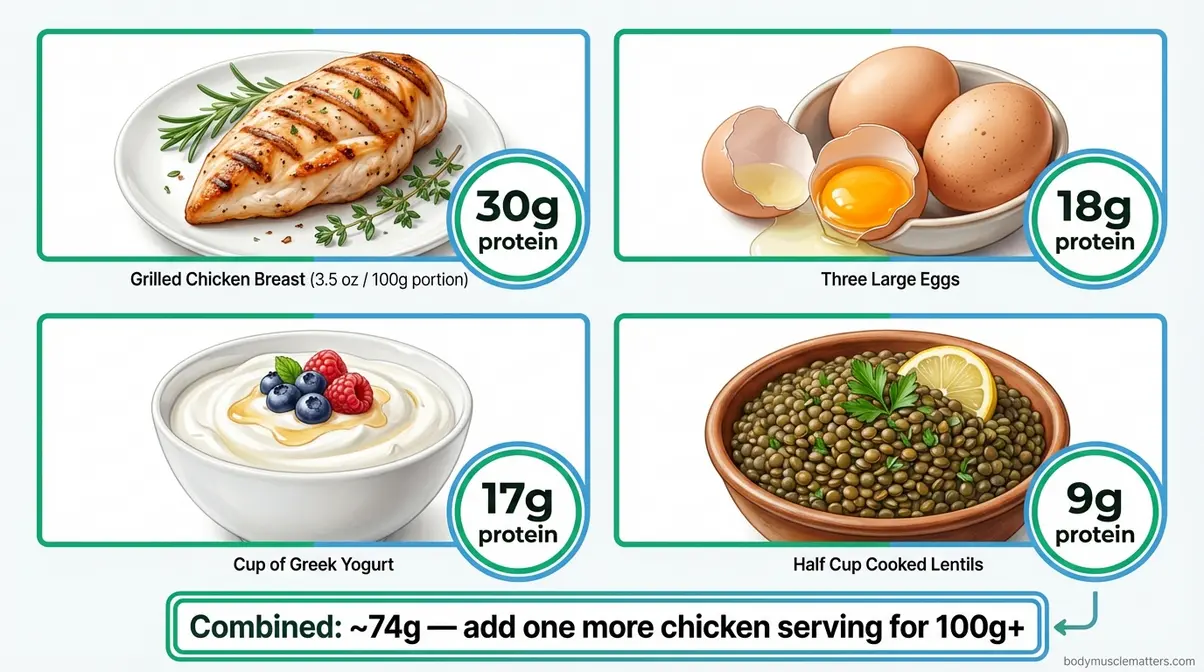
Practical distribution works like this: A man targeting 160g of protein daily might structure it as breakfast 40g, lunch 45g, dinner 45g, and a snack providing 30g. Spreading intake across 3–5 eating occasions is effective — not because of biological necessity, but because it’s easier to hit a large daily target incrementally than in one or two sittings.
Building muscle is one goal. For men using protein as a weight management tool, the strategy is slightly different — and in some ways, even more straightforward.
Protein for Weight Loss: How It Works
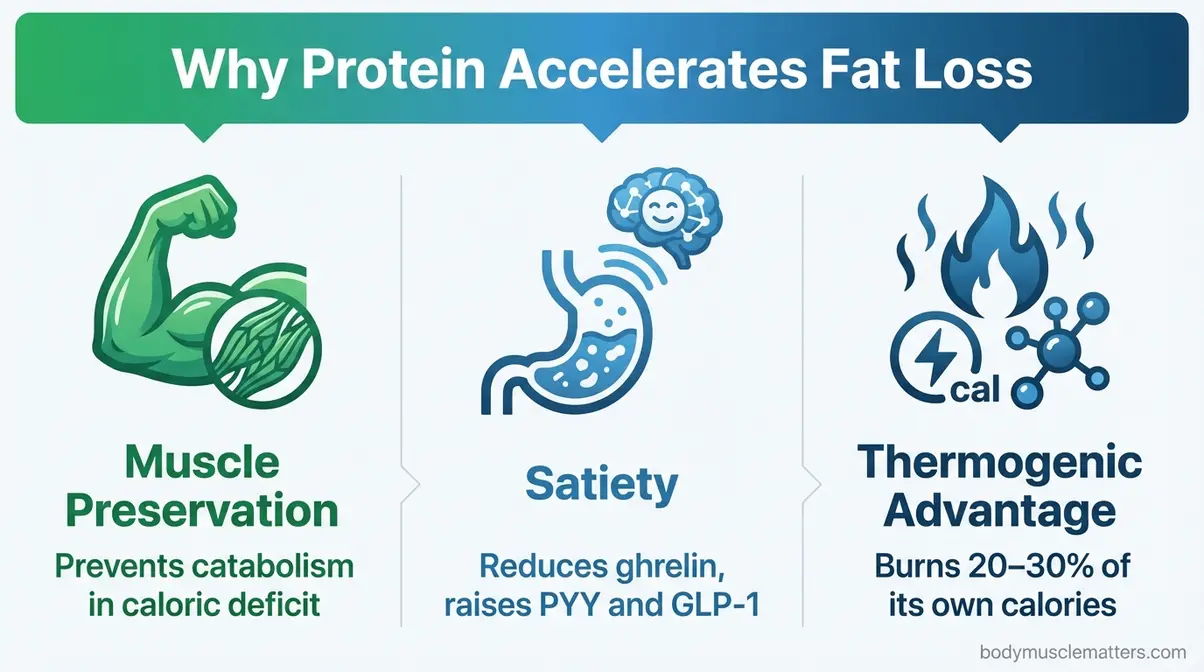
For men aiming to lose body fat while preserving muscle, research consistently supports a daily protein intake of 1.2–1.6 grams per kilogram of body weight — roughly 50–75% higher than the sedentary RDA. This is the protein range where fat loss and muscle preservation intersect. In the Protein Pyramid, weight loss shifts the Goal Layer to a moderate elevation: you don’t need the muscle-building maximum, but you need significantly more than the sedentary baseline.
“Protein has a thermic effect of 20–30%, meaning the body burns roughly 1 calorie for every 4–5 calories of protein consumed — making it the most metabolically expensive macronutrient to digest” (PMC, 2019).
Protecting Muscle in a Caloric Deficit
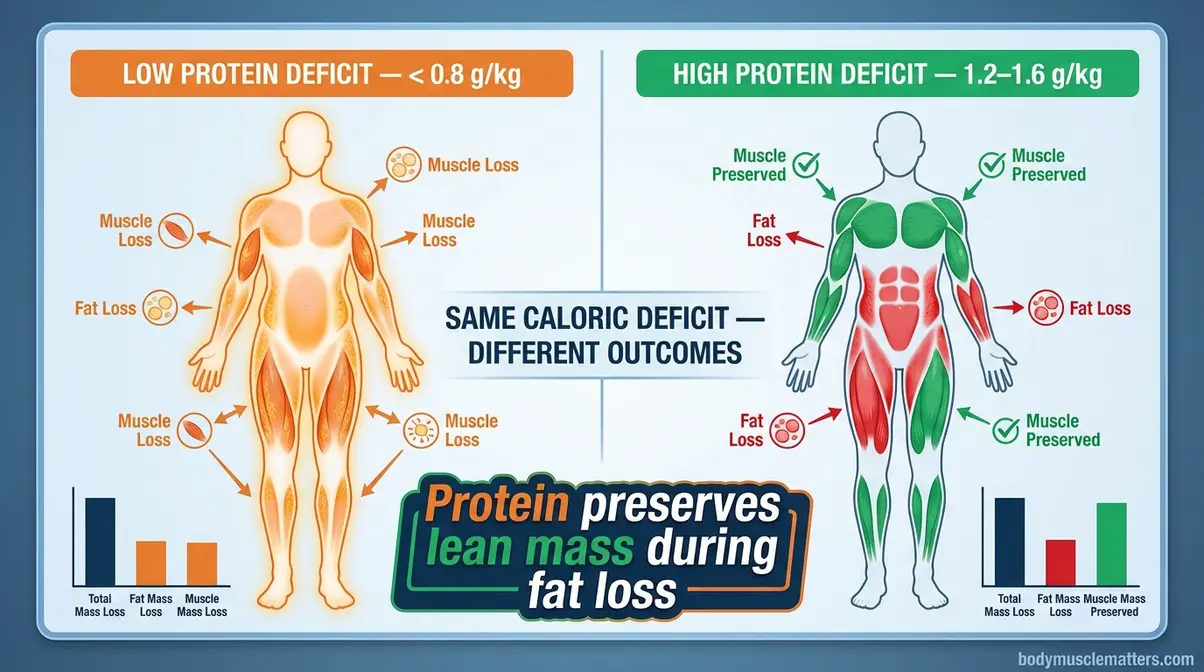
Three mechanisms explain why protein intake is especially important when you’re trying to lose belly fat while maintaining your physique.
Muscle preservation: Without adequate protein in a caloric deficit, the body catabolizes muscle tissue for energy. Sufficient dietary protein provides the amino acids needed to prevent this breakdown, ensuring the weight you lose comes primarily from fat rather than hard-earned lean mass.
Satiety: Protein reduces ghrelin (the primary hunger hormone) while increasing peptide YY and GLP-1 — the fullness hormones. The practical result is that men eating higher-protein diets consume fewer total calories without feeling deprived, making adherence to a caloric deficit significantly easier.
Thermogenic advantage: Protein digestion burns approximately 20–30% of its own calories through the thermic effect of food. Carbohydrates burn 5–10%; fat burns just 0–3% (PMC, 2019). Over weeks and months, this creates a meaningful metabolic edge for high-protein eaters in a caloric deficit.
A 180 lb man aiming to lose fat should target approximately 98–130g of protein daily (1.2–1.6 g/kg). At the higher end of this range, he’ll feel fuller throughout the day, retain more muscle tissue, and burn slightly more calories through digestion alone.
Knowing why protein helps is valuable — knowing the exact range that works is what drives results. Here’s where to aim.
The Right Range for Fat Loss
For general fat loss, the evidence supports 1.2–1.6 g/kg daily. For active men who are cutting — maintaining their training load while losing weight — the range rises to 1.6–2.0 g/kg to maximize muscle retention during the deficit.
On the question of spot reduction: protein alone does not specifically burn belly fat. No single food or macronutrient does. But high protein intake during a caloric deficit produces greater overall fat loss and less muscle loss compared to a lower-protein deficit — resulting in measurably better body composition over the same timeframe.
Practical targets at the most searched body weights:
- 180 lb man cutting: Aim for 98–130g daily (1.2–1.6 g/kg)
- 200 lb man cutting: Aim for 109–145g daily (1.2–1.6 g/kg)
When whole food sources fall short on busy days, protein’s role in your weight loss journey is well-supported by the convenience of protein supplements — especially when your cooking schedule doesn’t cooperate.
Weight loss and muscle gain both require men to know their numbers. For women, those numbers look slightly different — here’s the short version, and where to go for the full picture.
Protein Needs for Women — A Different Equation
Many men research protein needs alongside a partner or family member. While this guide focuses on men, the methodology—grams per kilogram of body weight—is identical for women. The main differences are a lower average body weight, which reduces the absolute gram targets, and hormonal factors that can influence needs throughout life.
The RDA for sedentary women is 46g per day, compared to 56g for men. For active women aiming to build muscle, the Dietary Guidelines for Americans 2020–2025 recommend 1.2–1.7 g/kg per day. This is the same range as moderately active men because the biological mechanisms of muscle protein synthesis don’t differ substantially by sex.
For example, a 130 lb (59 kg) woman needs approximately 47g daily at sedentary activity and 71–100g if actively training. A 150 lb (68 kg) woman would need around 54g sedentary and 82-116g when active. Compare this to a 180 lb man, who needs 66g sedentary and 116–147g for muscle building—the difference is almost entirely body weight.
Hormonal factors further complicate the picture. Pregnancy and breastfeeding significantly increase protein requirements to support fetal and infant development. Later, perimenopause and menopause introduce hormonal shifts that can accelerate muscle loss, often pushing protein needs toward the upper end of the active range to compensate. These situations warrant individualized guidance.
For a complete breakdown of protein requirements specific to women — including pregnancy, perimenopause, and athletic performance goals — see our dedicated guide.
Protein Needs for Special Health Circumstances
If you have a kidney condition, take Mounjaro, or you’re over 60, the generic protein table above is not quite right for you. These three situations require a modified approach — and in each case, working with a physician or registered dietitian isn’t optional, it’s essential.
These three populations represent the Optimization Layer of the Protein Pyramid: their goal-adjusted needs are further modified by a health or demographic factor that changes everything. No competitor article addresses all three in dedicated, medically informed sections. This is where personalized protein guidance becomes genuinely life-relevant.
Intake with Kidney Disease or One Kidney
For men with Chronic Kidney Disease (CKD), protein is not simply a performance variable — it’s a clinical one. The kidneys process nitrogen, a byproduct of protein metabolism. When kidney function is impaired, that processing load becomes a physiological burden. The National Kidney Foundation guidelines advise that protein intake “may need to be limited” for CKD patients not on dialysis, to reduce the workload on compromised kidneys (NKF, 2023).
Critically, the guidance reverses for men on dialysis: dialysis itself removes protein metabolites, and dialysis patients typically need more protein — not less — to compensate for losses during treatment. This is why no universal number applies.
The potential risks of excessive protein intake are especially significant in this population. As a concrete illustration: a healthy man at 80 kg might reasonably target 128–160g of protein for muscle building. A man with stage 3 CKD at the same weight may be restricted to 40–64g — a completely different equation driven by GFR (glomerular filtration rate) and current kidney function markers like creatinine.
For men with one kidney, the clinical data is less definitive. The general guidance is to follow a moderate (not high-protein) intake and monitor kidney function regularly with a nephrologist. There is no safe “one-size-fits-all” number for anyone with kidney disease.
Consult your nephrologist or registered dietitian before adjusting protein intake if you have kidney disease, reduced kidney function, or a single kidney.
Kidney disease constrains protein. GLP-1 medications present the opposite challenge — they often make higher protein intake critical for preserving muscle mass.
Protein on Mounjaro & Other GLP-1s
GLP-1 receptor agonists — including Mounjaro (tirzepatide) and Ozempic/Wegovy (semaglutide) — cause significant appetite suppression and rapid caloric restriction. The weight loss these medications produce is real and often dramatic. The risk is that a substantial portion of that weight loss comes from lean muscle mass, not just fat tissue. Early clinical data suggests that up to 39% of weight lost on Mounjaro may be lean muscle (Sword Health, 2025) — a ratio that makes protein intake on these medications a priority, not an afterthought.
Clinical nutrition guidance for GLP-1 users consistently emphasizes 1.2–1.6 g/kg of body weight daily at minimum, with many practitioners recommending the higher range of 1.6–2.0 g/kg during active weight loss phases to maximize muscle preservation. A 200 lb man on Mounjaro targeting 1.6 g/kg would aim for approximately 145g of protein daily.
Per-meal distribution becomes especially important for GLP-1 users because appetite suppression makes large meals physically difficult. Targeting 4–5 smaller, protein-dense meals of 20–30g each is more achievable than trying to hit daily targets across two large sittings. Practical options: Greek yogurt (15–17g per cup), eggs (6g each), lean meats (25–30g per 3.5 oz), and protein shakes (20–30g per serving).
If you are taking Mounjaro, Ozempic, or any GLP-1 medication, discuss your protein targets with the prescribing physician or a registered dietitian before making changes.
GLP-1 medications are predominantly a younger-to-middle-age concern. For men over 60, the protein challenge is biological — the body becomes less efficient at using protein to build and maintain muscle.
Protein Needs for Men Over 60
Sarcopenia — the age-related loss of muscle mass and strength — accelerates after age 60, with men losing roughly 1–2% of muscle mass per year without targeted intervention. This isn’t a vanity concern; sarcopenia contributes to falls, fractures, metabolic slowdown, and loss of functional independence.
Research from PubMed Central indicates that protein requirements for older adults should be 1.0–1.3 g/kg per day to meaningfully combat sarcopenia — representing 25–60% more protein than the standard sedentary RDA (PMC, 2015). “Adults over 60 may need 1.0–1.3 grams of protein per kilogram of body weight per day to combat age-related muscle loss (sarcopenia) — 25–60% more than the standard sedentary RDA” (PMC, 2015).
Per-meal distribution carries special importance for older men. Research indicates that aging muscles develop “anabolic resistance” — a reduced efficiency in responding to smaller protein doses. Hitting 30–40g per meal, rather than the 20g that works well for younger men, may be necessary to drive the same synthesis response in men over 60.
A practical example: a 175 lb (79 kg) 65-year-old man should aim for 79–103g of protein daily — nearly double the minimum RDA of 63g. Simple additions that get him there: an extra egg at breakfast (+6g), a Greek yogurt snack (+15–17g), or a protein shake after exercise (+20–25g).
Men over 60 with existing health conditions should consult a physician or registered dietitian before significantly increasing protein intake.
Whether you’re managing a health condition or simply trying to optimize your intake, the next section addresses the most common mistakes — and the myths that may be working against you.
Common Protein Myths and Mistakes
More protein is almost always better than less — until it isn’t. Three persistent myths lead men to overcomplicate protein timing, fear a 50-gram omelet, or push intake beyond the point where any benefit exists. Here’s what the research actually shows.
These myths often arise because men are stuck at the Foundation Layer of the Protein Pyramid, applying one-size-fits-all numbers without accounting for their goal or health profile. Getting past the myths means getting to the real numbers.
For days when you’re away from the kitchen, a high-protein bar is an easy way to keep your intake on track — around 20g of protein in a pocket-sized snack.

Pros
- 21g protein per bar with only 3g sugar
- Ideal for busy days, travel, or post-workout
- Gluten-free and widely available
Cons
- More processed than whole-food protein sources
- Costs more per gram of protein than powder
The 30g Per Meal Absorption Myth
The claim circulates constantly: “Your body can only absorb 30 grams of protein per meal.” This conflates two distinct processes. Absorption — the uptake of amino acids from digestion — is nearly complete for most quality protein sources regardless of dose. Muscle protein synthesis efficiency is a different question, and that’s where the 20–40g range actually applies.
The International Society of Sports Nutrition position stand recommends 20–40g of high-quality protein per meal to maximize muscle protein synthesis — but explicitly finds no evidence for a strict absorption ceiling (ISSN via PubMed, 2017). “A 2017 ISSN position stand found no evidence for a strict 30-gram per-meal absorption limit — the body can utilize larger protein doses effectively, particularly in resistance-trained individuals” (ISSN via PubMed, 2017).
Practically speaking: eating 60g of protein in one meal doesn’t “waste” the protein. It simply provides diminishing marginal synthesis benefit per gram above the 40g threshold. For most men, spreading protein across 3–4 meals of 30–50g each is a smart practical strategy — not a biological necessity. Miss a meal and eat more at the next one; you haven’t lost the protein.
What about the opposite problem — eating too much protein? For most healthy men, excess protein is processed and excreted, but there are early warning signs worth knowing.
Signs You’re Getting Too Much Protein
The first signs of excessive protein intake are usually felt in the digestive system:
- Constipation and bloating: High protein intake often displaces fiber-rich foods, slowing digestion. The result is gastrointestinal discomfort that becomes unmistakable within days.
- Increased thirst and dehydration: Protein metabolism produces urea, which requires significant water for renal excretion. Very high protein intake meaningfully increases your fluid requirements.
- Bad breath: High-protein, lower-carbohydrate states can trigger ketone production, leading to a distinctive acetone-like halitosis that brushing doesn’t fully resolve.
- Unexplained fatigue: Some men report unusual tiredness when protein intake rises above 3.0 g/kg — the body works harder to process the metabolic load.
The potential adverse effects of high protein intake — including digestive disturbance and elevated dehydration risk — are primarily documented above 2.5–3.0 g/kg per day (PMC, 2015). For healthy men following the ranges in this guide, these symptoms are unlikely to appear.
Most healthy men following the ranges in this guide won’t experience these symptoms. But for some situations, professional guidance isn’t optional — it’s essential.
When to Talk to a Professional
Specific circumstances warrant professional evaluation before adjusting protein intake significantly: diagnosed or suspected kidney disease or reduced kidney function; active prescription for GLP-1 medications (Mounjaro, Ozempic, Wegovy); a history of disordered eating; pregnancy; or any dramatic dietary change layered on top of a pre-existing medical condition.
The right professional depends on your situation. A registered dietitian (RD) provides personalized macro guidance and meal planning. A nephrologist handles kidney-related protein concerns. Your primary care physician is the starting point for medication interactions and general medical clearance.
Below, you’ll find direct answers to the eight most-searched questions on this topic — each designed to stand alone as a concise, accurate answer.
Frequently Asked Questions
How Much Protein Does a 200 lb Man Need?
A 200-pound (91 kg) man needs a minimum of 73g of protein daily if sedentary, but 109–182g if actively training. The baseline of 0.8 g/kg only covers essential functions. For building muscle, the evidence supports 1.4–2.0 g/kg, which calculates to 127–182 grams. For moderate daily exercise, 109–130 grams is a practical and effective starting point.
Is 100g of Protein Too Much?
For most active men, 100 grams of protein per day is not excessive; it’s an appropriate target for those weighing 154–176 lbs who exercise regularly. However, for a smaller or sedentary man, 100g could be significantly more than needed. The right amount depends on your body weight and activity, so use the 0.8–2.0 g/kg formula to find your personal range. Context matters more than the number alone.
How Much Protein Daily on Mounjaro?
Men on Mounjaro (tirzepatide) or other GLP-1 medications generally need more protein—at least 1.2–1.6 g/kg of body weight, and up to 1.6–2.0 g/kg—to preserve muscle during rapid weight loss. For a 200-pound man, this means about 109–145g daily. Always consult your prescribing physician for a personalized target.
Protein Intake with One Kidney?
Individuals with one kidney or any kidney disease must not self-prescribe protein intake. This is a clinical decision for a nephrologist or registered dietitian based on your GFR (kidney function). Protein is often limited to reduce the kidney’s workload. A generic high-protein diet can be harmful, so professional medical guidance is essential.
Is 2 Eggs a Day Enough Protein?
Two large eggs provide about 12–13 grams of protein. This is a good contribution to your daily total but is far short of a man’s full requirement. A sedentary 170-pound man needs around 62 grams daily, so two eggs cover only 20% of that minimum. Eggs are a great protein source but should be part of a larger, protein-rich diet.
Build Muscle with 100g of Protein at 200 lbs?
Building muscle on 100 grams of protein at 200 pounds is possible but suboptimal. At 91 kg, the evidence-based range for muscle growth is 127–182 grams daily (1.4–2.0 g/kg). At 100g, your progress will be much slower. While not impossible, increasing your intake to 130–145g would yield noticeably better results.
First Signs of Too Much Protein?
The first signs of excessive protein are typically digestive issues like constipation and bloating, along with increased thirst. Bad breath from ketone production and unexplained fatigue can also occur. These symptoms are most common above 2.5–3.0 g/kg body weight. If they appear, reduce your intake and consult a healthcare professional.
How Much Protein Is in an Egg?
One large egg contains about 6 grams of protein—roughly 4g in the white and 2g in the yolk. Eggs are a complete protein source, providing all nine essential amino acids. For tracking, two eggs are about 12-13g, and a three-egg omelet is around 18g.
Conclusion
For most men, the right daily protein intake falls between 0.8 g/kg (the evidence-based minimum) and 2.0 g/kg (the upper effective range for muscle building). A 180-pound man needs roughly 66–147 grams depending on his goals. The range is wide because protein needs are personalized — not universal. Start with your body weight, apply your goal multiplier, and adjust for any health factors like age, kidney function, or GLP-1 medication use. That three-step process covers what most protein guidance never does.
The Protein Pyramid Framework gives every man a clear, reproducible path: establish your Foundation Layer with the RDA, apply your Goal Layer based on whether you’re building muscle, cutting fat, or maintaining, then fine-tune the Optimization Layer for age or health conditions. Following all three layers produces a daily protein target you can defend with evidence — and actually achieve with a realistic eating plan.
Use our free protein calculator at bodymusclematters.com to input your body weight, goal, and activity level for a personalized daily target in under 60 seconds. Then build one high-protein day of meals — and add complexity from there. One number, one day of meals, and you have a blueprint you can replicate.
Related posts:
Best Protein Powder for Muscle Growth: Tested (2026)
Best High Protein Meal Delivery Services 2026: Top 7
Protein Powder Without Artificial Sweeteners: 10 Best Picks
Can You Eat Too Much Protein? Symptoms & Safe Limits
Best Protein Powder for Weight Loss: 10 Expert Picks
What Are Macros? A Plain Guide to Protein, Carbs and Fat

Callum
Hi, I'm Callum, the founder of Body Muscle Matters. I'm not a certified trainer, I'm a self taught lifter who started this site to share what I've learned from my own training and a lot of trial and error. Everything here comes from real experience and honest research, written the way I'd explain it to a friend who is just getting started. My goal is simple: practical, no hype fitness advice you can actually use.