Medical Disclaimer: The information in this article is for educational purposes only and is not a substitute for professional medical advice. Always consult a qualified healthcare provider or certified fitness professional before starting any new exercise program, particularly if you have a pre-existing health condition or injury.
Most people believe muscles grow during a workout. They don’t. You actually create the stimulus in the gym — but the growth happens hours and days afterward, through a cascade of molecular events triggered by the mechanical stress of lifting. That soreness you feel the next morning? That’s part of the process.
Without understanding why muscles grow, most beginners end up following contradictory advice — lift heavy, lift light, train every day, rest more. This confusion wastes months of effort and leads to frustrating plateaus that feel impossible to break through.
In this guide, you’ll learn exactly what muscle hypertrophy is, the biological mechanisms that drive it, and the evidence-based training and lifestyle strategies that maximize it. We’ll cover the core science, the cellular biology, the training principles, and the individual factors that influence your results — so you never need another source on this topic.
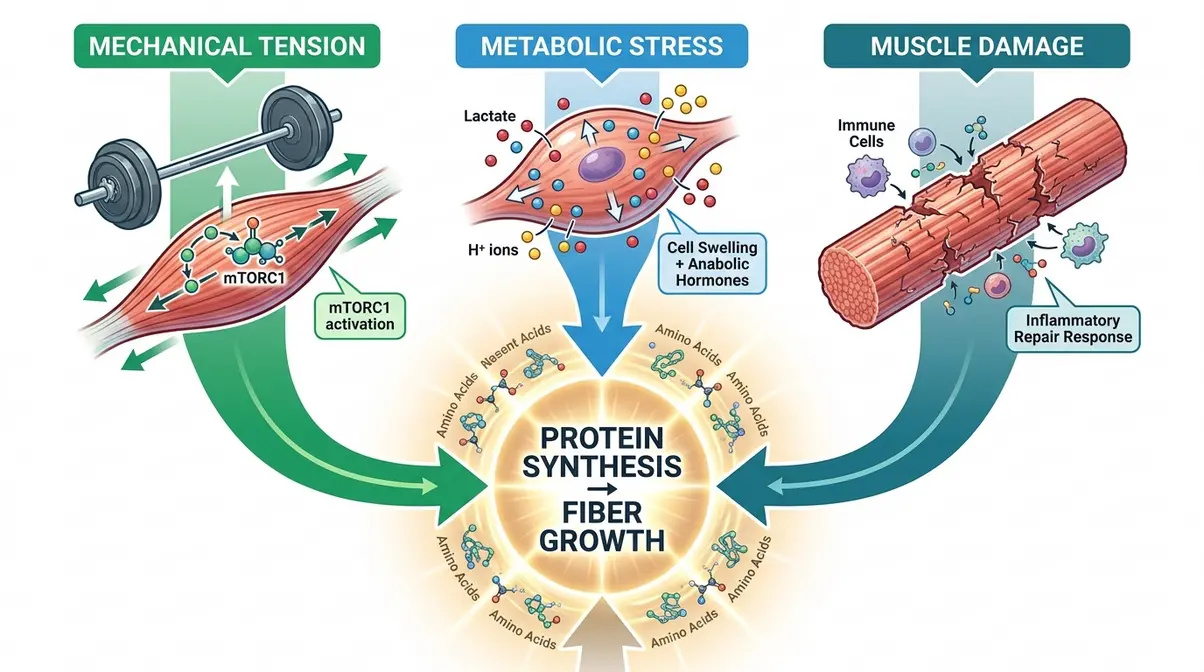
Muscle hypertrophy — the process by which muscle fibers increase in size — is driven by three primary mechanisms: mechanical tension, metabolic stress, and muscle damage, all of which trigger protein synthesis and structural repair.
- Mechanical tension is the single most important driver of muscle growth, activating the mTORC1 signaling pathway that switches on protein production
- 12–20 weekly sets per muscle group is the evidence-based volume sweet spot for trained individuals (NIH systematic review, 2022)
- 3–4 repetitions in reserve per set optimizes the growth stimulus without excessive fatigue
- The Stimulus-to-Structure Bridge: every training variable you adjust triggers a specific cellular event — understanding this connection makes every workout decision smarter
- Nutrition and sleep are equally critical; muscles grow during recovery, not during the workout
What Is Muscle Hypertrophy? (The Core Science)
Muscle hypertrophy is the process by which individual muscle fibers increase in size and cross-sectional area, resulting in larger, stronger muscles overall. It occurs when the rate of muscle protein synthesis exceeds the rate of muscle protein breakdown, resulting in a net increase in muscle fiber size (PMC, 2021). This is the foundational principle behind all resistance training — and understanding it changes how you think about every set you perform.
Think of your muscles as a collection of tiny cables made up of protein filaments. When you lift weights, you put those cables under stress. Your body interprets that stress as a signal: these cables need to be stronger. Over the following 24–72 hours, it rebuilds them — thicker, denser, and more capable than before.
This is The Stimulus-to-Structure Bridge — the principle that every training decision you make (how much you lift, how many sets you do, how long you rest) triggers a specific chain of cellular events that determines how your muscles adapt. Understanding this bridge transforms arbitrary-seeming training rules into logical conclusions you can reason through on your own.
Sarcoplasmic vs. Myofibrillar Hypertrophy: Two Ways Muscles Get Bigger
Not all muscle growth is identical. Researchers identify two primary subtypes, and they respond differently to training stimuli.
Myofibrillar hypertrophy is an increase in the density and number of contractile protein filaments — specifically the actin (thin) and myosin (thick) filaments that generate force when your muscle contracts. This type of growth increases the actual force-producing machinery inside each fiber. The result is a muscle that is both larger and meaningfully stronger. Higher loads and lower rep ranges (roughly 1–6 reps) tend to emphasize this adaptation.
Sarcoplasmic hypertrophy is an increase in the fluid and energy-storage components surrounding the contractile proteins — think glycogen, water, enzymes, and the cellular “fuel tanks” that power repeated contractions. This produces noticeable size increases that don’t translate as directly to maximal strength. Higher-rep, pump-focused training (roughly 12–30 reps) tends to favor this type.
Here is the key insight most beginner resources miss: both subtypes occur simultaneously in most training programs. The ratio shifts based on rep ranges and load, but you are never training exclusively for one or the other. A well-designed program that includes both moderate and higher rep ranges captures both mechanisms — giving you the size of sarcoplasmic growth and the strength of myofibrillar growth.
What this means for you: Don’t obsess over “training for size vs. training for strength” as if they’re mutually exclusive. A program that varies rep ranges naturally optimizes both subtypes.
Hypertrophy vs. Hyperplasia: Growth vs. New Fibers
A common misconception is that muscles grow by producing new fibers. This process — called hyperplasia (the creation of entirely new muscle fibers) — does appear to occur in some animal models, but evidence in humans remains limited and contested. The primary mechanism for human muscle growth is hypertrophy: existing fibers get bigger, not more numerous.
This distinction matters practically. You are working with a relatively fixed number of muscle fibers determined largely by genetics. Your training goal is to maximize the size and quality of those fibers — not to generate new ones. This is actually good news: it means your genetic ceiling is set by fiber quality, not just fiber count, and quality is highly trainable.
The Role of Muscle Fibers and Satellite Cells in Growth
Human skeletal muscle contains two main fiber types. Type I fibers (slow-twitch) are fatigue-resistant and built for endurance. Type II fibers (fast-twitch) generate more force and have greater growth potential. Most people have roughly a 50/50 mix of Type I and Type II fibers in major muscle groups, though this ratio varies significantly between individuals and across different muscles (Healthline, 2019).
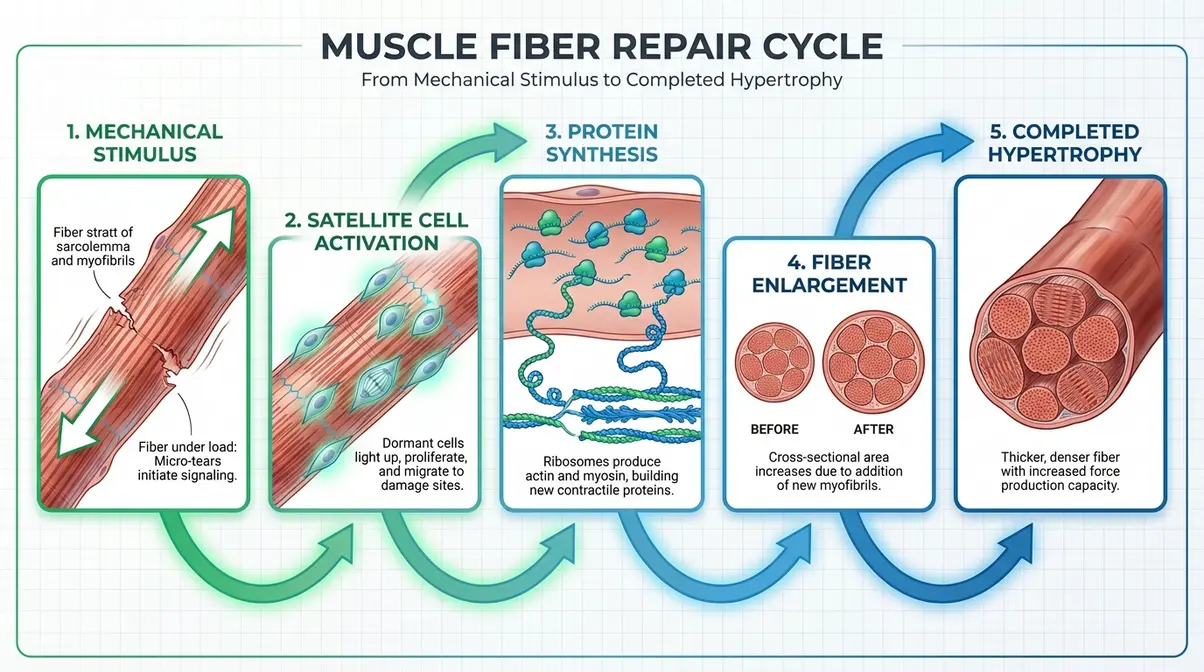
The real heroes of muscle growth, however, are satellite cells — the stem-cell-like repair workers that fuse with damaged muscle fibers to enable growth. These cells normally sit dormant on the surface of muscle fibers. When mechanical stress damages the fiber, satellite cells activate, divide, and either fuse directly with the fiber to donate new nuclei or form entirely new myofibrils. More nuclei mean more capacity to produce proteins — and more proteins mean larger, stronger fibers.
Research from the University of New Mexico describes satellite cell activation as a critical step in the hypertrophic response: without sufficient satellite cell activity, the muscle’s capacity for long-term growth becomes limited. This is part of why progressive overload — continuously increasing the challenge — remains essential. It keeps satellite cells active over time.
What this means for you: Every time you challenge your muscles with sufficient load, you’re not just tiring them out — you’re activating a biological repair system that rebuilds them larger. The stimulus triggers the structure.
How Muscles Actually Grow: The Biological Mechanisms
Mechanical tension, metabolic stress, and muscle damage are the three recognized drivers of muscle hypertrophy — and each one triggers a distinct cascade of cellular events. Understanding these mechanisms helps you see why specific training choices (heavier loads, shorter rest periods, eccentric emphasis) produce the results they do. According to a 2025 PMC review, “mechanical tension is the primary and essential driver of resistance-training–induced muscle hypertrophy through mechanotransductive signaling, independent of systemic hormonal fluctuations” (PMC12927080).
Mechanical Tension: The Primary Driver of Muscle Growth
Mechanical tension is the force generated within a muscle fiber as it contracts against resistance. When you lift a weight, the actin and myosin filaments in your muscle fibers pull against each other, generating enormous tension at the cellular level. This tension is the primary signal that tells your body to build more muscle.
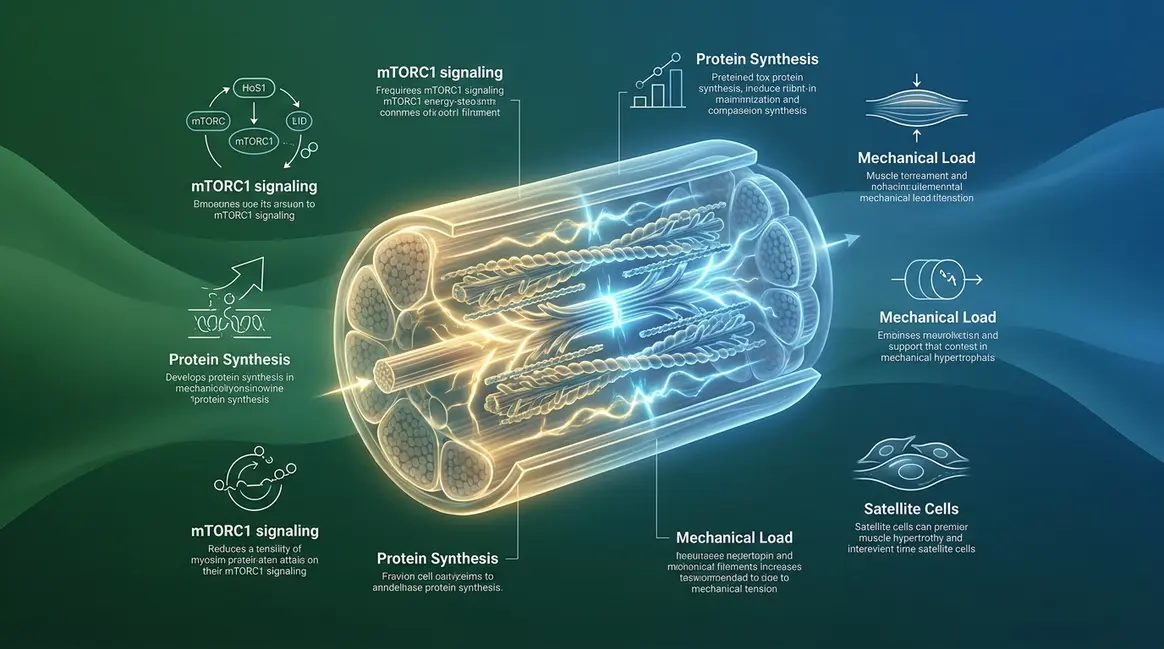
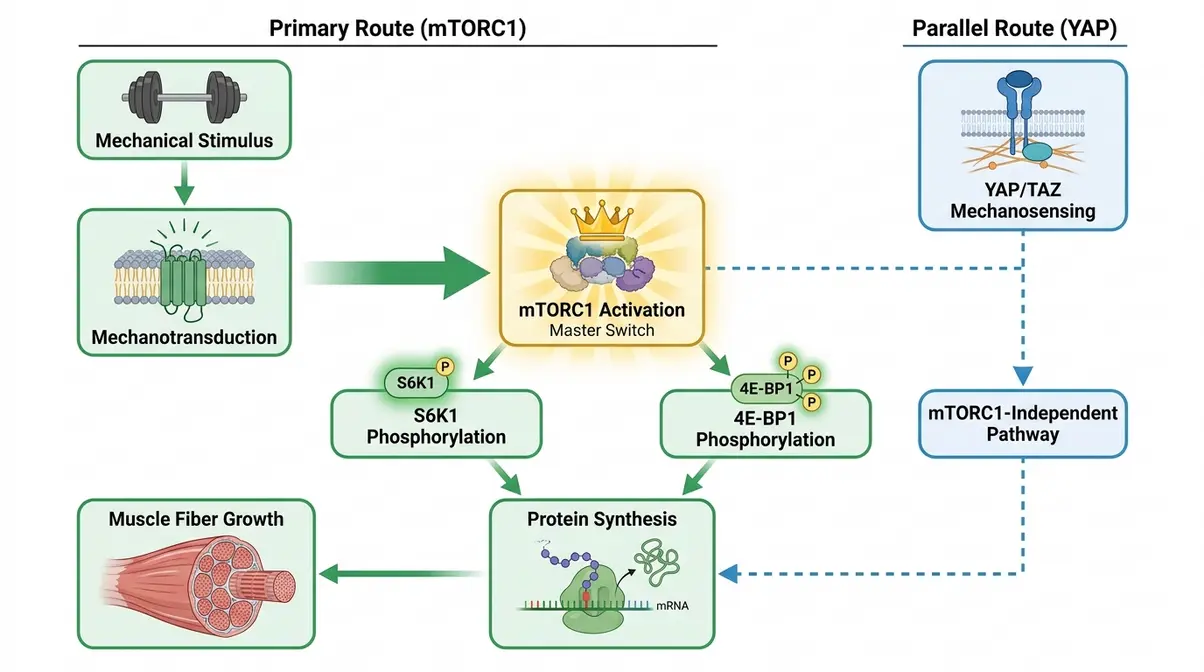
How does the cell “feel” this tension? Through a process called mechanotransduction (the conversion of a physical force into a biochemical signal). Specialized proteins in the muscle fiber’s membrane and internal structure detect the mechanical deformation and trigger a signaling cascade. The central hub of this cascade is a protein complex called mTORC1 (the mechanistic target of rapamycin complex 1 — think of it as the cell’s master switch for protein production).
When mTORC1 is activated, it phosphorylates (switches on) two key downstream targets: S6K1 and 4E-BP1. These targets accelerate the production of new proteins — specifically the contractile proteins actin and myosin — and increase the cell’s overall capacity for protein synthesis. A 2022 PMC review confirmed that “mTORC1 plays an important role in resistance exercise–induced hypertrophy,” while also noting that the process “extends beyond merely stimulating mTORC1” (PMC9390238).
Mechanical tension is the single most powerful signal for muscle growth. Studies using rapamycin (a drug that blocks mTORC1) have shown that blocking this pathway significantly reduces the protein synthesis response to resistance exercise — confirming its central role (PMC9720898).
What this means for you: Load matters. Progressively increasing the weight or difficulty of your exercises keeps mechanical tension high — and keeps the mTORC1 signal firing.
Metabolic Stress: What the “Pump” Actually Does
That swollen, burning feeling in your muscles during high-rep sets — the “pump” — is not just satisfying to experience. It reflects a real biological phenomenon called metabolic stress: the accumulation of metabolic byproducts (lactate, hydrogen ions, inorganic phosphate) when muscles work hard enough to outpace their oxygen supply.
Metabolic stress contributes to hypertrophy through several mechanisms. It triggers the release of anabolic hormones (like growth hormone and IGF-1) locally in the muscle. It causes cell swelling — the influx of fluid into muscle cells — which the cell interprets as a threat and responds to by reinforcing its structural proteins. It also produces a mild level of metabolic fatigue that recruits additional motor units (groups of muscle fibers), exposing more fibers to the growth stimulus.
Importantly, metabolic stress does not require heavy loads to be effective. This is why blood flow restriction (BFR) training — using a cuff to restrict venous blood flow while lifting very light weights — can produce meaningful hypertrophy. A PMC study found that low-intensity resistance exercise combined with BFR enhanced mTORC1 signaling and muscle protein synthesis in older men, comparable to heavier traditional training (PMC2867530).
What this means for you: The pump is not just ego — it’s a legitimate signal. Higher-rep sets (12–20 reps) and techniques like supersets or shorter rest periods amplify metabolic stress and contribute meaningfully to muscle growth.
Muscle Damage and the Inflammatory Repair Response
When you perform unfamiliar exercises — especially movements with a significant eccentric phase (the lowering portion, where the muscle lengthens under load) — you create microscopic tears in the muscle fiber’s structural proteins. This is muscle damage, and it is the third recognized hypertrophic mechanism.
The damage triggers an inflammatory repair response. Immune cells flood the area, clearing debris. Satellite cells — those repair workers introduced earlier — activate and fuse with damaged fibers, donating new nuclei and rebuilding the damaged sections. The fiber is repaired thicker than before.
However, muscle damage is not required for hypertrophy. Research increasingly suggests that tension and metabolic stress can drive substantial growth even without significant damage. Excessive damage (the kind that causes days of debilitating soreness) can actually impair training frequency and slow overall progress. The goal is not maximum damage — it is the optimal stimulus.
What this means for you: Don’t chase soreness as a measure of workout quality. Soreness indicates damage occurred; it doesn’t confirm that growth is happening. Focus on progressive tension and sufficient volume instead.
Protein Synthesis vs. Protein Breakdown: The Net Balance
Muscles are in a constant state of turnover. Muscle protein synthesis (MPS) — the building of new proteins — is always occurring. So is muscle protein breakdown (MPB) — the dismantling of old, damaged, or excess proteins. The difference between the two rates determines whether your muscle grows, shrinks, or stays the same.
Net muscle protein balance = MPS − MPB
After a resistance training session, MPS spikes significantly — sometimes by 40–100% above baseline — and remains elevated for up to 24–48 hours. MPB also rises, but to a smaller degree. The result is a positive net balance: more protein is being built than broken down.
Without adequate nutrition — particularly protein — this balance tips back toward breakdown. Your body cannot synthesize new contractile proteins without sufficient amino acids (the building blocks of protein). This is why protein intake is not optional for muscle growth; it is the raw material the synthesis process requires.
What this means for you: Resistance training creates the signal for growth. Protein provides the material. You need both — consistently — to accumulate muscle over time.
The Cutting Edge: mTORC1, YAP Signaling, and Longitudinal Growth
The three-mechanism model (tension, stress, damage) is well-established — but 2024–2026 research has added significant nuance to how muscles grow at the molecular level. Two emerging mechanisms deserve attention.
YAP Signaling: YAP (Yes-Associated Protein) is a mechano-sensitive transcription factor — a protein that responds to physical forces by switching genes on or off. Research from PMC (2024) found that YAP knockout decreases muscle mass and fiber cross-sectional area, while YAP overexpression promotes skeletal muscle hypertrophy (PMC11745433). Critically, YAP can drive muscle growth through an mTORC1-independent pathway — meaning it represents a parallel route to hypertrophy that operates even when the primary mTOR pathway is partially suppressed. This dual-axis model (mTORC1 + YAP/TAZ) better explains why different training approaches can all produce growth.
Longitudinal Sarcomerogenesis: Traditional hypertrophy is primarily radial — fibers get wider. But longitudinal sarcomerogenesis describes a different kind of growth: the addition of new sarcomeres (the basic contractile units of a muscle fiber) in series, making the fiber longer. A landmark 2024 study documented a 49% increase in serial sarcomere number in the biceps femoris following 9 weeks of eccentric Nordic hamstring training — described as “the first clear indication of human skeletal muscle sarcomerogenesis following eccentric training” (PMC11863339). A 2025 review confirmed that the key driver of this sarcomere addition is “the production of large active or passive forces at longer muscle lengths” (PMC12590150).
What this means for you: Training muscles through a full range of motion — especially emphasizing the stretched, lengthened position — may activate growth mechanisms beyond what traditional approaches capture.
How to Train for Maximum Muscle Growth
Training for muscle hypertrophy is not guesswork — it is applied biology. Every variable you manipulate (sets, reps, load, rest, frequency) corresponds to a specific cellular event. The Stimulus-to-Structure Bridge framework makes this explicit: when you understand why each variable matters, you can adjust your training intelligently rather than following rules blindly.
Training Volume: How Many Sets Per Week?
Training volume — the total number of sets performed per muscle group per week — is the most reliably dose-responsive variable in hypertrophy research. More sets generally mean more growth, up to a point.
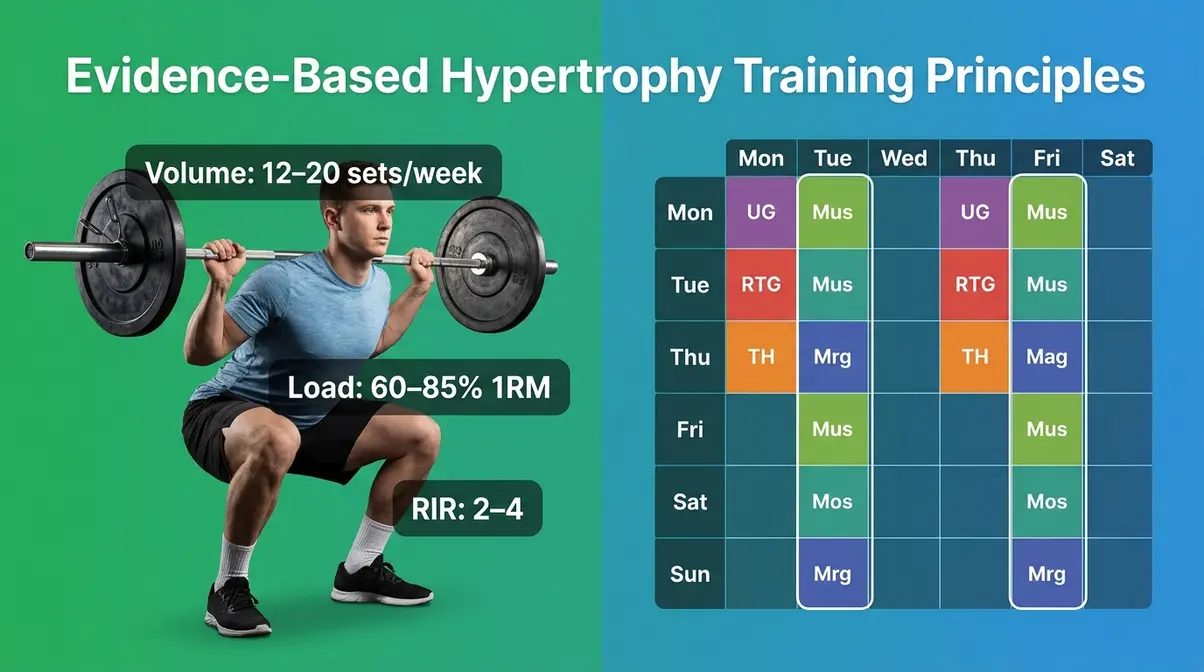
A systematic review published in PMC (2022) analyzed seven studies in trained individuals and concluded that 12–20 weekly sets per muscle group represents an optimal standard recommendation for hypertrophy, with training each muscle twice per week (PMC8884877). A companion umbrella review from Frontiers in Sports and Active Living (2022) added that at least 10 weekly sets per muscle group is necessary to maximize muscle mass gains, and that 2–3 sets per exercise covering ≥10 weekly sets is a practical starting point.
A 2026 meta-regression confirmed the dose-response relationship with 100% posterior probability — meaning the evidence that more weekly sets produce more growth is statistically near-certain — while also documenting clear diminishing returns at higher volumes (PubMed, 41343037, 2026).
Here is a practical volume guide based on current evidence:
| Training Experience | Recommended Weekly Sets per Muscle Group | Notes |
|---|---|---|
| Beginner (< 1 year) | 10–15 sets | Start lower; recovery capacity is still adapting |
| Intermediate (1–3 years) | 12–20 sets | The primary evidence-based sweet spot |
| Advanced (3+ years) | 15–25 sets | Higher volumes may add incremental benefit |
| Older adults (60+) | 6–12 sets | Low-volume approaches show superior functional outcomes (see LVRT section) |
What this means for you: If you are an intermediate lifter doing fewer than 10 sets per muscle group per week, adding volume is probably your highest-leverage intervention. Beyond 20 sets per week, the returns diminish rapidly relative to the recovery cost.
Load and Intensity: How Heavy Should You Lift?
Load — expressed as a percentage of your 1-rep maximum (1RM), the heaviest weight you can lift once — interacts with rep ranges to determine the primary hypertrophic stimulus.
Research from NASM identifies the traditional hypertrophy range as 67–85% of 1RM, corresponding roughly to 6–12 repetitions performed with good form. However, more recent evidence has significantly expanded this window. Studies now confirm that loads as low as 30% of 1RM can produce comparable hypertrophy to 80% of 1RM — provided sets are taken close to muscular failure.
This insight is practically important. You don’t need to lift maximally heavy to grow maximally. What matters is the proximity to failure — how hard the final reps feel — not the absolute load on the bar. A light set taken to failure recruits the same high-threshold motor units (and thus the same high-growth-potential Type II fibers) as a heavy set.
The practical takeaway: use loads that allow 6–30 repetitions performed with genuine effort. Vary the rep range across your training week to capture both myofibrillar and sarcoplasmic adaptations.
Repetitions in Reserve (RIR): The Smart Way to Train to Failure
One of the most useful concepts in modern hypertrophy training is Repetitions in Reserve (RIR) — the number of reps you could have performed before reaching absolute failure. An RIR of 2 means you stopped with 2 reps “left in the tank.”
Research supports training near — but not necessarily at — absolute failure for maximizing hypertrophy. As the scientific literature consensus states:
“Evidence indicates that significant muscle growth occurs when the majority of training sets are performed with ~3–4 repetitions in reserve.”
Training to absolute failure on every set increases fatigue, raises injury risk, and can compromise recovery between sessions. An RIR of 2–4 keeps the stimulus high while managing systemic fatigue. For the final set of each exercise, pushing to 0–1 RIR (very close to failure) can add additional stimulus without the cost of doing so on every set.
A 2024 PubMed analysis found that “muscle hypertrophy improves as sets are terminated closer to failure,” while noting that the relationship between proximity to failure and strength gains differs — strength responds more uniformly across a wider RIR range (PubMed, 38970765, 2024).
What this means for you: Stop 2–4 reps before failure on most sets. Push close to failure on your last set of each exercise. This approach maximizes the growth signal while keeping your training sustainable week to week.
Strength vs. Hypertrophy Training: Key Differences
Many beginners wonder whether they should “train for strength” or “train for hypertrophy.” The honest answer is that both goals overlap significantly — but the emphasis differs.
| Variable | Strength Focus | Hypertrophy Focus |
|---|---|---|
| Rep range | 1–5 reps | 6–30 reps |
| Load | 85–100% 1RM | 60–85% 1RM |
| Sets per exercise | 3–5 | 3–4 |
| Rest between sets | 3–5 minutes | 1–3 minutes |
| Primary adaptation | Neural efficiency + myofibrillar density | Muscle fiber size (both subtypes) |
| Volume (weekly sets) | Lower (6–10) | Higher (10–20+) |
Strength training primarily improves neural efficiency — your nervous system gets better at coordinating muscle fibers to produce force. Muscle growth is a secondary effect. Hypertrophy training prioritizes fiber size by using sufficient volume and metabolic stress. Both produce some of each adaptation; the ratio shifts with programming emphasis.
For most beginners, a program that includes both moderate (6–8 rep) and higher (10–15 rep) work delivers the best of both worlds — building the strength base and the structural size simultaneously.
LVRT for Older Adults: Building Muscle at Any Age
One of the most important — and most underappreciated — findings in recent hypertrophy research involves older adults. The prevailing assumption has been that building muscle after 60 requires high training volumes. The evidence now challenges this assumption directly.
A 2024 network meta-analysis of 151 randomized controlled trials found that low-volume resistance training (LVRT) was the most effective approach for improving muscle hypertrophy, lean body mass, and physical function in healthy older adults — outperforming moderate and high-volume approaches on all functional measures (PubMed, 39405023). Specifically, LVRT showed an effect size of 0.40 for lower-limb muscle growth, with a 94.2% probability of being the single most effective volume category.
A 2025 Frontiers in Sports and Active Living study confirmed that “even a low-volume resistance training program can yield meaningful benefits for managing frailty, sarcopenia, and fall risk among older adults in daycare centers.”
For older adults, the practical recommendation from Age and Ageing is a program involving two sessions per week, combining upper- and lower-body exercises, performed with relatively high effort for 1–3 sets of 6–12 repetitions. This is far less volume than typically recommended for younger adults — and evidence suggests it is sufficient for meaningful muscle growth and functional improvement.
What this means for you (if you’re 60+): More is not better. Two well-executed sessions per week with effort close to failure may be the optimal stimulus — and the one most compatible with recovery capacity at this life stage.
The Factors That Determine How Fast You Grow
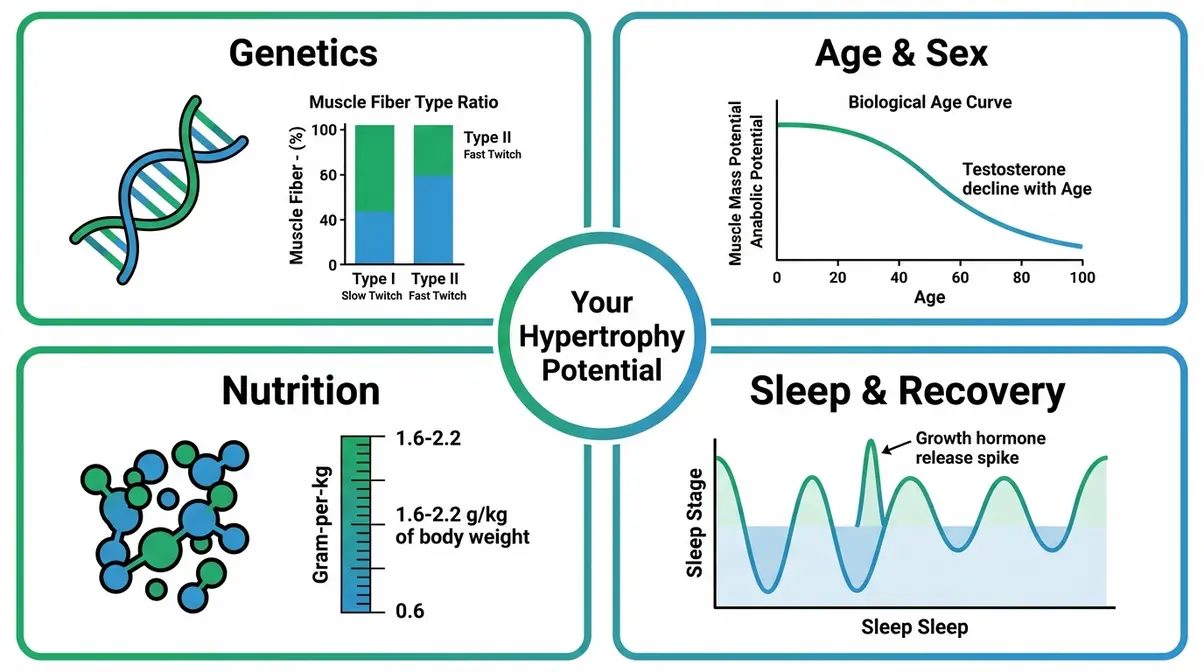
Two people can follow the identical training program, eat the same diet, and sleep the same hours — and experience dramatically different rates of muscle growth. This is not a failure of the program. It reflects the powerful influence of individual biological factors that determine your personal response to training.
Genetics and Individual Variation
Genetics influence muscle growth potential through several channels: the ratio of Type I to Type II muscle fibers, the density of androgen receptors (which determine how sensitively your muscles respond to hormones like testosterone), the baseline level of myostatin (a protein that limits muscle growth — lower myostatin = higher ceiling), and the number and reactivity of satellite cells.
Research suggests that genetic factors may account for up to 50% of the variance in muscle growth response between individuals. This means roughly half of your hypertrophic potential is written in your biology before you ever touch a barbell. The other half — training quality, nutrition, sleep, consistency — is entirely within your control.
The most honest framing: genetics set your ceiling, but most people never come close to reaching it. Before attributing slow progress to genetics, examine training consistency, protein intake, sleep quality, and progressive overload first.
Age and Sex: What the Research Actually Shows
Age significantly affects the hypertrophic response. Testosterone and growth hormone — two key anabolic hormones — peak in the late teens to mid-20s and decline gradually thereafter. After age 30, muscle protein synthesis rates begin to decline slightly, and anabolic resistance (reduced sensitivity of muscle protein synthesis to training and protein intake) increases with each decade.
However, this does not mean muscle growth stops. Research consistently shows that older adults — including those in their 60s, 70s, and beyond — can achieve meaningful hypertrophy with appropriate training. The mechanisms are the same; the dose and recovery requirements differ.
Sex also matters. Males typically have 10–20 times higher testosterone levels than females, which translates to a higher ceiling for absolute muscle mass. However, relative hypertrophy — muscle growth as a percentage of starting muscle mass — is similar between males and females when training and nutrition are equated. Females build muscle at comparable rates; they simply start from a different baseline.
What this means for you: Your age and sex affect your ceiling and your recovery capacity — but not your ability to make meaningful progress. The Stimulus-to-Structure Bridge works the same way regardless of demographics.
Nutrition: Protein, Calories, and Muscle Growth
Nutrition is the second pillar of hypertrophy, after training. No amount of mechanical tension will build muscle without the raw materials to support protein synthesis.
Protein is the non-negotiable. Current evidence-based recommendations suggest 1.6–2.2 grams of protein per kilogram of body weight per day for individuals seeking to maximize hypertrophy. For a 75 kg (165 lb) person, that’s roughly 120–165 grams of protein daily. Research from Healthline and multiple systematic reviews supports distributing this intake across 3–5 meals to maximize the muscle protein synthesis response throughout the day.
Calories matter too — but the relationship is nuanced. A modest caloric surplus (200–500 calories above maintenance) provides the energy and substrate needed for anabolism. However, muscle growth can occur in a slight caloric deficit if protein intake is high and training stimulus is sufficient — particularly in beginners and those returning after a break.
| Nutritional Variable | Evidence-Based Target | Notes |
|---|---|---|
| Protein intake | 1.6–2.2 g/kg/day | Higher end for caloric deficit or advanced trainees |
| Caloric surplus | +200–500 kcal/day | For maximizing muscle gain; minimize fat gain |
| Meal frequency | 3–5 meals/day | Optimizes muscle protein synthesis throughout day |
| Leucine per meal | ≥ 2–3 g | The amino acid that most potently triggers mTORC1 |
Leucine — an essential amino acid found abundantly in animal proteins, whey, and soy — is particularly important. Leucine is the primary dietary trigger for mTORC1 activation. A meal that contains ≥2–3 grams of leucine produces a robust muscle protein synthesis response; meals below this threshold produce a blunted response regardless of total protein content.
What this means for you: Hit your protein target daily. Prioritize leucine-rich sources (eggs, dairy, meat, fish, legumes with complete proteins). A mild caloric surplus accelerates progress but is not strictly required.
Sleep and Recovery: Where Muscles Actually Grow
Here is a counterintuitive fact that beginners often underestimate: muscles don’t grow during training — they grow during recovery. Training is the stimulus. Sleep is when the structural remodeling actually happens.
During deep sleep (slow-wave sleep), the pituitary gland releases a surge of growth hormone — one of the primary signals for muscle protein synthesis and tissue repair. Sleep deprivation blunts this hormonal response, reduces mTORC1 signaling, and increases muscle protein breakdown. Research indicates that sleeping fewer than 6 hours per night significantly impairs the anabolic response to resistance training.
The target for most adults seeking hypertrophy is 7–9 hours of quality sleep per night. Beyond sleep duration, recovery between sessions matters. Most muscle groups need 48–72 hours of recovery time between hard training sessions — which is why training a muscle group twice per week (rather than daily) is the standard evidence-based recommendation.
What this means for you: Sleep is not passive recovery — it is active construction. Treating sleep as optional while training hard is like laying the foundation for a building and then removing the workers before they can build the walls.
Common Training Mistakes and When to Adjust
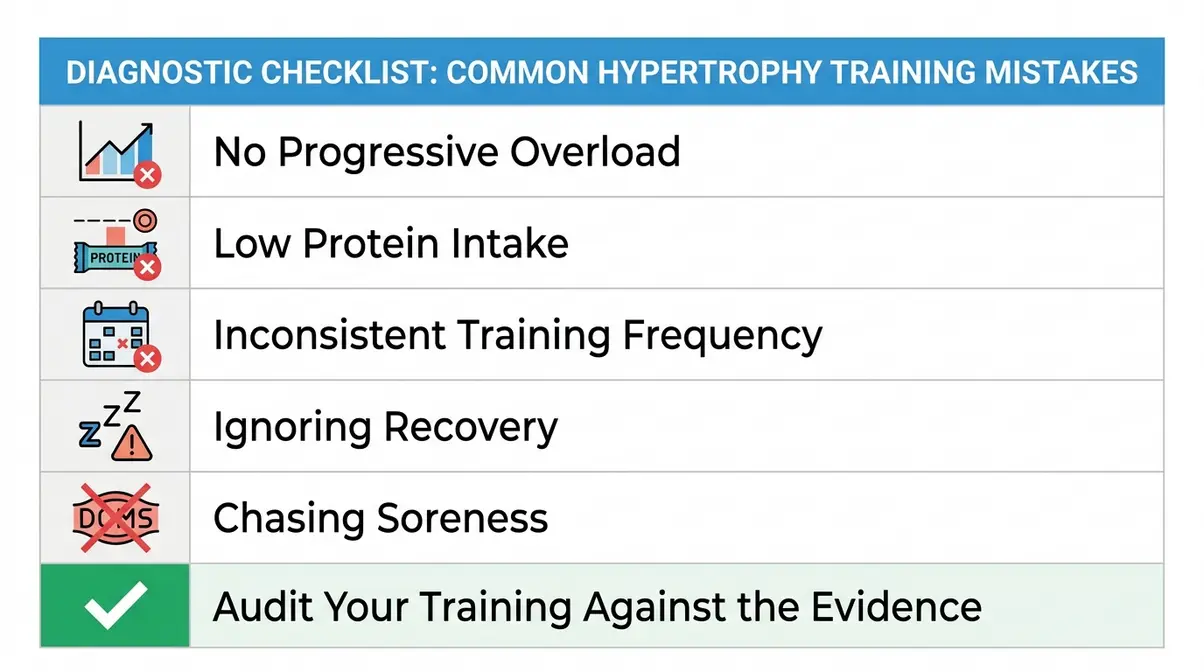
Even with a solid understanding of the science, certain patterns consistently derail muscle growth. Recognizing them early saves months of wasted effort.
Common Pitfalls That Slow Muscle Growth
1. Insufficient progressive overload. The most common mistake is training with the same weights, sets, and reps for months. Without progressive overload — gradually increasing the challenge — the mechanical tension stimulus plateaus and growth stalls. Track your lifts and aim to add small increments of load or volume every 1–3 weeks.
2. Inadequate protein intake. Many people underestimate how much protein they actually consume. Research suggests that most recreational trainees eat significantly less protein than the 1.6–2.2 g/kg/day recommended for hypertrophy. Tracking intake for a few weeks reveals the gap.
3. Inconsistent training frequency. Missing sessions frequently breaks the stimulus chain. Muscle protein synthesis elevates for 24–48 hours after training and then returns to baseline. Infrequent training (once per week per muscle group) leaves long windows where no growth signal is present. Twice-weekly frequency per muscle group is the evidence-based minimum for consistent hypertrophy.
4. Ignoring recovery. Training a muscle group while it is still recovering from the previous session can impair adaptation. Persistent soreness, declining performance, or increased resting heart rate are signs of insufficient recovery — reduce volume or frequency before adding more.
5. Excessive reliance on soreness as feedback. Soreness indicates muscle damage occurred. It does not indicate that growth is happening, nor that your workout was effective. A well-adapted trainee may experience minimal soreness even during highly productive training.
When a Different Training Approach Might Work Better
The standard hypertrophy model (moderate loads, 6–20 reps, 10–20 weekly sets) is effective for most people — but it is not universally optimal.
For older adults (60+): As discussed in the LVRT section, lower training volumes with higher effort levels may produce superior functional outcomes and muscle growth compared to higher-volume approaches. If you’re over 60 and finding standard hypertrophy volumes difficult to recover from, reducing total sets while maintaining effort is evidence-backed.
For beginners in the first 3–6 months: Almost any progressive resistance program produces hypertrophy during the initial “newbie gains” period. Beginners benefit more from mastering movement patterns and building consistent habits than from optimizing volume, load, or rep ranges. Simplicity and consistency outperform complexity at this stage.
For individuals with joint issues or injuries: High-load training may be contraindicated. Blood flow restriction (BFR) training with very light loads (20–30% 1RM) can produce comparable hypertrophy with significantly reduced joint stress — making it a valuable alternative for those managing pain or recovering from injury.
When to Consult a Professional
Resistance training is safe for most healthy adults when performed with proper form and appropriate progression. However, professional guidance is warranted in several situations:
- Pre-existing health conditions: Heart disease, hypertension, diabetes, osteoporosis, or any condition affecting the musculoskeletal system warrants clearance from a physician before beginning resistance training.
- Persistent pain during training: Pain (not general muscle fatigue) during exercises is a signal to stop and consult a physiotherapist or sports medicine physician before continuing.
- Plateau lasting 3+ months: If progress has stalled despite consistent training and adequate nutrition, a certified strength and conditioning specialist (CSCS) or exercise physiologist can assess programming gaps.
- Significant form concerns: Poor technique increases injury risk and reduces training effectiveness. A qualified personal trainer can identify and correct movement patterns before they cause harm.
Frequently Asked Questions
How long does it take to see results from hypertrophy training?
Most beginners notice measurable strength improvements within 2–4 weeks of consistent resistance training, primarily due to neural adaptations (improved motor unit recruitment). Visible muscle size changes typically require 6–12 weeks of consistent training with adequate protein intake. A 2022 systematic review found that trained individuals gained meaningful hypertrophy across 8–12 week programs with 12–20 weekly sets per muscle group. Individual results vary based on genetics, nutrition, and training consistency — but most people who train and eat properly see clear progress within 3 months.
Is muscle soreness a sign that hypertrophy is occurring?
Muscle soreness (DOMS — delayed onset muscle soreness) is not a reliable indicator of muscle growth. Soreness reflects muscle damage and the inflammatory response, not protein synthesis or fiber enlargement. Research indicates that well-adapted trainees can experience minimal soreness during highly productive training phases. Conversely, novel exercises or excessive volume can produce significant soreness with little long-term hypertrophic benefit. Focus on progressive overload and adequate volume rather than chasing soreness as a training metric.
How much protein do I need to build muscle?
The evidence-based target for maximizing muscle hypertrophy is 1.6–2.2 grams of protein per kilogram of body weight per day. For a 75 kg (165 lb) person, that’s approximately 120–165 grams daily. Distribute intake across 3–5 meals to maximize the muscle protein synthesis response throughout the day. Each meal should ideally contain ≥2–3 grams of leucine — the amino acid that most potently activates the mTORC1 synthesis pathway. Animal proteins (eggs, dairy, meat, fish) and some plant proteins (soy, pea) reliably meet this threshold.
Can I build muscle without lifting heavy weights?
Yes — research confirms that loads as low as 30% of your 1-rep maximum can produce comparable hypertrophy to heavier loads, provided sets are taken close to muscular failure. The critical variable is not absolute load but proximity to failure: working hard enough to recruit high-threshold Type II muscle fibers. This finding is particularly relevant for older adults, those with joint issues, or anyone using blood flow restriction (BFR) training. The caveat is that very light loads require more reps and more time per set, which may increase training duration.
What is the difference between hypertrophy and strength training?
Hypertrophy training primarily targets muscle fiber size, while strength training primarily targets neural efficiency — the nervous system’s ability to coordinate muscle fibers to produce maximum force. Hypertrophy programs typically use moderate loads (60–85% 1RM), higher rep ranges (6–30 reps), more weekly sets (10–20+), and shorter rest periods (1–3 minutes). Strength programs use heavier loads (85–100% 1RM), lower rep ranges (1–5 reps), fewer weekly sets, and longer rest periods (3–5 minutes). Both adaptations occur simultaneously in any resistance training program — the ratio shifts based on programming emphasis.
Conclusion
For anyone beginning resistance training, muscle hypertrophy is a process that rewards understanding. Mechanical tension activates mTORC1 — the cell’s master switch for protein production. Metabolic stress and muscle damage add secondary signals. Protein synthesis rebuilds the damaged fibers thicker and stronger. Evidence from systematic reviews and meta-analyses (2022–2026) consistently shows that 10–20 weekly sets per muscle group, performed with 2–4 repetitions in reserve, optimizes the hypertrophic stimulus for most trained individuals (PMC8884877).
The Stimulus-to-Structure Bridge is the mental model that makes all of this actionable. Every variable you adjust in training — load, volume, rest, frequency — corresponds to a specific cellular event. Heavier loads activate more mTORC1 signaling. Higher volumes expose more fibers to the growth stimulus. Adequate rest allows satellite cells to complete the repair cycle. Understanding these connections means you can reason through any training decision rather than following rules blindly or chasing the latest trend.
The next step is straightforward: audit your current training against the evidence. Are you hitting 10+ weekly sets per muscle group? Are you consuming 1.6–2.2 g of protein per kilogram of bodyweight? Are you sleeping 7–9 hours? Are you progressively overloading your lifts over time? If any of these are missing, address them before adding complexity. The science is clear — and now, so is the path forward.