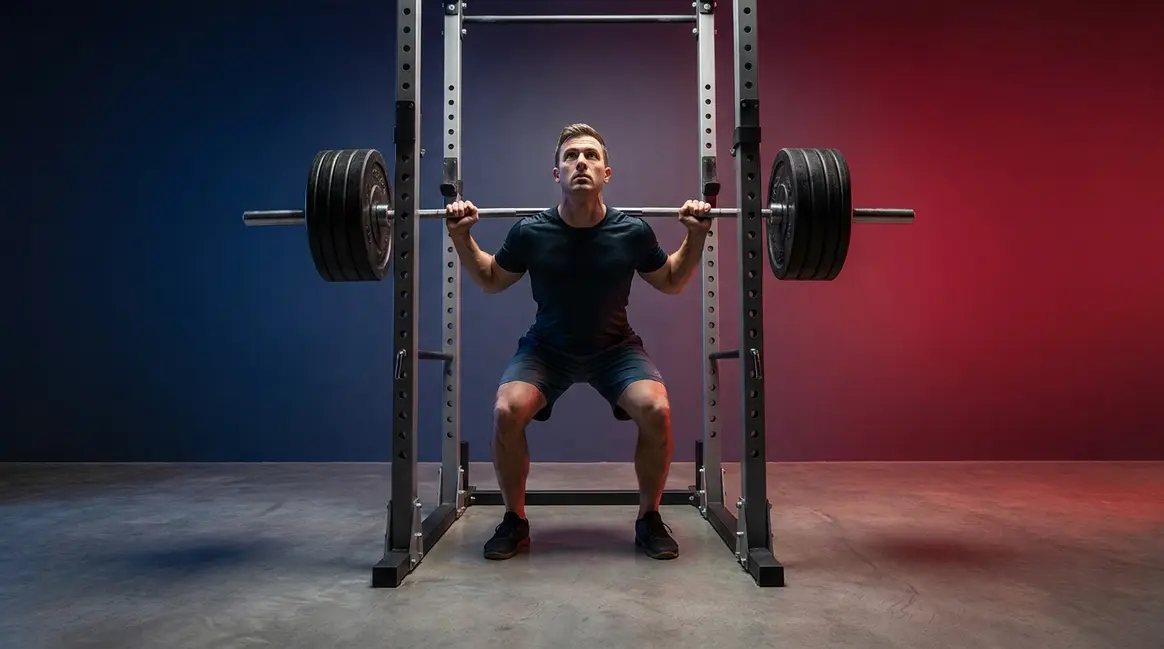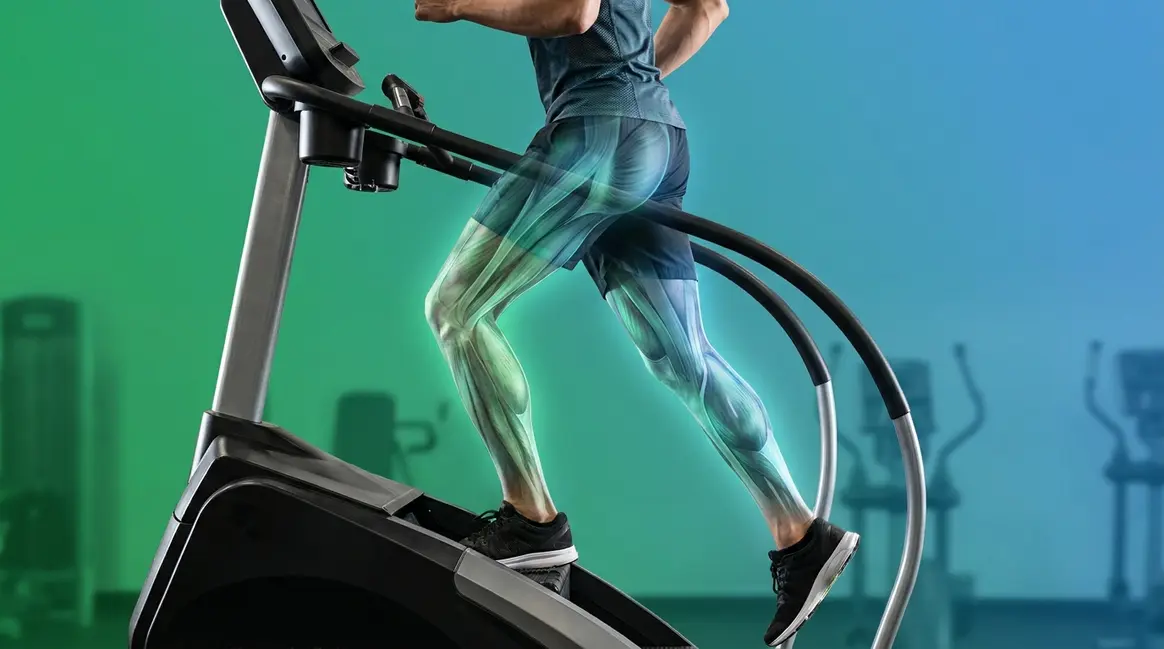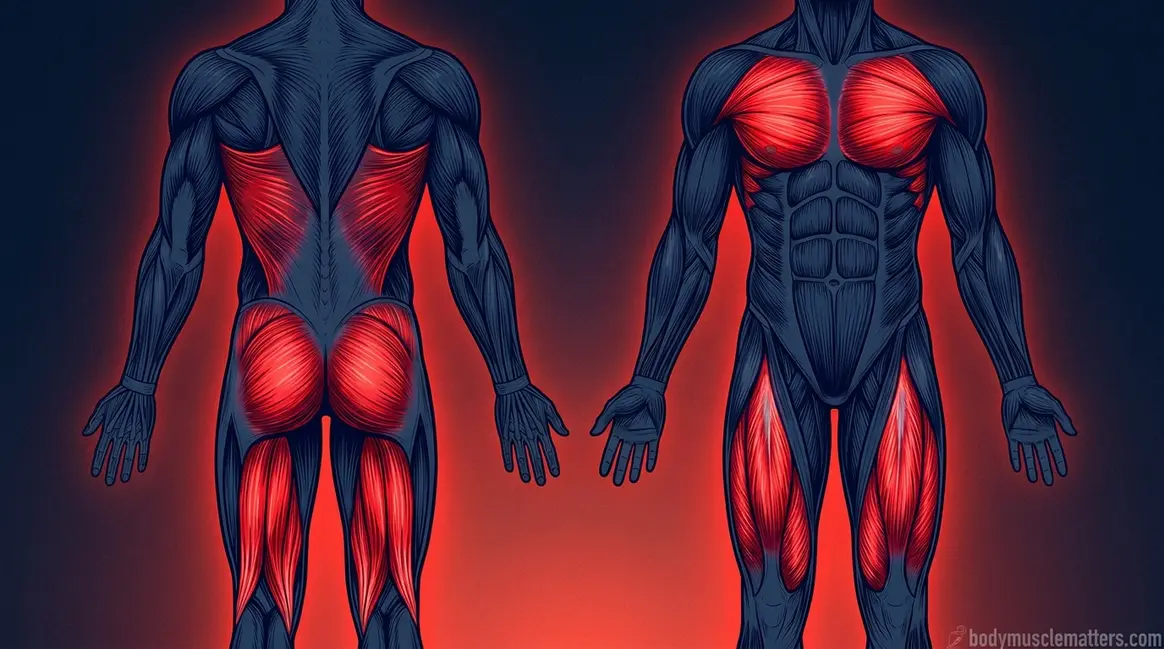
The Largest Muscles in the Human Body and How to Train Them
You’ve probably heard it before: the gluteus maximus is the biggest muscle in the body. And that’s true — but only if you measure by volume. Measure by surface area, and a different muscle wins. Measure by length, and a third muscle takes the crown entirely. The largest muscles in the human body aren’t ranked by a single ruler.
Most anatomy articles hand you one answer and move on. That leaves out the muscle stretching across your entire back, the one that never stops beating, and the one scientists confirm is the longest in your body. Understanding all three “biggest” categories gives you a far richer picture of how your body is built.
In this guide, you’ll discover the top 5 largest muscles in the human body ranked by volume and surface area, plus the strongest, hardest-working, and longest muscles — all explained in plain English. This guide synthesizes NIH StatPearls anatomy data, PubMed MRI studies, and Cleveland Clinic clinical descriptions to give you accurate, beginner-friendly answers.
⚕️ Medical Disclaimer: This article is for educational purposes only and does not constitute medical advice, diagnosis, or treatment. Always consult a qualified healthcare provider for any health concerns or before starting a new exercise program.
The largest muscles in the human body depend on how you measure: the gluteus maximus leads by volume, the latissimus dorsi by surface area, and the sartorius by length — a distinction called the Size Spectrum Framework.
- By volume: The gluteus maximus (glutes) is the single largest individual muscle
- Largest group: The quadriceps femoris contains 4 muscles and is the most voluminous group
- Widest muscle: The latissimus dorsi covers the entire back surface
- Never stops: The heart is the hardest-working muscle — it beats approximately 100,000 times per day (British Heart Foundation)
- Strongest: The masseter (jaw muscle) generates the most force relative to its size
What Is the Largest Muscle in the Human Body?
The gluteus maximus is the largest muscle in the human body when measured by volume (total mass of muscle tissue). Research published in NIH’s clinical anatomy resources confirms it is “the largest and most powerful” skeletal muscle in the body. But “largest” is not a simple question — and the answer changes depending on which measuring stick you use.
Gluteus Maximus: Volume Champion
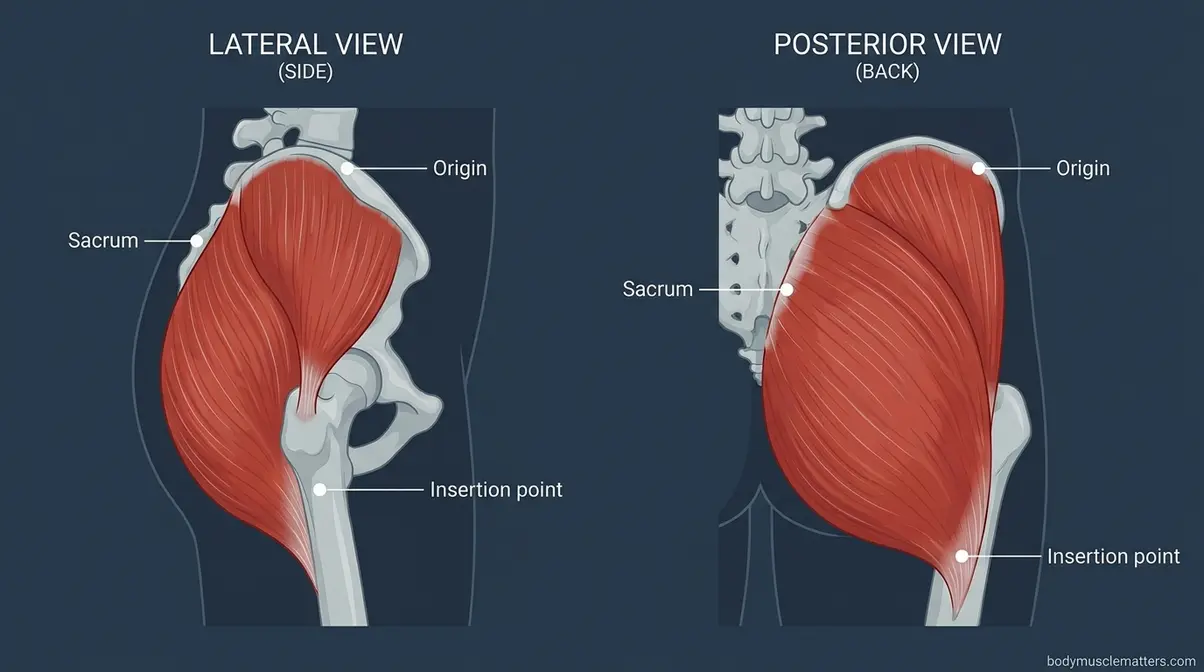
The gluteus maximus — the main muscle of your buttocks — earns its title as the body’s volume champion for a very specific reason. It has more total muscle tissue, by mass, than any other single muscle. It runs from the back of your pelvis (the ilium and sacrum) down to the top of your thigh bone (femur), covering a thick, powerful region you use every time you stand up, climb stairs, or sprint.
“With a name like gluteus MAXimus it shouldn’t be hard to remember it’s the biggest muscle in the body.”
That nickname is well-earned. According to NIH StatPearls anatomy data, the gluteus maximus plays a central role in hip extension (pushing your leg backward), external rotation, and stabilizing your pelvis during walking and running. It’s not just big — it’s functionally essential.
MRI-based studies confirm high variability in gluteus maximus size across individuals, with cross-sectional area measurements averaging around 10,190 mm² in men and 7,947 mm² in women at the femoral head level (PMC research). These differences reflect age, body mass index, and activity level — not just sex.
Why does size matter here? A larger muscle can generate more absolute force. The gluteus maximus is one reason humans can walk upright so efficiently — its sheer volume powers every push-off step you take.
Measuring Volume, Area, and Length
Here is where things get genuinely interesting. The Size Spectrum Framework is a simple idea: every time someone claims a muscle is “the largest,” you should ask largest by what measure? There are three primary ways anatomists measure muscle size, and each produces a different winner.
| Measurement Type | Definition | Winner |
|---|---|---|
| Volume (mass) | Total amount of muscle tissue, by weight or cubic centimeters | Gluteus maximus |
| Surface area | How much skin/back surface the muscle covers | Latissimus dorsi |
| Length | End-to-end span of the muscle belly | Sartorius |
| PCSA* | Physiological cross-sectional area — predicts force potential | Gluteus maximus / Quadriceps |
PCSA (physiological cross-sectional area) = the total area of all muscle fibers packed side by side, which predicts how much force a muscle can produce.
This framework matters because it prevents confusion. When a fitness coach says “the lats are the biggest muscle,” they’re talking about surface area — the wide, fan-like spread across your back. When an anatomist says “the gluteus maximus is the biggest,” they mean volume. Both statements are correct. They’re just measuring different things.
Research published in the Journal of Anatomy confirms that the latissimus dorsi is “one of the largest muscles in the body in terms of surface area,” while noting its PCSA is relatively modest — meaning it covers a lot of ground but doesn’t pack as many force-producing fibers per unit area as the glutes or quads.
The Size Spectrum Framework also applies beyond muscles: the longest bone, the largest cell, and the most energy-hungry organ each require their own measuring lens, as you’ll see later in this guide.
Smallest Muscle: The Stapedius
Before ranking the biggest muscles, it helps to appreciate the other end of the spectrum. The smallest skeletal muscle in your body is the stapedius — a tiny muscle tucked inside your middle ear, measuring approximately 1–6 mm in length depending on the source (NIH research).
Despite its microscopic size, the stapedius performs a critical job. According to NIH microsurgical anatomy research, it stabilizes the stapes (the smallest bone in your body, shaped like a stirrup) and contracts reflexively when you hear a loud sound. This acoustic reflex dampens excessive vibrations before they can damage your cochlea. When the stapedius is paralyzed — often from facial nerve damage — patients develop hyperacusis, an abnormal sensitivity to sound.
So the same body that houses the massive gluteus maximus also contains a muscle smaller than a grain of rice, doing a completely different but equally vital job. That contrast is what makes human anatomy so fascinating.
Largest Muscle in Females?
The gluteus maximus is the largest muscle in the female body by volume, just as it is in the male body. MRI-based studies show the gluteus maximus cross-sectional area averages approximately 7,947 mm² in women compared to 10,190 mm² in men — a difference attributable to hormonal, body composition, and activity-level factors, not a change in ranking. The quadriceps remain the largest muscle group, and the latissimus dorsi remains the widest muscle by surface area in female anatomy as well. The rankings hold across sexes; only the absolute measurements differ.
Top 5 Largest Muscles in the Body
Ranking the body’s biggest muscles requires applying the Size Spectrum Framework consistently. The list below ranks by individual muscle volume unless noted, which is the standard used in most anatomical and MRI-based research. For each muscle, you’ll also see what else makes it notable beyond raw size.
How to read this section: Each entry answers three questions — where is it, how big is it, and why does that size matter for how your body works?
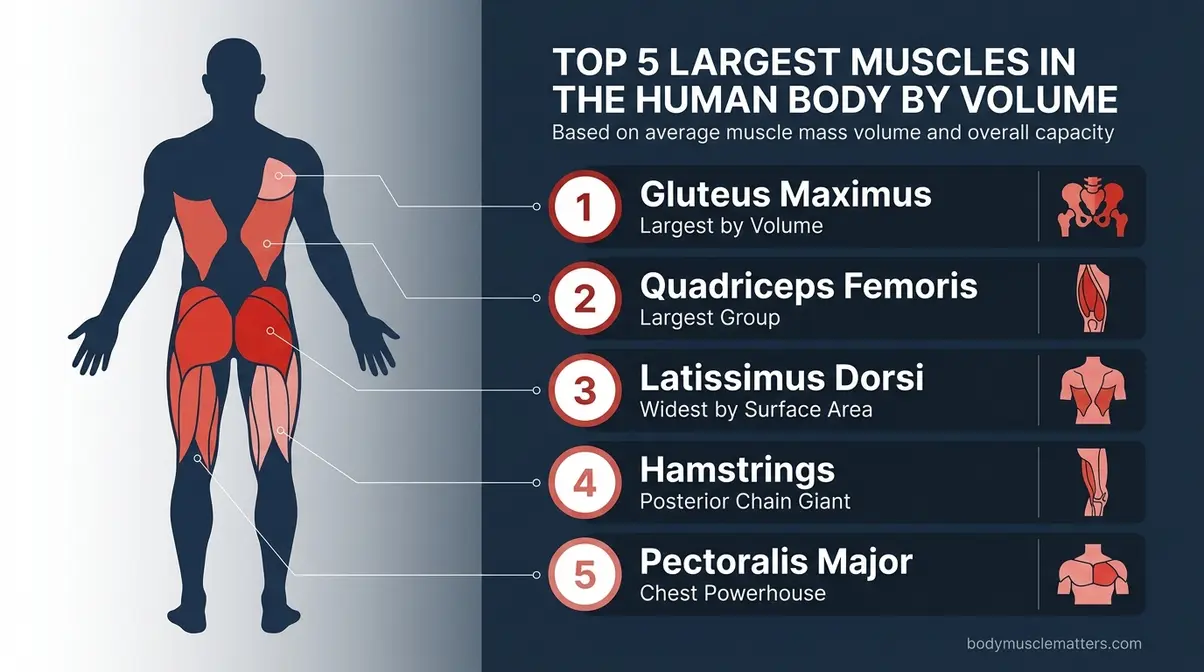
#1 Gluteus Maximus: Lower Body Power
The gluteus maximus is the single largest individual muscle in your body by volume. It sits at the back of your pelvis and forms the bulk of what most people call the “glutes.” Every time you rise from a chair, climb a hill, or accelerate into a sprint, this muscle is doing the heavy lifting.
Location: Posterior pelvis, covering the buttocks region
Primary function: Hip extension, external rotation, and pelvic stabilization
- Key roles in movement:
- Powers the “drive phase” in running and jumping
- Stabilizes your pelvis when you stand on one leg
- Controls your descent when sitting or squatting
Research in clinical anatomy resources describes the gluteus maximus as playing “an important role in optimal functioning of human movement systems.” Athletes with weak glutes frequently develop compensatory injuries in the knees, lower back, and hips — evidence that size here comes with serious functional responsibility.
Fiber type note: The gluteus maximus contains a mix of slow-twitch (Type I) and fast-twitch (Type II) fibers, making it effective for both endurance activities (long hikes) and explosive efforts (sprinting). This dual composition is one reason it’s so large — it needs to serve multiple movement demands.
Quotable fact: The gluteus maximus is the body’s largest skeletal muscle by volume, generating more total force in hip extension than any other single muscle — a design that evolved specifically for upright human walking and running.
Where the gluteus maximus dominates by sheer tissue volume, the quadriceps takes a different route to the top — by combining four separate muscles into one formidable group.
#2 Quadriceps Femoris: Largest Group
The quadriceps femoris — or “quads” — are the largest muscle group in the human body. This is a critical distinction from #1. The gluteus maximus is the largest individual muscle. The quadriceps is the largest group, consisting of four separate muscles working together along the front of your thigh.
- The four muscles of the quadriceps:
- Rectus femoris — runs straight down the thigh; the only quad that crosses the hip joint
- Vastus lateralis — the outer quad; often the largest of the four by volume
- Vastus medialis — the inner quad; the teardrop-shaped muscle above your inner knee
- Vastus intermedius — the deep quad, lying beneath the rectus femoris
Location: Anterior (front) thigh, from hip to knee
Primary function: Knee extension — straightening your leg
According to NIH anatomy resources, the quadriceps are essential for walking, running, cycling, and squatting. They decelerate your descent when you land from a jump and generate explosive force when you push off a surface. Competitive cyclists and sprinters develop particularly large quadriceps because these sports demand sustained, powerful knee extension.
The vastus lateralis alone is often cited as one of the largest individual muscles in the body — in some body types, it rivals the gluteus maximus in volume. When you hear fitness coaches say “train your legs for the biggest hormonal response,” they’re largely referring to the sheer tissue volume of the quads.
Why the group distinction matters: When researchers measure “muscle volume” across the whole body using MRI scans, the combined quadriceps volume typically exceeds the gluteus maximus. But anatomists classify them as four separate muscles — which is why the gluteus maximus holds the title for largest single muscle.
The quads rule the front of your thigh. But flip to the other side of your body, and the next entry on this list claims the widest real estate of any muscle you can see.
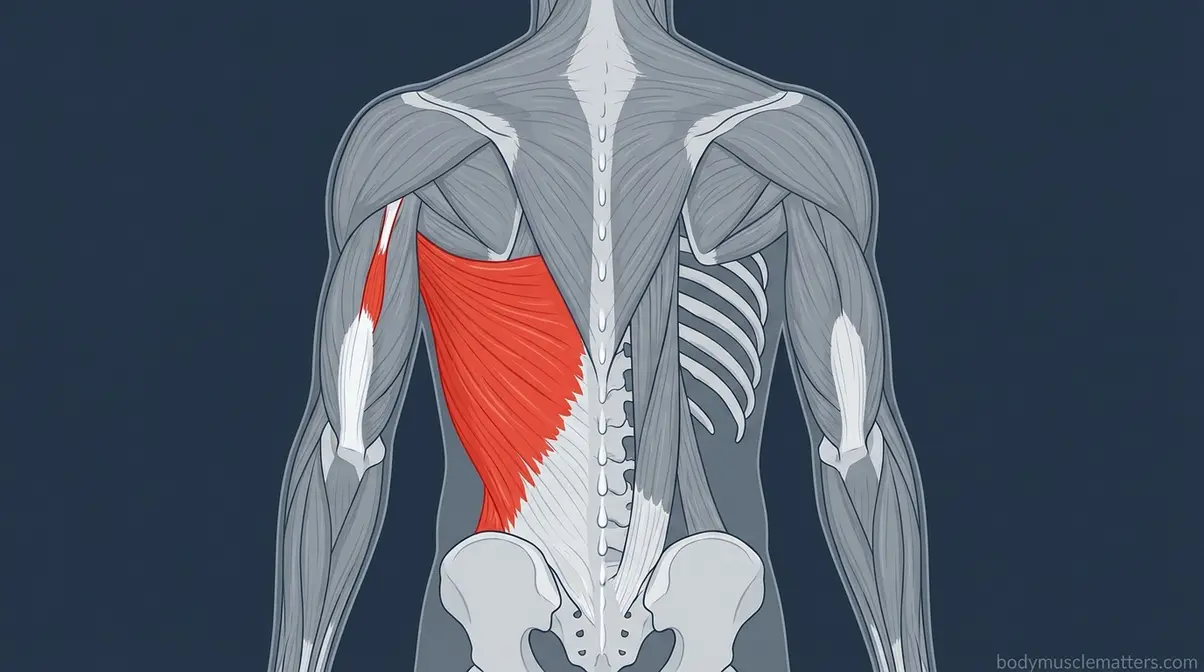
#3 Latissimus Dorsi: Widest Muscle
Ask someone which muscle covers the most surface area in the human body, and the answer is the latissimus dorsi — your lats. NIH StatPearls describes it as “a broad, flat muscle occupying most of the lower posterior thorax.” In plain terms, it’s the wide, fan-shaped muscle that gives a trained back its distinctive V-shape taper.
Location: Lower and mid-back, from the lower thoracic vertebrae (T6–T12) and lumbar spine down to the upper arm bone (humerus)
Primary function: Shoulder extension, adduction (pulling your arm toward your body), and internal rotation
What makes the lats remarkable by surface area: The latissimus dorsi originates from a remarkably wide base — the lower thoracic vertebrae, the thoracolumbar fascia, the lumbar and sacral spinous processes, the posterior third of the iliac crest, and the last four ribs. All those fibers converge into a single tendon that attaches to your upper arm. This funnel-like architecture is why the lats cover so much back surface.
Research published in the Journal of Anatomy confirms the lats are “one of the largest muscles in the body in terms of surface area,” while noting their PCSA — the measure of force potential — is relatively modest at around 5.6 cm². That’s the Size Spectrum Framework in action: massive by surface area, moderate by force output.
In practice: The lats drive every pulling movement — pull-ups, rows, and swimming strokes. They also act as accessory breathing muscles and help stabilize the spine during heavy lifting.
Behind the quads on the front of the thigh sits an equally large group of muscles that many beginners overlook entirely.
#4 Hamstrings: Posterior Chain Giant
The hamstrings are a group of three muscles running along the back of your thigh — the biceps femoris (long and short head), semimembranosus, and semitendinosus. Together, they form one of the largest and most injury-prone muscle groups in the body.
Location: Posterior (back) thigh, from the sitting bone (ischial tuberosity) to the knee
Primary function: Knee flexion (bending your knee) and hip extension (working alongside the glutes)
Like the quadriceps, the hamstrings cross two joints — the hip and the knee — which makes them highly versatile but also mechanically complex. According to NIH anatomy resources, they are critical for decelerating leg swing during running, controlling knee stability, and generating force during deadlifts and sprinting.
Why hamstrings get injured so often: The hamstrings must both lengthen and generate force simultaneously during running — a demand called eccentric loading. When the muscle is fatigued or imbalanced relative to the quads, this eccentric demand causes micro-tears or full strains. Anatomy educators consistently note that a quad-to-hamstring strength ratio below 0.6:1 significantly increases injury risk.
Fiber type composition: The hamstrings contain a higher proportion of fast-twitch (Type II) fibers than the glutes, making them more explosive but also more fatigue-prone. This is why sprinters develop hamstring strains far more often than endurance runners.
The hamstrings dominate the back of the lower body. Completing the top 5, the next muscle shifts attention to your upper body — specifically, the powerful chest muscle that drives nearly every pushing movement you make.
#5 Pectoralis Major: Chest Powerhouse
The pectoralis major — your “pecs” — is the largest and most superficial muscle of the anterior chest wall. NIH StatPearls describes it as “a thick, fan-shaped muscle” that forms the bulk of the chest region. It’s the muscle most associated with pressing exercises like push-ups and bench presses.
Location: Anterior chest wall, from the clavicle, sternum, and upper ribs to the humerus
Primary function: Shoulder adduction, internal rotation, and flexion
- The pectoralis major has two distinct heads that produce slightly different movements:
- Clavicular head (upper chest): Flexes the arm upward, as in a front raise
- Sternocostal head (lower chest): Extends the arm downward from a raised position and drives horizontal pushing
According to NIH StatPearls and Physiopedia, the pectoralis major is the primary mover in any horizontal pushing action. It also stabilizes the shoulder joint and contributes to forced exhalation during heavy breathing.
Why it completes the top 5: The pectoralis major rounds out the body’s largest muscles by providing substantial volume in the upper body. While the gluteus maximus and quadriceps dominate lower-body volume, the pecs are the upper body’s most voluminous single muscle — making them the logical upper-body representative in any size ranking.
| Rank | Muscle | Size Claim | Location |
|---|---|---|---|
| #1 | Gluteus maximus | Largest individual by volume | Buttocks |
| #2 | Quadriceps femoris | Largest muscle group | Front thigh |
| #3 | Latissimus dorsi | Largest by surface area | Back |
| #4 | Hamstrings | Largest posterior thigh group | Back thigh |
| #5 | Pectoralis major | Largest upper-body single muscle | Chest |
Muscle Superlatives: Strongest & Longest
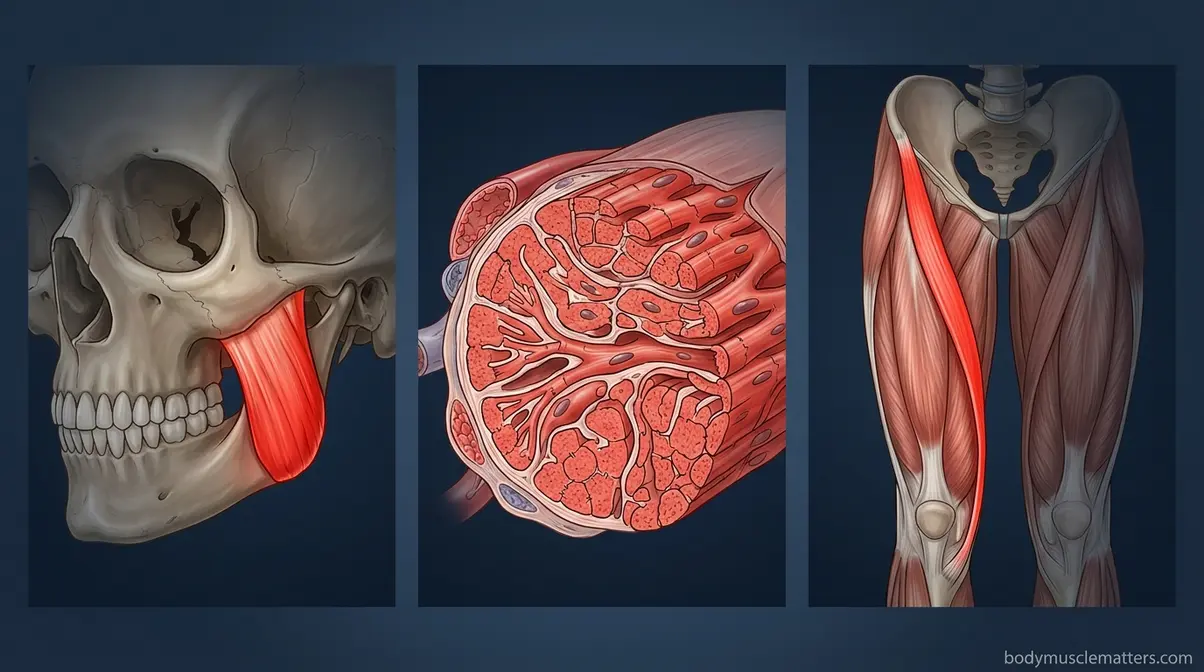
Size isn’t the only way to measure a muscle’s impressiveness. Some muscles win on force per unit area, others on relentless endurance, and one wins simply by being extraordinarily long. This section covers the muscle superlatives that the Size Spectrum Framework points toward but doesn’t fully capture — because “remarkable” means different things in different contexts.
Strongest Muscle: The Masseter
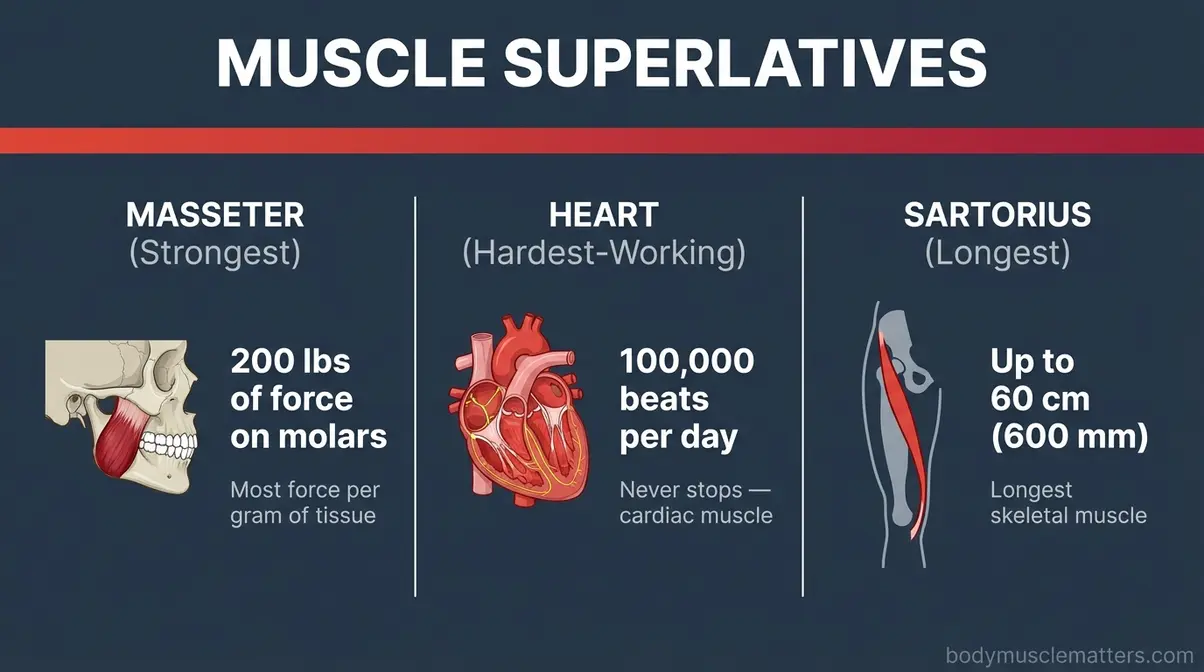
The masseter — your primary chewing muscle — wins the title of strongest muscle in the body relative to its size. The Library of Congress confirms: “The strongest muscle based on its weight is the masseter.” When all jaw muscles work together, they can close the teeth with a force of approximately 55 pounds (25 kg) on the incisors and up to 200 pounds (90.7 kg) on the molars (Harvard Medical School facts).
Why is such a small muscle so powerful? The masseter achieves this because it has an extraordinary number of muscle fibers densely packed into a small volume — and a near-perfect mechanical angle of insertion on the jawbone, maximizing torque. Live Science notes it “has many fibers packed into a small area” — a design optimized for force, not range of motion.
This is the Size Spectrum Framework applied to strength: the masseter is not the largest muscle by volume, surface area, or length. But by force-per-unit-weight — its physiological cross-sectional area relative to its mass — it outperforms every other muscle in your body.
Important qualifier: If you measure strength by total force output (not relative to size), the gluteus maximus generates more absolute force. The masseter’s supremacy is specifically about efficiency — more force per gram of muscle than anything else you’ve got.
Quotable fact: The masseter generates up to 200 pounds of force on the molars — more force per gram of muscle tissue than any other skeletal muscle in the human body.
The jaw muscle wins on relative strength. But for sheer, relentless endurance, nothing in your body comes close to the next muscle on this list.
Hardest-Working Muscle: Your Heart
The heart is not technically a skeletal muscle — it’s cardiac muscle, a distinct tissue type. But it wins the “hardest-working” title without contest. The British Heart Foundation confirms that the human heart beats approximately 100,000 times per day, pumping about 5 litres of blood per beat cycle continuously, without rest, for your entire life.
To put that in context: a person with an average resting heart rate of 70 beats per minute generates approximately 100,800 heartbeats in a single 24-hour period. Over a 70-year lifespan, that’s roughly 2.5 billion beats — all without a single voluntary command from you.
Why doesn’t the heart fatigue? Cardiac muscle fibers are structurally different from skeletal muscle fibers. They contain a higher density of mitochondria (the energy-producing organelles in cells) and rely primarily on aerobic (oxygen-based) metabolism. This design allows them to sustain continuous contractions without the lactic acid buildup that causes skeletal muscle fatigue during intense exercise.
The diaphragm is a close second: Your diaphragm — the dome-shaped breathing muscle beneath your lungs — also never voluntarily stops. It contracts 12–20 times per minute during rest, 20,000+ times per day, for your entire life. Unlike the heart, the diaphragm is skeletal muscle and can be consciously controlled (you can hold your breath), but its automatic function is nearly as relentless.
Clinical note: Heart muscle health is distinct from skeletal muscle health. Conditions affecting cardiac function — including arrhythmias and cardiomyopathy — require evaluation by a cardiologist, not a sports medicine or musculoskeletal specialist.
Longest Muscle: The Sartorius
The sartorius is the longest muscle in the human body, running in a diagonal band from the front of your hip bone (anterior superior iliac spine) all the way down to the inner side of your knee. Research published in PMC confirms it is “strap-like, up to 600 mm in length” — that’s up to 60 centimeters, or nearly 2 feet, in a single muscle.
Location: Anterior thigh, running diagonally from outer hip to inner knee
Primary function: Helps flex, abduct, and externally rotate the hip; also flexes the knee
The sartorius is sometimes called the “tailor’s muscle” — from the French couturier — because the cross-legged sitting position tailors historically used to sew required exactly the hip and knee movements the sartorius controls. According to Wikipedia’s anatomy entry, it is “the longest muscle in the human body.”
Where does the sartorius fit in the Size Spectrum Framework? It wins on length — but it’s a thin, strap-like muscle with relatively little volume or surface area. It’s a reminder that the framework’s three dimensions (volume, surface area, length) don’t always correlate. A muscle can be extraordinarily long but still relatively small in mass.
Fun fact: The sartorius contains five to seven distinct neurovascular compartments along its length — more than most muscles — which reflects the challenge of supplying blood and nerve signals across such an unusually long structure.
Human Anatomy Fun Facts: Beyond the Muscles
The Size Spectrum Framework doesn’t stop at muscles. The human body contains equally surprising superlatives in cells, bones, and organs. Understanding these gives you a complete picture of the body’s “largest” category — and a few facts that tend to genuinely surprise people.
Largest Cell, Bone, and Organ
The largest cell: The human ovum (egg cell) is the largest cell in the human body, measuring approximately 120 micrometers (0.12 mm) in diameter — roughly the size of a grain of sand. It’s one of the only cells in the body visible to the naked eye under the right conditions. For comparison, red blood cells measure just 6–8 micrometers in diameter, making the ovum about 15–20 times wider.
The largest bone: The femur (thighbone) is the longest and strongest bone in the human body. NIH StatPearls confirms: “Your femur is the largest bone in your body. Most adult femurs are around 18 inches long.” It runs from the hip socket to the knee joint and can support approximately 30 times your body weight — which is why femur fractures require significant trauma forces to occur.
The largest organ: The skin is the body’s largest organ by surface area, covering roughly 1.5–2 square meters in an average adult. It’s worth noting this because students often guess the liver or brain — both are large, but neither comes close to skin’s total surface coverage.
| Superlative | Winner | Key Measurement |
|---|---|---|
| Largest cell | Ovum (egg cell) | ~120 micrometers diameter |
| Largest bone | Femur (thighbone) | ~18 inches / 45 cm long |
| Largest organ | Skin | ~1.5–2 m² surface area |
| Longest muscle | Sartorius | Up to 60 cm (600 mm) |
| Largest muscle by volume | Gluteus maximus | Largest single skeletal muscle |
The Most Energy-Hungry Organ
Here’s one that surprises most people: the organ that uses the most energy in your body is not your muscles — it’s your brain.
Research published in PMC confirms that the human brain accounts for approximately 2% of body weight but consumes roughly 20% of the body’s total energy at rest. It runs almost entirely on glucose, requiring a continuous supply of about 120 grams per day. In caloric terms, your brain burns approximately 260 calories daily — just to maintain baseline function while you sit still.
Why so much energy? The brain’s neurons fire constantly, maintaining ion gradients across their membranes, transmitting signals, and sustaining synaptic connections. About 75% of the brain’s energy budget goes toward this signaling activity alone (BrainFacts.org). The remaining 25% maintains cellular housekeeping functions.
The practical takeaway: This is why mental fatigue feels real even after a day with no physical exertion. Your brain has been burning fuel at an intense rate regardless of whether your muscles were active.
What about the tongue? The tongue is a fascinating muscle in its own right — it’s actually composed of eight interwoven muscles (four intrinsic, four extrinsic) rather than one. This unique structure gives it three-dimensional flexibility that no other muscle in the body possesses. It’s not the largest or most energy-hungry, but it’s arguably the most mechanically complex muscle per unit volume (PubMed analysis).
Common Myths and Misconceptions About Muscle Size
Every popular anatomy topic accumulates misconceptions. The biggest muscles aren’t immune. Here are the two most important myths to understand — one about what size actually means, and one about when muscle discomfort requires professional attention.
Myth: Biggest Equals Strongest
This is perhaps the most widespread misconception in fitness and anatomy. The Size Spectrum Framework exists precisely because size and strength are not the same thing.
The myth: Bigger muscle = more force. Therefore, the gluteus maximus should be the strongest muscle.
The reality: Strength depends on physiological cross-sectional area (PCSA) — the total cross-section of all muscle fibers, not the muscle’s overall volume or length. A muscle packed with short, parallel fibers can produce more force than a larger muscle with longer, angled fibers.
The masseter proves this. It’s far smaller than the gluteus maximus by volume, yet it generates more force per gram of tissue. Meanwhile, the latissimus dorsi has enormous surface area but a relatively modest PCSA of ~5.6 cm² — meaning it’s designed for range of motion, not maximum force output.
The practical lesson for training: Muscle size (hypertrophy) and muscle strength are related but distinct adaptations. Strength training at lower rep ranges (1–5 reps, high load) preferentially develops neural efficiency and PCSA. Hypertrophy training (8–12 reps, moderate load) builds volume. You can be stronger without being visibly bigger, and vice versa.
Research from anatomical studies consistently shows that the relationship between muscle volume and force output varies significantly by muscle architecture — fiber pennation angle, fiber length, and fiber type composition all mediate the size-to-strength relationship.
Hardest Muscle to Grow
The calves (gastrocnemius and soleus) are widely considered the hardest muscle to get bigger. Anatomy educators and strength coaches consistently note that calf muscles contain a high proportion of slow-twitch (Type I) fibers, which are resistant to hypertrophy compared to fast-twitch fibers. Additionally, the calves are conditioned daily by walking and standing, making them highly adapted to low-level stimulus. Research suggests calf muscles may require higher training frequencies and volumes than other muscle groups to achieve comparable growth — often 15–20 sets per week versus the 10–15 sets sufficient for larger muscles.
When to See a Doctor About Muscle Pain
Not all muscle discomfort is normal training soreness. Some conditions affecting the body’s largest muscles require professional evaluation. This section is not a diagnostic tool — it’s a guide to recognizing when self-management is insufficient.
Common conditions affecting large muscles:
- Gluteal tendinopathy: Persistent pain on the outer hip or buttock, often worsening with sitting or climbing stairs. The Cleveland Clinic notes this condition involves degeneration of the tendons attaching the gluteal muscles to the hip. A physical therapist can diagnose and treat this with targeted loading exercises.
- Trochanteric bursitis: Inflammation of the bursa near the hip’s greater trochanter, producing lateral hip pain. Often confused with gluteal tendinopathy; proper diagnosis requires clinical assessment.
- Hamstring strain: A tear in one or more hamstring muscles, ranging from minor (Grade 1) to complete rupture (Grade 3). Sudden sharp pain at the back of the thigh during sprinting or kicking is the hallmark symptom.
- Pectoralis major tear: Rare but serious, typically occurring during heavy bench pressing. A sudden “pop” and visible deformity of the chest require immediate medical evaluation.
When to seek help: Consult a physician or physical therapist if you experience pain that persists beyond 2 weeks, pain that worsens with rest, swelling or bruising around a large muscle, or any sudden sharp pain during exercise. Anatomy educators and sports medicine clinicians consistently advise against self-diagnosing muscle conditions affecting the hip, thigh, or shoulder — the anatomy in these regions is complex, and misdiagnosis can delay appropriate treatment.
Frequently Asked Questions
What are the 7 major muscles?
The 7 major muscle groups are the chest (pectoralis major), back (latissimus dorsi and trapezius), shoulders (deltoids), arms (biceps and triceps), core (abdominals and obliques), glutes (gluteus maximus, medius, and minimus), and legs (quadriceps and hamstrings). These groups cover the primary movement patterns of the human body — pushing, pulling, rotating, and extending. Most full-body training programs are structured around these 7 groups to ensure balanced muscular development. Individual muscles within each group vary significantly in size and function.
Smallest and largest muscle?
The smallest muscle is the stapedius, located in the middle ear, measuring approximately 1–6 mm in length. The largest muscle depends on your measuring lens: the gluteus maximus by volume, the latissimus dorsi by surface area, and the sartorius by length — the core principle of the Size Spectrum Framework. This distinction is why anatomy sources sometimes give different answers to the same question. All three claims are technically correct; they simply measure different dimensions of “largest.”
What muscle never stops?
The heart is the muscle that never stops working. As cardiac muscle, it beats approximately 100,000 times per day throughout your entire life. The diaphragm — a skeletal muscle — is a close second, contracting automatically 12–20 times per minute during rest to drive breathing, though it can be briefly controlled voluntarily. No skeletal muscle matches the heart’s complete inability to rest, because cardiac muscle is structurally and biochemically designed for continuous aerobic work, powered by an exceptionally dense supply of mitochondria.
What is the 3-3-3 rule at the gym?
The 3-3-3 rule is an informal training guideline suggesting 3 sets of 3 exercises for 3 major muscle groups per session — or in some interpretations, 3 days of training per week targeting 3 muscle groups each day. It’s not a formally published protocol from sports science research, but it functions as a beginner-friendly structure that prevents overtraining while ensuring consistent stimulus across the body’s largest muscle groups. Fitness professionals note it works well for beginners who need a simple, repeatable framework before advancing to periodized programming. Always adapt any training rule to your individual fitness level and goals.
What’s the easiest muscle to grow?
The quadriceps are frequently cited as the easiest muscle group to develop, largely because they are the largest muscle group in the body and respond robustly to compound movements like squats and leg presses. Anatomy educators note that large muscles with a high proportion of fast-twitch fibers — including the glutes and pecs — also respond quickly to progressive overload. Evidence from resistance training research suggests beginners can gain meaningful quad size within 6–8 weeks of consistent training. To learn more about which muscles grow the fastest, consider your genetic predisposition, training consistency, and nutrition, as all influence individual response rates significantly.
What muscle never gets tired?
The heart never gets tired in the conventional sense — it is structurally incapable of the fatigue that affects skeletal muscles. Cardiac muscle fibers have roughly 5 times more mitochondria than typical skeletal muscle fibers, allowing them to sustain aerobic energy production indefinitely without lactic acid buildup. The diaphragm also has extraordinary fatigue resistance, operating continuously for decades. Among skeletal muscles, the soleus (the deeper calf muscle) has the highest proportion of slow-twitch oxidative fibers — approximately 70–80% — making it the most fatigue-resistant skeletal muscle in the body.
Pitfalls, Alternatives & Expert Help
Common Pitfalls
1. Confusing muscle groups with individual muscles. The quadriceps is the largest muscle group — four muscles combined. The gluteus maximus is the largest individual muscle. Conflating these leads to contradictory claims that are both technically correct. Use the Size Spectrum Framework to specify which lens you’re applying.
2. Assuming size equals strength. A large muscle isn’t automatically the strongest. PCSA (physiological cross-sectional area) — not volume — predicts force output. The masseter’s extraordinary force per gram proves that small, densely-fibered muscles can outperform much larger ones in relative strength.
3. Using muscle soreness as a progress indicator. Delayed onset muscle soreness (DOMS) reflects tissue damage, not necessarily effective training stimulus. The largest muscles (glutes, quads) can be effectively trained with no soreness at all, especially once you’ve adapted to an exercise.
4. Neglecting the posterior chain. Because the glutes and hamstrings are “behind you,” many beginners underemphasize them. These are two of the body’s five largest muscles — and among the most commonly undertrained, contributing to knee pain, lower back problems, and poor athletic performance.
5. Ignoring the Size Spectrum when reading anatomy sources. Different credible sources give different “largest muscle” answers — and they’re all right. Recognizing the measurement lens each source uses prevents unnecessary confusion.
When to Choose Alternatives
- If you have hip or gluteal pain: Standard glute exercises (squats, lunges) may aggravate gluteal tendinopathy or trochanteric bursitis. A physical therapist can prescribe specific loading protocols that rebuild tendon tolerance without aggravating the condition.
- If standard anatomy guides feel too advanced: For beginners, resources from Cleveland Clinic and NIH MedlinePlus offer plain-language anatomy explanations designed for non-specialists.
When to Seek Expert Help
Consult a physical therapist or sports medicine physician if you experience persistent hip, thigh, or chest muscle pain lasting more than 2 weeks, sudden muscle “pop” sensations during exercise, visible asymmetry or deformity in a muscle region, or weakness in a major muscle group that affects daily activities. Anatomy educators consistently emphasize that large-muscle conditions — particularly gluteal tendinopathy, hamstring tears, and pectoralis ruptures — are frequently misdiagnosed through self-assessment alone.
Conclusion
For curious beginners and fitness enthusiasts, understanding the largest muscles in the human body means more than memorizing one name. The gluteus maximus leads by volume, the latissimus dorsi by surface area, and the sartorius by length — a framework supported by MRI studies, NIH anatomy data, and clinical research. The heart beats 100,000 times daily without rest, the masseter generates up to 200 pounds of jaw force, and the quadriceps represent the largest muscle group in the body. These facts paint a far richer picture than any single “biggest muscle” claim can offer.
The Size Spectrum Framework is the key takeaway here. Every time you encounter a “largest muscle” claim, apply the three-lens test: largest by volume, by surface area, or by length? That habit transforms a simple anatomy question into genuine anatomical literacy — and it’s the reason this guide exists.
Your next step: pick one of the top 5 muscles from this guide and learn one exercise that trains it directly. Start with the gluteus maximus (hip thrusts or squats), the quadriceps (leg press or lunges), or the latissimus dorsi (pull-downs or rows). Build familiarity with your body’s biggest muscles through movement, not just memorization — and consult a certified trainer or physical therapist if you’re new to resistance training and want personalized guidance.
Related posts:
StrongLifts 5x5 for Beginners: Complete Guide 2026
How to Get a Bigger Bum Without Exercise: 3-Tier Guide
What Muscles Does the StairMaster Work? 6 Groups
Olympic Weightlifting vs Powerlifting: 2026 Guide
What Kills Muscle Gains? 7 Proven Saboteurs to Fix Now
Best Strength Training Apps for Women: Top 7 Picks

Callum
Hi, I'm Callum, the founder of Body Muscle Matters. I'm not a certified trainer, I'm a self taught lifter who started this site to share what I've learned from my own training and a lot of trial and error. Everything here comes from real experience and honest research, written the way I'd explain it to a friend who is just getting started. My goal is simple: practical, no hype fitness advice you can actually use.