You already know meditation is supposed to be good for you. But “just sit there and breathe” feels like a suspiciously small ask for something promising to fix your stress, sleep, and focus. Here’s the part that tends to surprise skeptics: research published in PMC Neurobiological Changes Induced by Mindfulness (2026) confirms that regular meditation induces neuroplasticity — measurably increasing cortical thickness, reducing amygdala reactivity, and improving brain connectivity. This isn’t relaxation. It’s a structured brain workout.
Meanwhile, stress compounds quietly. Sleep fragments. Attention erodes. The longer you wait to build a practice, the more ground you lose — and the further the gap grows between where you are and where you want to be.
“Meditation is well known as a technique to reduce stress and anxiety, it may also help enhance your mood, promote healthy sleep patterns, and boost cognitive function.”
This guide covers 15 science-backed benefits of meditation — and the specific technique to unlock each one — so you can start practicing with real confidence today. You’ll move through mental, physical, neurological, spiritual, and practical angles, all built for complete beginners.
Key Takeaways: Benefits of Meditation
The benefits of meditation span your brain, body, and emotional life — backed by decades of peer-reviewed research showing measurable changes in brain function and structure from consistent daily practice.
- Reduces stress: Meditation lowers cortisol (the body’s primary stress hormone) and calms the nervous system within a single session
- Reshapes the brain: Regular practice grows the prefrontal cortex and reduces amygdala reactivity — your brain’s fear-response center
- Improves sleep: Mindfulness training has been shown to reduce insomnia severity and improve sleep quality in both adults and children
- Works for everyone: From students to seniors, specific techniques (mindfulness, TM, loving-kindness) target different goals
- The Benefit-Action Bridge: Every benefit in this guide comes with a named technique so you can practice exactly what science proves
Table of Contents
- What Are the Benefits of Meditation? An Overview
- Mental and Emotional Health Benefits
- Neurological Benefits of Meditation
- Physical Health Benefits of Meditation
- Benefits by Meditation Type: Finding Your Practice
- When and Who: Meditation for Specific Situations
- Spiritual Benefits of Meditation
- What Real People Say: Community Perspectives and Balance
- Limitations and Cautions
- Frequently Asked Questions
- Conclusion
What Are the Benefits of Meditation? An Overview
Meditation is a mind-training practice with roots in ancient traditions and now validated by modern neuroscience. Research from PMC (2026) confirms it produces measurable neurological changes — including increased cortical thickness and reduced stress reactivity — that passive relaxation simply cannot replicate. This guide does something most articles skip: it uses The Benefit-Action Bridge, pairing every proven benefit with a specific, named technique so you can immediately practice what science proves.
Approximately 275 million people meditate worldwide as of 2026 (Mindfulness Box, 2026) — and the use of meditation among U.S. adults more than tripled in just five years (TherapyRoute, 2026). That growth isn’t trend-chasing. It reflects accumulating evidence that this practice delivers real, measurable results across multiple domains of health.
You can explore the core benefits of meditation for stress relief to see how the research applies to everyday wellbeing.
What Makes Meditation Different from Relaxation
Relaxation and meditation feel similar from the outside. They are not the same thing at all. Relaxation reduces stimulation — think of it as sitting in a warm bath. Stress drops, and you feel better temporarily. Meditation is more like physical therapy: intentional, structured, and building capacity over time.
When you meditate, you deliberately train your attention and awareness. You notice thoughts arising, choose not to chase them, and return to your anchor (breath, mantra, or body sensation). That cycle of noticing and returning is the actual exercise. Because of it, research shows meditation produces neurological changes — increased gray matter density, reduced amygdala reactivity, improved connectivity between brain regions — that passive rest does not (PMC, 2026). That distinction makes everything else in this article credible.
Now that you know what meditation actually is, here are the five categories of benefits — and the science behind each one.
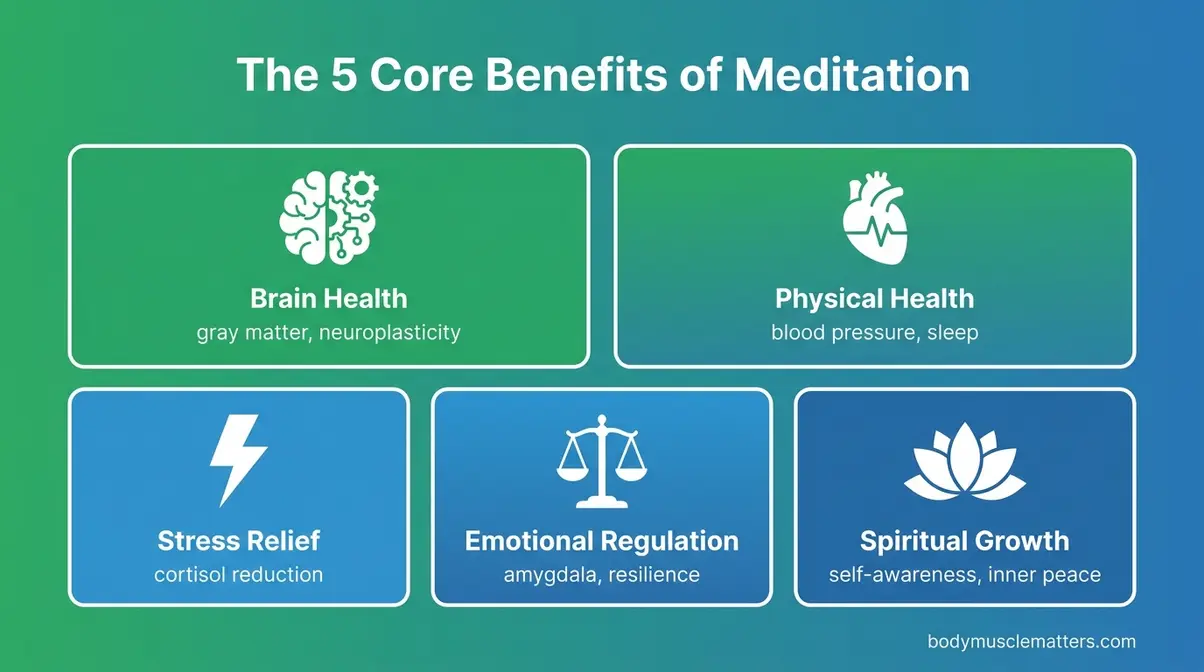
The Five Core Benefits at a Glance
These five categories represent the breadth of what a consistent practice can deliver:
- Stress Relief — May lower cortisol, the body’s primary stress hormone, with measurable effects seen in studies using sessions as short as 11 minutes (PMC, 2026)
- Brain Health — Grows gray matter in memory and focus regions, with neuroplasticity effects documented in multiple peer-reviewed studies (PMC Neurobiological Changes, 2026)
- Emotional Regulation — Reduces amygdala reactivity, making emotional outbursts less frequent and less intense
- Physical Health — May lower blood pressure and improve sleep quality, with a 2026 systematic review confirming significant reductions in cardiovascular markers (Healthcare Bulletin, 2026)
- Spiritual Growth — Increases self-awareness and a sense of inner connection through practices like loving-kindness and Vipassana
Each of these five categories has its own body of research. Let’s start with the one most people care about first: mental and emotional health.
Mental and Emotional Health Benefits of Meditation
The mental health benefits of meditation are the most thoroughly studied — and the most immediately felt. Research consistently shows that mindfulness-based interventions reduce stress, manage anxiety, and build emotional resilience through mechanisms that don’t require a prescription. For anyone seeking relief from daily overwhelm, these benefits are the place to start.
Stress and Cortisol Reduction
Cortisol is the body’s primary stress hormone — the chemical released when your brain perceives a threat, real or imagined. Chronically elevated cortisol is linked to weight gain, sleep disruption, immune suppression, and cardiovascular risk. Meditation appears to be one of the most accessible tools for bringing it down.
A 2026 randomized controlled trial published in PMC found that yoga nidra meditation — practiced for just 11 minutes daily — produced measurable reductions in stress, anxiety, and depression compared to a waitlist control group. Thirty-minute sessions showed an even stronger effect: a flatter cortisol awakening response, meaning the typical sharp morning spike of the stress hormone was less pronounced (PMC, 2026). Separately, research on Mindfulness-Based Stress Reduction (MBSR) found it significantly reduces stress and depressive symptoms, particularly in older adults (PMC, 2026).
Estimated Time: 10-20 minutes
Tools/Materials: A quiet space, comfortable seating or a mat.
The Benefit-Action Bridge — Technique: Body Scan Meditation
- Lie down or sit comfortably
- Close your eyes and take three slow breaths
- Bring your attention to the top of your head
- Slowly scan downward — face, neck, shoulders, chest, arms, belly, legs — noticing any tension without trying to fix it
- Spend 10–20 minutes completing the scan
Start with 10 minutes daily for two weeks and notice changes in your morning mood.
Anxiety and Emotional Regulation
The amygdala — think of it as your brain’s alarm system — fires whenever it detects a threat. In anxious people, it fires too often and too intensely. Research from PMC’s 2026 neurobiological review found that mindfulness meditation reduces amygdala reactivity, helping you respond to stress rather than react to it. That’s a meaningful distinction for anyone who’s ever said something in anger they immediately regretted.
Studies also show that meditation increases activity in the prefrontal cortex (PFC) — the brain region responsible for rational thinking, impulse control, and emotional perspective. The PFC and amygdala work in opposition: when the PFC is stronger, the alarm system is quieter. Across meditation communities, practitioners consistently report feeling less “hijacked” by strong emotions within 4–8 weeks of starting a daily practice.
The Benefit-Action Bridge — Technique: Loving-Kindness (Metta) Meditation
- Sit quietly and close your eyes
- Silently repeat: “May I be happy. May I be healthy. May I be at peace.”
- Expand the phrases outward: a loved one, a neutral person, then all beings
- Practice for 10–15 minutes daily
Research suggests metta practice specifically reduces self-critical thinking and increases positive emotional states, according to findings from Harvard Health.
Focus, Memory, and Cognitive Flexibility
Meditation doesn’t just calm you down — it sharpens you up. A 2026 meta-analysis published in PMC examined mindfulness-based interventions across 15 cognitive subdomains and found improvements in global cognition, attention, and working memory (PMC, 2026). For students and professionals who feel their attention span has been eroded by constant notifications, this finding is particularly relevant.
Working memory — your brain’s ability to hold and manipulate information in real time — is one of the cognitive functions most sensitive to stress. When cortisol rises, working memory capacity drops. By reducing cortisol and increasing prefrontal activity, meditation creates the neurochemical conditions where sustained attention becomes easier. Even children benefit: research cited by NCCIH found improvements in attention problems in children following mindfulness-based programs.
The Benefit-Action Bridge — Technique: Mantra Repetition
Silently repeat a single word or phrase — “calm,” “here,” or a traditional Sanskrit mantra like “So Hum” — for 15–20 minutes. Each time your mind wanders, gently return to the mantra. This trains the attentional “muscle” the same way bicep curls train your arm.
Where mental benefits address how you think and feel, neurological benefits explain why meditation works at the structural level of the brain.
Neurological Benefits of Meditation
For skeptics, the neurological research is the most persuasive part of the story. You can dismiss a wellness trend. It’s harder to dismiss fMRI scans showing measurable changes in brain tissue. This is where The Benefit-Action Bridge becomes especially powerful — because the techniques aren’t just helpful habits, they’re documented brain-changers.
How Meditation Reshapes the Brain (Neuroplasticity)
Neuroplasticity is your brain’s ability to physically change its structure in response to experience. You can think of it like a hiking trail: the more you walk a path, the more defined it becomes. Meditation forges new neural pathways — and strengthens existing ones — through repeated, deliberate attention training.
A 2026 study from Mount Sinai revealed that meditation induces changes in deep brain areas associated with memory and emotional regulation (Mount Sinai, 2026). Meanwhile, a striking April 2026 study published in Science Daily found that just seven days of intensive mind-body practice produced measurable changes across the brain and body — suggesting neuroplasticity benefits can appear faster than previously believed. A 2026 PMC review of neurobiological changes confirmed that meditation increases cortical thickness, reduces amygdala reactivity, and improves brain connectivity across multiple study populations (PMC, 2026).
Quotable: Regular meditation practice produces measurable changes in brain structure and connectivity — making it one of the most evidence-supported self-improvement practices available (PMC Neurobiological Changes, 2026).
The Vagus Nerve Connection: Meditation’s Calming Pathway
This is the section every top competitor misses entirely — and it’s one of the most important mechanisms behind meditation’s benefits.
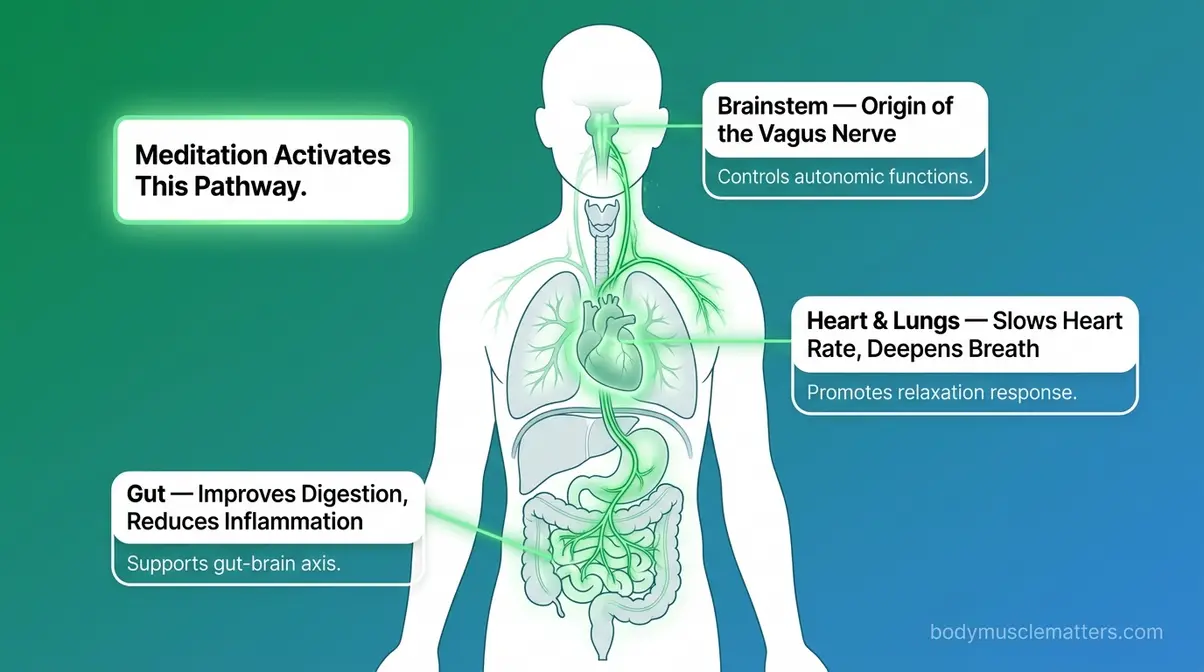
The vagus nerve is the longest cranial nerve in your body, running from your brainstem down through your heart, lungs, and gut. It’s the primary pathway of the parasympathetic nervous system — your body’s “rest and digest” system, the biological opposite of “fight or flight.” When the vagus nerve is activated, heart rate slows, blood pressure drops, digestion improves, and anxiety quiets.
Research published in Cedars-Sinai (2026) confirms that meditation directly activates the vagus nerve, calming the broader network of nerves that control physiological processes. A landmark 2026 study published in Psychological Medicine (University College London) found that combining vagus nerve stimulation with compassion meditation produced significantly larger and more immediate increases in self-compassion than meditation alone — suggesting meditation’s vagus nerve pathway is both real and amplifiable (PMC, 2026).
The Benefit-Action Bridge — Technique: 5-7-5 Breathing for Vagus Nerve Activation
The 5-7-5 breathing rule is a structured breath pattern designed to engage the parasympathetic nervous system through extended exhalation:
- Inhale slowly through your nose for 5 counts
- Hold gently at the top for 7 counts
- Exhale fully through your mouth for 5 counts
- Repeat for 5–10 rounds
The extended hold and controlled exhale stimulate the vagus nerve by increasing heart rate variability (HRV) — a measurable marker of parasympathetic activity. Practice this at the start of a meditation session or during moments of acute stress.
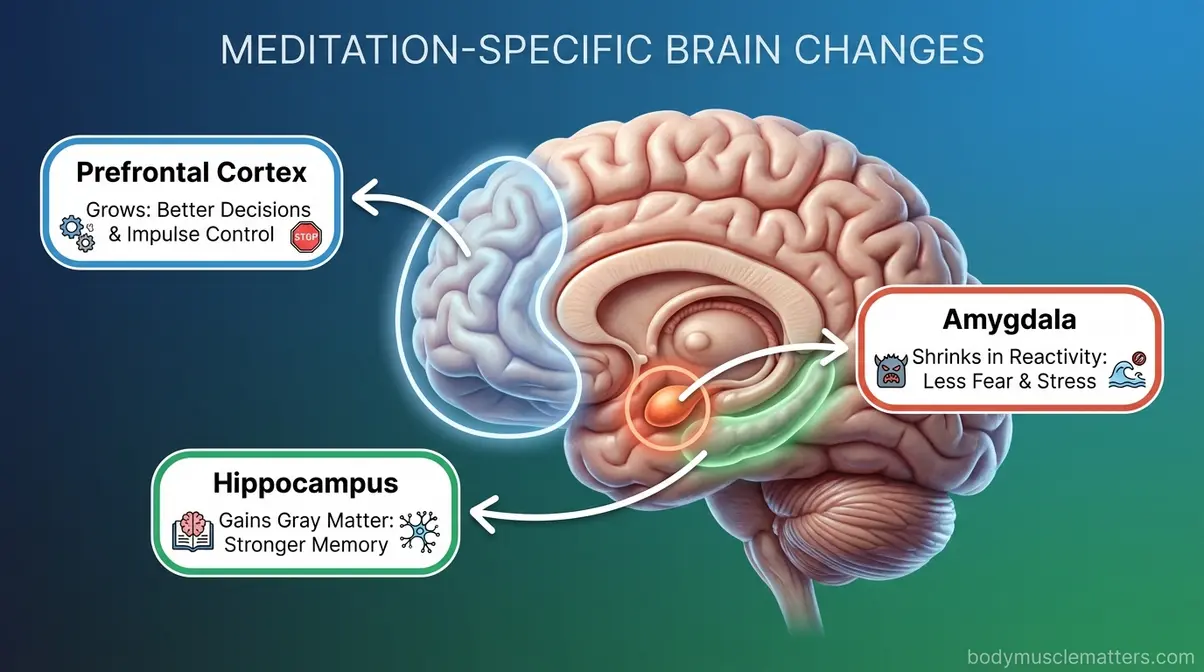
What Happens to Your Amygdala, Prefrontal Cortex, and Hippocampus
Three brain regions show the most consistent changes with meditation practice:
| Brain Region | What It Does | What Meditation Does |
|---|---|---|
| Amygdala | Your brain’s alarm system — triggers fear and stress responses | Reduces reactivity; you feel less triggered by everyday stressors |
| Prefrontal Cortex (PFC) | Rational thinking, impulse control, decision-making | Increases gray matter density; strengthens your ability to pause before reacting |
| Hippocampus | Memory formation and emotional regulation | May increase gray matter concentration, supporting better learning and emotional resilience |
Research from Harvard (2011, referenced in ongoing discussions) and Mount Sinai (2026) both document gray matter changes in these regions. The hippocampus finding is particularly relevant for anyone worried about age-related memory decline — research suggests meditation may slow that process (PMC, 2026).
The neurological case is strong. Now let’s look at what happens below the neck.
Physical Health Benefits of Meditation
The physical health benefits of meditation are less obvious to beginners — but no less real. Research shows that the same calming effect that quiets your amygdala also reduces inflammation, lowers blood pressure, and improves the quality of your sleep. Your nervous system doesn’t distinguish between emotional and physical stress. Calm one; calm both.
Blood Pressure and Cardiovascular Health
Blood pressure is the force your blood exerts against artery walls. Chronically high blood pressure — called hypertension — increases the risk of heart attack and stroke. Meditation appears to offer a meaningful, non-pharmaceutical way to reduce it.
A 2026 systematic review of 23 studies published in Healthcare Bulletin found that meditation and mindfulness-based interventions are associated with significant reductions in systolic and diastolic blood pressure, improved heart rate variability, and enhanced parasympathetic activity (Healthcare Bulletin, 2026). A separate 2026 trial found that meditation training reduced mean systolic blood pressure by 6.88 mmHg in the meditation group, compared to 2.75 mmHg in controls (McKnight’s, 2026). The American Heart Association also notes that mindfulness and meditation may help manage high blood pressure and improve overall cardiovascular wellbeing (AHA, 2026).
The Benefit-Action Bridge — Technique: Mindfulness Breath Focus (10 minutes daily)
Sit upright, close your eyes, and place one hand on your chest. Breathe naturally and simply notice the sensation of air entering and leaving. When your mind wanders, return to the breath. Consistency matters more than session length — 10 minutes daily outperforms 60 minutes once a week.
Better Sleep and Natural Pain Relief
Poor sleep and chronic pain share a common driver: an overactive nervous system that struggles to downshift. Meditation addresses both by activating the parasympathetic system and reducing the inflammatory markers that amplify pain perception.
A 2026 PMC study on yoga nidra found that regular practice significantly improved sleep quality and reduced insomnia markers, with effects on both subjective well-being and biological stress indicators (PMC, 2026). For pain, the NCCIH notes that mindfulness meditation may help reduce chronic pain intensity by changing how the brain processes pain signals — not by eliminating the sensation, but by reducing the emotional suffering attached to it. This distinction matters: you may still feel the pain, but it loses some of its grip.
The Benefit-Action Bridge — Technique: Body Scan Before Sleep
Begin a 15-minute body scan (described in the stress section) as you lie in bed. The goal is not to fall asleep during it — though many people do. The goal is to systematically release physical tension so your nervous system recognizes it’s safe to transition into rest.
Benefits by Meditation Type: Finding Your Practice
Not all meditation is the same. Different techniques activate different neural pathways and serve different goals. Understanding your options is the first step to finding what works for you — and the research on each type is increasingly specific.
Mindfulness Meditation for Stress and Anxiety
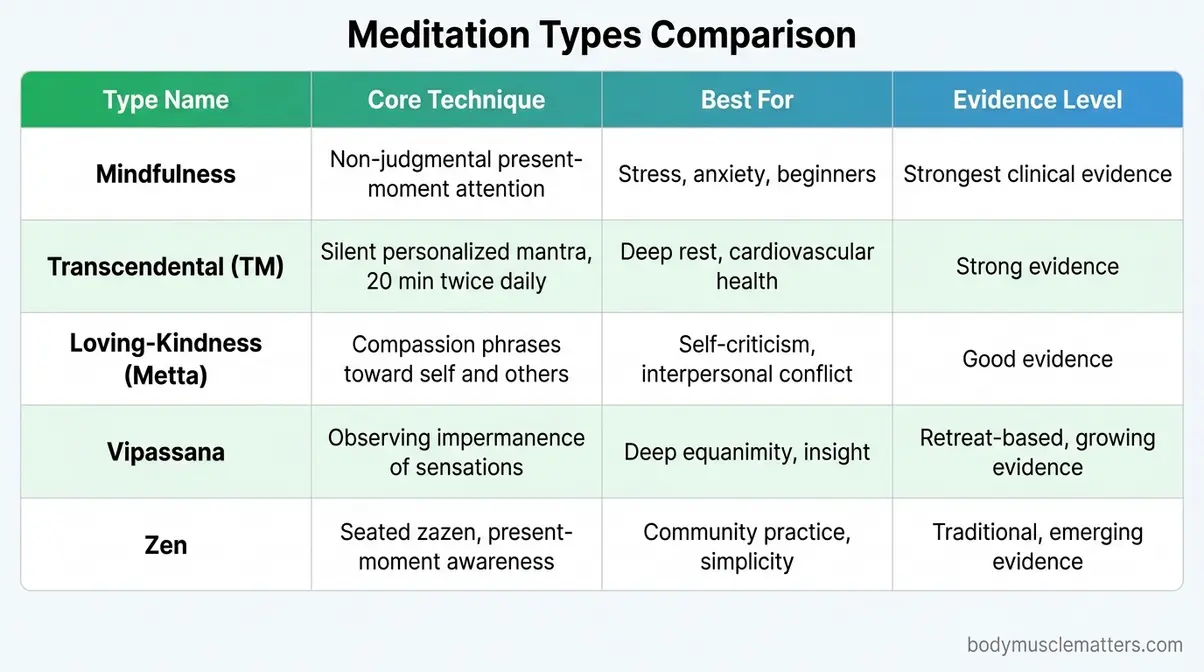
Mindfulness meditation — the practice of paying deliberate, non-judgmental attention to the present moment — is the most researched form of meditation in Western clinical settings. It forms the foundation of MBSR (Mindfulness-Based Stress Reduction), an 8-week structured program developed at the University of Massachusetts Medical School.
Research consistently shows that MBSR reduces self-reported stress, anxiety, and depression. A 2026 PMC study found MBSR significantly reduces stress and depressive symptoms among elderly participants, with 83.33% of the intervention group reporting low stress versus just 12.50% in the control group (PMC, 2026). For beginners, mindfulness is the most accessible entry point — no special equipment, no instructor required, and apps like Headspace and Calm offer guided sessions.
Best for: Everyday stress, anxiety, emotional regulation, and beginners starting from zero.
Transcendental Meditation (TM) for Deep Rest
Transcendental Meditation (TM) involves silently repeating a personalized mantra for 20 minutes, twice daily, while sitting comfortably with eyes closed. Unlike mindfulness, TM doesn’t ask you to observe thoughts — it allows the mind to settle naturally into a state of restful alertness.
A 2026 study published in News-Medical found that long-term TM practitioners show favorable biological markers of aging and stress, including improved gene expression, cognitive function via EEG, and lower hair glucocorticoid (cortisol) levels compared to non-meditators (News-Medical, 2026). TM requires certified instruction and carries a fee, which is worth considering — but its evidence base for stress and cardiovascular health is substantial.
Best for: Deep rest, cardiovascular health, long-term stress reduction, and people willing to commit to a structured program.
Loving-Kindness, Vipassana, and Zen: Community and Insight
Three other traditions offer distinct benefits worth knowing:
- Loving-Kindness (Metta) — Focuses on cultivating compassion toward yourself and others. Research suggests it reduces self-criticism and increases positive affect. Particularly effective for people struggling with shame or interpersonal conflict.
- Vipassana — An insight practice that observes the impermanent nature of sensations, thoughts, and emotions. Typically taught in intensive retreat settings (10 days of silence). Builds profound equanimity over time.
- Zen — A practice rooted in seated meditation (zazen) and present-moment awareness. Emphasizes simplicity and community practice. Accessible through local Zen centers.
All three have community dimensions that mindfulness apps lack — and research suggests social connection amplifies meditation’s mental health benefits.
Which Meditation Type Is Best for OCD?
OCD (Obsessive-Compulsive Disorder) involves intrusive, unwanted thoughts (obsessions) and repetitive behaviors performed to reduce the anxiety they cause (compulsions). The challenge with OCD is that trying to suppress thoughts typically makes them stronger — which is where mindfulness offers a different approach.
A 2026 special report in PubMed found that mindfulness-based interventions show promise as complementary treatments for OCD, particularly for improving emotional regulation and acceptance of intrusive thoughts (PubMed, 2026). A 2026 meta-analysis of 10 RCTs confirmed mindfulness interventions produced moderate effect sizes for OCD symptom reduction (PMC, 2026). Crucially, the mechanism is acceptance, not suppression: mindfulness teaches you to observe intrusive thoughts without engaging with them, reducing their emotional charge over time.
The Benefit-Action Bridge — Technique: The 3-3-3 Rule for OCD
- When an intrusive thought arises:
- Name 3 things you can see around you
- Name 3 sounds you can hear right now
- Move 3 parts of your body (wiggle fingers, roll shoulders, flex feet)
This grounding technique interrupts the obsessive loop by redirecting attention to present-moment sensory experience — the core mechanism of mindfulness. It is not a replacement for professional OCD treatment (particularly Exposure and Response Prevention therapy), but it can serve as a complement. Always consult a therapist who specializes in OCD before modifying your treatment approach.
Where mindfulness addresses type-specific goals, the next section explores how meditation benefits change based on when and who is practicing.
When and Who: Meditation for Specific Situations
The benefits of meditation don’t apply equally to everyone in every context. The research on demographic-specific and timing-specific applications is growing — and the findings are more concrete than most beginners expect.
Daily and Morning Meditation: What Changes Over Time
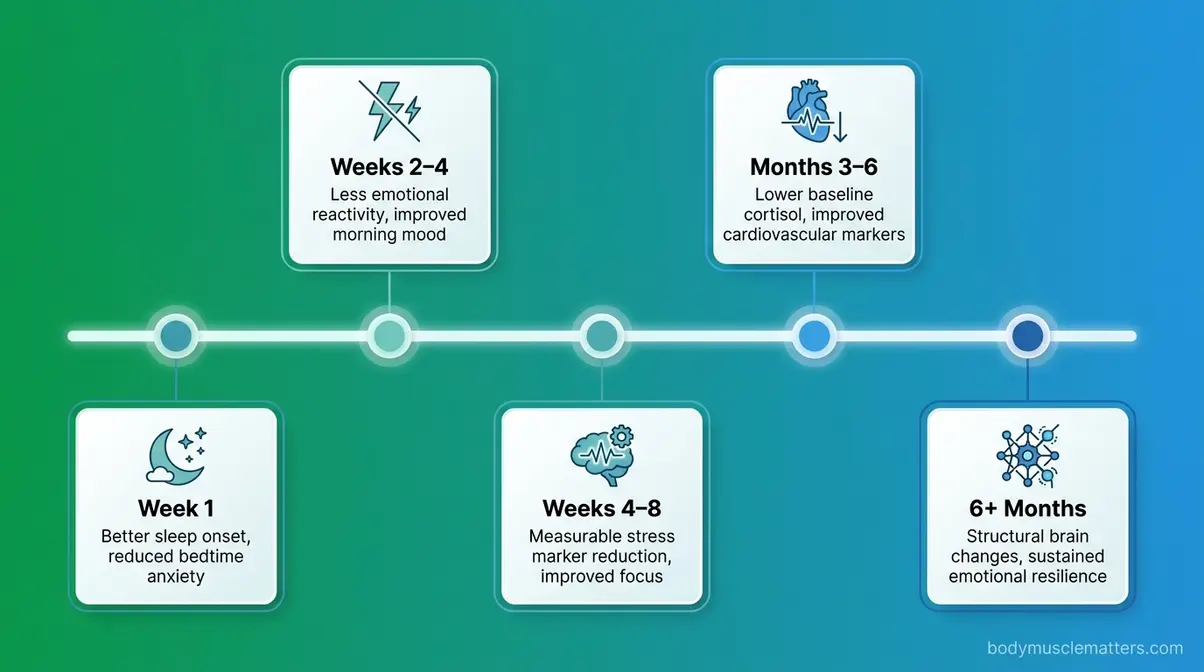
What actually happens if you meditate every day? The short answer is: a lot — and it compounds. In the first week, most practitioners report reduced reactivity and slightly improved sleep. By weeks 4–8, research suggests measurable changes in emotional regulation and stress markers. Long-term practitioners (years) show structural brain differences, lower baseline cortisol, and improved cardiovascular markers.
Morning meditation is particularly effective because cortisol peaks in the first 30–60 minutes after waking (the “cortisol awakening response”). Meditating during this window — before checking your phone or email — can flatten that spike and set a calmer neurochemical baseline for the day. Even 10 minutes of breath-focused mindfulness before your first coffee has a measurable effect on perceived stress throughout the day (PMC, 2026).
The Benefit-Action Bridge: Set a recurring 10-minute morning alarm labeled “brain workout.” Use a body scan or breath focus. No app required.
Meditation Benefits for Students and Children
Students face a specific convergence of stressors: academic pressure, social complexity, sleep deprivation, and the constant cognitive demands of learning. Research suggests meditation addresses all four.
A 2026 meta-analysis published in PMC found that mindfulness-based interventions improve global cognition and multiple cognitive subdomains in meditation-naïve participants — including attention, working memory, and cognitive flexibility (PMC, 2026). For children specifically, NCCIH-cited research found improvements in attention problems following mindfulness programs. MIT research on student mindfulness programs found reductions in perceived stress and improvements in academic self-efficacy among university students.
Even brief, school-integrated mindfulness sessions (5–10 minutes) show measurable benefits for children’s attention and emotional regulation — without requiring any prior experience or dedicated equipment.
Meditation Before Sleep: Falling Asleep Faster
The transition from wakefulness to sleep requires your nervous system to downshift — something that’s increasingly difficult in a world of blue-light screens and unresolved to-do lists. A 2026 PMC study on yoga nidra found that a guided meditation practice significantly reduced insomnia severity and improved sleep quality, with effects on both biological stress markers and subjective well-being (PMC, 2026).
A 2026 PMC study on women with Long COVID dysautonomia found that a 6-week mindfulness program significantly reduced insomnia severity and improved self-awareness and emotional regulation (PMC, 2026) — suggesting meditation’s sleep benefits extend even to people managing chronic illness.
The Benefit-Action Bridge: Try a 15-minute progressive body scan in bed, starting at your feet and moving upward. Keep the room dark. If you fall asleep during the scan, that’s the goal.
Spiritual Benefits of Meditation
The spiritual dimension of meditation is the hardest to measure — and the one most beginners initially skip. That’s understandable. But research on self-awareness, compassion, and sense of meaning suggests these benefits are real, even for people who don’t identify as spiritual. Think of this category as the “inner life” benefits: who you are when you’re alone with your thoughts.
Self-Awareness, Inner Peace, and Connection
Regular meditation cultivates self-awareness — the ability to observe your own thoughts and emotions without being consumed by them. This is sometimes called the “observer self.” Research from the APA suggests that meditation increases relationship satisfaction and kindness toward others, partly because practitioners become more attuned to their own emotional states and less reactive in interpersonal situations.
Loving-kindness (metta) practice, in particular, has been shown to increase compassion not just toward others but toward oneself — a benefit that’s especially meaningful for people who struggle with self-criticism or perfectionism. Across meditation communities, practitioners consistently report a growing sense of inner steadiness — not the absence of difficulty, but a changed relationship with it.
The 5-7-5 Breathing Rule: A Spiritual Grounding Technique
The 5-7-5 breathing rule appears in both neurological and spiritual contexts because it bridges both. As a neurological tool, it activates the vagus nerve and increases heart rate variability. As a spiritual practice, it creates a moment of deliberate stillness — a pause between stimulus and response where intention can live.
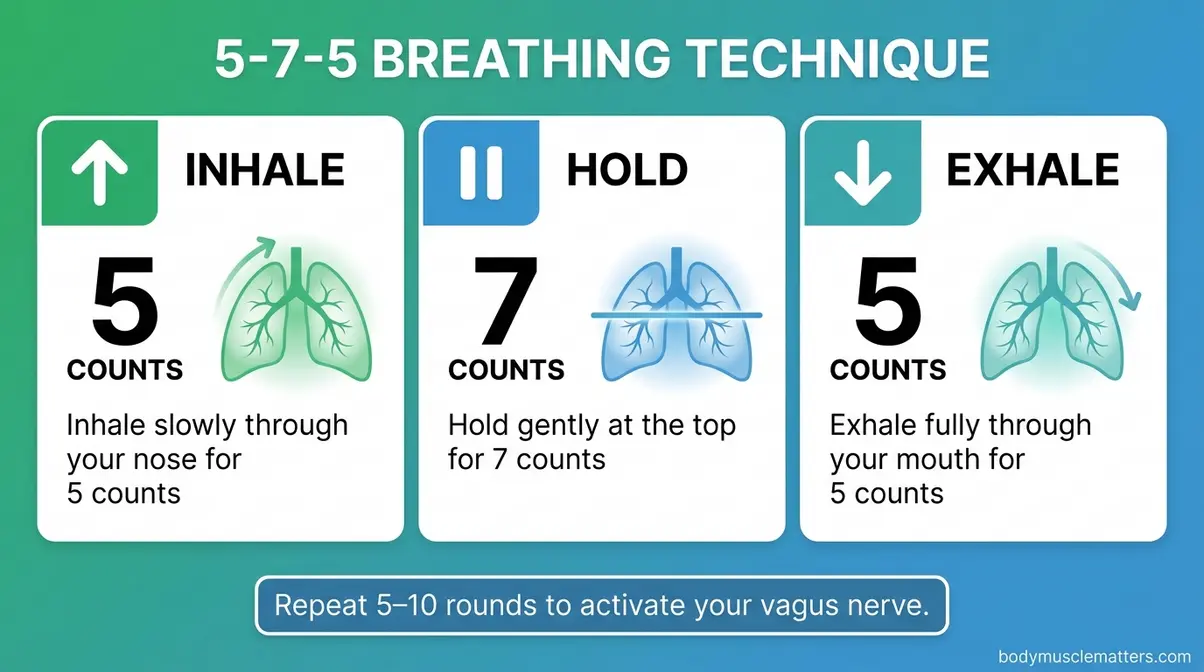
Many practitioners use this technique as a transitional ritual — a few rounds before a meditation session, before a difficult conversation, or at the end of a workday. The three golden rules of meditation — consistency, non-judgment, and return — apply here: practice consistently, don’t judge how well you do it, and simply return to the breath each time you lose it.
What Real People Say: Community Perspectives and Balance
Science tells you what can happen. Community tells you what does happen — for ordinary people, in ordinary circumstances, without perfect conditions.
What Reddit and Real Practitioners Report
Across Reddit communities like r/meditation and r/mindfulness (combined 2M+ members), the most consistent reports from beginners include:
- Reduced reactivity within 2–4 weeks: “I noticed I wasn’t snapping at my partner as much after about three weeks of daily sitting.”
- Sleep improvements within the first week: Many practitioners report falling asleep faster before the two-week mark, particularly when using body scans or breath focus before bed.
- The “nothing happened” phase: Nearly every long-term practitioner reports a period of two to four weeks where meditation feels pointless. Those who push through consistently report the shift arriving on the other side.
- Compounding benefits: Practitioners with 6+ months of daily practice report that the benefits extend beyond meditation sessions into their baseline emotional state — feeling calmer and more present even when not meditating.
These reports align with the clinical literature. Common experiences reported by practitioners — reduced reactivity, improved sleep, and a growing sense of equanimity — mirror what researchers measure in controlled settings.
Pros, Cons, and Who Should Be Cautious
Meditation is not universally beneficial for everyone in every circumstance. Here’s an honest assessment:
- What the evidence strongly supports:
- Stress and cortisol reduction
- Improved sleep quality
- Reduced anxiety and emotional reactivity
- Modest blood pressure reduction
- Cognitive improvements in attention and working memory
- Where the evidence is mixed or limited:
- Structural brain changes (some studies show them; a 2026 NIH-linked study found no structural changes after 8-week MBSR — the field is still resolving this)
- Pain relief (promising but inconsistent across populations)
- OCD treatment (useful as a complement to established therapies, not a replacement)
- Who should be cautious:
- People with trauma histories may find certain meditation styles (particularly those involving body awareness) activating rather than calming. Trauma-sensitive mindfulness — a modified approach — is available and recommended.
- People with psychosis or certain dissociative conditions should consult a mental health professional before starting intensive practice.
- If you are managing any diagnosed mental health condition, talk to your doctor or therapist before beginning a meditation practice.
Limitations and Cautions
Common Pitfalls
Pitfall 1: Expecting silence. Beginners often quit because their minds won’t stop producing thoughts. This misunderstands the practice. Meditation is not about having an empty mind — it’s about noticing thoughts and returning to your anchor. The noticing is the practice.
Pitfall 2: Inconsistency. A 30-minute session once a week is less effective than 10 minutes every day. Research consistently shows that frequency matters more than duration for building the neurological changes associated with meditation. Set a realistic daily minimum — even 5 minutes counts.
Pitfall 3: Using the wrong technique for your goal. Body scans help with sleep and physical tension. Breath focus helps with anxiety and attention. Loving-kindness helps with self-criticism and interpersonal conflict. Matching technique to goal matters.
When to Choose Alternatives
Meditation is one tool, not a complete mental health strategy. Consider these situations where alternatives or additions are more appropriate:
- Clinical anxiety or depression: Meditation can complement, but should not replace, evidence-based treatments like CBT or medication. Research supports meditation as an adjunct, not a primary treatment, for clinical conditions.
- Trauma: Standard mindfulness can be retraumatizing for some survivors. Seek a trauma-informed practitioner or explore somatic therapies designed for trauma processing.
- OCD: Exposure and Response Prevention (ERP) therapy remains the gold-standard treatment. Mindfulness is a useful addition, not a substitute.
When to Seek Expert Help
If you are managing a diagnosed mental health condition, consult your doctor or therapist before starting a meditation practice. If you experience increased anxiety, dissociation, or distressing memories during meditation, stop the practice and speak with a mental health professional. These responses are not universal, but they are real — and they’re more likely in people with trauma or dissociative histories.
Frequently Asked Questions
What are the 5 benefits of meditation?
The five core benefits of meditation are stress reduction, improved brain health, emotional regulation, better physical health, and spiritual self-awareness. Research confirms that meditation lowers cortisol (the stress hormone), increases gray matter in memory regions, reduces amygdala reactivity, improves cardiovascular markers, and builds self-awareness over time (PMC Neurobiological Changes, 2026). Most beginners notice stress and sleep improvements within two to four weeks of daily practice.
Does meditation help with dysautonomia?
Meditation may help manage dysautonomia symptoms by calming the overactive sympathetic nervous system that drives many of the condition’s effects. A 2026 PMC study found that a 6-week mindfulness program for women with Long COVID dysautonomia significantly reduced insomnia severity, anxiety, and inflammatory gene expression (PMC, 2026). Diaphragmatic breathing and mindfulness practice can reduce the stress load on an already-taxed autonomic nervous system — though meditation is a complement to medical treatment, not a replacement. Always consult your physician before modifying your care plan.
What type of meditation is best for OCD?
Mindfulness-based meditation is the most researched complementary approach for OCD. It works by teaching acceptance of intrusive thoughts rather than suppression — which paradoxically reduces their power. A 2026 PubMed special report found mindfulness effective for improving emotional regulation and acceptance in OCD patients when combined with standard treatments like ERP therapy (PubMed, 2026). The 3-3-3 grounding rule (name 3 things you see, 3 sounds you hear, move 3 body parts) is a practical mindfulness technique for interrupting obsessive loops. OCD requires professional treatment — mindfulness works best as an adjunct.
What happens if you meditate daily?
Daily meditation produces cumulative neurological and emotional benefits that grow over weeks and months. In the first two weeks, most practitioners report reduced reactivity and improved sleep. By weeks 4–8, research shows measurable changes in stress markers and emotional regulation. Long-term daily practitioners show structural brain differences — increased prefrontal cortex activity and reduced amygdala reactivity — as well as lower baseline cortisol and improved cardiovascular health (Mount Sinai, 2026; PMC, 2026). Consistency matters more than session length: 10 minutes daily outperforms 60 minutes once a week.
What is the 5-7-5 rule in meditation?
The 5-7-5 rule is a structured breathing pattern designed to activate the vagus nerve and shift your nervous system from “fight or flight” into “rest and digest.” You inhale through your nose for 5 counts, hold gently for 7 counts, and exhale fully through your mouth for 5 counts. This extended hold and controlled exhale increases heart rate variability — a measurable marker of parasympathetic nervous system activity. Repeat for 5–10 rounds at the start of a meditation session or during acute stress.
What are the three golden rules of meditation?
The three golden rules of meditation are consistency, non-judgment, and return. Practice consistently — even 5 minutes daily is more effective than occasional long sessions. Approach your practice with non-judgment — there is no “good” or “bad” meditation session; every session where you showed up counts. And return — every time your mind wanders (which it will, constantly), gently return your attention to your anchor. That act of returning is the exercise itself. These three principles apply across every meditation tradition and style.
What does meditation do to the vagus nerve?
Meditation activates the vagus nerve, the body’s primary parasympathetic pathway, running from the brainstem through the heart, lungs, and gut. Research from Cedars-Sinai (2026) confirms that meditation and mindfulness practices directly stimulate vagal activity, reducing heart rate and blood pressure. A 2026 University College London study found that combining vagus nerve stimulation with compassion meditation produced significantly greater self-compassion benefits than meditation alone, suggesting the vagal pathway is central to meditation’s calming effects (PMC, 2026). The 5-7-5 breathing technique is specifically designed to maximize this vagal activation.
Does Elon Musk practice meditation?
Elon Musk has not publicly identified as a regular meditator. He has spoken about using focused work sprints, first-principles thinking, and high-intensity productivity as his primary cognitive tools. While some prominent tech executives — including Marc Benioff, Jack Dorsey, and Ray Dalio — have publicly credited meditation with improving their performance and decision-making, Musk’s public statements do not include meditation as part of his routine. This doesn’t diminish meditation’s evidence base — its benefits are documented in peer-reviewed research regardless of any individual’s endorsement.
Conclusion
For anyone seeking relief from stress, anxiety, or poor sleep, the benefits of meditation are among the most evidence-supported options available without a prescription. Research from PMC (2026), Mount Sinai (2026), and a landmark April 2026 study published in Science Daily all confirm that consistent practice produces measurable changes in brain connectivity, cortisol levels, and cardiovascular markers — changes that compound over weeks and months of daily practice. The best approach combines a consistent technique matched to your goal, a realistic daily minimum (10 minutes is enough to start), and a willingness to push through the first “nothing is happening” phase.
The Benefit-Action Bridge is the principle that makes this guide different from a standard benefits list. Every proven benefit you’ve read about here comes with a named, research-backed technique — the 5-7-5 breathing rule for vagal activation, the 3-3-3 rule for OCD, body scans for sleep and stress, metta practice for emotional regulation. The science tells you what meditation does. The technique tells you how to get there.
Your starting point is simple: pick one technique from this guide, set a 10-minute daily alarm, and practice it for two weeks before evaluating. Don’t wait for perfect conditions or a perfect mindset. The research is clear — the brain changes when you show up consistently, not when you do it flawlessly.