⚠️ HEALTH DISCLAIMER: This article is for informational and educational purposes only. It does not constitute medical advice. Always consult a qualified healthcare professional before making significant changes to your health, sleep, or fitness routine.
📋 MEDICALLY REVIEWED BY: | Reviewed: January 2026
You’re training four days a week, hitting your protein targets, and logging every set — but the muscle growth still isn’t coming. Before you blame your program or your diet, look at what happens every night when you close your eyes. Research published in JAMA found that even one week of sleeping only five hours per night can reduce testosterone levels by 10–15% — quietly dismantling the hormonal environment your muscles need to grow (Leproult & Van Cauter, JAMA, 2011).
Without quality sleep, every workout is undermined before it even begins. The iron you lift is just the stimulus. Sleep is where the actual muscle building happens. Understanding how sleep affects muscle growth and recovery — and acting on that knowledge — is the most underused performance advantage available to any athlete.
In this guide, you’ll discover exactly how sleep drives the hormones and biological processes that build muscle, what happens when you deprive yourself of it, and six science-backed protocols you can start using tonight.
Sleep is when your body actually builds muscle — not just recovers from it. Consistently getting 7–9 hours triggers the hormonal cascade that drives muscle protein synthesis and growth. This is The Sleep Dividend: quality sleep compounds into measurable gains over time.
- Growth Hormone peaks during deep (slow-wave) sleep — the stage most disrupted by short nights and late bedtimes
- One week of 5-hour nights can reduce testosterone by 10–15%, undermining every workout (JAMA, 2011)
- Sleep deprivation is catabolic: cortisol rises, muscle protein synthesis drops, and recovery stalls
- 7–9 hours nightly is the evidence-backed target for athletes seeking maximum muscle recovery
- Six protocols in this guide — from sleep environment to training adjustments — can be implemented tonight
What Actually Happens to Your Muscles While You Sleep
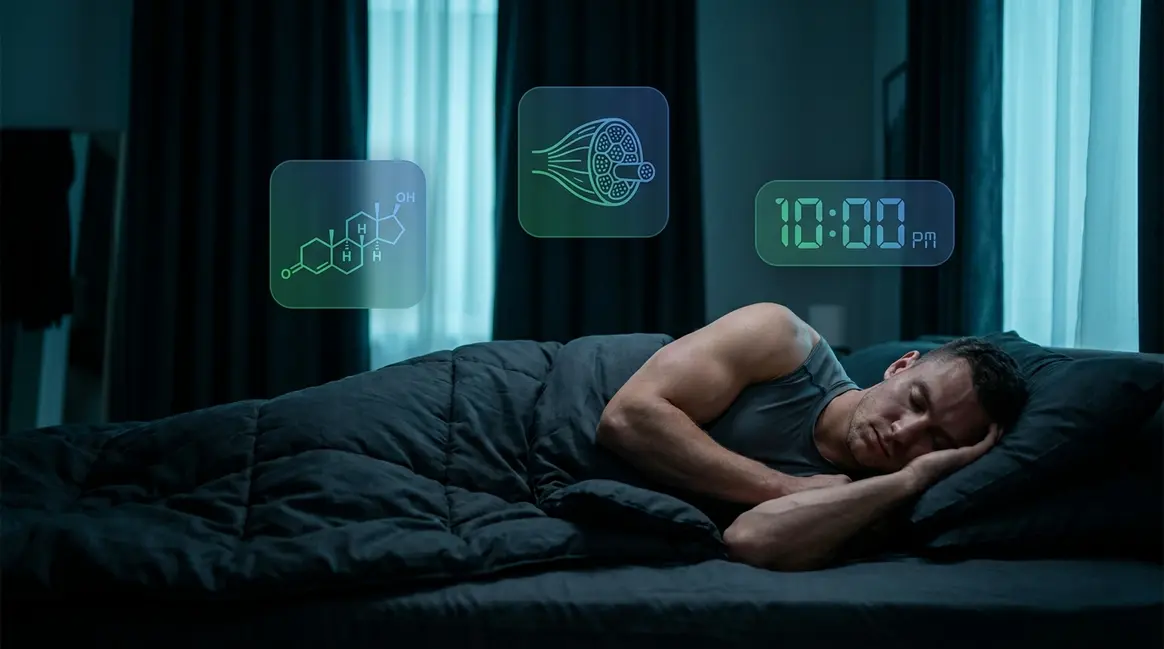
Sleep is not passive downtime. It is your body’s primary anabolic state — the window when Human Growth Hormone surges, damaged muscle fibers are rebuilt, and the hormonal balance between muscle-building and muscle-breakdown is restored. Every training session you complete is only a stimulus. Without sleep, that stimulus goes unrewarded.
Understanding this process starts with knowing which sleep stages actually do the heavy lifting.
Understanding the Sleep Stages That Matter for Athletes
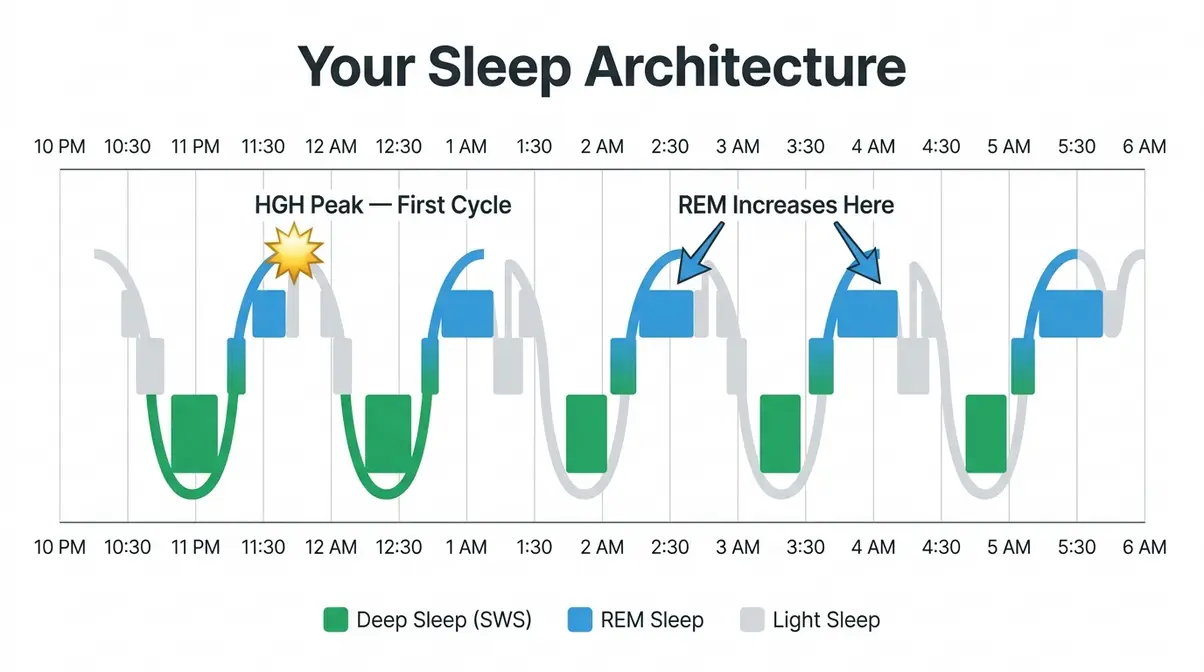
Your brain cycles through four distinct stages of sleep roughly every 90 minutes. Two of these matter most for muscle recovery.
Stage 1 and Stage 2 NREM are light sleep — your body temperature drops, heart rate slows, and your nervous system begins to downshift. These stages are the gateway, but they’re not where the real work happens.
Stage 3 NREM, also called slow-wave sleep (SWS) — also called deep sleep — is the most physically restorative stage. Your muscles receive increased blood flow, tissue repair accelerates, and the pituitary gland releases the majority of your nightly growth hormone. For athletes, this is the most valuable 90 minutes of the night.
REM sleep (Rapid Eye Movement), which occurs in longer episodes during the second half of the night, is critical for cognitive recovery, motor skill consolidation, and emotional regulation. Research suggests REM sleep helps “encode” movement patterns learned during training — essentially, your brain rehearses technique while you sleep (Walker, Why We Sleep, 2017; Stickgold, Nature Reviews Neuroscience, 2005).
Why this matters for your training: Cutting sleep short doesn’t just reduce total sleep time — it disproportionately eliminates the stages you need most. Short nights rob you of deep sleep early in the night and REM sleep late in the night. Both losses compound.
The Growth Hormone Surge: Your Body’s Overnight Construction Crew
Think of Human Growth Hormone (HGH) — the primary hormone your body uses to repair and build muscle tissue — as your overnight construction crew. During the day, you tear down the building (training). At night, the crew arrives, reads the blueprints, and rebuilds it stronger. But here’s the critical detail competitors almost never mention: the crew only works the first shift.
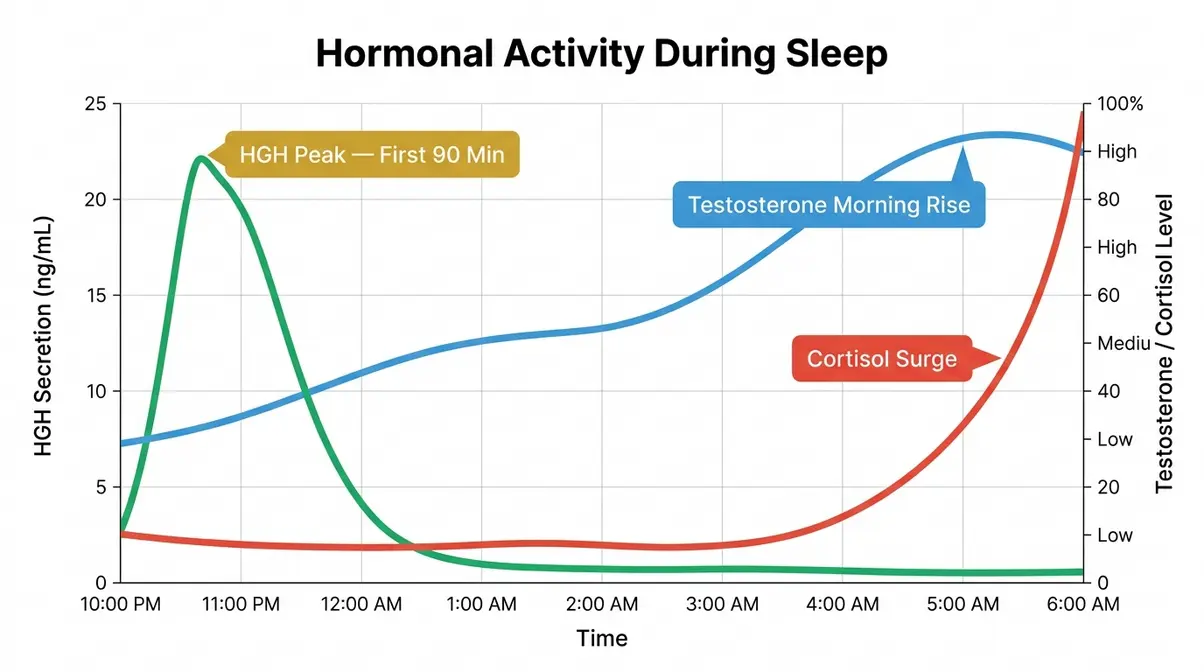
Research published in Endocrinology and cited across PubMed consistently shows that the majority of nightly HGH secretion occurs during the first episode of slow-wave sleep — typically within the first 90 minutes of falling asleep (Van Cauter et al., Sleep, 2000; PubMed). If you go to bed at midnight instead of 10 pm, you’re not just losing two hours of sleep — you may be missing the peak HGH secretion window almost entirely.
This asymmetry is the insight most fitness content ignores. Going to bed late and sleeping in does not compensate. The timing of your first deep sleep episode is what matters, and that is anchored to your circadian rhythm (your body’s internal 24-hour clock), not to your total hours in bed.
The majority of Human Growth Hormone is secreted during the first episode of slow-wave sleep, making early-night deep sleep the single most anabolic period in a 24-hour cycle (PubMed, 2000).
Alcohol, late-night screen exposure, and irregular bedtimes all suppress or delay slow-wave sleep onset — reducing HGH output even when total sleep time appears adequate. For an athlete trying to maximize muscle growth, bedtime is a performance variable, not a preference.
Why this matters for your training: A 10 pm bedtime versus a 1 am bedtime, even with the same total hours of sleep, produces measurably different hormonal outcomes. Protect your first sleep cycle the way you protect your first working set.
Muscle Protein Synthesis: How Your Body Rebuilds Overnight
When you train, you create microscopic tears in your muscle fibers. That damage is the signal your body needs to build back stronger. But the rebuilding — muscle protein synthesis (MPS), the cellular process that rebuilds damaged muscle fibers into stronger ones — requires two things: adequate protein and adequate sleep.
During deep sleep, blood flow to skeletal muscle increases significantly. Amino acids (the building blocks of protein) are transported into muscle cells, and the molecular machinery for MPS — specifically the mTOR signaling pathway — becomes more active (Dattilo et al., Medical Hypotheses, 2011). In simple terms: sleep is when your muscles use the protein you ate during the day.
Without sufficient sleep, this process is interrupted. Studies show that sleep-deprived subjects experience meaningful reductions in MPS rates even when protein intake remains constant. The amino acids are available — but the cellular environment to use them isn’t. It’s like having all the building materials delivered to the construction site but sending the crew home early.
Why this matters for your training: Hitting your protein targets is necessary, but not sufficient. If your sleep is short or fragmented, your body cannot fully capitalize on the protein you’re consuming. Sleep is the delivery mechanism, not just the rest period.
The Testosterone vs. Cortisol Battle During Sleep
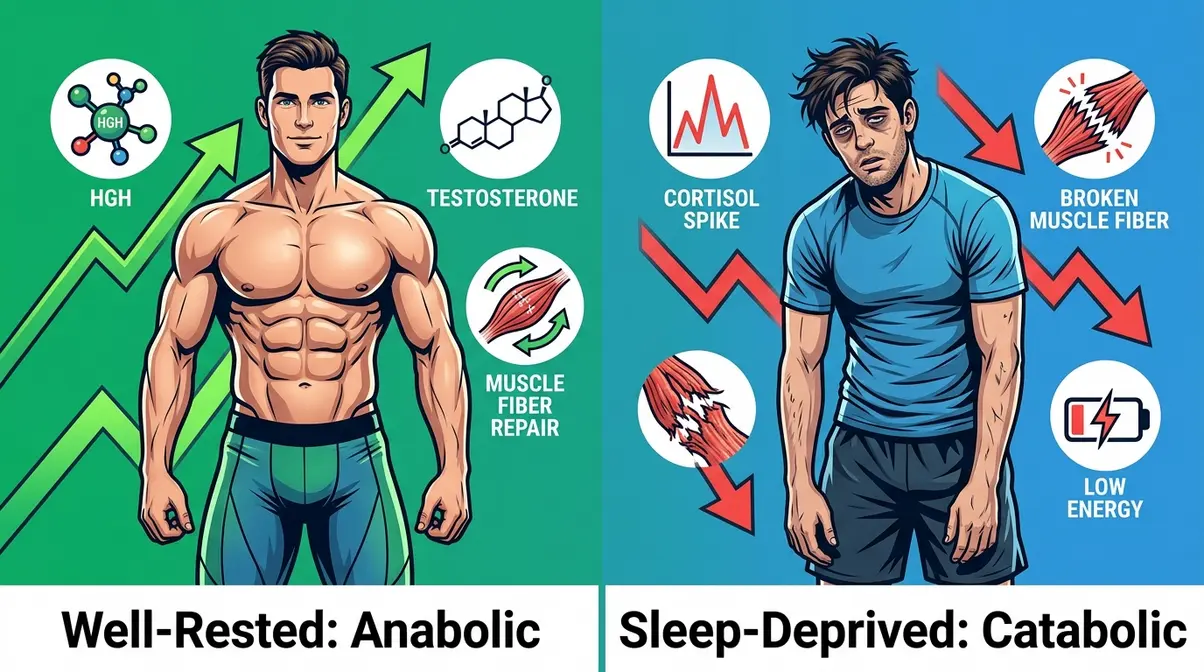
Two hormones govern whether your body is in a muscle-building (anabolic) or muscle-breaking (catabolic) state: testosterone and cortisol.
Testosterone — an anabolic hormone that signals your body to build and maintain muscle mass — rises during sleep and peaks in the early morning hours, typically around the time of waking. Research using polysomnography (sleep monitoring in a lab setting) has confirmed that testosterone secretion is tightly linked to sleep architecture; disrupting sleep disrupts testosterone output (Leproult & Van Cauter, JAMA, 2011).
Cortisol — a catabolic stress hormone that breaks down muscle tissue when elevated for too long — follows the opposite pattern. It is naturally lowest during the first half of the night and rises toward morning to prepare your body for waking. This seesaw relationship is healthy when sleep is adequate.
When sleep is shortened or disrupted, this balance tilts. Testosterone secretion is blunted. Cortisol remains elevated for longer periods. The result is a hormonal environment that actively works against the muscle growth your training was designed to stimulate.
The Sleep Dividend begins here. Each night of quality sleep is a deposit into your hormonal bank account — compounding testosterone output and suppressing chronic cortisol elevation. Each night of poor sleep is a withdrawal that costs you more than just one day of recovery.
How Sleep Deprivation Sabotages Your Muscle Gains
“Chronic sleep loss is a potent catabolic stressor, increasing the risk of metabolic dysfunction and loss of muscle mass and function.”
That quote is not from a fitness blog. It comes from peer-reviewed research, and it captures a reality that most training programs fail to account for. Sleep deprivation doesn’t just make you tired — it systematically dismantles the biological environment your muscles need to grow. Here’s exactly how it happens.
The 18% Drop: How Sleep Loss Cuts Muscle Protein Synthesis
Research examining the effects of sleep restriction on muscle recovery found that subjects sleeping five hours per night showed significantly reduced rates of muscle protein synthesis compared to those sleeping eight hours — with some studies documenting reductions in anabolic signaling of approximately 18% or greater (Dattilo et al., Medical Hypotheses, 2011; Lamon et al., Journal of Physiology, 2021).
That number matters. An 18% reduction in MPS means that even with identical training and nutrition, a sleep-deprived athlete is rebuilding muscle at a fraction of the rate of a well-rested one. Over weeks and months, this compounds into a measurable gap in muscle mass and strength.
The mechanism is direct: insufficient sleep suppresses the mTOR pathway (the molecular on-switch for muscle protein synthesis), reduces anabolic hormone output, and increases inflammatory markers — all of which slow the muscle repair process. Your muscles are receiving the signal to grow but lacking the hormonal environment to execute it.
The practical consequence: If you’re sleeping five to six hours per night and wondering why your training isn’t producing results, this is a primary reason. No amount of extra protein or additional training volume can fully compensate for a suppressed MPS rate.
The Cortisol Spike: How Poor Sleep Turns Your Body Catabolic
Sleep deprivation triggers a stress response. Your body interprets insufficient sleep as a physiological threat — and responds by elevating cortisol (a catabolic stress hormone that breaks down muscle tissue when elevated for too long).
Research from multiple sleep restriction studies consistently shows that even partial sleep deprivation — sleeping six hours instead of eight — elevates evening cortisol levels and disrupts the normal cortisol rhythm (Leproult et al., Sleep, 1997; Omada Health, 2023). Chronic elevation of cortisol creates a catabolic state: your body begins breaking down muscle tissue for energy, accelerating the very muscle loss you’re training to prevent.
This effect is amplified during caloric deficits. A study examining subjects in a caloric deficit found that those sleeping 5.5 hours lost significantly more lean muscle mass compared to subjects sleeping 8.5 hours, despite identical caloric intake — with the sleep-deprived group losing roughly 60% more lean mass during the deficit period (Nedeltcheva et al., Annals of Internal Medicine, 2010).
For athletes cutting weight before a competition or trying to lean out while preserving muscle, this finding is critical. Poor sleep during a cut doesn’t just slow fat loss — it actively accelerates muscle loss. Sleep deprivation is, by definition, a catabolic stressor.
Beyond the Gym: The Real Performance Costs of Poor Sleep
The damage from sleep deprivation extends well beyond the hormonal. Research on athletes across multiple sports documents a cascade of performance costs that directly undermine training quality and long-term progress.
- Reaction time and coordination decline sharply after even one night of reduced sleep — with effects comparable to mild alcohol intoxication after 17–19 hours of wakefulness (Williamson & Feyer, Occupational and Environmental Medicine, 2000)
- Maximal strength output decreases with sleep restriction, with studies showing reductions in grip strength and lower-body force production after consecutive short nights
- Glycogen (the stored carbohydrate your muscles use as fuel during training) is replenished less efficiently when sleep is inadequate, meaning your energy reserves for the next session are compromised
- Injury risk rises substantially. A landmark study of adolescent athletes found that those sleeping fewer than eight hours per night were 1.7 times more likely to be injured than those sleeping eight or more hours (Milewski et al., Journal of Pediatric Orthopedics, 2012)
- Perceived effort increases — the same workout feels harder when you’re sleep deprived, making it more likely you’ll cut sets short, reduce weight, or skip sessions entirely
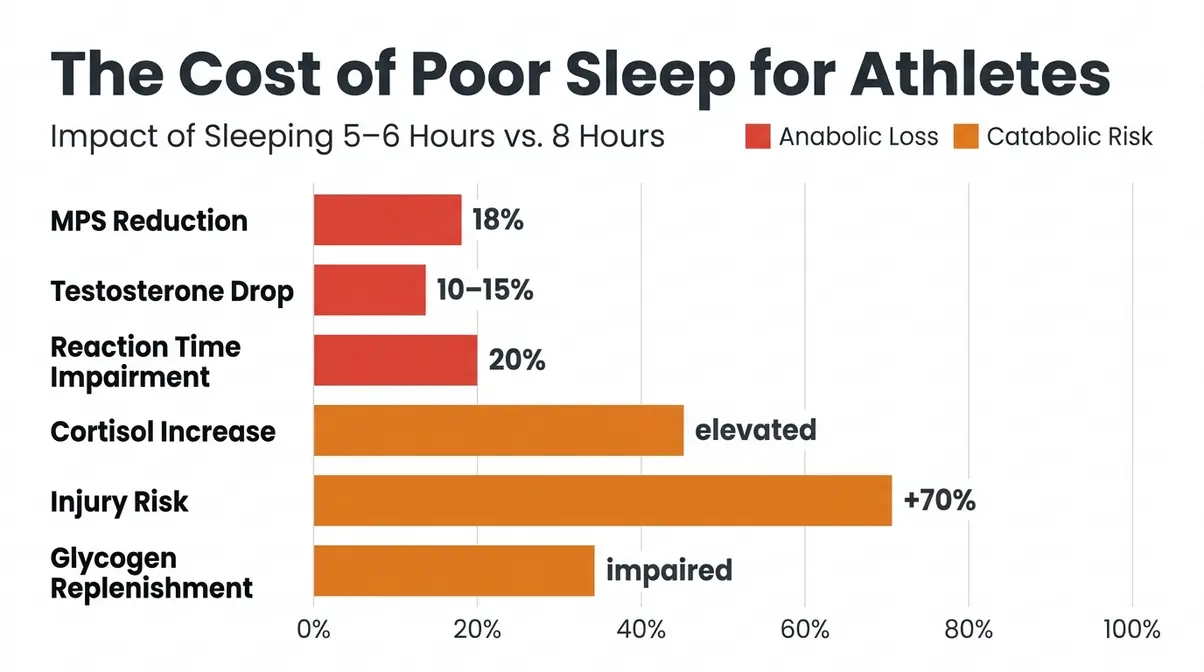
The compounding effect of these costs is what makes chronic sleep deprivation so destructive for muscle growth. You’re not just recovering more slowly — you’re training with less force, fueling less effectively, risking injury, and operating in a catabolic hormonal environment. Every session is less productive than it could be.
Your Sleep Optimization Playbook: 6 Protocols for Maximum Recovery
Knowing that sleep matters is not enough. Here are six specific, numbered protocols — drawn from sleep science and athlete performance research — that you can begin implementing tonight. This is how you start earning The Sleep Dividend: a compounding return on every workout, built one quality night at a time.
Protocol 1 & 2: How Much Sleep Do Athletes Actually Need?
Protocol 1: Target 7–9 Hours of Total Sleep
The CDC and NIH both recommend 7–9 hours of sleep per night for adults (CDC, Sleep and Sleep Disorders, 2022). For athletes under consistent training stress, evidence supports targeting the upper end of that range — 8–9 hours — to support full hormonal recovery and muscle repair.
Research on collegiate athletes found that extending sleep to 10 hours per night for five to seven weeks produced significant improvements in sprint times, reaction time, and reported fatigue — suggesting that many athletes are chronically under-sleeping relative to their recovery needs (Mah et al., Sleep, 2011).
- How to implement:
- Calculate your target bedtime by counting back 8–9 hours from your required wake time
- Set a consistent bedtime alarm — not just a wake alarm
- Track your sleep duration for one week using a phone app or wearable before optimizing further
Protocol 2: Prioritize Sleep Consistency Over Total Hours
Going to bed and waking at the same time every day — including weekends — anchors your circadian rhythm and makes it easier to reach deep sleep quickly. Irregular sleep schedules fragment your sleep architecture, reducing the time spent in slow-wave and REM stages even when total hours appear adequate.
Research published in Scientific Reports found that social jetlag (the mismatch between weekday and weekend sleep timing) was associated with poorer metabolic health markers and reduced sleep quality, independent of total sleep time (Roenneberg et al., 2012).
- How to implement:
- Choose a fixed wake time and hold it seven days a week — this is your anchor
- Work backward to set a consistent bedtime that allows 8 hours
- Allow a maximum of 30-minute variation on weekends; more than that begins to disrupt your rhythm
Protocols 3 & 4: Building the Perfect Sleep Environment
Protocol 3: Control Your Sleep Temperature
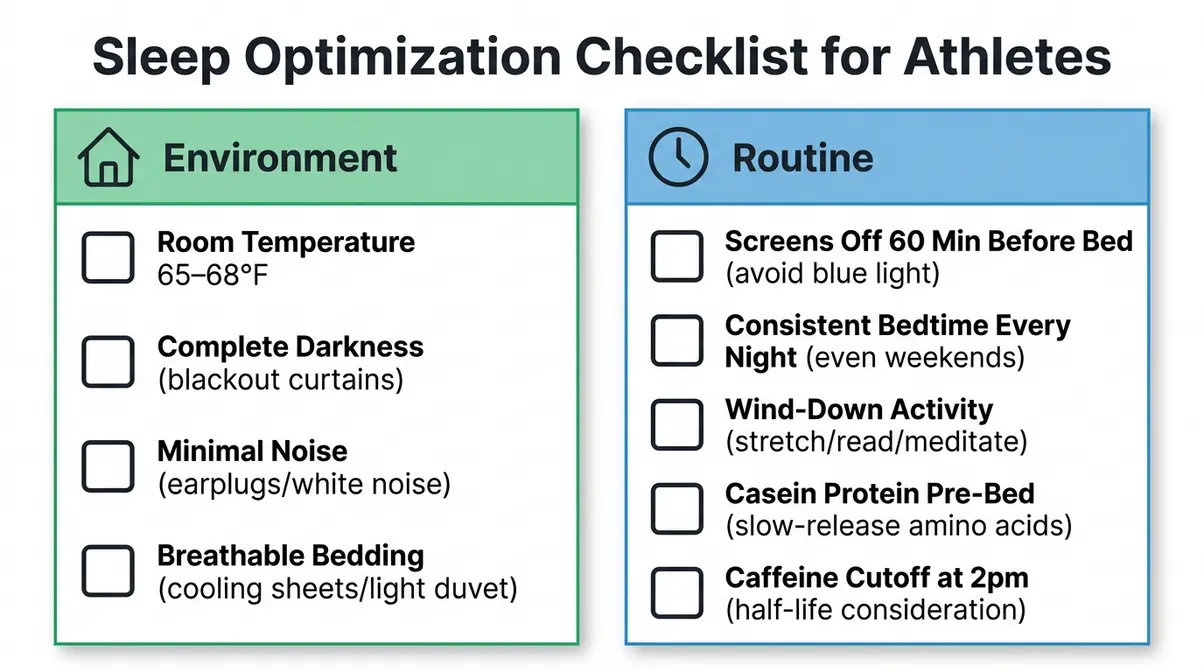
Your core body temperature naturally drops by 1–2°F as you fall asleep, signaling the onset of slow-wave sleep. A room that is too warm interferes with this process, delaying sleep onset and reducing deep sleep time.
Research from the National Sleep Foundation and sleep laboratories consistently identifies 65–68°F (18–20°C) as the optimal bedroom temperature range for sleep quality. Even a 2–3°F increase above this range has been shown to reduce slow-wave sleep duration.
- How to implement:
- Set your thermostat to 65–68°F (18–20°C) before bed
- If you can’t control room temperature, use breathable, moisture-wicking bedding
- Take a warm shower 60–90 minutes before bed — the subsequent body temperature drop accelerates sleep onset
- Avoid heavy blankets that trap heat if your room runs warm
Protocol 4: Eliminate Light and Optimize Your Pre-Sleep Routine
Blue light — emitted by phones, laptops, and LED lights — suppresses melatonin (the hormone that signals your body it’s time to sleep) by up to 50% when exposed within two hours of bedtime (Harvard Health, 2020). For athletes, this is particularly damaging because melatonin suppression delays the onset of the slow-wave sleep needed for HGH release.
- How to implement:
- Set a “screens off” alarm 60 minutes before your target bedtime
- Switch overhead lights to warm (amber) bulbs in the evening, or use a salt lamp
- If you must use screens, enable Night Mode or use blue-light blocking glasses
- Make the final 30 minutes of your evening predictable: stretching, reading, or a consistent wind-down activity trains your nervous system to associate that routine with sleep onset
- Keep your bedroom completely dark — blackout curtains or a sleep mask are low-cost, high-impact investments
Protocol 5: Nutrition Strategies That Enhance Sleep Quality
What you eat in the hours before bed directly affects your sleep quality and overnight muscle repair. Three evidence-backed strategies stand out.
1. Consume casein protein before bed. Casein is a slow-digesting dairy protein that releases amino acids steadily over 5–7 hours. Research from Maastricht University found that consuming 40g of casein protein 30 minutes before sleep significantly increased overnight muscle protein synthesis rates in resistance-trained men without disrupting sleep quality (Res et al., Medicine & Science in Sports & Exercise, 2012). Practical options include cottage cheese, Greek yogurt, or a casein protein shake.
2. Avoid alcohol within three hours of bedtime. Alcohol is one of the most potent suppressors of slow-wave sleep. Even moderate consumption (one to two drinks) reduces deep sleep duration by up to 20% in the first half of the night — directly cutting HGH output during your most anabolic sleep window. Many athletes underestimate this effect because alcohol causes faster sleep onset, masking the quality reduction that follows.
3. Limit caffeine after 2 pm. Caffeine has a half-life of approximately five to six hours, meaning a 3 pm coffee still has half its stimulant effect active at 8 pm. Research shows caffeine delays sleep onset and reduces total slow-wave sleep even when subjects report feeling unaffected (Drake et al., Journal of Clinical Sleep Medicine, 2013).
- How to implement:
- Set a hard caffeine cutoff at 2 pm (or 1 pm if you’re particularly sensitive)
- Add 30–40g of casein protein to your evening meal or as a pre-bed snack
- If you drink alcohol, finish at least three hours before your target bedtime
- Consider tart cherry juice (a natural source of melatonin precursors) as an evening drink — small studies suggest it modestly improves sleep duration and quality in athletes
Protocol 6: How to Adjust Training After a Bad Night of Sleep
Even with the best protocols, poor nights happen. Travel, stress, and life intervene. The mistake most athletes make is training at the same intensity regardless of sleep quality — which amplifies the catabolic hormonal state created by sleep deprivation and increases injury risk.
Research from the ISSA and multiple sports science programs supports modifying training volume and intensity on days following poor sleep, rather than pushing through at full capacity (ISSA, Sleep and Muscle Growth, 2023).
- How to implement:
- Assess your sleep honestly. Less than six hours or highly fragmented sleep = modified training day
- Reduce volume by 20–30%. Cut sets, not exercises. Keep the movement patterns, reduce the load
- Lower intensity. Train at 70–80% of your typical working weight. Fatigue impairs motor control, making heavier loads disproportionately risky
- Prioritize skill work and technique. REM-sleep-deprived athletes show impaired motor learning — this is a good session to reinforce form rather than push intensity
- Consider active recovery instead. A 30-minute walk, mobility session, or light swim maintains blood flow and glycogen distribution without adding stress to an already-stressed system
- Protect the next night. After a poor night, your recovery priority is the following night’s sleep, not compensating with caffeine or extra training volume
Common Sleep Mistakes Athletes Make (And How to Fix Them)
The 5 Most Damaging Sleep Habits for Muscle Growth
Even athletes who understand the importance of sleep routinely undermine it with avoidable habits. Based on patterns documented across exercise science research and coaching practice, these five mistakes cause the most measurable damage to muscle recovery.
1. Inconsistent bedtimes. Varying your sleep schedule by more than 60–90 minutes night to night fragments your sleep architecture. Your circadian rhythm is a biological clock — irregular inputs produce irregular outputs, including reduced deep sleep and blunted HGH release.
2. Training too close to bedtime. Intense exercise raises core body temperature and cortisol — both of which delay sleep onset. Research generally recommends finishing high-intensity training at least two to three hours before bed. Light mobility work or yoga is the exception and can actually improve sleep quality.
3. Relying on alcohol as a sleep aid. Alcohol causes faster sleep onset, which many athletes misinterpret as improved sleep. In reality, alcohol suppresses REM and deep sleep in the second half of the night, producing fragmented, non-restorative sleep. This is one of the most common and most damaging sleep mistakes in athletic populations.
4. Ignoring sleep debt. Chronic partial sleep restriction — consistently sleeping six hours when you need eight — accumulates a sleep debt that is not fully reversed by one long night of recovery sleep. Research shows it takes multiple nights of adequate sleep to restore full cognitive and hormonal function after a period of restriction.
5. Using your bed for work or scrolling. Cognitive and emotional arousal from screens or work tasks in bed trains your nervous system to associate the bedroom with wakefulness. Over time, this makes it harder to fall asleep quickly — delaying the onset of deep sleep and reducing your HGH window.
When to Seek Professional Guidance on Sleep
If you’ve implemented consistent sleep hygiene protocols for four or more weeks and still experience persistent fatigue, difficulty falling asleep, frequent waking, or daytime sleepiness despite adequate time in bed, these may be signs of an underlying sleep disorder such as sleep apnea, insomnia disorder, or restless legs syndrome.
Sleep disorders are common in athletes — particularly sleep apnea, which can go undiagnosed for years while silently degrading recovery, hormonal function, and performance. A sleep specialist or your primary care physician can order a sleep study to rule out structural causes.
Do not self-diagnose or self-treat sleep disorders with supplements or medications without professional guidance. Melatonin, magnesium, and other common sleep supplements are generally safe at low doses, but they are not substitutes for addressing structural sleep problems. Consult a healthcare provider before adding any supplement to your routine.
Frequently Asked Questions
How does sleep affect muscle growth and recovery?
Sleep directly drives the hormonal processes that build muscle. During deep sleep, your body releases the majority of its nightly Human Growth Hormone, which stimulates muscle protein synthesis — the cellular process of rebuilding damaged muscle fibers. Research shows that even one week of sleeping only five hours per night can reduce testosterone by 10–15% and meaningfully suppress muscle protein synthesis rates (JAMA, 2011). Without adequate sleep, training stimulus goes unrewarded regardless of how much protein you consume.
How many hours of sleep do athletes need for muscle growth?
Athletes should target 8–9 hours of sleep per night for optimal muscle recovery and hormonal function. The CDC recommends a minimum of 7 hours for adults, but research on competitive athletes consistently shows benefits at the higher end of this range. A study extending collegiate athletes’ sleep to 10 hours per night for several weeks produced measurable improvements in speed, reaction time, and fatigue scores (Mah et al., Sleep, 2011). Seven hours is a floor, not a target.
Does lack of sleep hinder muscle growth?
Yes — sleep deprivation is one of the most significant suppressors of muscle growth. Research documents an approximate 18% reduction in muscle protein synthesis rates in sleep-restricted subjects, even with identical protein intake and training. Beyond MPS, poor sleep elevates cortisol (a catabolic stress hormone that breaks down muscle tissue), reduces testosterone, and impairs glycogen replenishment. Sleeping five to six hours per night while training hard creates a catabolic hormonal environment that actively opposes the muscle growth your workouts are designed to stimulate.
What is the best time to go to sleep for muscle growth?
Earlier is better — specifically, a bedtime that places your first sleep cycle between 10 pm and midnight. The reasoning is biological: the majority of nightly HGH secretion occurs during the first episode of slow-wave sleep, which is anchored to your circadian rhythm. Going to bed at 1 am versus 10 pm — even with the same total sleep hours — may mean missing the peak HGH secretion window entirely. Sleeping in does not compensate for a late bedtime when it comes to growth hormone output.
Can you make up for lost sleep on weekends?
Weekend recovery sleep partially restores some cognitive function, but does not fully reverse the hormonal and metabolic effects of chronic sleep restriction. Research shows that testosterone suppression and elevated cortisol from weekday sleep debt are not completely reversed by one or two nights of extended sleep. Additionally, sleeping significantly later on weekends creates “social jetlag” — a circadian mismatch that makes it harder to fall asleep on Sunday night, perpetuating the cycle. Consistency across all seven days is more effective than catch-up sleeping.
The Sleep Dividend: Compounding Your Gains Over Time
Every training session you complete is an investment. The work you put into the gym creates the stimulus for muscle growth — but sleep is where that investment pays off. Growth hormone surges, muscle protein synthesis runs, testosterone rises, cortisol retreats. Night after night, quality sleep compounds these hormonal outputs into the muscle growth your training was designed to produce.
The Sleep Dividend is not a metaphor. It is a measurable biological reality. Athletes who consistently sleep 8–9 hours show greater muscle protein synthesis rates, higher testosterone levels, lower injury risk, and better training performance than their sleep-deprived counterparts — even when training volume and nutrition are identical. Sleep is not the passive part of your program. It is the most anabolic part.
Start with one protocol tonight. Fix your bedtime. Drop your room temperature to 65°F. Cut screens an hour before bed. Add casein protein to your evening meal. Small, consistent changes to your sleep habits produce compounding returns — the same way consistent training does. The athletes who treat sleep as a performance variable, not a lifestyle afterthought, are the ones who earn the full return on every workout they complete.
Your next session starts the moment you close your eyes tonight.