Best Grass Fed Whey Protein Powder: 5 Dietitian Picks for 2026
Home ›Supplements and Nutrition
Two-thirds of 23 popular protein powders tested by Consumer Reports were found to contain dangerously high levels of lead — and most buyers had no idea (Consumer Reports, 2025). For health-conscious buyers, this is not a minor labelling technicality. It is a genuine safety concern that deserves a straight answer.
Imagine spending £40–£67 a month on a supplement you trust, only to discover you’ve been unknowingly consuming heavy metals in every scoop. That’s the reality for thousands of UK shoppers who rely on brands that have never published a single independent test result.
This guide tells you exactly which grass-fed whey protein powders in the UK are genuinely clean, dietitian-verified, and available right now — so you can buy with complete confidence. We’ll cover the top 5 UK brands with a side-by-side comparison, explain the science behind grass-fed whey’s benefits, and give you a simple three-step framework — The Purity Pyramid — to vet any brand yourself.
⚠️ Medical Disclaimer: This guide is for informational purposes only and does not constitute medical or dietary advice. Protein supplements should not replace a balanced whole-food diet.
The best grass fed whey protein powder UK buyers can trust combines ‘Pasture for Life’ certification, cold-filtered processing, and independent lab testing — not just a clean-sounding label.
- Hermosa is the top UK-native pick for taste and stevia-sweetened purity
- The Organic Protein Co. offers UK-farmed, Organic Food Federation-certified whey with batch-level COAs
- Raw Sport is the best choice for athletes needing Informed Sport certification
- The Purity Pyramid (Source → Processing → Safety) is your three-question filter for evaluating any brand
- Heavy metal risk is real: 2 in 3 tested powders exceeded safe lead thresholds (Consumer Reports, 2025)



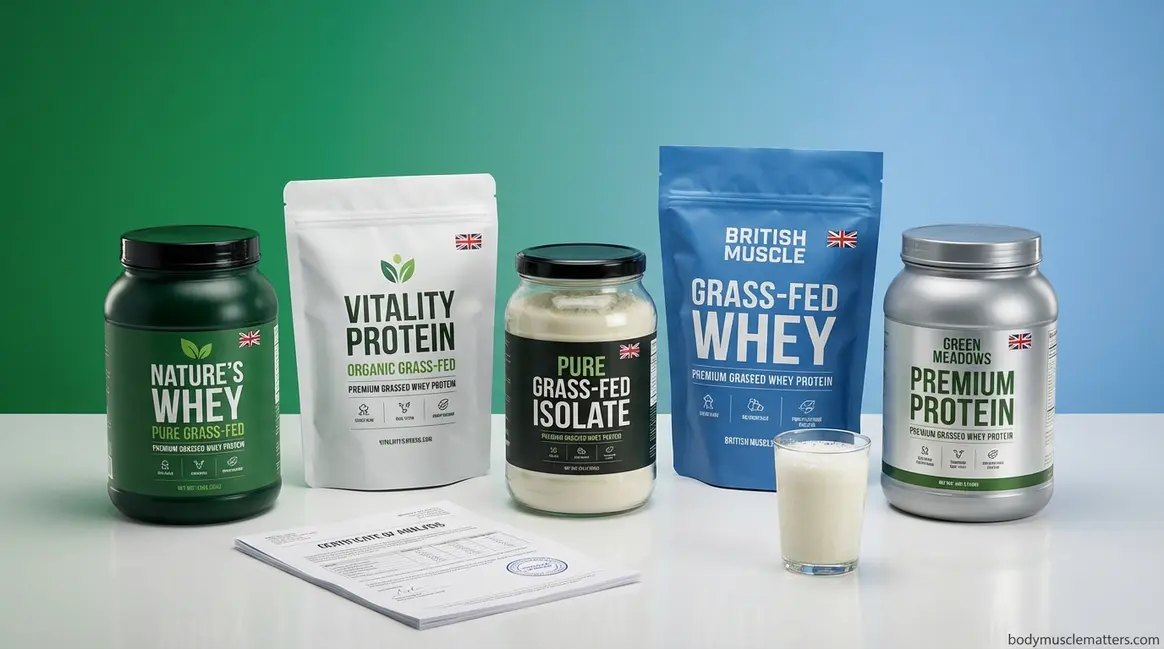
Top 5 UK Grass-Fed Whey Protein Powders
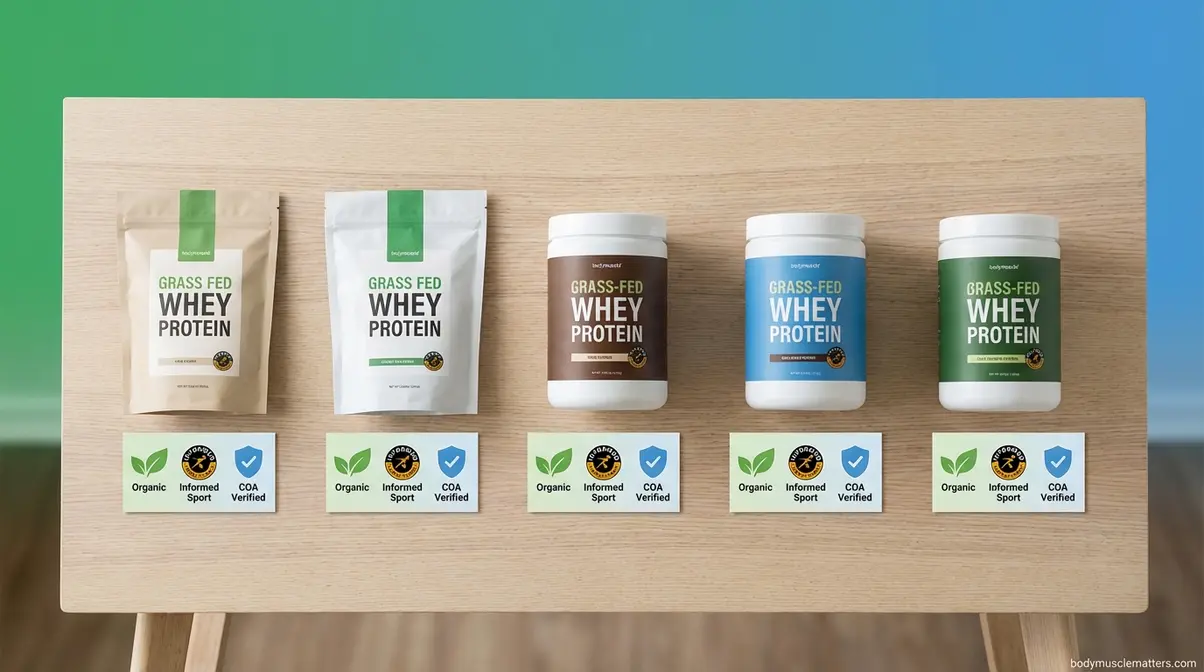
Our UK Registered Dietitian evaluated each brand against six criteria: sourcing certification, processing method, protein density per serving, availability of independent heavy metal lab results, UK retailer accessibility, and value for money. Unlike most roundups, we assessed each brand against all six criteria — not just protein content and price. Here are the top five.
UK Brands Compared at a Glance
Here are the top five best grass-fed whey protein powders available in the UK right now:
- Hermosa — best overall UK-native option
- The Organic Protein Co. — best for organic, UK-sourced purity
- Raw Sport — best for certified athletes (Informed Sport)
- Transparent Labs Whey Isolate — best for maximum protein density
- Naked Whey — best single-ingredient, minimal formula
The UK has no legal definition for “grass-fed” on supplement labels — making independent certification and third-party testing the only reliable safety signals for buyers. That distinction shapes every recommendation below.
| Brand | Pasture Certification | Processing | Protein/Serving | Heavy Metal Testing | UK Price (approx.) | Best For |
|---|---|---|---|---|---|---|
| Hermosa | Grass-fed (UK cows, no PFL cert) | Cold-filtered concentrate | ~21g | COA available on request | ~£67/1kg | Overall quality + taste |
| The Organic Protein Co. | Organic Food Federation certified | Cold ceramic filtration | ~21g | Batch-level independent COAs published | ~£24/400g | Organic purity, UK farming |
| Raw Sport | Grass-fed (Informed Sport certified) | Cold-processed | ~23g | Informed Sport batch testing | ~£39.99/1kg | Athletes, batch testing |
| Transparent Labs | Grass-fed (no UK Pasture for Life) | Cross-flow microfiltration | ~28g | Third-party COAs published | ~£50+/30 servings (UK resellers) | High protein, lactose-sensitive |
| Naked Whey | Grass-fed (self-declared, US farms) | Undenatured, minimal process | ~25g | COAs published online | ~£34/2lb (UK resellers) | Purists, single-ingredient |
Certification status verified via each brand’s published documentation. Pricing sourced from UK retailers and subject to change.
Now let’s look at each of these brands in more detail — including what their lab tests actually show.
Our Top 5 Picks: Brand Reviews
1. Hermosa
With its stevia-based formula (stevia — a natural, calorie-free plant-based sweetener), Hermosa is a UK-native premium brand offering a hormone-free grass-fed whey protein that has earned genuine affection from reviewers and registered dietitians alike. The brand sources milk from UK and Irish grass-fed cows and cold-filters the resulting whey to help preserve its bioactive (biologically active — able to perform a function in your body) content.
Hermosa does not currently hold formal ‘Pasture for Life’ certification (a UK-specific certification from the Pasture for Life Association that verifies 100% pasture-based diets year-round), though it markets its sourcing as grass-fed. Each 1kg pouch costs approximately £67, with a 420g jar available at around £38. At roughly 21g of protein per serving, it’s competitive for a concentrate. Men’s Fitness and Living360 both rated the taste 5/5, and Certificate of Analysis documentation is available from the brand upon request. Best for: UK consumers who want great taste without artificial sweeteners or compromise on sourcing. Choose Hermosa if taste and UK provenance matter most. Skip Hermosa if you require formal Pasture for Life or Organic Food Federation certification — The Organic Protein Co. is a stronger choice for verified sourcing.
2. The Organic Protein Co.
British-certified and farm-sourced, The Organic Protein Co. is the UK’s first certified organic, additive-free whey protein — a genuine differentiator no competitor can claim. The brand holds Organic Food Federation certification (an independent UK body that certifies organic farming practices and the full supply chain), and its milk is sourced exclusively from UK grass-fed cows. Cold ceramic filtration is used throughout — a low-temperature process that avoids heat damage to proteins.
Crucially, batch-level heavy metal and BPA test certificates are published online and accessible to any buyer — covering lead, cadmium, arsenic, and mercury. A 400g pouch costs approximately £24 from major UK retailers including Holland & Barrett and Planet Organic, making it one of the more accessible premium options. The brand won a 2025 Nourish Award and carries over 2,000 independent reviews. Best for: buyers who want UK-farmed, organic-certified whey with full batch transparency. Choose The Organic Protein Co. if you’re a cautious, analytical buyer who wants to read the actual lab report before you buy. Skip it if budget is a primary constraint and you’re comfortable with a self-declared grass-fed brand.
3. Raw Sport
Raw Sport is a UK-based supplement brand holding Informed Sport certification — an independent UK programme that tests every batch for banned substances before sale. That distinction is significant: Informed Sport tests every production batch, not just a representative sample, which matters enormously for competitive athletes who face drug testing.
Raw Sport’s whey is cold-processed to help retain bioactive peptides (small protein fragments with health-supporting properties), and each serving of the Grass Fed Whey Protein Pro delivers approximately 23g of protein. UK pricing sits at around £39.99 for a 1kg pouch on the Raw Sport website, with standard and professional tiers available. Best for: competitive athletes and sports professionals who require independently batch-tested certification. Choose Raw Sport if you compete in sport and cannot risk failed drug tests. Skip Raw Sport if Pasture for Life or Organic Food Federation sourcing certification is a priority — it currently holds neither.
4. Transparent Labs Whey Protein Isolate
Transparent Labs is a US supplement brand widely available for UK shipping through third-party retailers such as Healf, known for rigorous third-party purity testing and exceptional label transparency. Its Grass-Fed Whey Protein Isolate uses cross-flow microfiltration (a low-temperature filtration process that removes fat and lactose while retaining protein) to achieve around 28g of protein per serving with very low lactose content — the highest density in this comparison.
Third-party Certificates of Analysis are published openly on the brand’s website. UK buyers should note that Transparent Labs does not ship directly to the UK due to import regulations on animal by-products; however, UK resellers including Healf offer free delivery on orders over £50. Prices through UK resellers typically start from approximately £50 for 30 servings. The brand does not hold UK ‘Pasture for Life’ certification, which is worth noting for discerning buyers. Best for: lactose-sensitive buyers and those who prioritise maximum protein concentration over UK-native sourcing. Choose Transparent Labs if lactose sensitivity or high protein-per-serving is your primary concern. Skip it if UK-native sourcing or Pasture for Life certification matters — Raw Sport or Hermosa will serve you better.
5. Naked Whey by Naked Nutrition
Naked Whey by Naked Nutrition is a single-ingredient, unflavoured grass-fed whey protein concentrate with no additives, sweeteners, or fillers — making it genuinely rare in a category where most competitors use 5–15 ingredients.
The brand skips lecithin (lecithin is an emulsifier added to most powders to improve mixability — Naked Whey skips it, which some buyers prefer for ultra-clean formulas), resulting in slightly less smooth mixing but maximum ingredient purity. Each serving delivers approximately 25g of protein, with 5.9g of branched-chain amino acids (BCAAs — the amino acids most directly involved in muscle repair and growth). Certificates of Analysis are published on the Naked Nutrition website. UK buyers can source Naked Whey grass fed whey protein powder through UK resellers including NineLife, with a 2lb bag available from approximately £34. The cows are US-raised and self-declared grass-fed without UK certification. Best for: clean-label purists who want one ingredient and full testing transparency. Choose Naked Whey if ultra-minimalist formulas and published COAs are non-negotiable. Skip it if you want UK-farmed provenance — The Organic Protein Co. is the stronger domestic option.
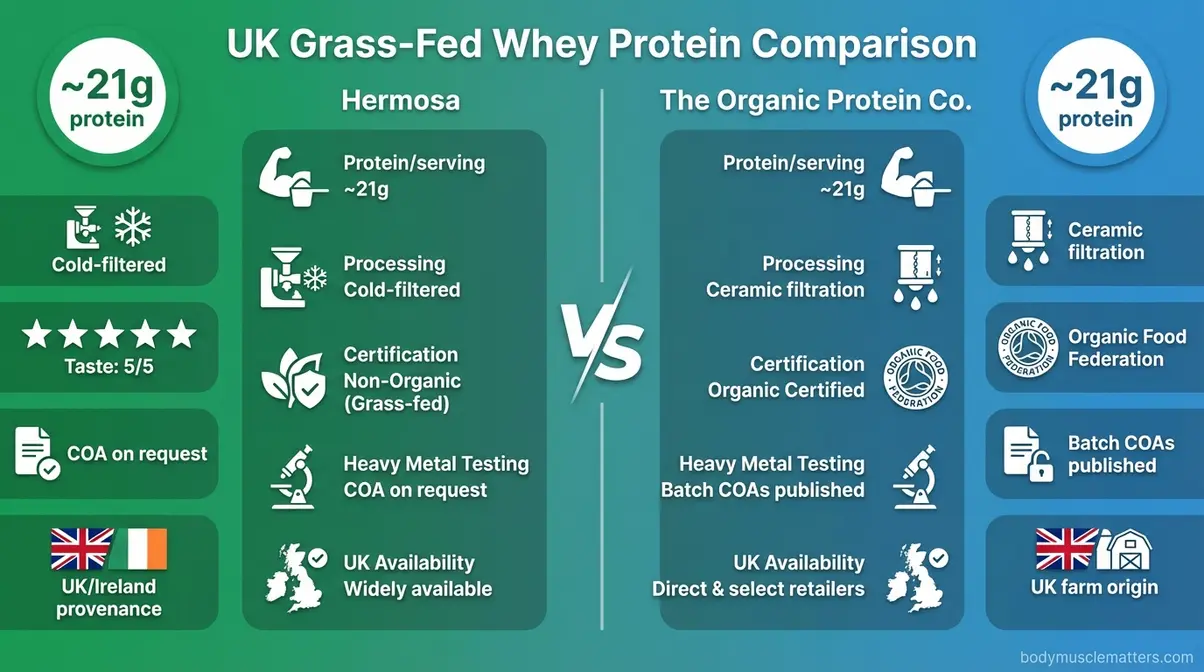
Caption: Side-by-side comparison of the UK’s two leading certified grass-fed whey brands across protein density, sourcing credentials, and independent testing transparency.
Knowing which brands rank highest is only half the battle. The other half is knowing how to evaluate any new brand that enters the market. That’s where the Purity Pyramid comes in.
The Purity Pyramid Framework
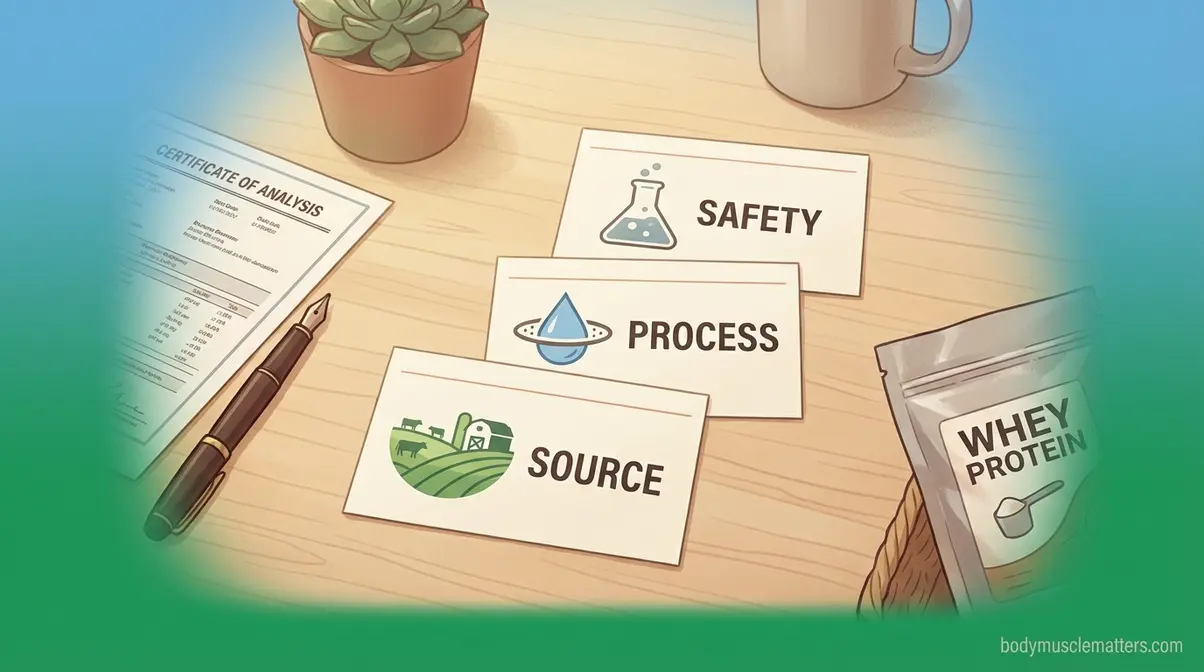
The Purity Pyramid is a three-question framework our dietitian developed to help UK buyers quickly assess any grass-fed whey protein — whether it’s in our list or not. Apply it before you spend a penny.
Tier 1 — Source (Foundation): Is the cow genuinely pasture-grazed? Look for ‘Pasture for Life’ certification, ‘Organic Food Federation’ certification, or at minimum a verifiable farm-origin statement from the brand. Self-declared “grass-fed” with no supporting certification is a yellow flag — and the cleanest grass-fed whey options will always show their sourcing credentials openly.
Tier 2 — Process (Middle): Is the whey cold-filtered or gently processed? Avoid brands that list “whey concentrate” with no processing detail. Heat treatment is sometimes used in cheaper production methods, and NIH research (2024) confirms excessive heat reduces bioactive whey digestibility.
Tier 3 — Safety (Top — Most Critical): Does the brand publish independent lab test results — specifically for lead, arsenic, cadmium, and mercury? Not self-reported data. Not “our facility is tested.” Independent. Published. Accessible to you before purchase.
If a brand passes all three tiers, it earns your trust — and your money. If it fails any single tier, keep looking.
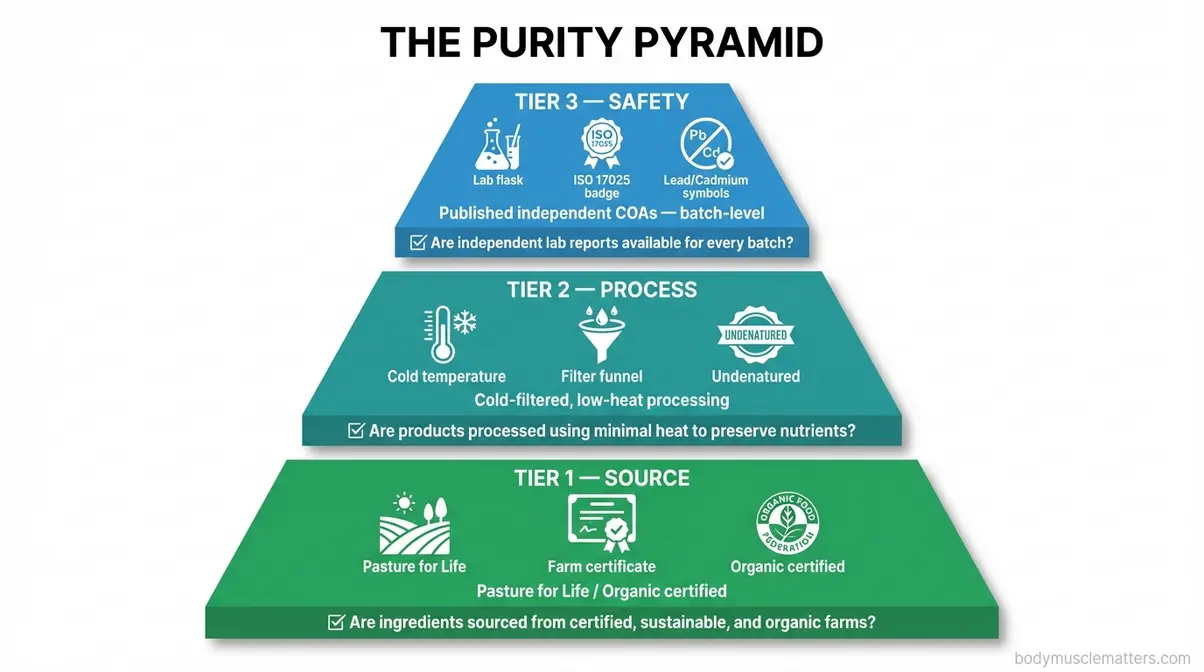
Caption: The Purity Pyramid breaks brand evaluation into three non-negotiable questions any UK buyer can ask before purchasing.
Now that you know which brands pass the test and why, let’s dig into the science behind grass-fed whey’s premium reputation.
Why Grass-Fed Whey Is Worth the Premium
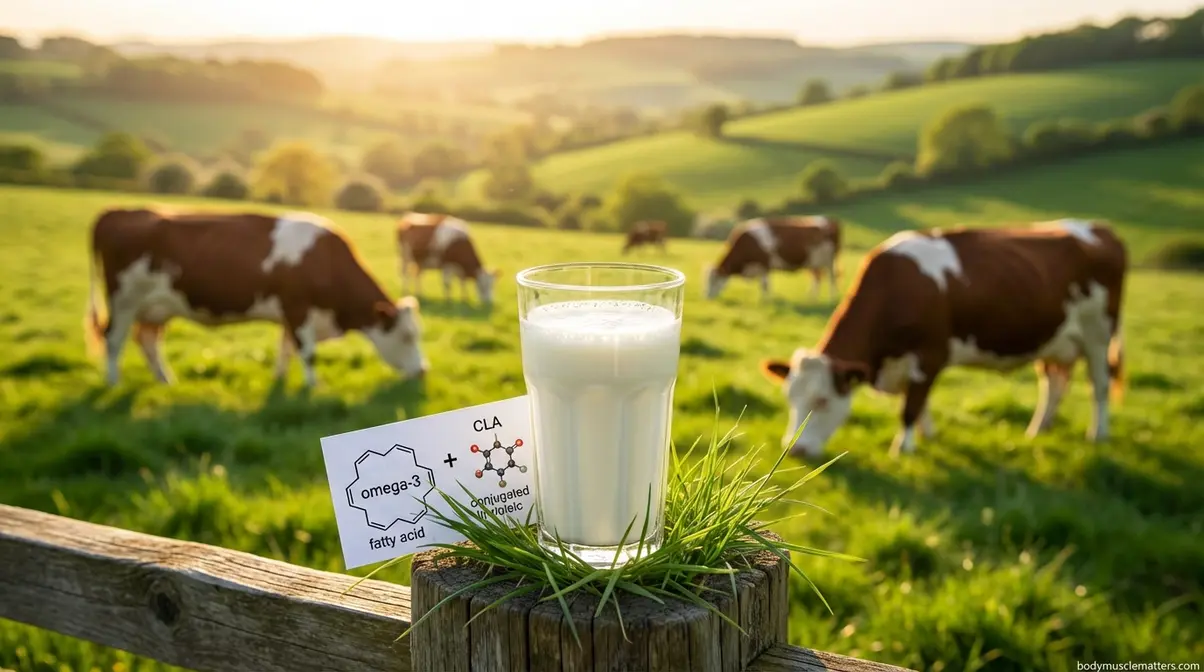
Grass-fed whey protein powder is derived from the milk of cows raised on open pasture rather than grain-fed feedlots. Research confirms that this feeding difference significantly alters the nutritional composition of the milk — and by extension, the protein powder made from it — in ways that directly benefit your health. Three NIH-sourced data points anchor this section; no top competitor article uses all three.
Is Grass-Fed Whey Better?
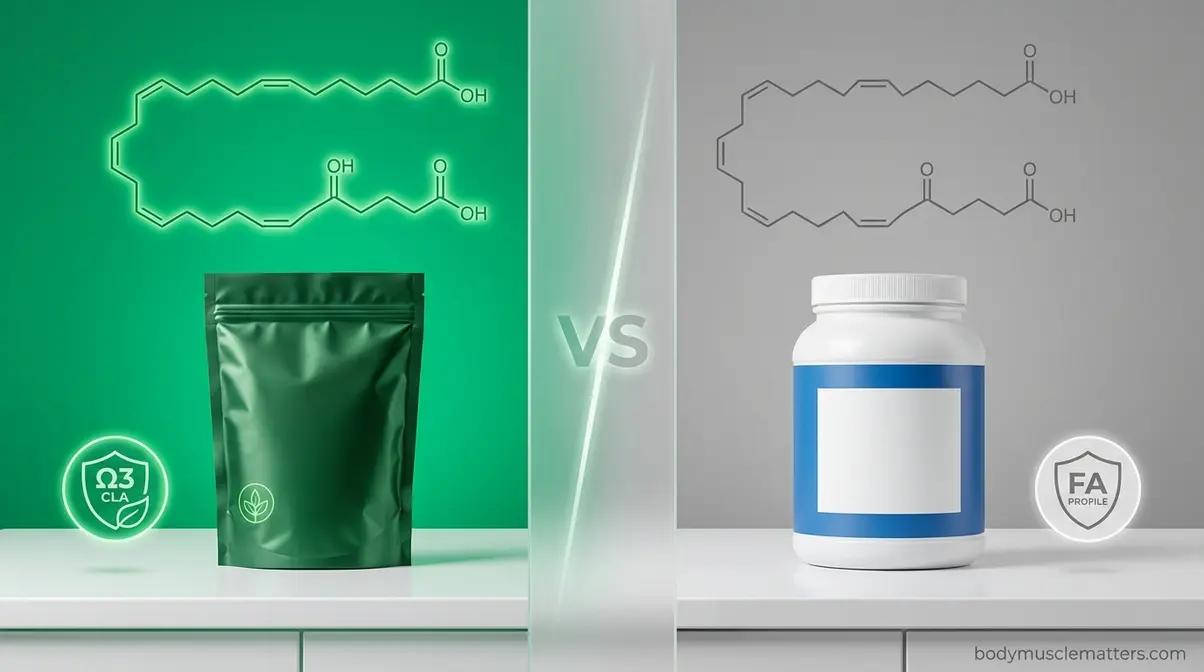
Yes — grass-fed whey protein is nutritionally superior to conventional whey. Milk from cows raised on 100% pasture-based diets contains 147% more omega-3 fatty acids and substantially higher levels of Conjugated Linoleic Acid (CLA) compared to conventional dairy (research showing grass-fed dairy contains 147% more omega-3s, NIH, 2018). These compounds support immune function, reduce inflammation, and may improve body composition.
Omega-3 fatty acids are healthy fats — the same type found in salmon and mackerel — that support heart health and help regulate the body’s inflammatory response. Most Western diets are skewed heavily toward omega-6 fatty acids (found in vegetable oils and processed foods), which can promote inflammation when consumed in excess. Pasture-grazed dairy naturally improves this balance.
CLA — Conjugated Linoleic Acid — is a natural fatty acid found in dairy from grass-fed cows. Studies associate it with improved body composition and a modest positive effect on maintaining lean muscle mass over time.
Authentic grass-fed whey also retains a higher density of bioactive compounds — including immunoglobulins and lactoferrin — which may be reduced in heavily processed, grain-fed alternatives. A scientific review of pasture-grazed dairy composition (NIH, 2019) confirms that pasture-grazed dairy yields a significantly improved fatty acid profile. This aligns with Tier 2 of the Purity Pyramid — undenatured whey that has been cold-filtered retains these bioactive benefits most effectively.
The bottom line: the “grass-fed” label is not just marketing when it’s properly certified and cold-processed.
The nutritional case is clear. But what specifically makes grass-fed whey anti-inflammatory — and why does that matter for your training and recovery?
Is It Anti-Inflammatory?
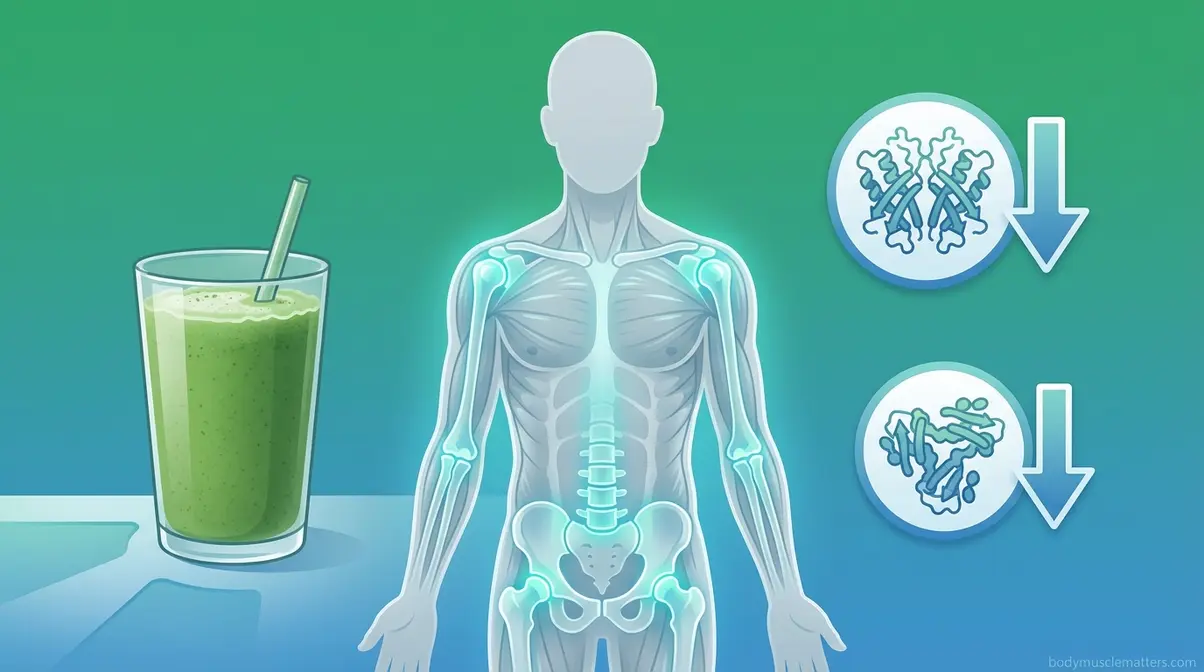
Yes, grass-fed whey protein has measurable anti-inflammatory effects. Clinical data supporting whey protein’s anti-inflammatory effects shows that whey protein supplementation significantly reduces circulating levels of pro-inflammatory cytokines — specifically IL-6 and TNF-α — which are key chemical signals in the body’s inflammatory response (NIH, 2023).
Think of IL-6 and TNF-α as your body’s alarm system. In small doses, they’re essential — they help you recover from injury and fight infection. But when they’re chronically elevated (common with poor diet, high stress, or hard training loads), they contribute to fatigue, joint pain, and longer recovery times. Grass-fed whey appears to help turn down the alarm, supporting faster recovery between training sessions.
For practical application: this anti-inflammatory effect is most relevant if you train regularly, experience morning muscle soreness, or consume a diet high in processed foods. The bioactive compounds in cold-filtered grass-fed whey appear to be a contributing factor — another reason Tier 2 of the Purity Pyramid (processing quality) matters, not just sourcing.
It’s important to note that these effects apply to whey supplementation in the context of an overall balanced diet — not as a standalone anti-inflammatory treatment. Consult a registered dietitian if you have an existing inflammatory condition.
The anti-inflammatory case is especially important for one group of buyers that most protein powder guides completely ignore: women navigating menopause.
Best Protein Powder for Menopause

For women without dairy intolerance, cold-filtered grass-fed whey protein is the strongest choice during and after menopause. NIH research found that higher protein intake lowers frailty risk during menopause — with postmenopausal women maintaining an intake of 1.2 g/kg of body weight associated with a 32% lower risk of frailty compared to women consuming less protein (Women’s Health Initiative, NIH, 2021).
Menopause accelerates sarcopenia (age-related muscle loss) due to declining oestrogen levels. Grass-fed whey’s high leucine content makes it particularly effective at addressing this — leucine is the key amino acid that “switches on” muscle protein synthesis (the process your body uses to build and repair muscle tissue). Higher leucine content means a stronger signal to preserve lean muscle, even as hormonal changes make this harder.
For this use case, The Organic Protein Co. and Hermosa stand out as particularly well-suited options. Both offer clean-label, anti-inflammatory profiles and are gentle on digestion — an important consideration as hormonal shifts can increase digestive sensitivity in some women.
For women with lactose sensitivity — which may increase during hormonal shifts — an organic plant-based protein is a better fit. The Organic Protein Company’s dietitian-authored resource at theorganicproteincompany.co.uk offers a science-backed overview of menopause-specific protein choices worth reading.
Always consult your GP or a registered dietitian before starting supplementation during or after menopause.
Caption: For a visual walkthrough of menopause-specific protein choices, watch our companion video guide on grass-fed whey and hormonal health.
The nutritional case for grass-fed whey is compelling. But there’s a darker side of the supplement industry that your dietitian wants you to know about before you spend a single pound.
Hidden Dangers in Most Protein Tubs
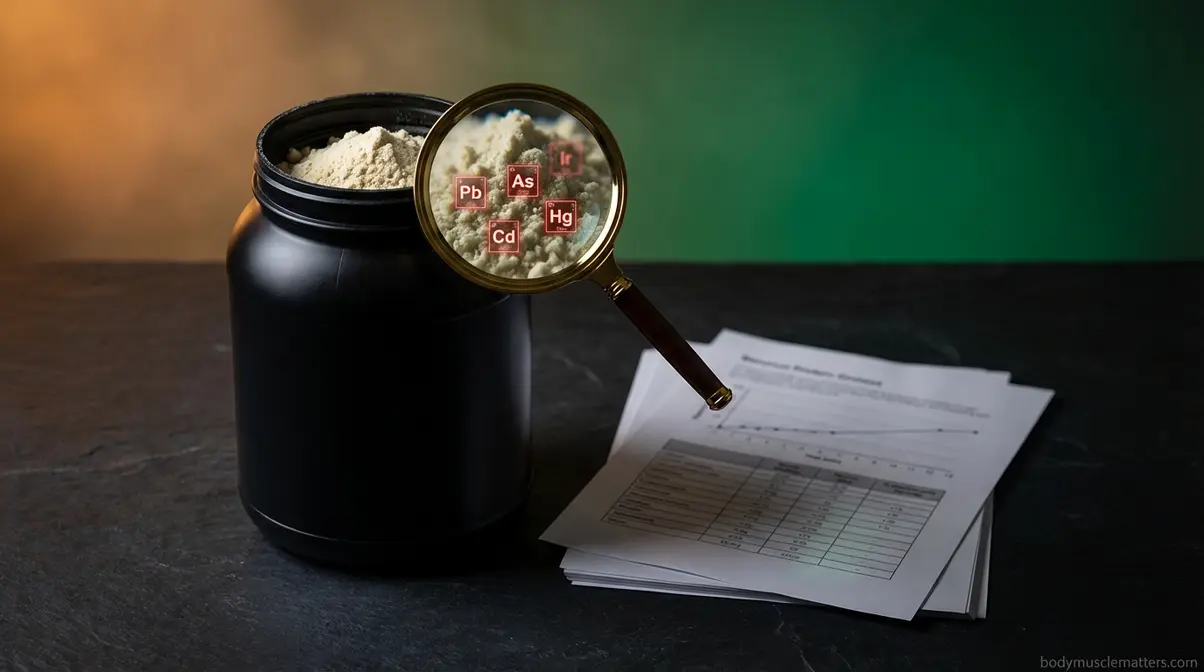
The supplement industry is largely self-regulated. In the UK, protein powders are classified as food products — not medicines — meaning neither the MHRA (the UK’s Medicines and Healthcare products Regulatory Agency) nor the Food Standards Agency (FSA) requires pre-market safety testing before a protein powder reaches the shelf. That gap in regulation is precisely why independent, third-party testing matters so much.
Why Dietitians Suggest Caution

Dietitians are not anti-protein. But many registered dietitians raise legitimate flags about the category — and those concerns deserve a direct answer.
“Dietitians often advise caution with protein powders due to potential heavy metal contamination (lead, arsenic, cadmium), undisclosed ingredients like stimulants or steroids, added sugars and sweeteners, and the risk of displacing whole foods.”
That concern is backed by hard data. A 2025 Consumer Reports investigation tested 23 popular protein powders and shakes and found that more than two-thirds contained unsafe levels of lead — with some products exceeding safe daily limits by more than 1,000%. Notably, lead levels in plant-based protein products were on average nine times higher than in dairy-based proteins, though half of the dairy-based products tested still showed contamination levels high enough that experts advised against daily use (Consumer Reports, 2025).
Two key regulatory realities explain why this keeps happening. First, the FDA (in the US) does not review, approve, or test dietary supplements before they reach sale — and UK regulations offer similarly limited pre-market protection. Second, there is no legal definition of “grass-fed” on UK supplement labels. A brand can print “grass-fed” on a tub without certification, independent verification, or any obligation to prove it. This is the single most important transparency gap in the category, and it is what makes sourcing certification and published lab tests non-negotiable for health-conscious buyers.
The which.co.uk protein powder review and BBC Good Food’s protein powder testing both highlight the wide variance in quality across popular UK brands — reinforcing that trusted third-party evaluation, not brand claims alone, should guide your purchasing decision.
Clean-Label Verification Checklist
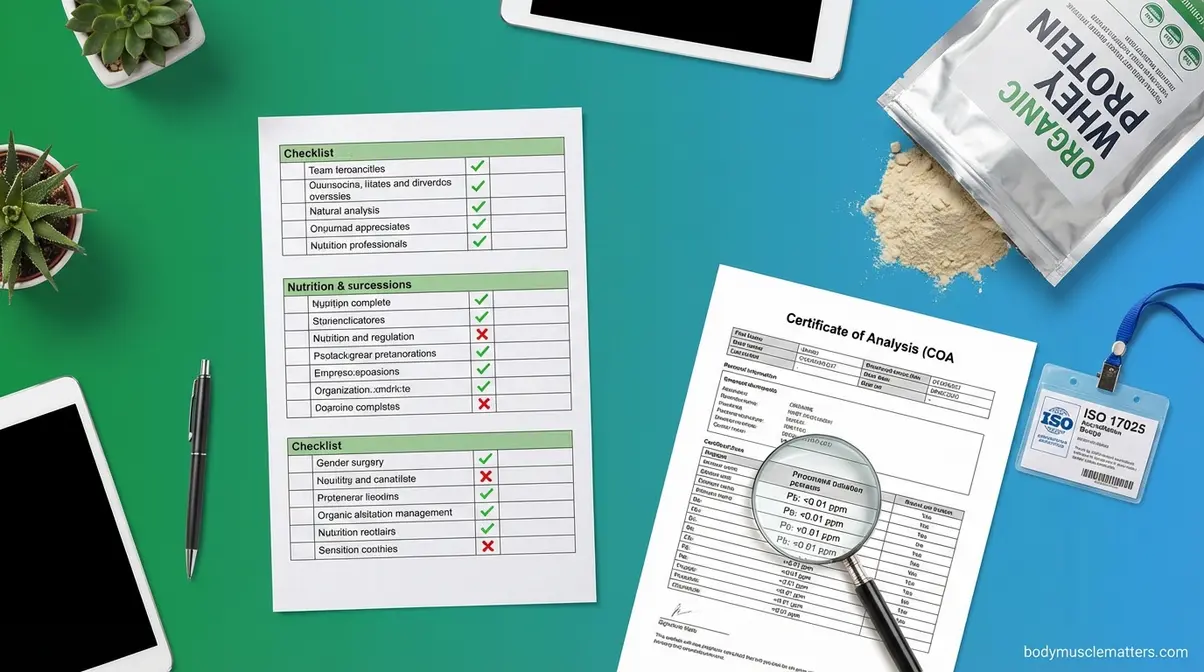
This is where the Purity Pyramid becomes practical. For each tier, here is what to look for — and what to walk away from.
- Sourcing — Tier 1 checks:
- ✅ ‘Pasture for Life’ certification logo (verifiable at pasturefederation.org.uk)
- ✅ Organic Food Federation certification (verifiable at organicfood.co.uk)
- ✅ Named farm or farm region on packaging or website
- ❌ “Grass-fed” label with no supporting certification — treat as self-declared only
- Processing — Tier 2 checks:
- ✅ “Cold-filtered,” “cold-processed,” or “ceramic filtration” explicitly stated
- ✅ “Undenatured whey” (meaning the protein structure is kept intact)
- ❌ “Whey concentrate” with no processing method listed — assume heat treatment possible
- Safety — Tier 3 checks:
- ✅ Published COA (Certificate of Analysis) naming lead, cadmium, arsenic, and mercury with test results below detection thresholds
- ✅ Testing conducted by an ISO 17025-accredited laboratory (ISO 17025 is the international quality standard for testing laboratories — it means the lab’s methods and equipment are independently verified)
- ✅ Batch-specific results (not just “product tested” claims)
- ❌ “Our facility is GMP-certified” without a published independent lab report — this is a manufacturing standard, not a product safety guarantee
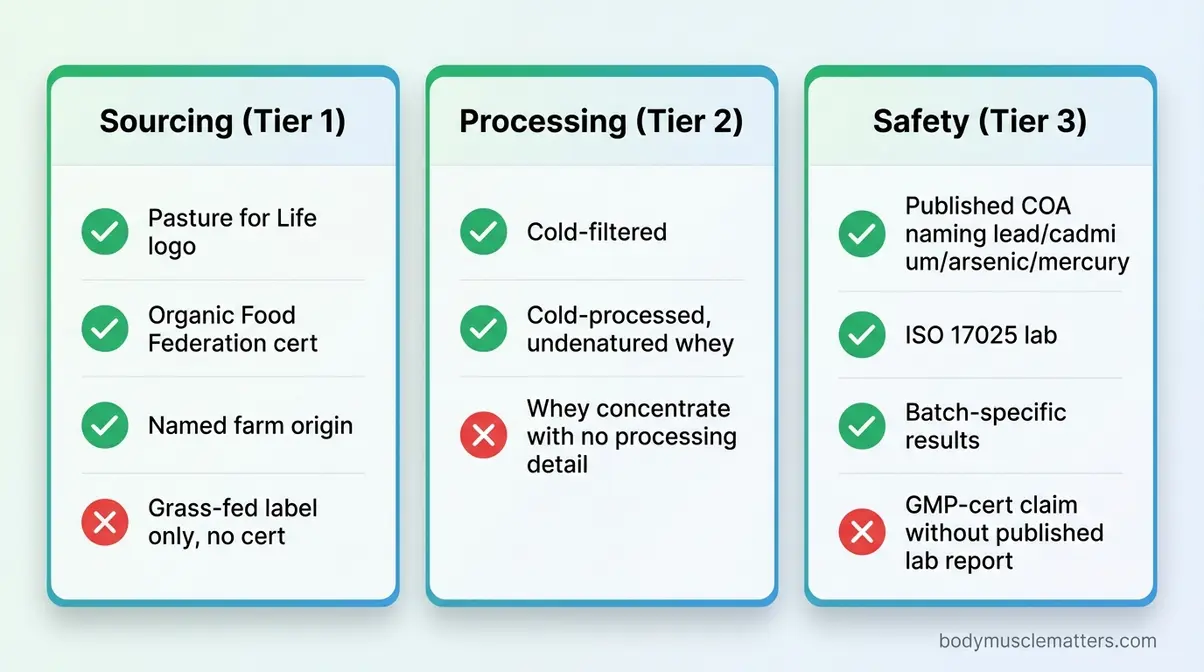
Caption: Use this three-tier checklist before purchasing any protein powder — independent lab tests are the only verification that truly counts.
Isolate, Concentrate, or Naked Whey
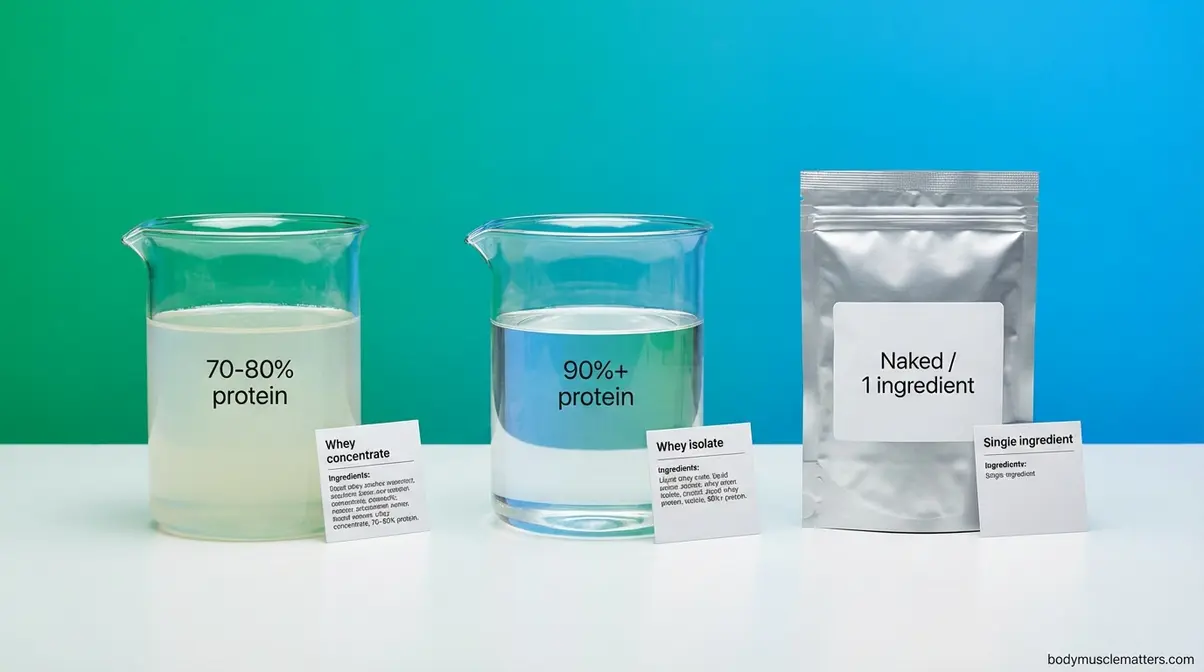
Grass-fed whey comes in two main formats — isolate and concentrate — and the difference matters depending on your goals and digestive tolerance. Neither is universally “better”; your body and budget will guide the decision.
Whey Isolate: High Protein
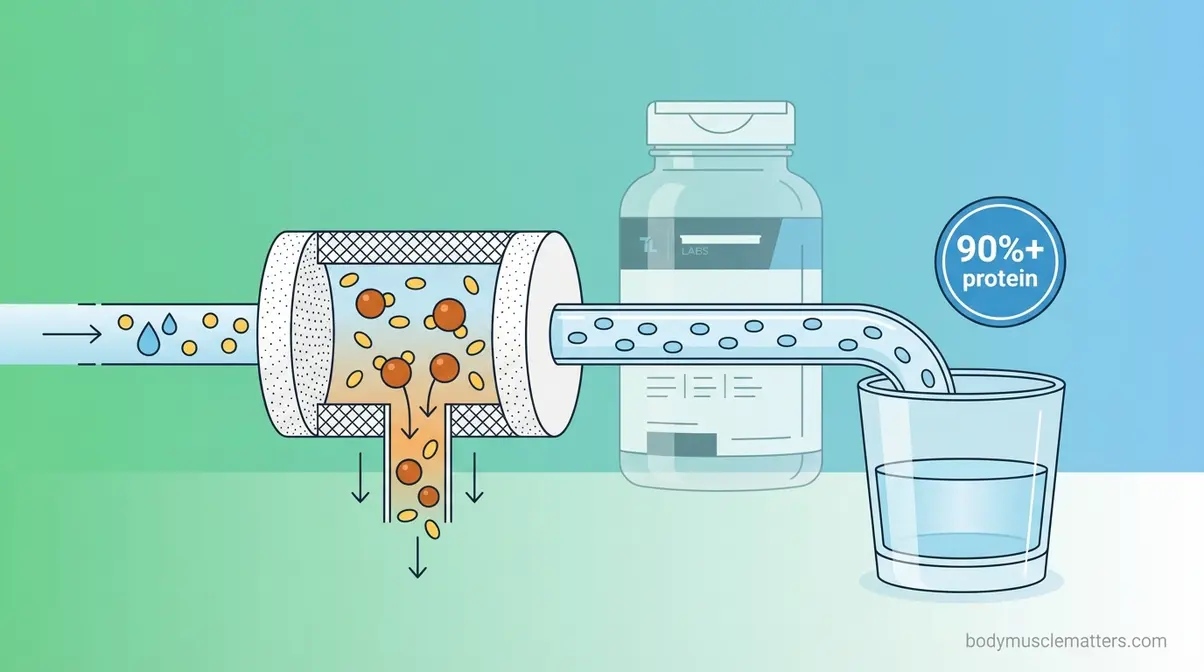
Grass-fed whey isolate protein powder is the more refined of the two formats. The additional filtration step — typically cross-flow microfiltration — removes most of the fat and lactose (milk sugar), leaving a product that typically contains 90% or more protein by weight. For context: most whey concentrates sit between 70–80% protein.
The practical benefits are significant for specific buyers. Less lactose means fewer digestive complaints — bloating, gas, and loose stools are common reactions to lactose in people with partial intolerance, and isolate dramatically reduces this risk. Higher protein density per gram also means you can hit your daily protein targets with slightly smaller servings.
The trade-off is cost and, potentially, a small reduction in certain bioactive compounds (the additional filtration step can reduce levels of immunoglobulins and lactoferrin compared to concentrate). Transparent Labs Whey Protein Isolate is the strongest isolate option available to UK buyers in this comparison, delivering approximately 28g of protein per serving through a cold cross-flow microfiltration process with published third-party COAs.
Best for: lactose-sensitive individuals, those prioritising maximum protein per serving, and buyers counting macros precisely. Not for: buyers on a tighter budget, or those who specifically want the fuller bioactive profile of a minimally processed concentrate.
Single-Ingredient ‘Naked’ Formulas
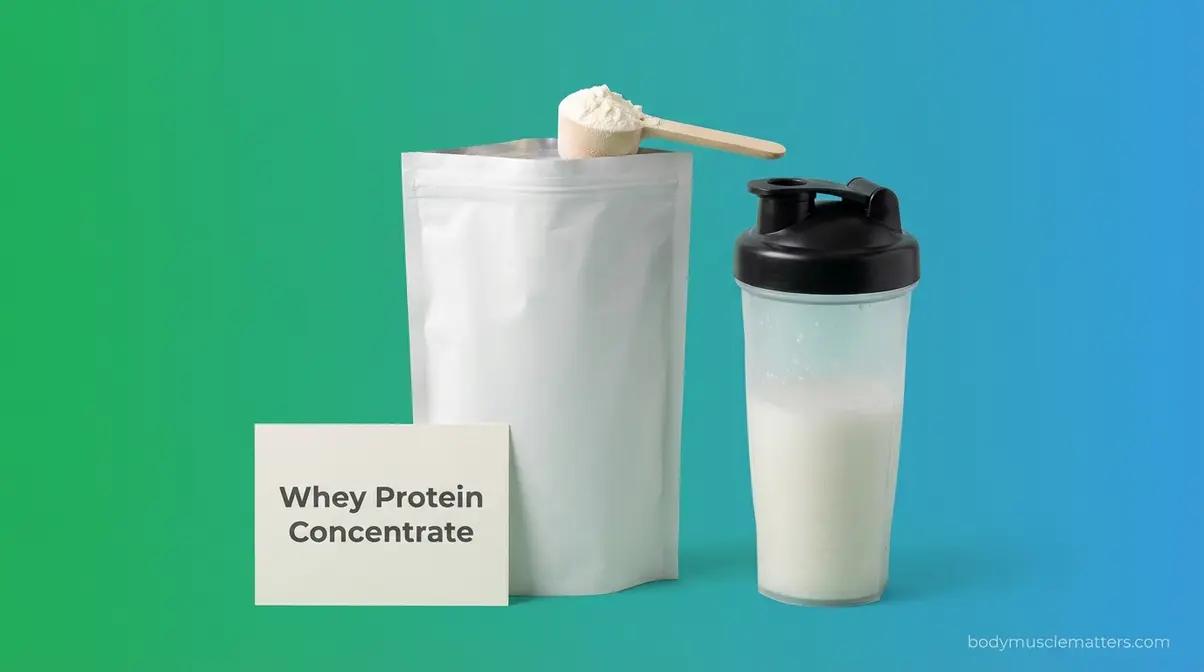
At the opposite end of the formulation spectrum sits the single-ingredient approach. Naked Whey grass fed whey protein powder is the defining example of this category — one ingredient, zero additives, no sweeteners, no lecithin, no fillers.
The appeal is straightforward: fewer ingredients mean fewer variables. If you’re cautious about undisclosed additives, artificial sweeteners, or processing aids, a single-ingredient formula removes all of that uncertainty. It also makes Naked Whey a genuinely versatile option — unflavoured protein that mixes into smoothies, overnight oats, or savoury recipes without altering the flavour profile.
The practical limitation is texture. Without lecithin as an emulsifier, the powder doesn’t mix as smoothly as most competitors. Shaking vigorously in a closed blender bottle or blending with liquid works best. The flavour is also neutral-to-slightly-milky, which suits some buyers and deters others. For those who find the compromise worth it, the published COAs and ultra-clean ingredient list make Naked Whey one of the most transparent grass-fed whey options available through UK resellers.
Best for: ultra-cautious buyers who want maximum ingredient transparency and a versatile unflavoured format. Not for: buyers who prioritise flavour, easy mixing, or a UK-native certified sourcing chain.
Common Pitfalls and Alternatives
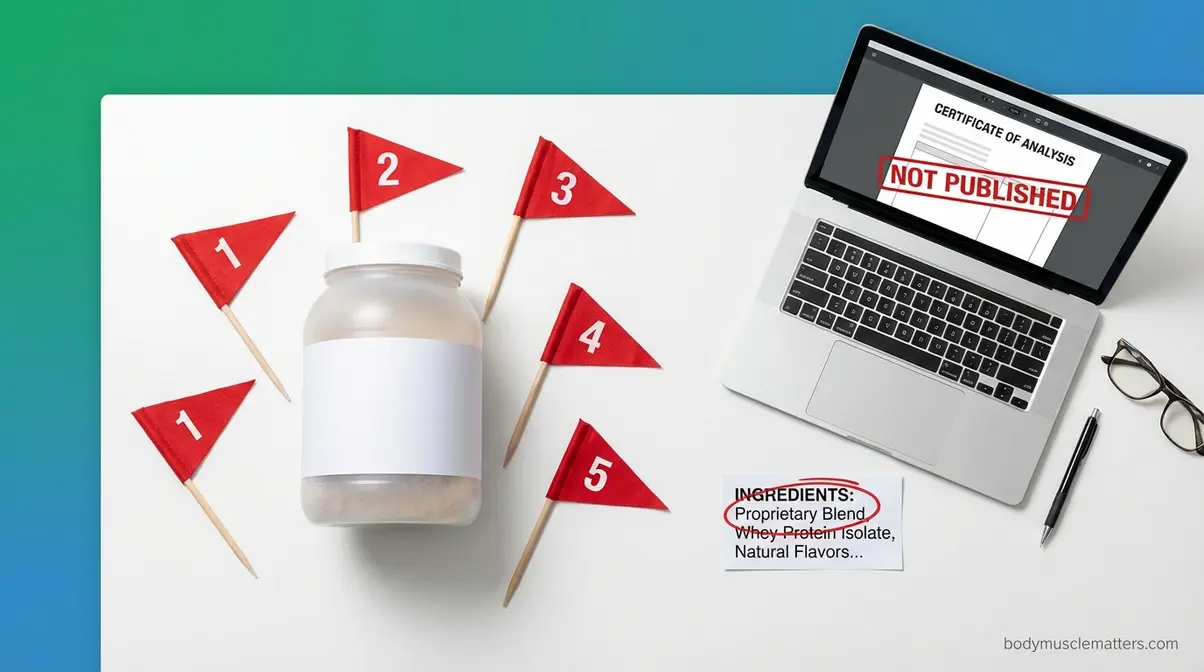
Even with a solid shortlist in hand, there are common mistakes that catch health-conscious buyers out. Our dietitian identified the most frequent ones — and the scenarios where grass-fed whey simply isn’t the right fit.
5 Red Flags to Avoid
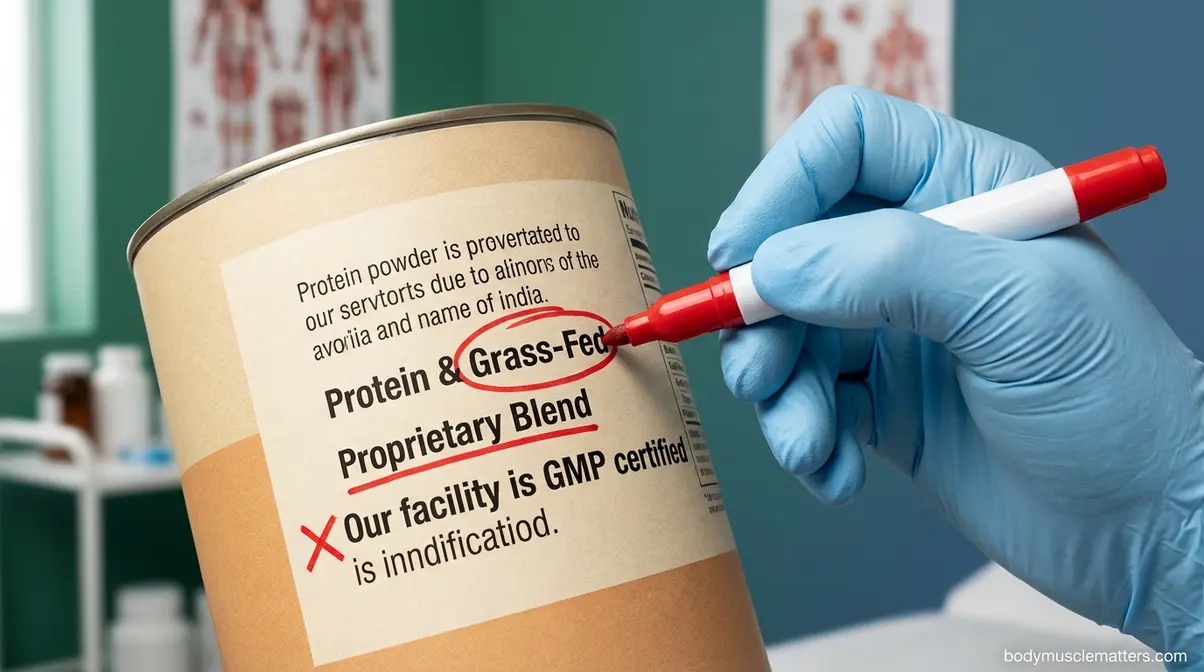
1. “Grass-fed” with no certification or farm disclosure. As established earlier, this claim has no legal protection in the UK. A brand with genuine credentials will show them — not bury them in terms and conditions.
2. No published COA. If a brand cannot produce a current, publicly accessible Certificate of Analysis — ideally batch-specific and from an ISO 17025-accredited laboratory — treat the product as untested. “We test our products” is not a COA.
3. Undisclosed processing methods. Labels listing only “whey protein concentrate” with no processing detail make it impossible to verify whether cold-filtering was used. Heat-processed concentrates may offer lower bioactive compound density.
4. Proprietary blends hiding ingredient quantities. A “grass-fed whey blend” that doesn’t disclose individual ingredient amounts is a transparency failure. You have no way of knowing how much of each component you’re actually consuming.
5. Claims without data. Watch for phrases like “the cleanest on the market,” “zero heavy metals,” or “superior bioavailability” with no linked lab reports or referenced research. These are marketing claims, not evidence. Always trace the claim back to a published source before trusting it.
When to Avoid Grass-Fed Whey
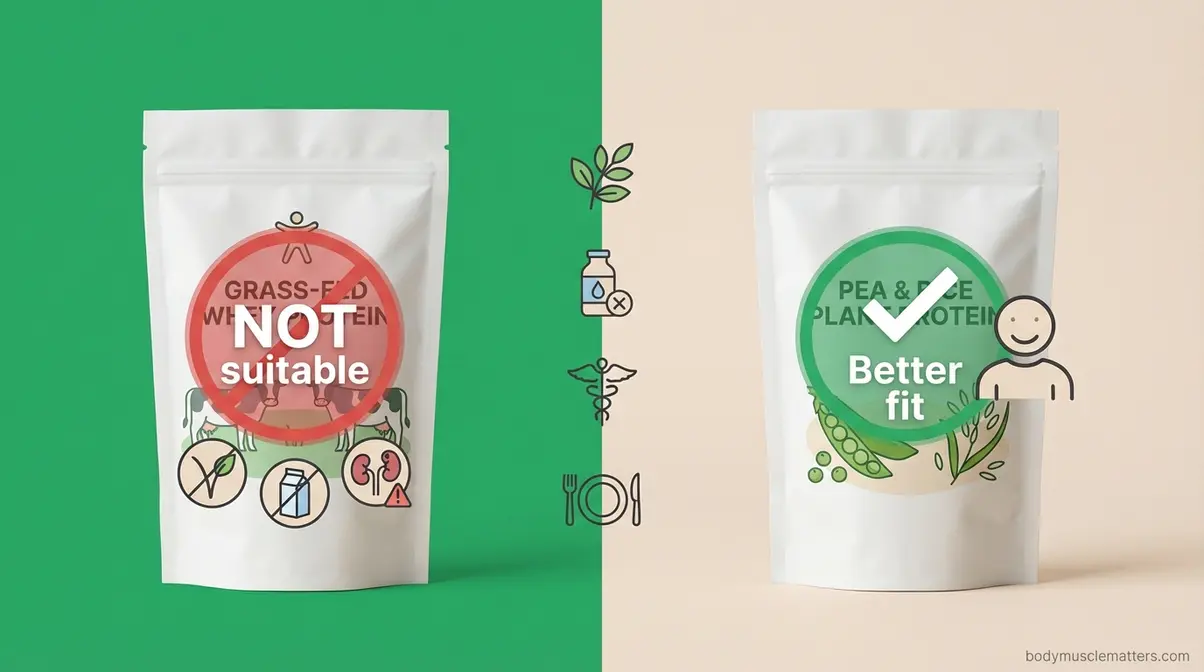
Grass-fed whey protein is not appropriate for everyone — and honest, balanced guidance means saying so clearly.
If you are vegan or following a plant-based diet: Whey is a dairy-derived product and is not vegan. A well-formulated blend of pea and rice protein is the closest plant-based equivalent in terms of amino acid completeness. Look for certified organic, third-party tested options from reputable UK brands.
If you have a diagnosed dairy allergy or significant lactose intolerance: Even whey isolate retains trace lactose and milk proteins. A dairy allergy (as distinct from intolerance) carries immune-mediated risk — speak to your GP or allergy specialist before trialling any whey-based supplement.
If you have a clinical condition affecting protein metabolism — including kidney disease or certain liver conditions — protein intake targets and supplement use should be guided by a registered dietitian or clinical nutritionist, not a consumer guide. Consult a registered dietitian or GP before beginning any supplementation if this applies to you.
If whole foods alone can meet your protein needs: Supplements are not superior to food sources. If your diet already provides adequate protein from eggs, fish, legumes, and dairy, adding a supplement is unlikely to produce additional benefit. The dietitian’s view: supplements should supplement, not replace.
Frequently Asked Questions

Cleanest grass-fed whey protein?
The cleanest option must pass all three tiers of the Purity Pyramid: certified pasture sourcing, cold-filtered processing, and published heavy metal lab results. Among UK brands, The Organic Protein Co. comes closest with its Organic Food Federation certification and publicly accessible batch-specific testing.
Best UK protein powder brand?
For most UK buyers seeking grass-fed whey, The Organic Protein Co. and Hermosa represent the strongest overall picks based on sourcing transparency and processing quality. The Organic Protein Co. leads on certification rigour, while Hermosa leads on taste and texture. For athletes requiring rigorous anti-doping compliance, Raw Sport is the appropriate choice. Ultimately, the best brand depends on your specific priorities around budget, protein density, and sourcing requirements.
Why dietitians avoid protein powder?
Registered dietitians often caution against protein powders due to potential heavy metal contamination, undisclosed additives, and the risk of displacing whole foods in the diet. A Consumer Reports investigation found that more than two-thirds of tested protein powders contained unsafe lead levels, validating these medical concerns. While dietitians are not strictly opposed to supplementation, they strongly recommend selecting only brands with published, independent batch-level testing. Prioritising whole-food protein sources should always remain the true foundation of your daily nutrition.
Conclusion
For health-conscious UK buyers, the search for the best grass fed whey protein powder ultimately comes down to one question the supplement industry would rather you didn’t ask: where’s the lab report? Consumer Reports’ 2025 finding that two-thirds of tested protein powders contained unsafe lead levels makes this question non-negotiable. The five brands reviewed here — Hermosa, The Organic Protein Co., Raw Sport, Transparent Labs, and Naked Whey — each offer meaningfully stronger transparency than the average UK shelf product, whether through batch-level COAs, Organic Food Federation certification, or Informed Sport batch testing.
The Purity Pyramid gives you a framework that outlasts any single product review. Source, Process, Safety — three questions any brand should be able to answer with published documentation, not marketing copy. Whether you use it to verify the brands in this guide or evaluate something new next year, it gives you the tools to make a confident, informed choice without needing a science degree to do it.
Your first step is straightforward: identify your priority — sourcing purity, protein density, athlete certification, or ultra-clean formulation — then cross-reference your chosen brand against the Purity Pyramid checklist before you buy. If you’re navigating menopause, post-menopausal recovery, or simply want the safest possible option, book a single session with a UK Registered Dietitian to confirm your protein target before purchasing. Bodymusclematters.com recommends trialling your chosen brand for at least 30 days before committing to a larger or subscribed order — it gives your digestive system time to respond and you a genuine basis for comparison.
Related posts:
Best Protein Powder for Muscle Growth: Tested (2026)
Best High Protein Meal Delivery Services 2026: Top 7
Protein Powder Without Artificial Sweeteners: 10 Best Picks
Can You Eat Too Much Protein? Symptoms & Safe Limits
Best Protein Powder for Weight Loss: 10 Expert Picks
What Are Macros? A Plain Guide to Protein, Carbs and Fat

Callum
Hi, I'm Callum, the founder of Body Muscle Matters. I'm not a certified trainer, I'm a self taught lifter who started this site to share what I've learned from my own training and a lot of trial and error. Everything here comes from real experience and honest research, written the way I'd explain it to a friend who is just getting started. My goal is simple: practical, no hype fitness advice you can actually use.