
⚠️ Medical & Nutritional Disclaimer
This content is for informational and educational purposes only. It is not a substitute for professional medical advice, diagnosis, or treatment. If you have a medical condition — including diabetes, heart disease, or any metabolic disorder — consult your doctor or a registered dietitian before changing your nutrition or exercise plan.
Reviewed by a Board-Certified Specialist in Sports Dietetics with over 10 years of experience in performance nutrition counseling. This article was reviewed for accuracy against current sports nutrition guidelines before publication.
You are 20 minutes into your workout. Your legs feel heavy, your focus is gone, and you’re already counting down until you can stop — not because you’re unfit, but because you haven’t fueled your body properly.
This energy crash is one of the most common reasons beginners quit workouts early. It doesn’t mean you need to train harder — it means you need to eat smarter. The good news is that this problem has a very specific, very fixable cause.
By the end of this guide, you’ll know exactly how to fuel your body for exercise at every stage — before, during, and after — so you can finish every session strong. We’ll walk through the science of what your body needs, then give you step-by-step fueling instructions organized by workout type using the 3-3-3 Fueling Framework.
Knowing how to fuel your body for exercise means eating the right foods at the right time — complex carbs 1-3 hours before, quick-digesting snacks 30-60 minutes before, and a protein-carb combo within 2 hours after.
- Before: Complex carbs (oatmeal, brown rice) build glycogen stores for sustained energy
- During: Drink 3-8 oz of water every 15-20 minutes; fuel long sessions with simple carbs
- After: Pair protein + carbs within 2 hours to rebuild muscle and replenish glycogen
- Weekly: Use the 3-3-3 Fueling Framework to sync your meals to your workout type
- Avoid: Refined carbohydrates and high-fat foods within 60 minutes of exercise
How-To Prerequisites
- Estimated Time: 15-20 minutes
- What You’ll Need: Water bottle, complex carbohydrates (oatmeal, brown rice), fast-digesting snacks (bananas), and quality protein sources (chicken, Greek yogurt).
What Fuels Your Body – Key Nutrition Prerequisites
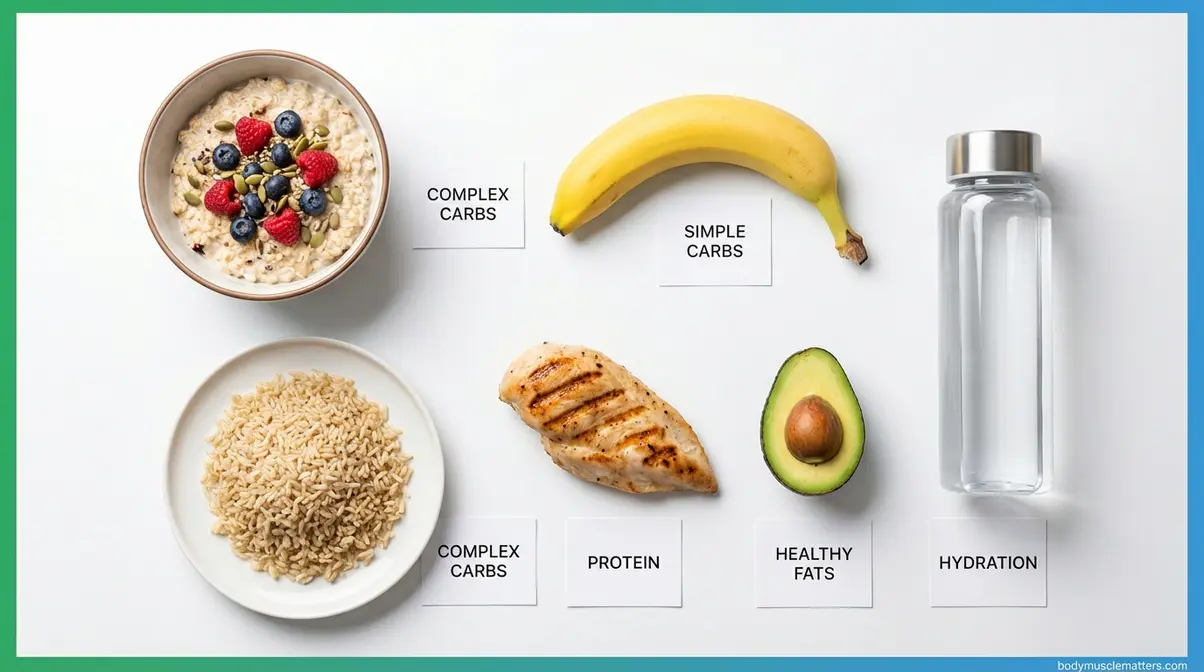
Before you can follow any fueling protocol, you need a plain-English understanding of what your body actually runs on. Think of your body like a car: you wouldn’t pour diesel into a gasoline engine and expect peak performance. The same logic applies to the foods you eat before, during, and after exercise. This section covers the “why” behind every recommendation in Steps 1-4.
How This Guide Was Researched
Our team of sports nutrition experts reviewed peer-reviewed research, clinical guidelines from Tier 1 authorities — including the Mayo Clinic, the American Heart Association (AHA), the Academy of Nutrition and Dietetics, the American College of Sports Medicine (ACSM), and the 2026 American Diabetes Association (ADA) Standards of Care — alongside current NIH/PubMed literature. Every timing recommendation, hydration figure, and macronutrient guideline in this guide is grounded in published evidence. This article was then reviewed by a Registered Dietitian with a Board Certification in Sports Dietetics (RD, CSSD) for clinical accuracy before publication. Where research is still evolving (such as optimal protein timing), we note the nuance explicitly rather than overstating certainty.
Carbohydrates: Your Workout Fuel
Carbohydrates are your body’s primary and fastest energy source during exercise. When you eat carbs, your body breaks them down into glucose (blood sugar) and stores the excess as glycogen (the stored form of sugar your muscles use for fuel). Your muscle glycogen stores are essentially your workout battery — and if that battery is empty, your performance tanks fast.
Not all carbohydrates work the same way, however. Research consistently distinguishes two types:
- Complex carbohydrates — These include oatmeal, brown rice, sweet potatoes, whole-grain bread, and quinoa. They digest slowly because of their fiber content, releasing energy gradually over 1-3 hours. This makes them ideal for pre-workout meals eaten 1-3 hours before exercise, because they prevent the sharp blood-sugar rise-and-crash that leaves you feeling flat.
- Simple carbohydrates — These include bananas, white rice, sports drinks, and honey. They digest quickly, delivering fast energy to your bloodstream. This makes them ideal for a snack 30-60 minutes before a session or for fueling during longer workouts.
A common fear beginners have is that carbohydrates cause weight gain. The nuance, addressed by the American Heart Association, is that refined carbohydrates — white bread, sugary pastries, candy — spike blood sugar rapidly and provide no sustained fuel. Complex carbs do the opposite. For exercise purposes, carbohydrates are not the enemy; they are the engine.
What’s the worst carb for belly fat?
Refined carbohydrates — processed sugars, white bread, sugary drinks, candy, and pastries — are the carbohydrate category most associated with excess fat storage, including abdominal fat. These foods spike blood sugar rapidly, trigger a large insulin response, and provide no sustained energy. The rapid insulin spike followed by a blood-sugar crash leaves you hungry again quickly, increasing total calorie intake. Complex carbohydrates — oatmeal, brown rice, sweet potatoes, whole-grain bread — do not trigger this cycle. They digest slowly, keep blood sugar stable, and provide sustained energy for exercise without promoting excess fat storage. Eliminating carbohydrates entirely is not necessary or advisable for active people.
Protein: For Muscle Repair and Growth
Protein is the building block your muscles use to repair micro-tears caused by exercise. During strength training especially, tiny muscle fibers break down — and protein provides the amino acids needed to rebuild them stronger. This is how you build muscle over time.
For most beginners, research suggests a daily intake of 1.4-2.0 grams of protein to build muscle per kilogram of bodyweight to support muscle repair and growth (Academy of Nutrition and Dietetics, 2026). For a 70 kg (154 lb) person, that is roughly 98-140 grams of protein per day.
Good protein sources to build your meals around:
- Chicken breast and turkey
- Eggs and egg whites
- Greek yogurt and cottage cheese
- Canned tuna and salmon
- Tofu and edamame
- Lentils and chickpeas
- Protein powder (whey or plant-based)
Two eggs provide roughly 12-14 grams of protein. That is a solid contribution to your daily total, though for most people building muscle, two eggs alone will not meet your full daily protein requirement — you will need multiple protein sources across your meals throughout the day.
Healthy Fats and Your Glycogen Stores
Healthy fats — from avocados, nuts, seeds, olive oil, and fatty fish — play a supporting role in exercise nutrition. They are not a primary fuel source during moderate-to-high-intensity workouts (your body prefers carbohydrates for that). However, they support hormone production, reduce exercise-induced inflammation, and help absorb fat-soluble vitamins (A, D, E, K) that keep your body functioning well over time.
Where fats matter most for your glycogen stores is the timing question: fat slows digestion significantly. Eating a high-fat meal right before a workout means your body is still processing it when you hit the gym — leaving you feeling sluggish, nauseous, or both. Keep high-fat foods away from your pre-workout window. They belong in meals eaten 3+ hours before exercise, or in your recovery meals after training.
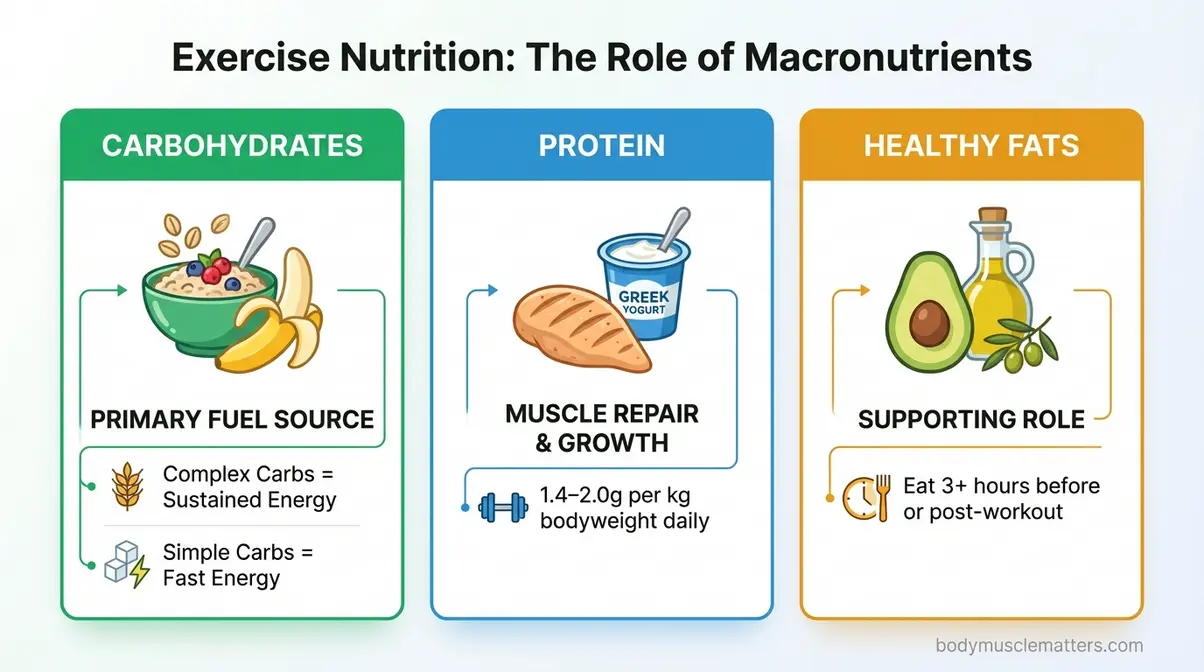
Caption: A clear visual breakdown of how each macronutrient supports energy, muscle repair, and recovery during exercise.
Step 1 – How to Fuel Up Before Your Workout

Pre-workout nutrition is the single biggest lever beginners can pull to improve their exercise experience. For a more comprehensive overview, read our ultimate workout nutrition guide. Research from the Academy of Nutrition and Dietetics confirms that combining carbohydrates and protein 1-4 hours before training supports both energy availability and muscle preservation — giving you more fuel and more protection in a single eating strategy. What you eat before your session determines how much energy you have when your muscles need it most.
Your 1-3 Hour Pre-Workout Meal
Your main pre-workout meal should be eaten 1-3 hours before exercise. This window gives your body enough time to digest the food and convert it into accessible fuel without causing discomfort during your session.
- What to include:
- A complex carbohydrate to load your glycogen stores
- A moderate portion of protein to protect muscle tissue
- Low fat and low fiber — both slow digestion and increase GI distress risk during exercise
Meal examples (1-3 hours pre-workout):
| Meal | Carb Source | Protein Source | Notes |
|---|---|---|---|
| Oatmeal with banana and Greek yogurt | Oats + banana | Greek yogurt | Classic, well-tolerated |
| Brown rice with grilled chicken and steamed broccoli | Brown rice | Chicken | High performance, filling |
| Whole-grain toast with scrambled eggs | Whole-grain bread | Eggs | Quick to prepare |
| Sweet potato with tuna | Sweet potato | Canned tuna | Budget-friendly |
| Quinoa bowl with turkey and roasted veg | Quinoa | Turkey | High protein option |
According to Mayo Clinic, eating 1-3 hours before exercise gives your body the digestion time it needs to deliver nutrients to your muscles when your workout begins. Eating too close to training — or skipping the meal entirely — forces your body to pull fuel from other sources, reducing the quality of your session and increasing fatigue.
Your 30-60 Minute Pre-Workout Snack
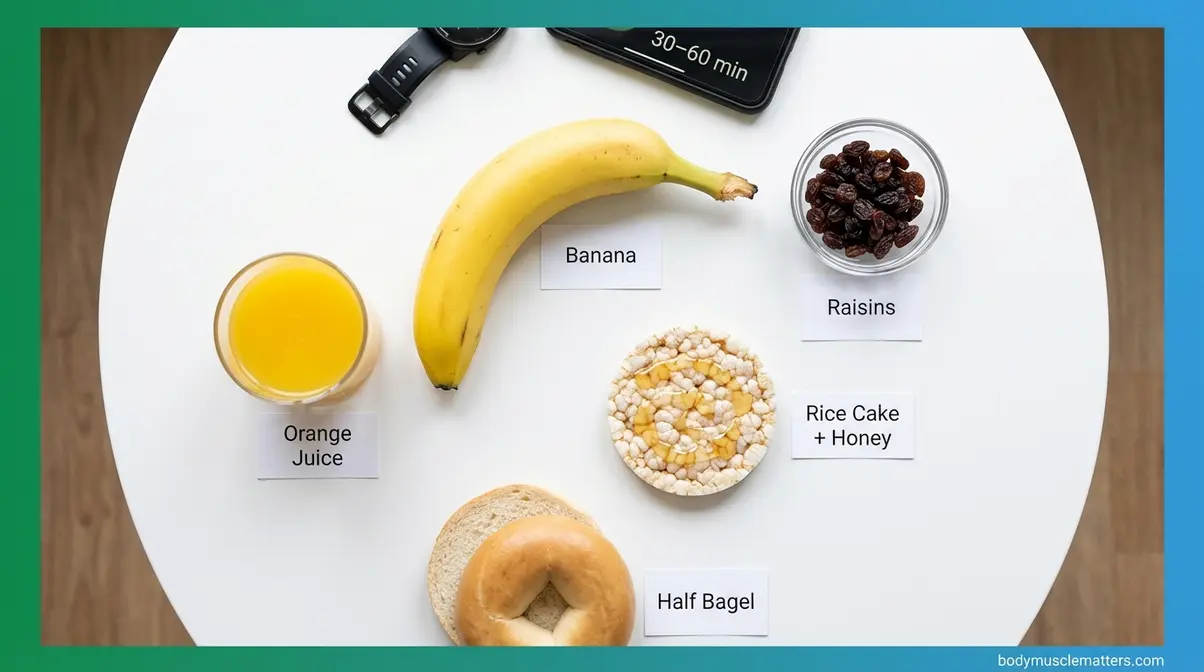
If you are training within 30-60 minutes and skipped your main pre-workout meal, or if you simply need a quick energy top-up, this is the window for a quick-digesting energy snack. The goal here is simple carbohydrates — foods that enter your bloodstream fast without sitting heavy in your stomach.
Best 30-60 minute pre-workout snacks:
- One banana (fast-digesting simple carbs, potassium for muscle function)
- A small handful of raisins or dates
- A rice cake with a thin spread of honey
- A small glass of 100% fruit juice
- Half a plain bagel (no heavy toppings)
What to avoid at this stage: Large portions of protein or fat, anything high in fiber, and anything that requires extended digestion time. At 30 minutes out, your digestive system does not have time to break down a full meal — eating one will redirect blood flow to your gut instead of your muscles, causing cramping and sluggishness.
Keep this snack to 100-200 calories. Less is more when timing is tight. The goal is to give your body a small, fast fuel source — not a meal. If you trained fasted accidentally, even a banana eaten 15 minutes before can meaningfully improve your performance compared to nothing (Nationwide Children’s Hospital, 2026).
Foods to Avoid Before Exercise
Certain foods — even healthy ones — can actively undermine your workout if eaten at the wrong time. The issue is not the food itself but the timing and its effect on your digestion during exercise.
Avoid these within 60 minutes of training:
| Food Category | Why to Avoid | Example Foods |
|---|---|---|
| High-fat foods | Slow digestion, cause heaviness and nausea | Bacon, fried foods, full-fat cheese, nut butter in large amounts |
| High-fiber foods | Cause bloating, gas, and GI cramping during exercise | Raw broccoli, beans, lentils, bran cereals |
| Refined sugar / candy | Spike blood sugar, cause a crash mid-workout | Candy bars, sugary soda, doughnuts |
| Large protein portions | Take too long to digest, redirect blood to gut | Large steak, protein-heavy casserole |
| Alcohol | Dehydrates, impairs coordination and reaction time | Beer, wine, spirits |
| Carbonated drinks | Cause bloating, discomfort during movement | Sparkling water, soda |
Users consistently report that eating a greasy or high-fat meal before training leads to cramps, sluggishness, and a strong urge to stop early. This is your digestive system competing with your muscles for blood flow — and during exercise, your muscles should win. Eat those heavier foods in the hours well after your session instead.
Can I exercise on an empty stomach?
Fasted exercise is manageable for short, low-intensity sessions but is not recommended for high-intensity training. For a gentle 20-30 minute morning walk, fasted exercise is generally fine. For strength training or cardio lasting 45+ minutes at moderate-to-high intensity, training without fuel forces your body to break down muscle protein for energy — the opposite of your goal. Research also shows that fasted high-intensity exercise produces a significantly larger cortisol spike than fed exercise. If you prefer morning training before breakfast, eat at minimum a small simple-carb snack (banana, dates, a small glass of juice) 15-30 minutes before your session.
Step 2 – Stay Energized During Your Workout

Most beginners focus all their nutrition attention on before and after the workout — and forget about the session itself. For shorter workouts, this is fine. But for sessions that push past 45 minutes, mid-workout fueling and consistent hydration become genuinely performance-critical.
Hydration Needs While Exercising
Dehydration is the fastest way to kill performance. Losing even 2% of your body weight in fluids causes a measurable drop in strength, endurance, and cognitive function — that is just 3 pounds for a 150-pound person (ACSM, 2026). Staying on top of hydration is one of the most impactful and straightforward things you can do for your workouts.
- ACSM hydration guidelines during exercise:
- Short sessions (<60 minutes): Drink 3-8 fluid ounces of water every 15-20 minutes
- Long sessions (60+ minutes): Drink 3-8 fluid ounces of a sports beverage (containing 5-8% carbohydrates and electrolytes) every 15-20 minutes
- Before exercise: Drink approximately 17 oz (500 ml) of water 2 hours before your session to arrive hydrated (ACSM Position Stand)
A practical rule for beginners: take a sip of water at every natural break point during your workout — between sets, after each lap, or at every song change. Do not wait until you feel thirsty. Thirst is a lagging indicator — by the time you notice it, your performance has already started to dip.
Signs you are under-hydrated during exercise: dark yellow urine before training, dry mouth, headache before the session starts, or dizziness during exercise. If you experience any of these, Nationwide Children’s Hospital recommends treating rehydration as your first priority before modifying your nutrition plan.
Fueling Long Workouts (45+ Minutes)
For workouts lasting 45-60 minutes or longer — whether that is a long run, a cycling session, or an extended strength circuit — your glycogen stores begin to deplete meaningfully. This is when mid-workout carbohydrates shift from “optional” to “strategically valuable.”
During long session options:
- Sports drinks (250-350 ml every 20-30 minutes) — provide carbohydrates and electrolytes simultaneously
- Banana halves or dates — natural simple carbohydrates, easy to carry
- Energy gels or chews — 20-25g of fast-digesting carbs, widely used in endurance sports
- Diluted fruit juice (50/50 with water) — budget-friendly, effective alternative to commercial sports drinks
Research published in Frontiers in Sports and Active Living (2026) confirms that pre-exercise feeding combined with carbohydrate intake during exercise promotes higher performance outcomes than either strategy alone — particularly for sessions exceeding one hour. For most beginners doing 30-45 minute sessions, water alone is sufficient. But once you push past that mark, treating mid-workout carbs as part of your fueling strategy — not a snack — becomes a meaningful performance lever.
Target 30-60 grams of carbohydrate per hour during sustained exercise. This does not mean a full meal — it means small, frequent doses of quick-digesting carbohydrates timed to prevent depletion rather than to respond to it.
Step 3 – Recover and Refuel After Your Workout
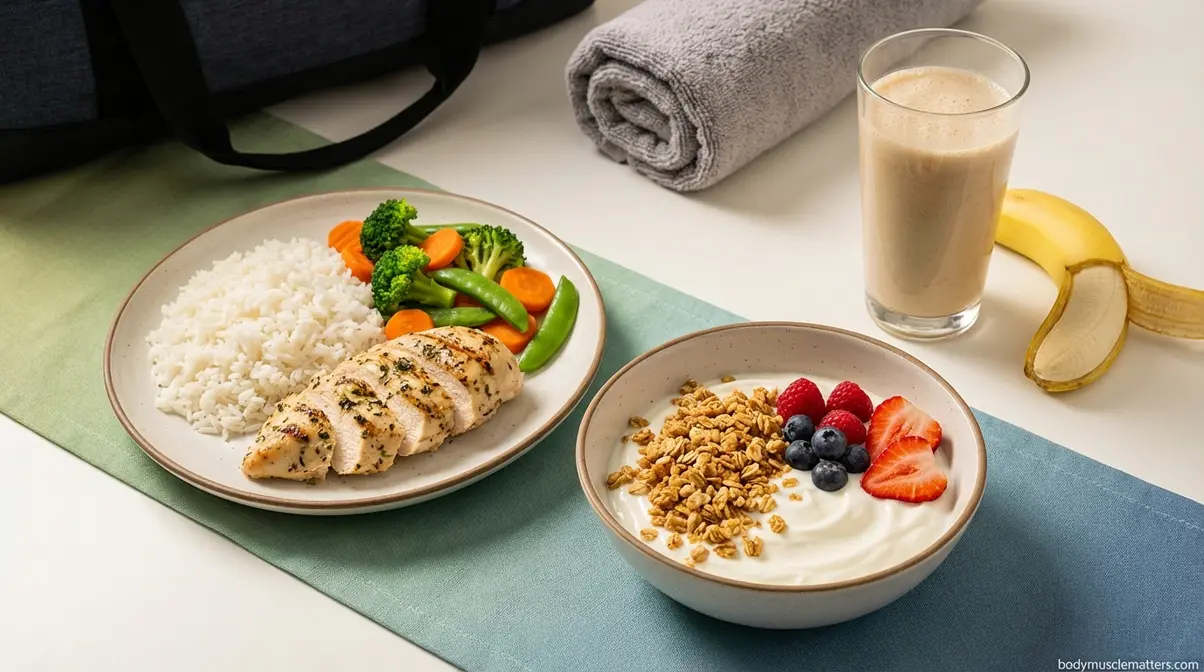
Post-workout nutrition is where the actual adaptation happens. You do not get stronger during the workout — you get stronger during recovery. What you eat in the hours after exercise determines how completely your body rebuilds muscle tissue, replenishes glycogen stores, and prepares itself for your next session.
Why the Recovery Window Matters
In the period immediately following exercise, your muscles are in a heightened state of readiness to absorb nutrients. Research from PMC/NIH (2026) confirms that consuming protein and carbohydrates immediately following vigorous exercise significantly speeds muscle recovery, restores glycogen, and reduces fatigue compared to delayed intake. Muscle protein synthesis — the process of building new muscle — remains elevated for approximately 2 hours after resistance training.
The practical implication: You do not need to chug a protein shake the second you put down the barbell. But eating a combined protein and carbohydrate meal within 2 hours of finishing your workout is a genuinely meaningful target — not gym mythology. A 2026 review in PMC found that consuming 20-40 grams of protein alongside 1-1.2 grams of carbohydrate per kilogram of bodyweight in this window maximizes both muscle repair and glycogen replenishment simultaneously.
Think of your post-workout recovery window like a door that is wide open for 2 hours after your session. You want to walk through it with the right foods — not leave it closed and wonder why you’re sore for three days.
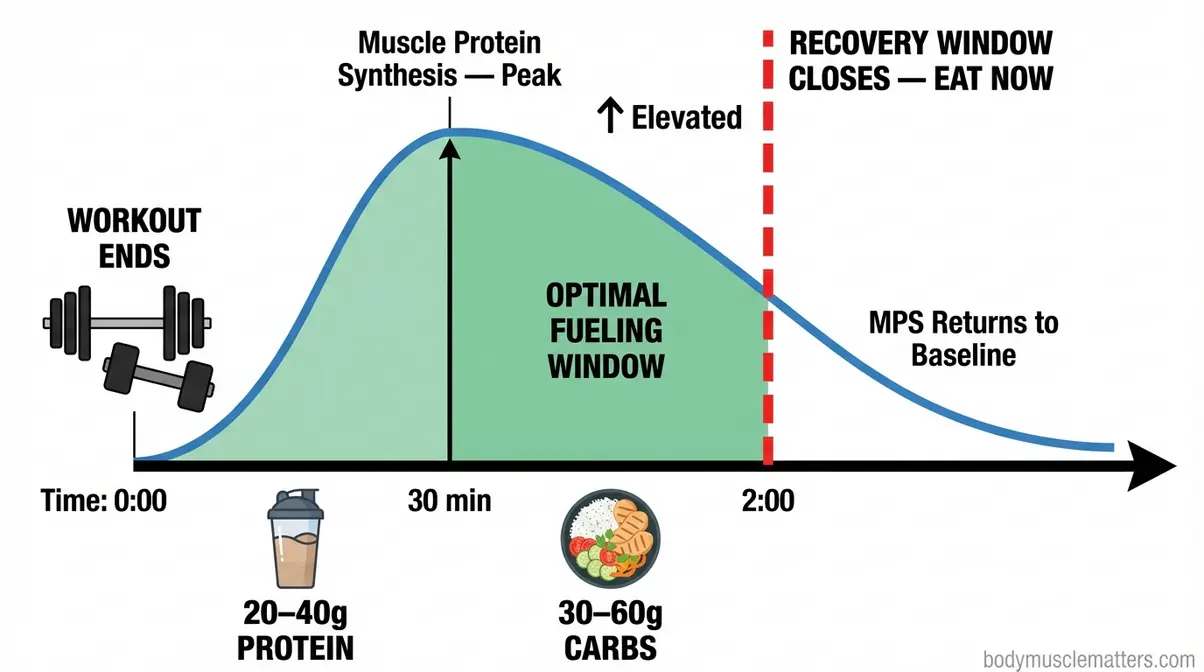
Caption: The post-workout recovery window remains open for up to 2 hours — pairing protein with carbohydrates during this period accelerates both muscle repair and glycogen replenishment.
The Best Post-Workout Foods
Your post-workout plate has one primary job: deliver protein for muscle repair and carbohydrates for glycogen replenishment — together, at the same meal. Research shows co-ingestion of both macronutrients outperforms either alone for recovery outcomes (Frontiers in Nutrition, 2026).
Top post-workout meal options (within 2 hours):
| Food Combination | Protein | Carb Source | Best For |
|---|---|---|---|
| Grilled chicken + white rice + steamed veg | Chicken | White rice | Strength training recovery |
| Greek yogurt + granola + berries | Greek yogurt | Granola + berries | Light sessions, easy digestion |
| Protein shake + banana | Whey/plant protein | Banana | Speed and convenience |
| Salmon + sweet potato | Salmon | Sweet potato | Anti-inflammatory recovery |
| Eggs on whole-grain toast | Eggs | Whole-grain bread | Budget-friendly, quick |
| Cottage cheese + apple + nuts | Cottage cheese | Apple | Before-bed recovery option |
| Tuna wrap (whole grain tortilla) | Tuna | Whole-grain tortilla | High protein, portable |
For those who cannot stomach a full meal immediately after training, a protein shake blended with a banana and some milk provides a fast, effective recovery hit in liquid form. According to UCLA Health, the best post-workout foods are those you will actually eat — so if chicken and rice sounds unappealing at 7 AM post-run, Greek yogurt and granola is a perfectly effective alternative.
Aim for: 20-40 grams of protein + 30-60 grams of carbohydrates within 2 hours of finishing exercise, adjusted for your workout type, intensity, and total body weight.
How to Rehydrate After Exercise
You lose fluid — and electrolytes (sodium, potassium, magnesium) — through sweat during every session. Rehydration after exercise is not optional; it is part of the recovery process. Failing to replace those fluids extends the physical stress your body is under and slows the repair process.
Post-workout rehydration protocol:
- Weigh yourself before and after exercise if you want an accurate measure — every pound lost equals approximately 16 oz of fluid needed to restore balance
- Drink 16-24 oz of water in the first 30 minutes after training
- For sessions over 60 minutes or in hot conditions, add electrolytes — a glass of chocolate milk, a coconut water, or a sports drink all provide sodium and potassium alongside fluids
- Continue sipping water consistently for 2-4 hours after your session
A practical sign of adequate rehydration: your urine should return to a pale yellow color within a couple of hours after training. Dark urine, headache, or continued fatigue post-workout are signs you have not replaced enough fluid. As Cleveland Clinic notes, recovery hydration is just as important as recovery nutrition — and many beginners neglect it completely.
Step 4 – The 3-3-3 Fueling Framework
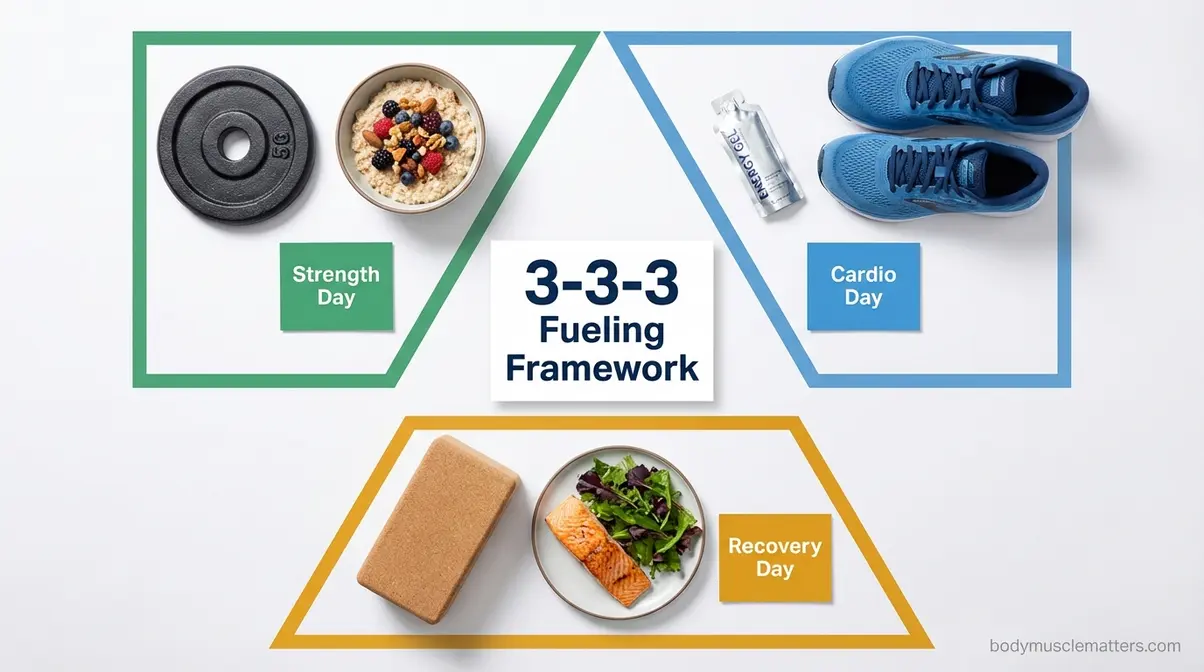
The three steps above give you the building blocks. Now we need to structure them into a repeatable weekly system — one that accounts for the fact that not all your workouts are the same type, and your fueling should reflect that.
“The 3-3-3 split is simply three strength sessions, three cardio days and three active recovery days across the week.”
That training structure deserves a matching nutrition structure. The 3-3-3 Fueling Framework maps your three workout types — strength training, cardio, and active recovery — to three fueling windows (before, during, after) using three core macronutrients (carbs, protein, fats). If your primary goal is shedding fat, pairing this nutrition structure with the 3-3-3 workout rule for weight loss ensures optimal recovery and sustainable results without sacrificing energy.
Caption: The 3-3-3 Fueling Framework — three workout types, three fueling windows, three core macronutrients, organized into a repeatable weekly calendar.
Strength Training Days
On your three strength training days, your body is about to be stressed through resistance — heavy loads, compound movements, and significant muscle demand. Your fueling priority is glycogen loading before, protein prioritization after.
Strength day fueling protocol:
Step 1 — Pre-workout (1-3 hours before):
Eat a moderate carbohydrate + protein meal. Think: oatmeal with Greek yogurt and a banana, or brown rice with chicken and broccoli. Aim for 40-60g of complex carbs and 20-30g of protein.
Step 2 — During (if session >60 minutes):
Water only for most strength sessions. If doing extended supersets or circuit training beyond 60 minutes, 250ml of a sports drink is appropriate.
Step 3 — Post-workout (within 2 hours):
This is your most important meal of a strength day. Hit 25-40g of protein alongside 30-60g of carbohydrates. Salmon and sweet potato, chicken and rice, or a protein shake and banana are all excellent options.
Why the emphasis on post-workout protein? Research from Frontiers in Nutrition (2026) confirms that taking protein supplements immediately following resistance training can aid in muscle healing — this is when your muscles are primed to rebuild.
Cardio Days: Fuel for Endurance
Your three cardio days (running, cycling, swimming, group fitness classes) have a different energy demand than strength days. Cardio relies heavily on your glycogen stores for sustained output — which means carbohydrates are your priority fuel, both before and potentially during longer efforts.
Cardio day fueling protocol:
Step 1 — Pre-workout (1-3 hours before):
Lean heavier on complex carbs than on strength days. A bowl of oatmeal with fruit, a whole-grain bagel with peanut butter (if 2+ hours before), or a banana with a light yogurt are strong choices. Target 50-70g of complex carbs.
Step 2 — During:
For cardio sessions under 45 minutes, water is sufficient. For runs or rides exceeding 45-60 minutes, introduce 30-60g of carbohydrates per hour — a sports drink, energy gel, or banana halves kept in a pocket.
Step 3 — Post-workout:
Replenish glycogen first, then protein. A 3:1 or 4:1 carbohydrate-to-protein ratio works well after longer cardio efforts. Chocolate milk, a banana with Greek yogurt, or a rice and turkey bowl are all effective recovery combinations.
Will you lose weight exercising three cardio days per week? Consistent moderate cardio does support caloric deficit and fat loss when combined with appropriate nutrition. The American Heart Association recommends at least 150 minutes of moderate-intensity aerobic activity per week for cardiovascular health — three 50-minute sessions fulfills that target exactly.
Active Recovery Days
Active recovery days — yoga, walking, gentle stretching, light swimming — are often misunderstood as “rest days.” They are not. They are low-intensity movement sessions designed to increase blood flow to sore muscles, reduce inflammation, and accelerate repair without adding training stress.
Your fueling goal on active recovery days shifts from performance fuel to repair support. You do not need the same carbohydrate load as on strength or cardio days. Instead, emphasize:
- Anti-inflammatory foods: Fatty fish (salmon, sardines), berries, turmeric, leafy greens
- Sustained protein across meals: Keep your total daily protein consistent — muscles repair on rest days too
- Healthy fats: Avocado, olive oil, walnuts — these support tissue repair and reduce exercise-induced inflammation
- Hydration: Continue drinking 8-10 cups of water throughout the day even without a structured workout
Reducing carbohydrate intake slightly on active recovery days is reasonable — your energy expenditure is lower. But do not drop total calories dramatically. Under-eating on recovery days is a common beginner mistake that leaves you depleted and undermines your strength and cardio sessions. Think of recovery day nutrition as the foundation that makes your training days possible.
Troubleshooting Your Fueling Plan
Even with a solid fueling strategy, you may hit walls — persistent fatigue, stalled progress, or a body that feels worse the more you train. These are signals worth paying attention to. This section covers three of the most common fueling-related problems beginners face.
Warning Signs You’re Overtraining

Overtraining syndrome (OTS) is a medical condition that occurs when the volume or intensity of training chronically exceeds your body’s ability to recover — often compounded by inadequate fueling. It is more common than beginners expect, and its signs are frequently mistaken for laziness or low fitness.
Key warning signs to watch for (Cleveland Clinic, 2026):
- Persistent fatigue that does not resolve after a rest day
- Declining performance — unable to hit weights or times you managed easily before
- Elevated resting heart rate — a morning heart rate 5-10 beats above your normal baseline
- Frequent illness — overtraining suppresses immune function, leaving you catching every cold
- Sleep disturbances — trouble falling asleep or staying asleep despite feeling exhausted
- Mood changes — unusual irritability, low motivation, or feelings of depression connected to training
If you recognize 3 or more of these symptoms, reduce training volume immediately and prioritize recovery nutrition. For a detailed breakdown of overtraining syndrome causes and recovery strategies, see our full guide on signs of overtraining syndrome.
The fueling connection is direct: training without adequate glycogen and protein is one of the fastest routes to OTS. Under-eating — especially carbohydrates — forces your body to break down muscle tissue for fuel, accelerating the decline.
How Fueling Affects Cortisol Levels
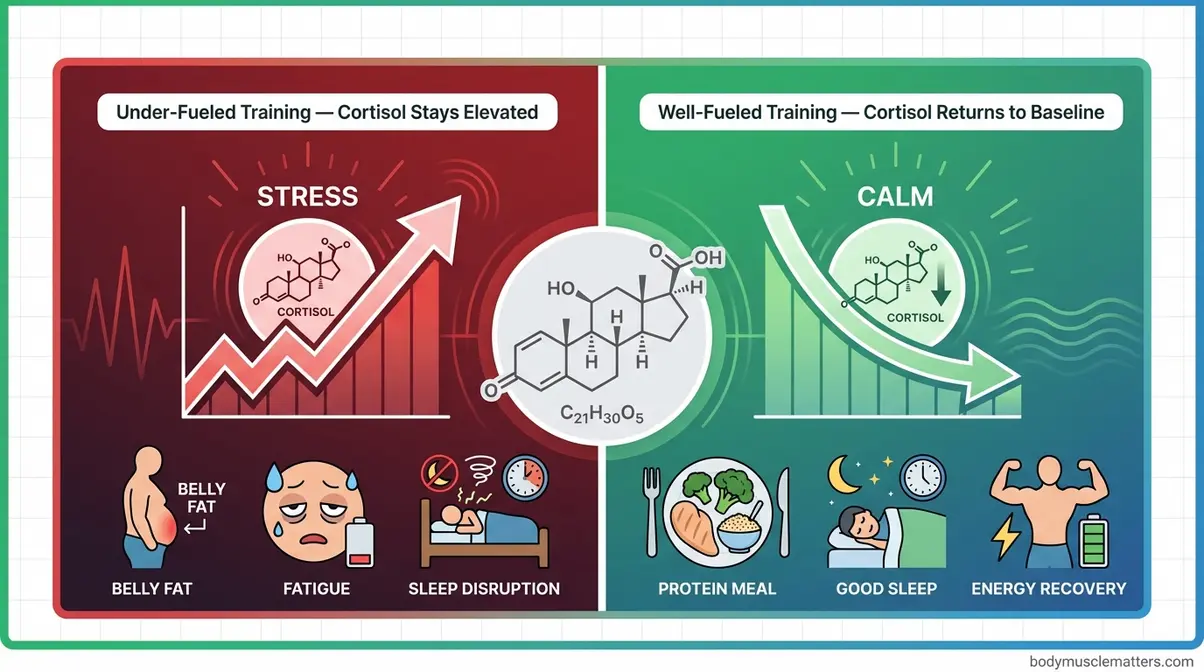
Cortisol is your body’s primary stress hormone. It rises during exercise — which is normal and beneficial in the short term — and should return to baseline during recovery. The problem arises when training stress is chronic and recovery nutrition is inadequate, causing cortisol to remain persistently elevated.
Here is what elevated cortisol from under-fueled training looks like in practice: fatigue that does not lift, stubborn belly fat despite exercising, disrupted sleep, and a feeling of being “wired but tired.” Stanford Lifestyle Medicine research confirms that while exercise temporarily raises cortisol, regular moderate-intensity training lowers your baseline cortisol over time — making you more resilient to stress (Stanford Lifestyle Medicine, 2026). The key word is “moderate.” High-intensity training without adequate recovery nutrition keeps cortisol chronically elevated.
Nutrition strategies that support healthy cortisol management:
- Eat within 30-60 minutes after exercise — delaying post-workout nutrition prolongs elevated cortisol
- Do not train fasted for high-intensity sessions — fasted exercise elevates cortisol significantly more than fed exercise
- Include anti-inflammatory foods on recovery days (omega-3s from salmon, antioxidants from blueberries and leafy greens)
- Prioritize sleep — cortisol regulation is heavily sleep-dependent, and no nutrition strategy fully compensates for chronic sleep deprivation
As Mayo Clinic notes, exercise reduces stress hormones over time — but only when paired with genuine recovery. Fueling is part of that recovery. Training consistently well-fueled is one of the most practical cortisol management tools available to beginners.
When to Seek a Different Approach
For most healthy beginners, the 3-3-3 Fueling Framework provides a complete, practical starting system. However, certain situations require a more tailored approach — and trying to self-navigate them using a general guide carries genuine risk.
Consult a Registered Dietitian (RD) or your physician if:
- You have Type 1 or Type 2 diabetes — exercise significantly affects blood glucose management, and fueling strategies must be individualized. The 2026 ADA Standards of Care recommend at least 150 minutes of moderate-intensity aerobic activity per week for people with diabetes, while emphasizing the need for blood glucose monitoring before, during, and after exercise. Fueling protocols for diabetics differ substantially from the general guidelines in this article.
- You have heart disease or a metabolic disorder — exercise intensity and pre-workout nutrition interact with cardiac medications and metabolic markers in ways that require clinical oversight.
- You are experiencing tachycardia (an abnormally rapid heart rate, typically over 100 beats per minute at rest) during or after exercise — this can be a sign of dehydration, overtraining, or an underlying cardiac issue.
- You want to use calorie-restriction-based weight loss alongside training — the interaction between a caloric deficit and fueling for performance is a nuanced area where an RD can prevent muscle loss and energy crashes that self-directed approaches frequently cause.
- You have experienced unexplained weight loss, extreme fatigue, or GI distress despite following standard fueling guidelines.
This content is for informational purposes only and is not a substitute for professional medical advice. If any of the above applies to you, please consult a healthcare professional before making significant changes to your nutrition or exercise plan.
Frequently Asked Questions
What is the 3-3-3 rule for workout?
The 3-3-3 workout split divides your weekly training into three strength sessions, three cardio days, and three active recovery days. From a nutrition standpoint, the 3-3-3 Fueling Framework maps each workout type to a specific fueling protocol — prioritizing complex carbs and protein before strength training, heavier carbohydrate loading before cardio, and anti-inflammatory foods on recovery days. This structure gives beginners a repeatable weekly nutrition plan synced to their actual training schedule, rather than generic “eat healthy” advice.
How to fuel your body for a workout?
Properly fueling your body for a workout means eating the right macronutrients at the right time. Eat a complex carbohydrate and protein meal 1-3 hours before exercise — for example, oatmeal with Greek yogurt or brown rice with chicken. If training within 30-60 minutes, eat a small simple-carb snack like a banana. During exercise, drink 3-8 oz of water every 15-20 minutes (ACSM Guidelines). Within 2 hours after training, eat a protein and carbohydrate combination to rebuild muscle and replenish glycogen stores.
How does exercise reduce cortisol?
Regular moderate exercise reduces baseline cortisol levels over time, even though it causes a temporary cortisol spike during each session. According to Stanford Lifestyle Medicine (2026), consistent aerobic and strength training improves your body’s stress-response efficiency, so cortisol returns to baseline faster after each workout. However, high-intensity training without adequate recovery nutrition can keep cortisol elevated chronically. Eating within 60 minutes after hard sessions and avoiding consistently fasted high-intensity training are two practical strategies to support cortisol recovery.
Exercise limits for diabetics
The 2026 American Diabetes Association Standards of Care recommend at least 150 minutes of moderate-intensity aerobic activity per week for people with diabetes — approximately 30 minutes on 5 days per week or 50 minutes on 3 days per week. Adults should also break up prolonged sitting with 3 minutes of light activity every 30 minutes. Resistance training is recommended 2-3 days per week. Because exercise affects blood glucose differently for each individual, people with diabetes should monitor blood sugar before, during, and after sessions and consult their doctor about workout-specific fueling protocols.
Weight loss with 3 weekly workouts?
Exercising 3 times a week can support weight loss when combined with a caloric deficit — meaning you are consuming fewer calories than you burn overall. Three 50-minute sessions of moderate-intensity cardio meets the AHA’s weekly activity recommendation for cardiovascular health. Weight loss is primarily driven by your overall caloric intake and output, not exercise alone. Attempting to restrict calories severely while training 3 times per week often backfires — it raises cortisol, slows metabolism, and causes muscle loss. A modest daily deficit of 300-500 calories alongside adequate protein intake is a more sustainable approach.
What are signs you’re overtraining?
Overtraining syndrome produces clear, measurable warning signals that go beyond normal post-workout soreness. The most consistent signs include persistent fatigue that does not improve after rest days, declining performance despite continued training, elevated resting heart rate, frequent illness, disrupted sleep, and mood changes such as unusual irritability or low motivation (Cleveland Clinic, 2026). If you experience 3 or more of these simultaneously, reduce training volume immediately. Inadequate fueling — particularly carbohydrate restriction during heavy training blocks — is one of the leading drivers of overtraining syndrome in beginners.
Are 2 eggs enough to build muscle?
Two eggs per day is not enough protein to build muscle on its own. Two eggs provide approximately 12-14 grams of protein, while research supports a daily intake of 1.4-2.0 grams per kilogram of bodyweight for muscle growth (Academy of Nutrition and Dietetics, 2026). For a 154 lb (70 kg) person, that is 98-140 grams of protein per day. Two eggs cover roughly 10-14% of that target. Eggs are an excellent, high-quality protein source — but you need to combine them with other protein foods across your meals, such as Greek yogurt, chicken, fish, cottage cheese, or legumes, to meet your daily muscle-building target.
When should I stop eating?
Stop eating a large meal at least 1-2 hours before exercise to allow adequate digestion. High-fat or high-fiber meals may need 2-3 hours. A small, easily digestible snack (under 200 calories, low in fat and fiber) can be eaten 30-60 minutes before training without causing discomfort. The exact timing depends on your individual digestion speed, workout intensity, and personal tolerance — some people are comfortable eating 45 minutes before a run, while others need 90 minutes. Start conservatively and adjust based on how your body responds in training.
Start the 3-3-3 Fueling Framework
Here is the most important thing to understand about how to fuel your body for exercise: no single meal makes or breaks your progress. What drives results is consistency — eating the right foods at the right times across the full week, adjusted to your workout type. Research reviewed by our team confirms that beginners who adopt structured nutrition timing protocols report significantly more energy, faster recovery, and better performance retention compared to those who eat randomly around training (AHA, 2026).
The 3-3-3 Fueling Framework is designed to make that consistency achievable without obsessing over every calorie. Strength days get complex carbs and protein before, and a protein-forward recovery meal after. Cardio days prioritize glycogen loading and mid-session hydration. Active recovery days shift to anti-inflammatory foods and distributed protein. That is the whole system — three workout types, three fueling windows, three macronutrients.
Caption: Print or screenshot this quick-reference checklist and keep it with your workout gear – the 3-3-3 Fueling Framework in one scannable view.
Start with the step that feels most manageable this week. If you consistently skip pre-workout fuel, focus on adding a complex carb meal 1-3 hours before each session. If you neglect recovery, commit to a protein-carb meal within 2 hours of every workout. Small, sustained improvements compound into significant results. If you have any medical condition — including diabetes, heart disease, or a metabolic disorder — please consult a registered dietitian for a personalized fueling protocol. A qualified RD can adapt the 3-3-3 Fueling Framework to your specific health needs, making your plan both safe and effective.